By Dr. Ashok Dyalchand | Director
Vandana (name changed), a 19-year-old married adolescent girl, resides in Shinde slum with her family consisting of five members. She has completed 10 years of schooling and is currently a homemaker. Her husband who has an education only up to 3 years of schooling, works as a construction labourer.
Shortly after getting married, Vandana became pregnant within two months. She has a son who is merely 8 months old.
Vandana belongs to a migrant, traditional community that has deeply rooted cultural norms that prescribe repeated child births soon after marriage.
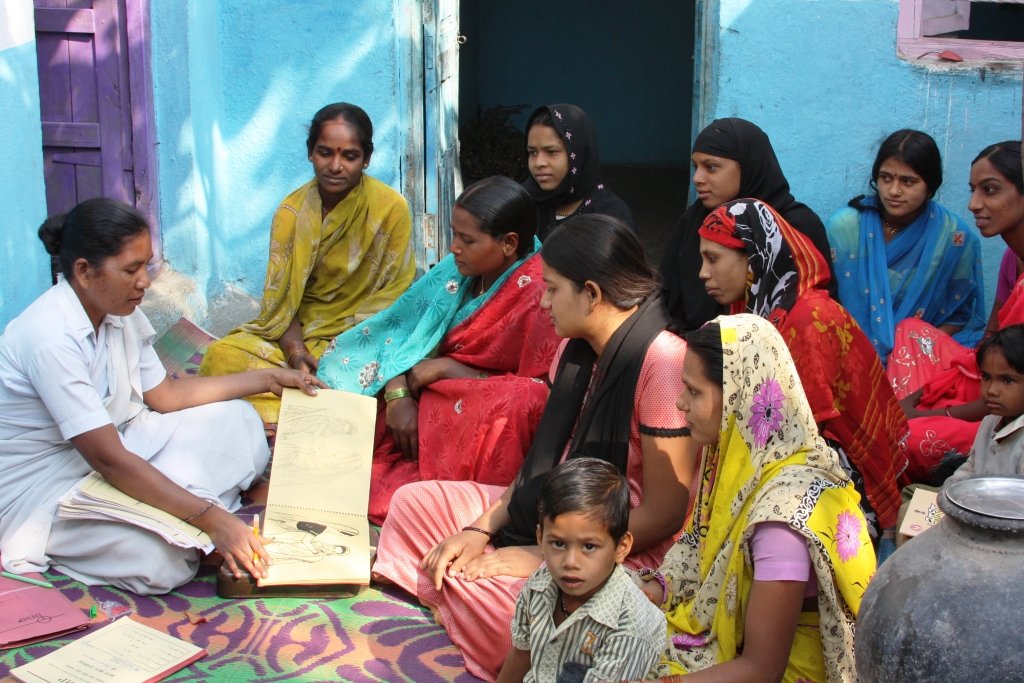
The community based health volunteer trained by Institute of Health Management Pachod (IHMP) visits Vandana and her family every month. During her interactions with Vandana’s parents-in law, the community health volunteer realised that they were keen for her to have a second child as soon as possible. The community health worker informed IHMP’s nurse who provides health services in this slum.
Vandana and her husband received need based behaviour change communication and counselling from the community health volunteer and IHMP’s nurse. They advised the couple against having a second child so soon after her first pregnancy.
The community health volunteer and IHMP’s nurse educated Vandana and her husband, about the potential complications for both the mother and new born if they decide to have another child so soon. The couple were advised to maintain an interval of at least 3 years between two child births. They told the couple repeatedly about the risks for the mother and neonate associated with not maintaining adequate spacing between two pregnancies.
The community health volunteer and IHMP’s nurse counselled Vandana and her husband about various family planning contraceptives that they can use.
Following the counselling sessions, Vandana's husband took the initiative to start using condoms despite his parents' desire for a second child as soon as possible. He respectfully explained to them the potential consequences of an early pregnancy.
Due to her husband's understanding nature, the couple have decided to maintain a spacing of at least 2.5 years before planning for their second pregnancy.
Vandana regularly visits the slum level clinics for having her son examined and immunised on time and for taking her iron and calcium supplements as advised by IHMP’s nurse. Her husband accompanies her to collect the monthly supply of condoms.
Because of their trust in the community health worker and IHMP’s nurse they were able to convince Vandana’s parents in law who are very conservative and traditional.
Vandana and her husband, are one of thousands of young married couples that are using contraceptives to delay first birth or maintain appropriate spacing between two births. This is the consequence of need specific communication and counselling provided during regular, monthly house visits by community based health volunteers, trained by IHMP.
This change would not have been possible by providing services through a fixed health facility where people come only when they perceive the need for a service.
By reaching out to the community through monthly home visits health workers are able to not only reach young women, but also sensitise their husbands and address social norms by counselling parents in law who resist change due to their traditional perceptions and values.
This is the foundational basis of primary health care being provided by IHMP over the last 50 years.
Project reports on GlobalGiving are posted directly to globalgiving.org by Project Leaders as they are completed, generally every 3-4 months. To protect the integrity of these documents, GlobalGiving does not alter them; therefore you may find some language or formatting issues.
If you donate to this project or have donated to this project, you can receive an email when this project posts a report. You can also subscribe for reports without donating.



Support this important cause by creating a personalized fundraising page.
Start a Fundraiser