By Lynellyn Long, Ph.D. | Project Leader
Many across the world, particularly young people, are suffering from unemployment, high prices, and political unrest and instability. In Armenia, Georgia, Moldova, and Ukraine, where HERA works, these problems are acute given increasing conflict, corruption, and external threats. The transfer of development and humanitarian assistance to military spending within and outside the countries means less resources for basic goods and services. With self-defence at stake, producing drones can seem as important as baking lavash bread.
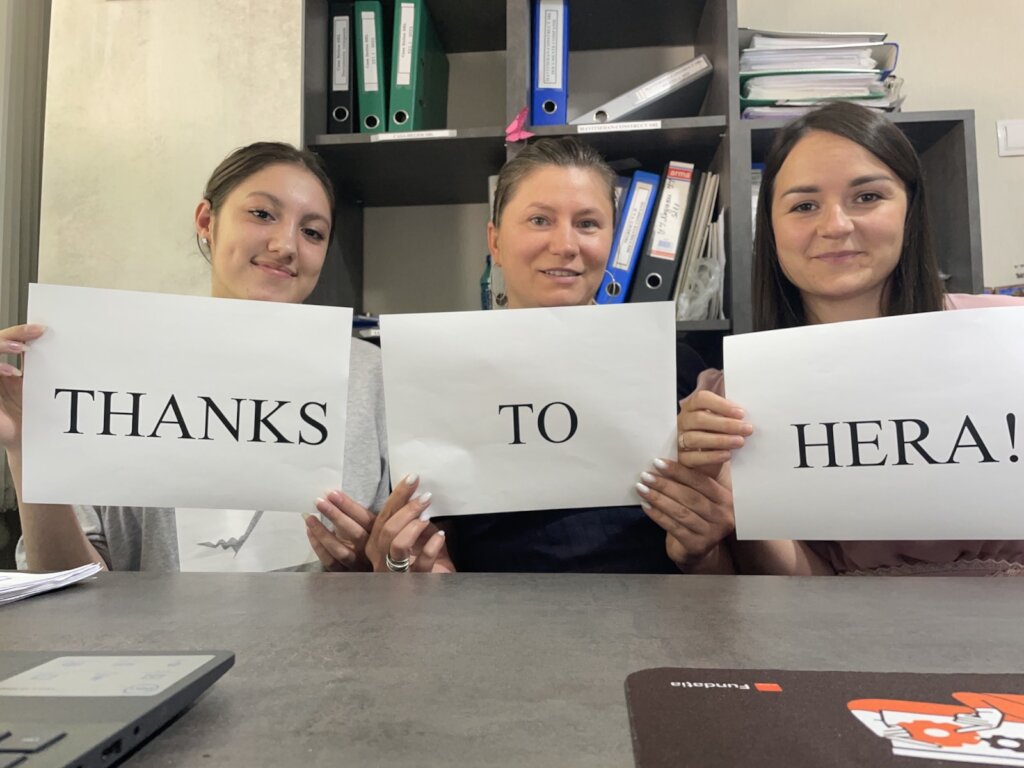
In challenging times, many young women in the four countries cannot count on finding work and are starting their own, or developing a family, venture. They do not wait for others to provide jobs or aid but are taking initiative. That explains why, despite not running the HERA competition in Georgia this year, we still received 193 applications from Armenian, Moldovan, and Ukrainian women entrepreneurs. Had we included Georgia, this year’s Competition would have been our largest ever. Once the Competition closed, three HERA volunteers spent many hours inputting all the data and 12 people, coming from Canada, France, Germany, Italy, the UK and the US, voluntarily scored all applications
Given the new “Russian laws” curtailing NGO and foreign activities, HERA did not launch this year’s Competition in Georgia. Our grants for essential equipment and/or technologies average $742.39 (€649.34) and overhead are too small to address the Government’s new surveillance and reporting requirements for the entrepreneurs and HERA. We are also aware that for many entrepreneurs the amount we give is of less importance than the recognition. Our main concern, however, is that the Georgian grantees could be stigmatized by any association with a Western European/North American organization.
The original founders of the international grants program, who started in 2010, are donating time and international airfares to profile the Georgian HERA entrepreneurs’ experiences over the past 16 years. We will also meet local lawyers and organizations to determine other ways to continue supporting Georgian women entrepreneurs. Our findings will be useful if HERA can start again. Rather than the abrupt shutting of many international programs we witnessed last year, we do not wish to leave the entrepreneurs, partners, colleagues and friends without acknowledging all their contributions over time.
The Moldovan applications this year again include several Ukrainian refugee ventures. Some are in the breakaway state of Transnistria, considered part of Moldova. The Transnistria residents predominantly speak Russian, which is close to Ukrainian, whereas Moldova’s official language is Romanian. In Ukraine, itself, most of the applications come from Kyiv. With the recent intensification of attacks, we have received further requests for portable generators. Armenia is hosting Iranian refugees coming to and through Armenia. Although we did not receive applications yet from these refugees, we received many more from a host community, Goris, this year. To describe the impact of our work, profiles of four women entrepreneurs funded in 2025 follow.
Armenia
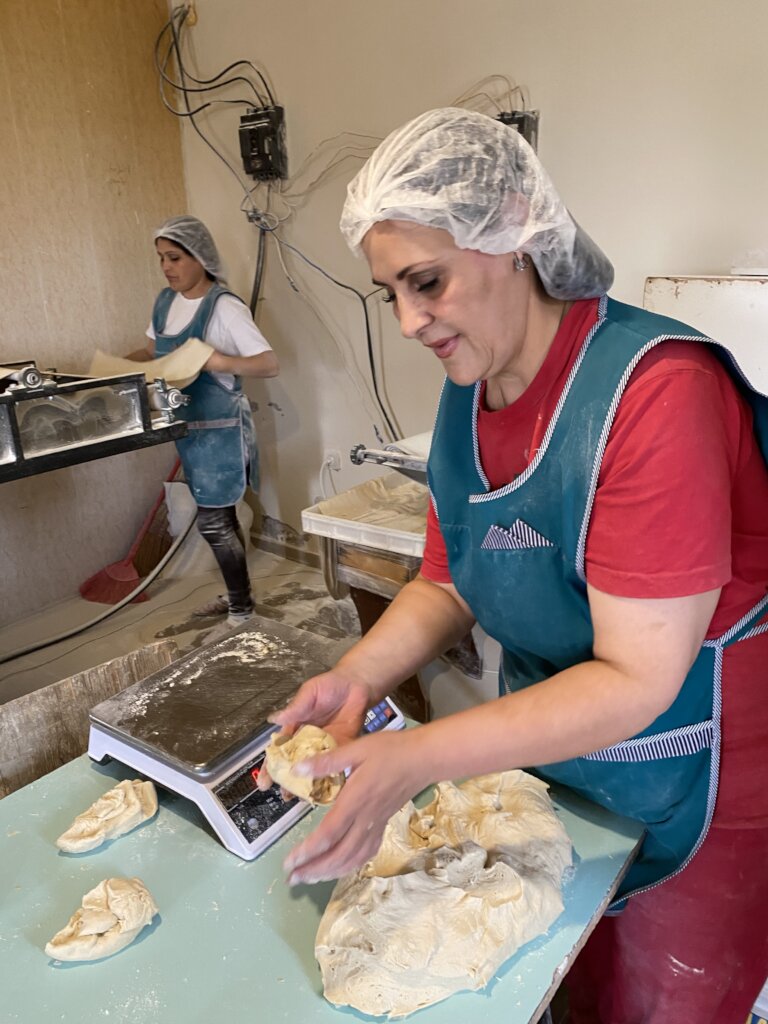
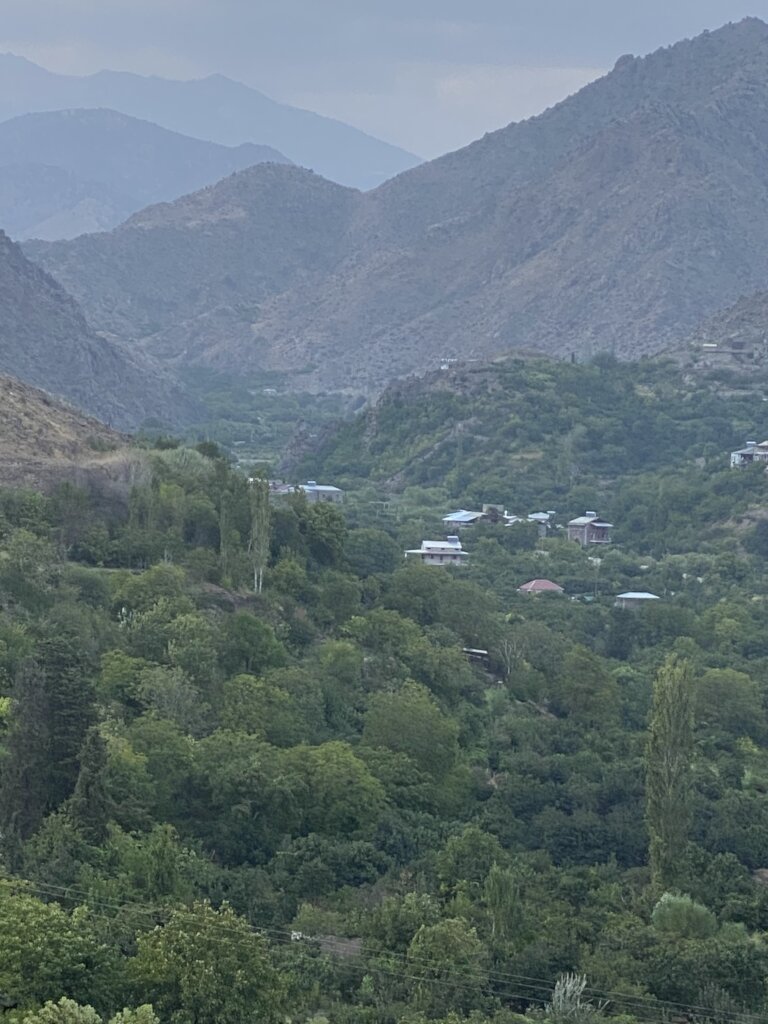
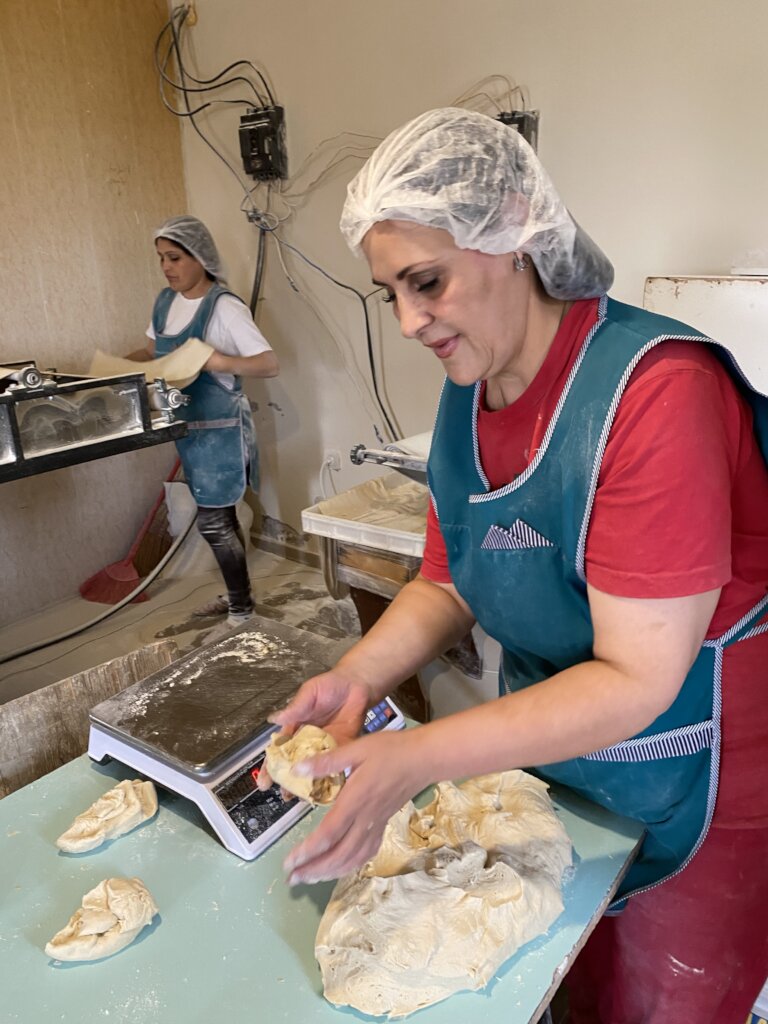
Marine Asatryan has the only bakery in Nor Kyang (meaning “New Life”), a small rural community in northern Armenia. She employs eight women workers ranging in age from 35 to 45 years. They work in two shifts to produce 4000 lavash breads (made with flour, salt, baking soda, and water) daily. They charge approximately $1.37 (€1.2) for five breads, about the same price as a baguette in France. On a low day, the bakery turns over $343 (€300) and during holidays, $914 (€800). Their customers all come to the bakery from the four neighboring villages (approximately 700 households). Their closest competitor is seven kilometers away.
Prior to opening the bakery, Marine was a housewife and never employed outside the home. She mortgaged her home to take a five-year, $10,000 (€8773) loan to launch the bakery. When we met, she was in the final year of the loan, which was almost paid off. She needed an industrial mixer; and found a second hand one for about $1,600 (€1491), which we cost shared.
Georgia
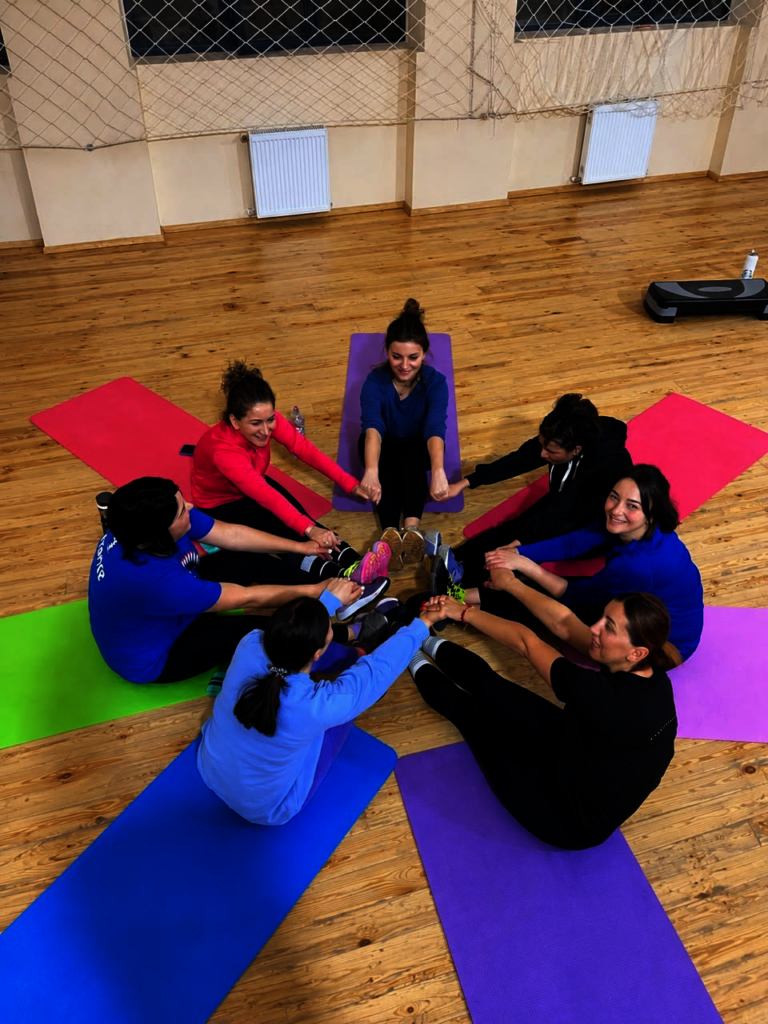
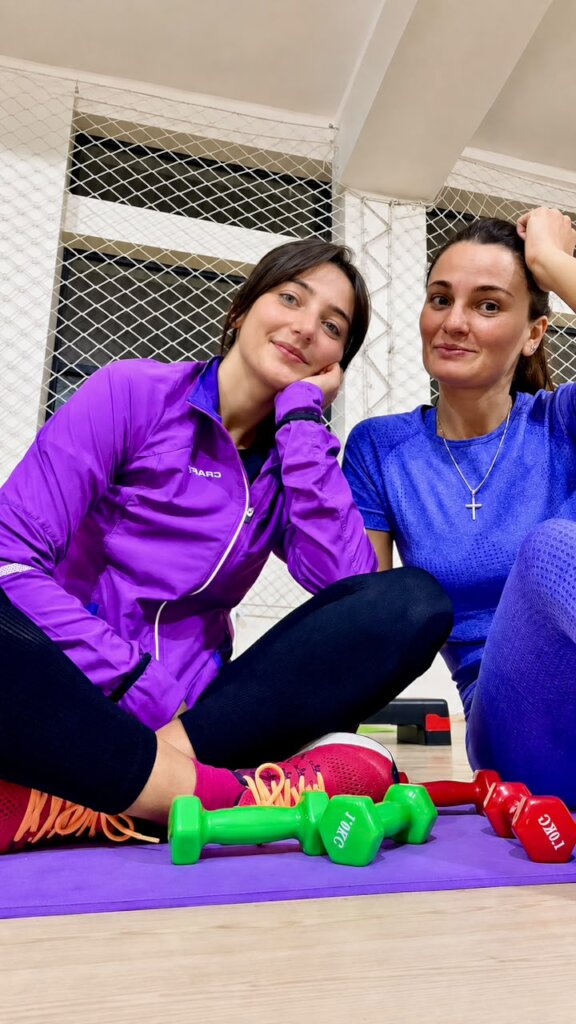
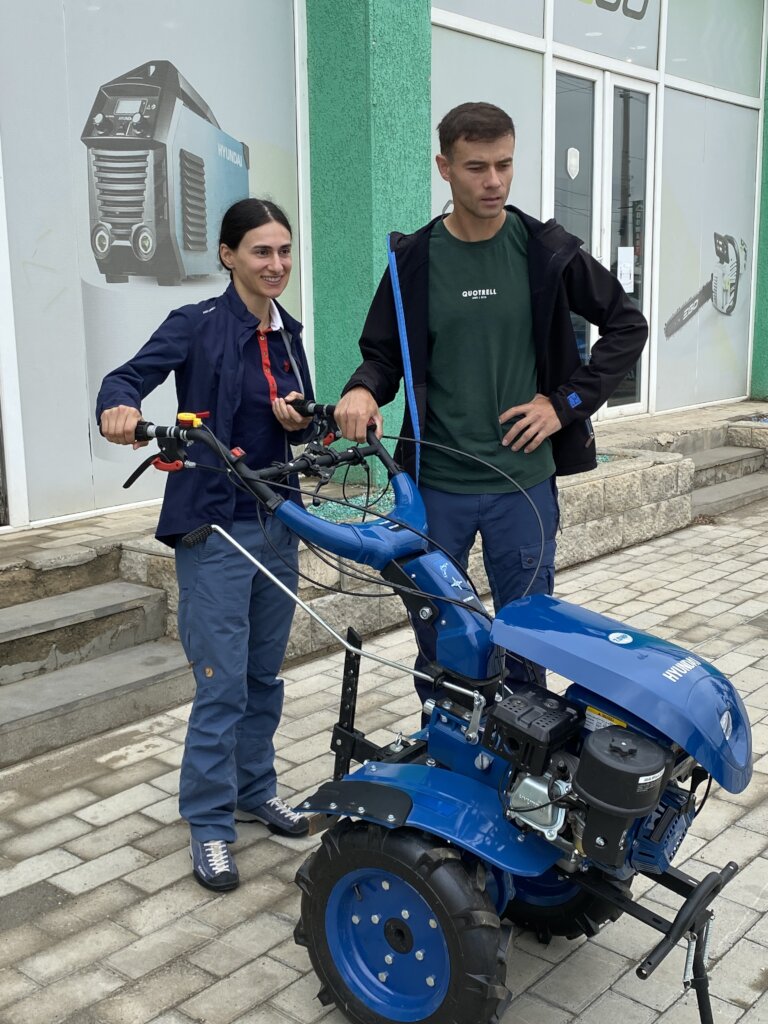
Khatia Mandaria, a secondary school English teacher, and Rusudan Svanidze, a fitness instructor, launched a women’s fitness program in a rural town. Khatia had noticed that the town’s impressive gym, funded by a foreign mining corporation, was available for women for only a couple hours a week and during that time, it was treated primarily as a social space. She persuaded her school to provide space for classes after school and working hours.
As Georgia Today (December 28, 2020) reported:
Georgia is famous for its rugby players and weightlifters but in fact, more than 80% of Georgians don’t get any exercise at all. The picture is particularly stark for women: only one in ten engages in any regular physical activity. The experience of other countries shows that this is not a matter of personal choice but rather a reflection of insufficient and unequal access to sports facilities, training and opportunities.
Khatia and Rusudan recognized the need to provide fitness activities of particular interest to women (e.g., Pilates, yoga, heat training, stationary bikes, strength exercises, etc.). In 2024 HERA’s grant provided for two stationary bikes and in 2025, for a running machine for $563 (€517.83). The classes started to appeal to women of all ages. By 2025, the two instructors were serving over 40 girls and women. They were turning over $1502 (€1320)/monthly, which allows them to invest in additional equipment and trainers.
Moldova
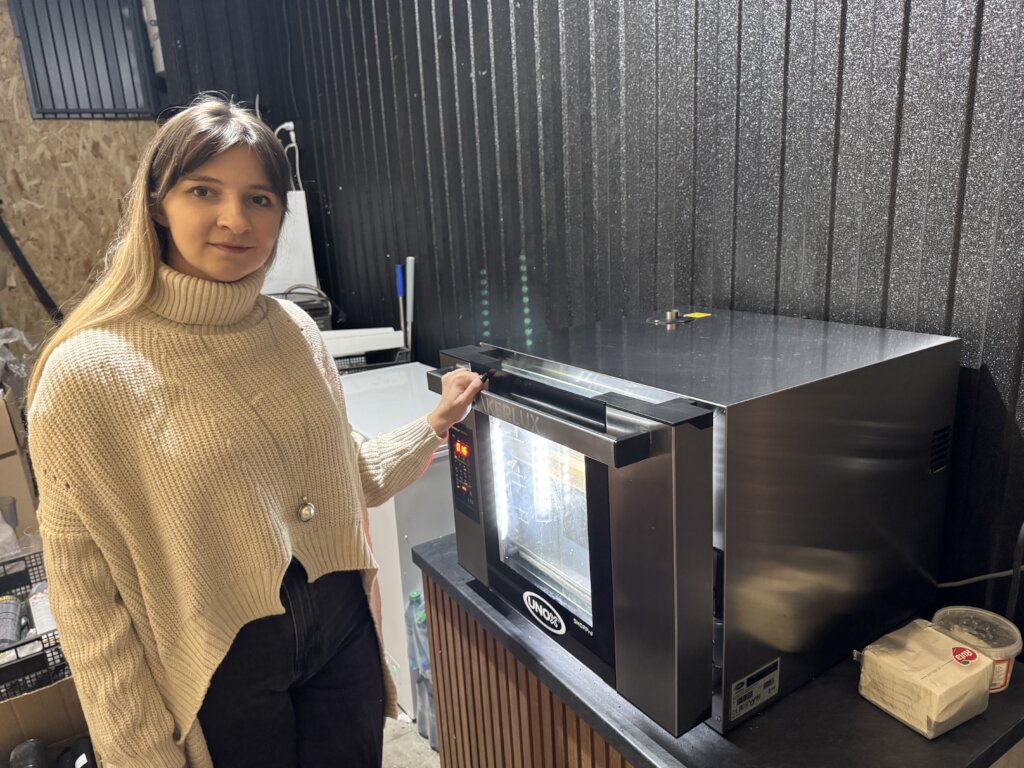
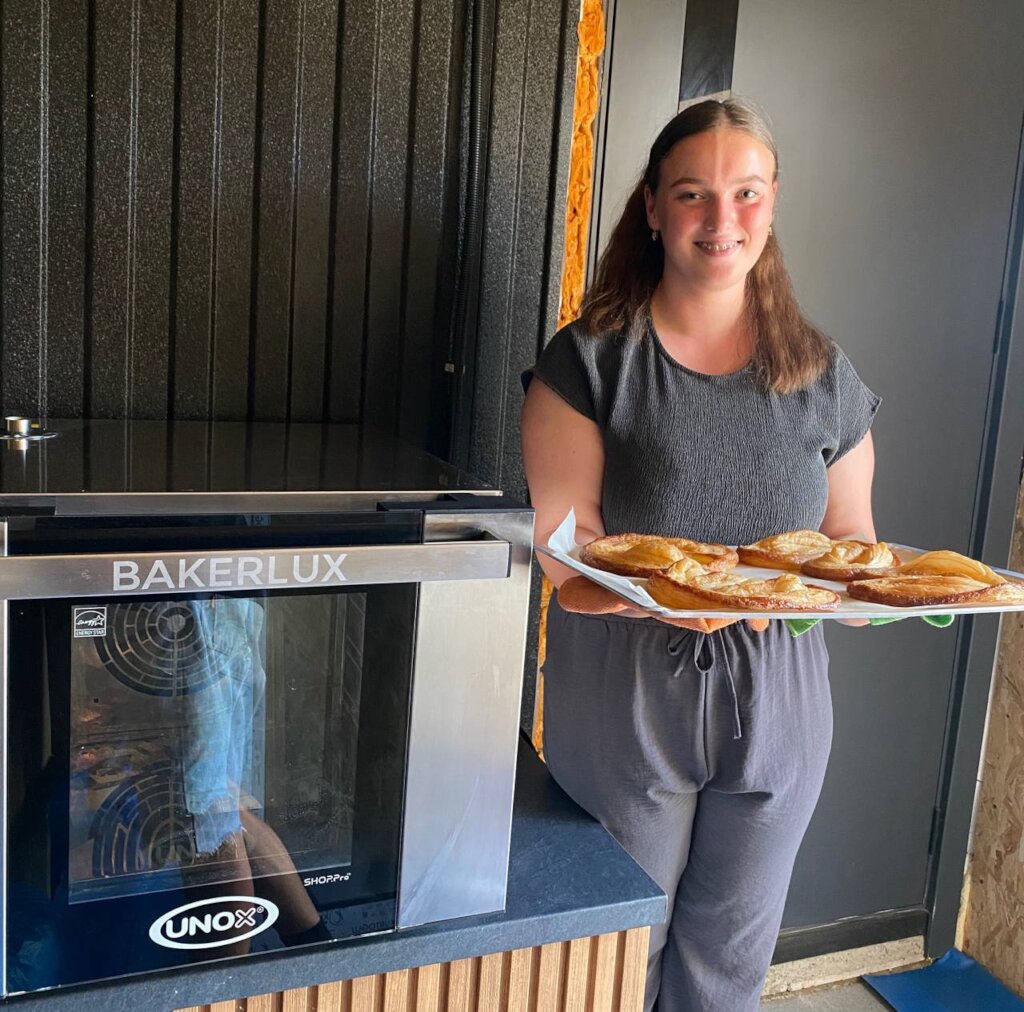
In early 2025, Alla Romaha Fulga opened Aristocrat Dream (aka @AQULINCA, @FFRIENDS.COFFEE), a small coffee shop, built by her husband, along the highway into Balti. In the first year alone, the coffee shop served up to 100 customers/day. Alla employed two young women (both 20 years of age): one full and one part-time. She estimated her 2025 turnover would be € 25.000 ($28,580). Since she was renting equipment, she asked HERA for a grant to purchase an oven for the cafe. The team provided a grant of $1,173.19 (€1026.77) to make this purchase.
In a recent update, Alla reports realizing a turnover of €33.000 ($37,736) in 2025. Ala also notes that the coffee shop’s average monthly turnover before the HERA grant was MLD 63,317 ($3,565), which after receiving the oven, increased to MLD 84,500 ($4,757). The increase in turnover allowed Alla to renegotiate a contract with their frozen pastry suppliers on more favourable terms.
The increase also allowed her to hire another part-time employee, Anastasiia, who became full-time after her 18th birthday this past March. Since psychology is Alla’s primary profession, she works with an organization that supports housing for young, disadvantaged women from rural areas. She met Anastasiia through this organization. As she explains (with Anastasiia’s permission):
Anastasiia comes from a family with three children. Her father has another family and is often away from home for months at a time. Her mother struggles with alcohol addiction. Despite these difficult circumstances, Anastasiia is a bright, capable, and determined young woman. Working at the coffee shop has helped her build confidence, develop social skills, and become financially independent. We are very proud of the progress she has made.
In describing next steps, Alla writes:
In the near future, we plan to create a drive-through lane. This will increase customer traffic, so we will need to fulfil orders faster. Therefore, we plan to purchase professional equipment for cold drinks, as well as employ another woman so that two people work per shift.
Alla has asked for a second grant this year to purchase the cold drinks equipment, which is a good request given Moldova’s increasing summer heat waves.
Ukraine
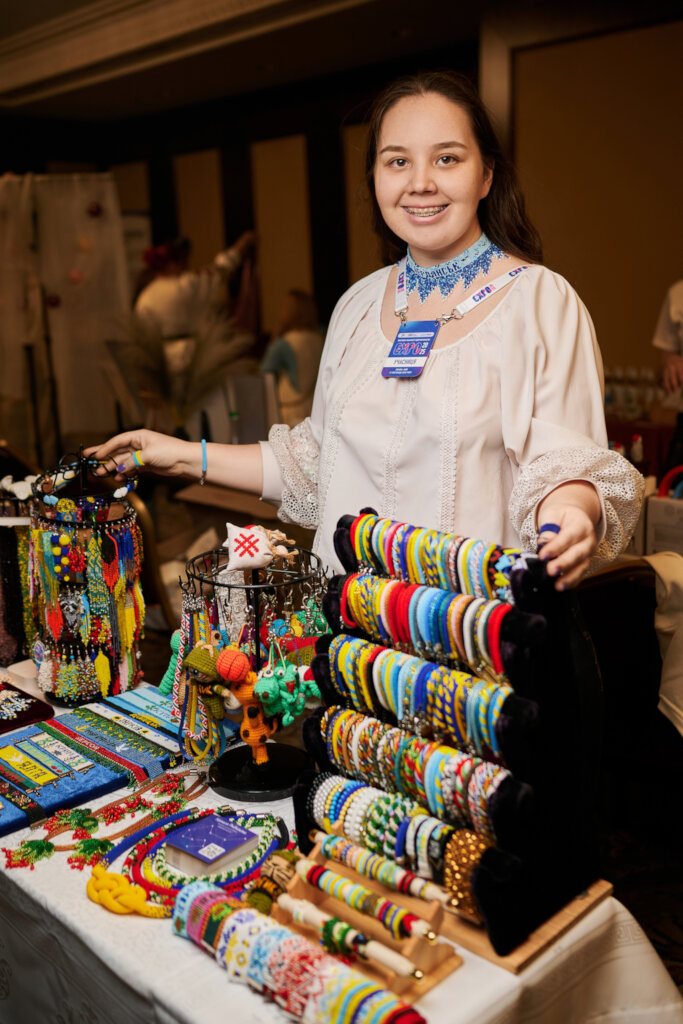
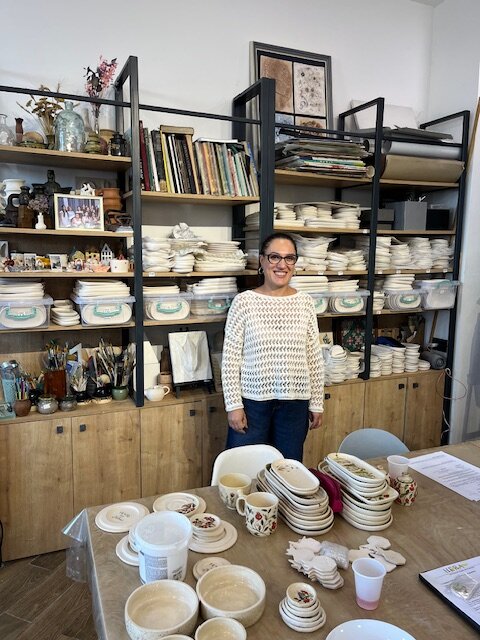
Natalia Rybnikova, 27 years of age, sells handmade jewellery under the brand name of Cosmic. She started her venture at 12 years of age when:
I joined a beading club in my hometown of Berdyansk, in Zaporizhzhia region. I fell in love with beads and, when the club leader first handed me a pair of earrings to make, I realized this was more than just a hobby—it was a lifelong passion. This is something I am deeply passionate about and find inspiration in every day; my soul is in these creations.
When the full-scale war started, my hobby transformed into my main work. It became not only my way of coping with the challenges around me but also a way to support myself and others. Running my own jewellery business allowed me to stay connected to my craft and keep pursuing my dreams, even in the face of adversity.
Her sales cover current production and operational costs but not her estimated total accumulated investment of $20,525 (€18.000) for materials, tools, marketing, and rental costs. Although an early-stage venture, Natalia’s determination and commitment impressed us. HERA provided her $918 (€805) towards purchasing a laptop, smart phone, lamps, and white backdrop to advertise her products on social media and to attract new customers on Etsy. Natalia reports using the smart phone for card payments at her stall at Andriivskyi Descent, the IDP Council exhibition, and the UN Women’s Entrepreneurship EXPO in Kyiv.
Prior to the grant, she reports an average monthly turnover of approximately 400 EUR. Since the grant, Natalia observes that: “with the purchase of new equipment, my average monthly turnover has increased to around 550 EUR, which is a positive change of about 37.5%.” She also has a growing number of international orders. She reports that an American customer bought a bracelet and earrings in the Ukrainian flag colors and later wrote that Natalia’s jewelry led to conversations about Ukraine in the customer’s family and professional circles.
Natalia has faced logistical and shipping challenges for international customers. She tested out different options, priced accordingly, and focused on higher priced items to keep shipping a reasonable percentage of total cost. She also reports overcoming war disruptions (air raid sirens, power cuts, and stress) by “planning my work in flexible blocks, using the new laptop and smartphone on battery power when needed, batching product photography on days with stable light and electricity, and informing customers in advance about possible delays.” Not surprisingly Natalia has requested a portable power station this year.
July Bonus Day
GlobalGiving’s July Bonus Day takes place from July 15, 2026, at 10:00:00 EDT to July 16, 2026, at 10:00:00 EDT. To receive incentive funds, your donations must be at least $100 and up to $1,500 to qualify. As many humanitarian organizations, our funds this year are limited even as the demand for HERA grants has increased. Based on current resources we plan to award approximately 40 grants (21% of applicants) this year and would like to offer more so your support will be very welcome!
All women in this report have given permission to tell their stories and to use their names and the names of their businesses. They have also given and received permission for these photographs. All hope that you will enjoy their products and services one of these days soon. We can vouch for their quality!
By Lynellyn D. Long, Ph.D. | Project Leader
By Lynellyn D. Long, Ph.D. | Project Leader
Project reports on GlobalGiving are posted directly to globalgiving.org by Project Leaders as they are completed, generally every 3-4 months. To protect the integrity of these documents, GlobalGiving does not alter them; therefore you may find some language or formatting issues.
If you donate to this project or have donated to this project, you can receive an email when this project posts a report. You can also subscribe for reports without donating.



Support this important cause by creating a personalized fundraising page.
Start a Fundraiser