By Lynellyn and Dennis Long | Project Leader and Organizer
This year HERA received 161 applications for our 2022 International Competition for Women Entrepreneurs from Armenia, Georgia, Moldova, and Ukraine. We also encouraged former Ukrainian grantees, who are restarting ventures, in Western Europe and the US, to apply.
HERA teams plan to travel, security permitting, to the four countries and to meet with the applicants in the US and Europe. If too dangerous to travel, we will assess the new ventures online, with the help of former grantees remaining in the conflict regions. This past spring, HERA team members have also been helping several former Ukrainian grantees and their families to resettle in Western Europe and the US. Some have already found work and at least two grantees in the Kiev region have already returned. Given the current situation, conflict could break out in Moldova or Georgia and/or escalate further in Ukraine and Armenia. As one Board member observes, “HERA is currently working in Putin’s cross hairs.” To prepare for this year’s assessments and to understand some of the complexities of rapidly evolving situations, we obtained the following updates from our recent grantees.(1)
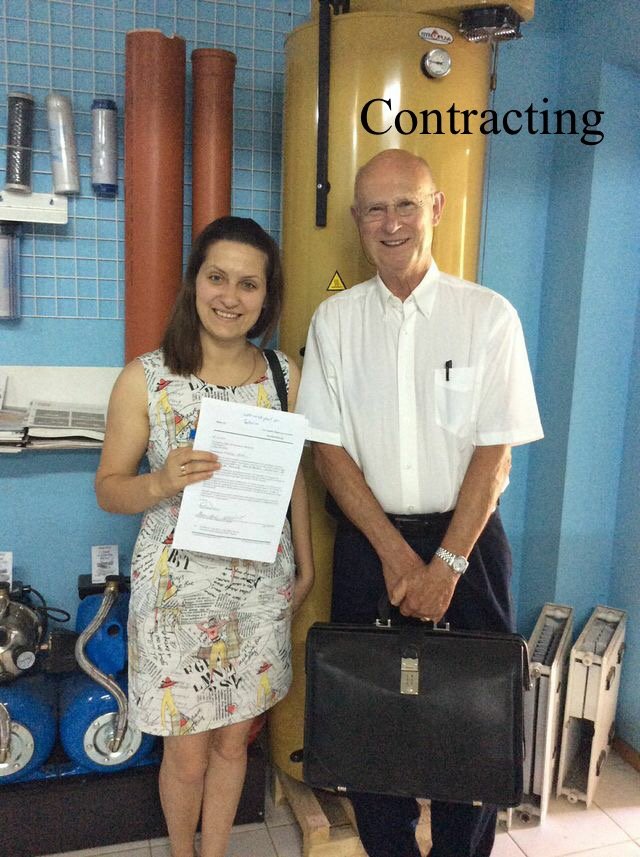
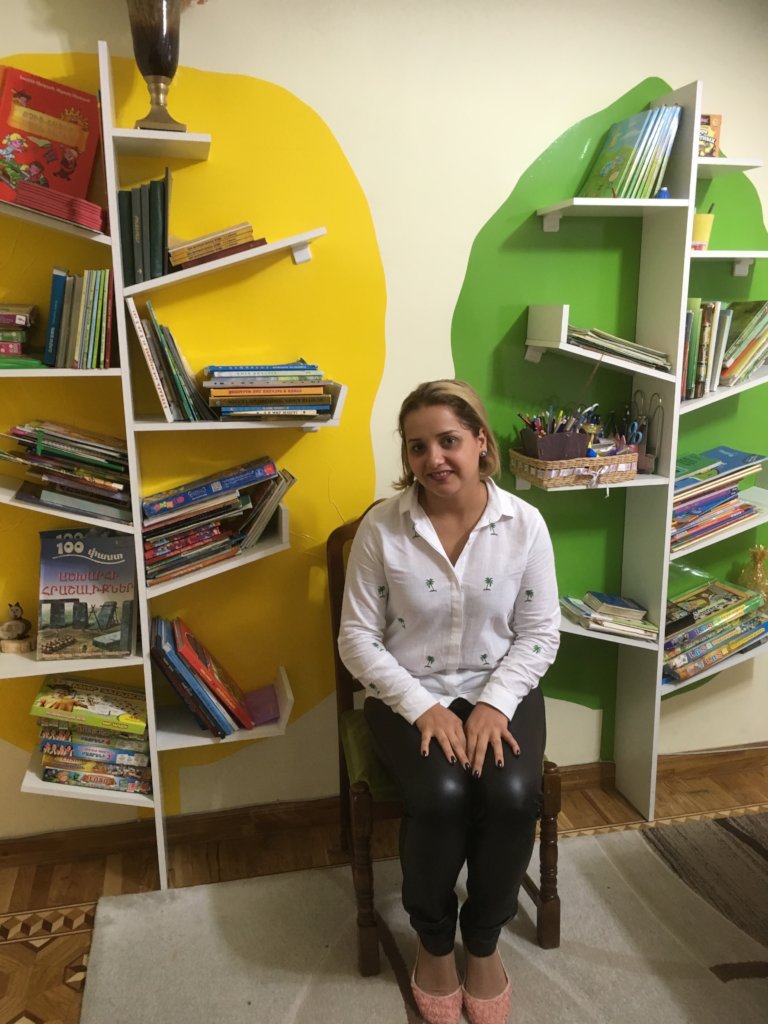
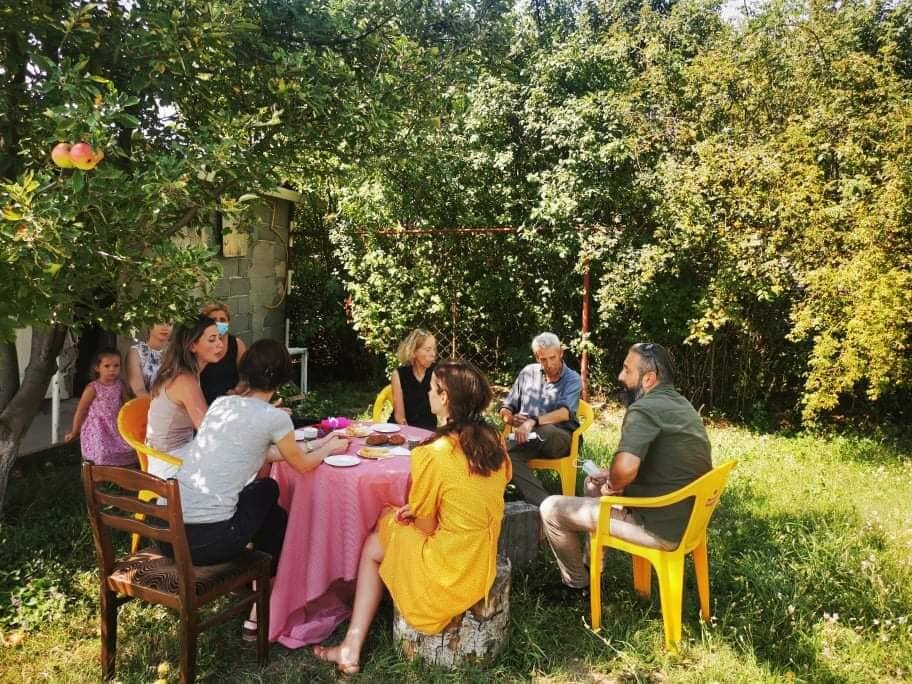
In Armenia, Svetlana Antonyan has established a private kindergarten and primary school in Masis, a town, 17.4 kilometers from Yerevan. To add a music program for her school, she bought a keyboard, drum, and guitar with her HERA 2021 grant (EUR 611). Svetlana reports that, “We’re grateful to be granted the opportunity to get support from your organisation as it enables me to grow my business. We hired a music teacher, Manucharyan Sofia, who teaches music classes to all three of our groups.”
Several Armenian 2021 grantees reported that the Artsakh/Nagorno-Karabakh conflict, along with the pandemic, negatively set back their businesses. Svetlana observed that: “We had a subtle decline on the financial part since the majority of parents faced difficulties in paying the tuition.” Although Armenia and Azerbaijan signed a cease fire agreement in November 2020 and Russia sent peacekeepers to maintain the borders; border incursions have continued. In April 2022 the two countries held the first of a series of peace talks at the European Council in Brussels. A second meeting is scheduled for the summer. Reportedly, some Russian peacekeepers and equipment have been reallocated to fight in Ukraine and the border situation remains volatile. As a result of the war in Ukraine, another 2021 HERA grantee observes that Armenia is seeing many more Russian tourists, which is helping the local economy. Svetlana reports her school is currently progressing well and she plans to expand the school’s grounds as the current enrolment is starting to exceed their capacity.
In Georgia, Marita and Keti Dumbadze started Tbilihhoby with 600 GEL ($240). Marita conceived of the business when she knitted a baby blanket for her soon-to-be born son. As she explains, “the idea came to me to make a knitted baby blanket that would be a special design and high quality; I knitted the same blanket as I had imagined so the idea of my venture was created.” Living in Tbilisi, Marita realized that Keti, her sister who lived in Choporti, a village in the mountains (41 km from the capital), needed work and would know other young women, who could learn high quality knitting and sewing skills.
Today, four years later, the Dumbadze sisters manufacture 30 different baby products. Their “mini factory” employs three young women (25-29 years) full-time, including Keti, in Choporti and two part-time, including Marita, who works on sales in Tblisi. As Marita observes, “We have gained good experience to manufacture baby products in high quality and with different designs.” They deliver throughout Georgia and sell through local retailers and on online (e.g., Etsy; cartooli, happykids.ge, and anovano.ge)
The pandemic had negative impact on sales and in the same period, their knitting machine broke down. Their HERA 2021 grant (EUR 900) paid for a new knitting machine. Marita claims that the new machine from HERA “actually saved the production process from stopping” and they re-employed the young woman weaver. This past year, she observes: “Of course, war has a bad influence on everything and on the business as well, but we try to save business and do our best to maintain employees. Now we no longer need to fight for survival, but we need to add different equipment to expand our manufacturing. In addition, we are maximally focused on exporting our products in European markets and the latter is our dream indeed.”
In Moldova, Elena Maretova, a printer, produces high quality wedding invitations (see mov. below). She received a new printer (EUR 700) in 2021 from HERA to develop her venture. Elena reports that “It gave me an opportunity to give a full-time workplace for young ladies, and our sales have doubled. I live in my country; I'm raising my children and can work and give workplaces for other women. It's wonderful! “
She plans to develop her venture with making “stylish packaging boxes” and is selling online and to local retailers. Elena believes (or hopes) that the “war in Ukraine can't touch us.” However, she reports: “the main obstacles we encountered this year are logistics, because some materials and equipment I bought in Ukraine.: But despite the difficult situation we continue cooperation. That's our way to support Ukrainian people and continue to keep growing my small business.”
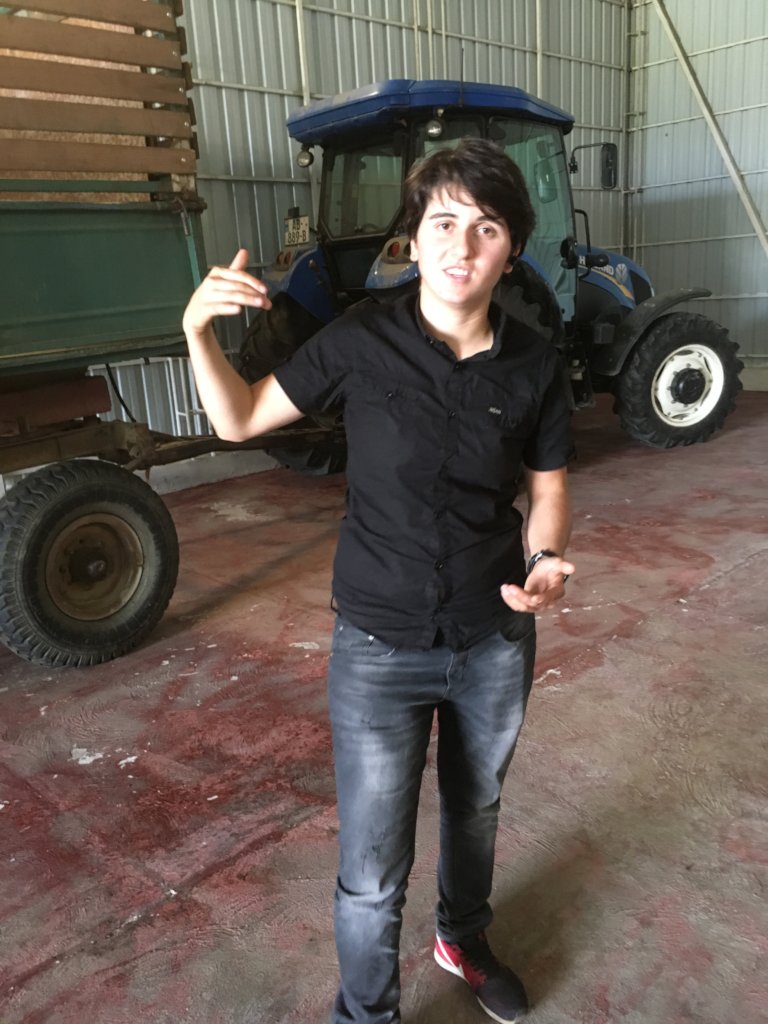
In Ukraine, Maryana Syniushko, who received a HERA 2021 grant (EUR 250) for math equipment for Halli Galli, her home and online school, reports that “I haven't applied [for a second grant] because April and May were quite unsafe in Kyiv - and I wasn't sure about the future of any educational offline projects in Kyiv. At that period a lot of private kindergartens and small schools announced their closure. Now the situation has changed a lot: it's safe and people are coming back. We have some online activities and plan to start offline activities in July.”
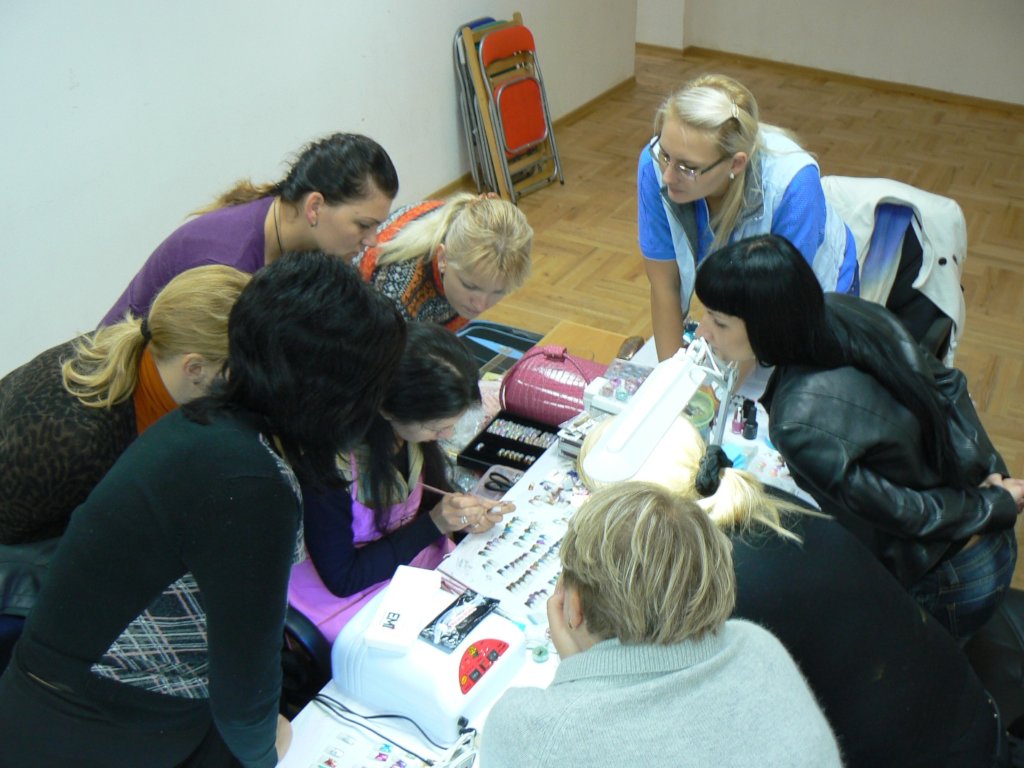
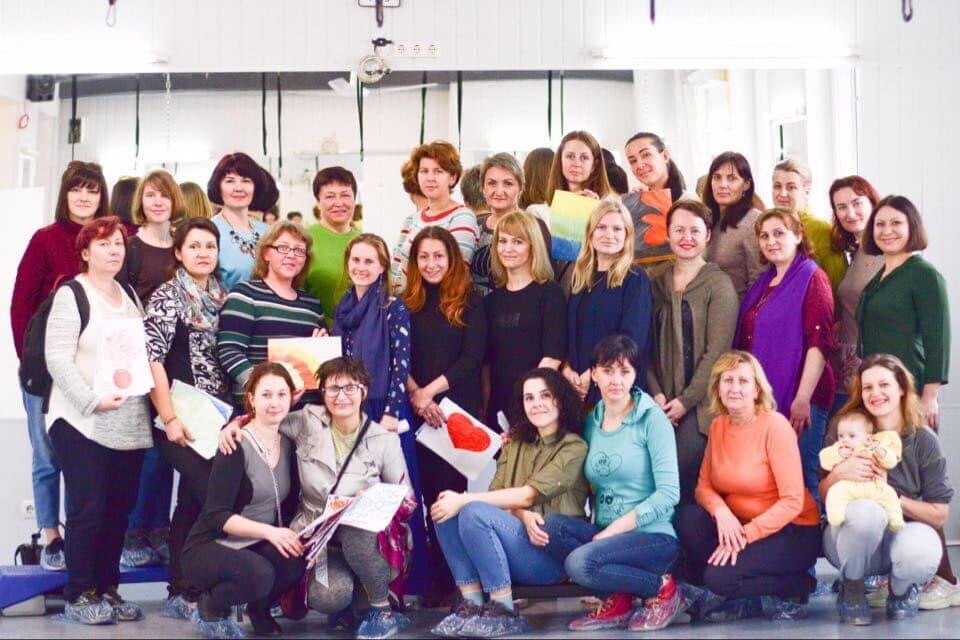
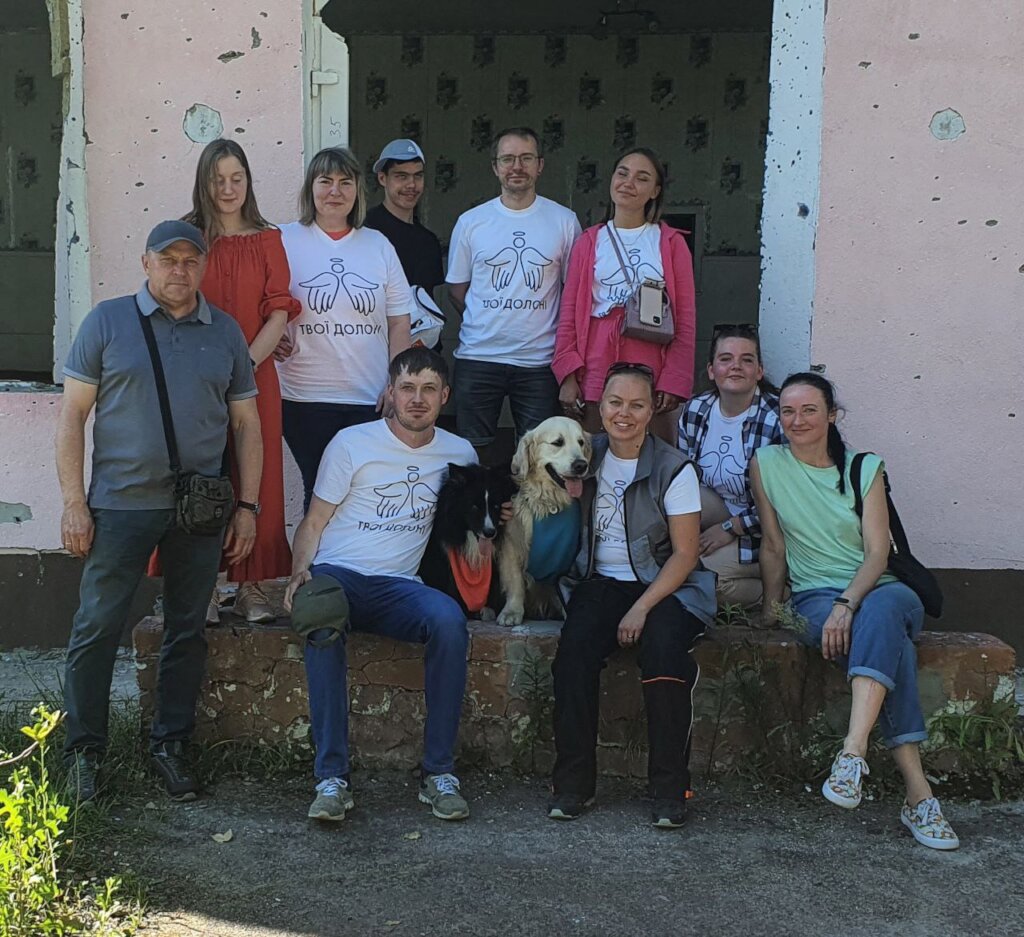
Her work now focuses on providing support to children affected by the war. She writes that: “1-2 times a week I still go to villages which suffered from the war. We have a multidisciplinary team now - some people came through Halli Galli (see photo). We complicated our support: we do a lot of mental health activities with kids and their parents, we provide them with medical assistance, humanitarian aid (like food products) and some pharmacy (when we have it - there are usually no any pharmacy stores and it's quite challenging for people to get any medications. We usually go to the most depressed villages - and it helps me a lot to appreciate how good my life is despite the situation in the country. The more I go, the more I understand how important it is to have direct contact with people, not only with authorities (though authorities sometimes may also be kids friendly and have a strong values basis). I see that we can be reborn and get recovered, it just takes time and requires systematic and professional efforts.”
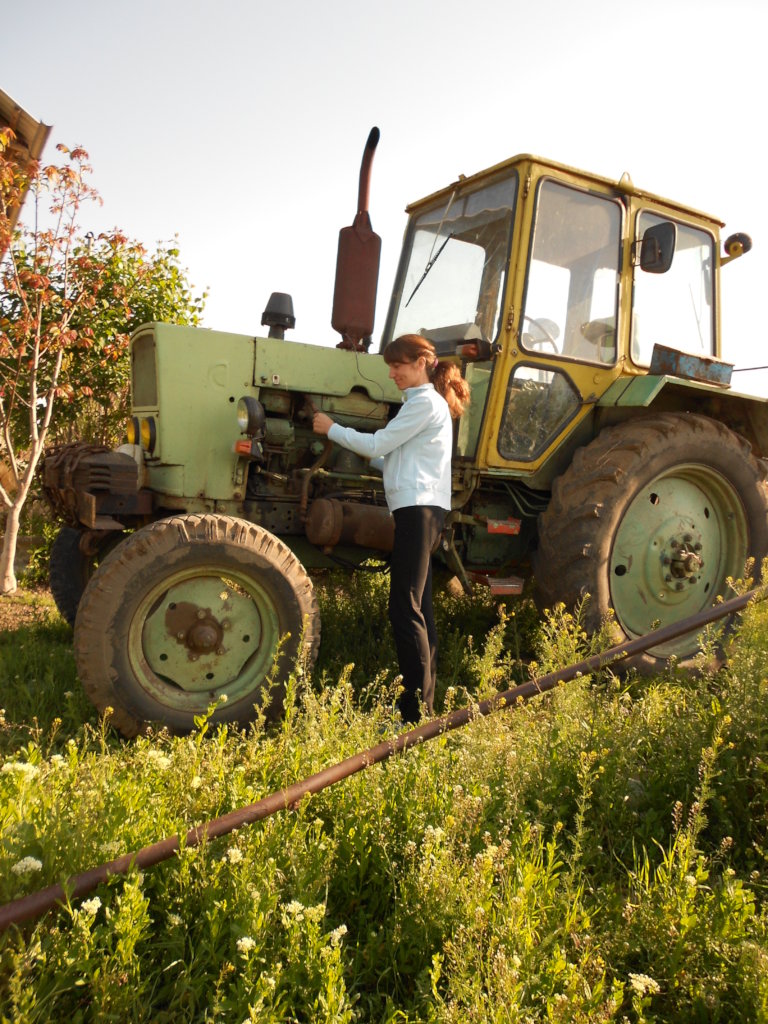
From Texas, USA Tanya Sapurko, the founder of Nut Shell, a Ukrainian architecture and interior design firm, writes: “The sphere of architecture and building isn`t relevant in the active phase of the military conflict and warfare. We are in a pause regime. All our present work in Kiev and Kharkiv has been suspended and projects have been frozen.” Tanya has already experienced restarting her work once as she observes: “Three years after my forced migration from Donetsk to Kiev in 2014, I opened an official business in November 2017, with a master's degree in architecture, experience in similar companies and a ready-made studio name. Nut Shell is a natural, eco-friendly and durable shell.”
With an initial grant (EUR 804) from HERA (2019) for a projector and printer, Tanya organized master classes to teach young women design skills and expanded her client base across Ukraine. With HERA’s second grant (EUR 526) in 2020 for a 3-D printer, she entered the German market during the pandemic and grew her team by 2.5 jobs in the first year and by three, in 2021. In face of the ongoing conflict, Tanya continues to employ five women, mostly based in Kiev. As she observes, “The real challenge for companies [is] to offer people jobs and to support the economy with cash flow. There is an understanding that the whole market is going to change. The market in architecture, design, and many sectors is being completely transformed and rebooted\reset. It is a difficult time, but it pushes you to search, to find solutions, to adapt your business to a new environment."
Tanya envisions four directions for Nut Shell’s work ahead: “(1) fast-creating modular systems for displaced and homeless people; (2) the renovation of houses, spot repairs, budgetary renovations of new buildings just commissioned, and introduction of shelters, following the example of Israel; (3) International projects (Europe, the USA, UAE) will stay popular because of their loyalty to Ukrainians; and (4) demand for repair and construction consultancy services. Fast, low-cost, and professional solutions will be particularly relevant.” As Tanya explains, “I recently came to Texas, US under the 'Uniting for Ukraine' program. I have found several projects abroad, so we are actively exploring new markets in America and Europe. We want to do our work 'today' to be able to contribute to Ukraine's economy 'tomorrow'.”
While supporting our former grantees on the move, HERA will continue to seek and support new women entrepreneurs, with potential to grow their businesses. We will also provide a second grant for those who are creating more employment and training for young women at risk of dangerous migration and trafficking. In face of the current conflicts, HERA’s objective of supporting women entrepreneurs to address dangerous migration and trafficking through economic growth has never been quite so relevant or needed. We plan to stay the course.
(1) We received permission to publish the names, reporting, and photos of the five women profiled here. We very much appreciate the time all five took to share their observations and insights.
Links:
Project reports on GlobalGiving are posted directly to globalgiving.org by Project Leaders as they are completed, generally every 3-4 months. To protect the integrity of these documents, GlobalGiving does not alter them; therefore you may find some language or formatting issues.
If you donate to this project or have donated to this project, you can receive an email when this project posts a report. You can also subscribe for reports without donating.



Support this important cause by creating a personalized fundraising page.
Start a Fundraiser