By Lynellyn D. Long, Ph.D. | Chair of HERA Trustees
In recruiting 36 women for the upcoming Entrepreneurship Training and Mentoring Programme, the HERA team has witnessed some dramatic shifts in the profiles of trafficked women. The most obvious shift is that far fewer Nigerian women (only two registered to date) and many more Albanian women (over a quarter of the class) have registered. The women still come from over 15 countries but this year the majority comes from Central and Eastern Europe versus countries in Africa. The women range in age from 19 – 42; however, most are in their 20s and the average age is 28.9 years. Another significant difference is that almost all are awaiting asylum and cannot yet work in the UK. What is most striking is that almost all have attended and/or hold university and other advanced degrees. Three have attended law courses and one a masters’ in finance. Despite their youth, most have significant work experience already. As our second year, university intern remarked, “these women are far more qualified than I am!”
Given these profiles of young women with significant education, expertise, and experience, what is generating this new demand and how should HERA respond? Some of the shift in demand reflects the UK Government’s focus on working with the Nigerian Government to shut down the trafficking streams, in which domestic slavery predominated, between the two countries. Women trafficked for domestic abuse are usually enslaved as young girls and taken out of school. The Government’s law enforcement effort has changed this official caseload but may also have driven the Nigerian caseload underground. With increased refusals of asylum claims and deportations, young Nigerian women are less likely to enter the Government's National Referral Mechanism through which many women are referred to HERA. With Brexit and rising anti-immigrant sentiment, current trafficking streams receiving official attention may again be from Central and Eastern Europe (as we saw in HERA’s early years). Another potential impact of Brexit may be an increase in irregular migration and trafficking (Human Trafficking Foundation, Spring 2017). Prior to Brexit, many women from that region could potentially enter legally through one of the EC countries. The impact of increased irregular migration is that traffickers gain more control over the migrants.
To respond to the new demand, the HERA team is increasing the academic rigor and intensity of this summer's entrepreneurship training at Imperial Business School. This year’s training, which will be held from 3-21 July, will provide sessions on Finance at a higher level than in the past. We will hold three intensive sessions on finance taught by a Cranfield professor, a former Imperial MBA Director, an MBA, and an entrepreneur. Another change is that in recruiting women for the programme, we have asked all to consider different career options no matter where they eventually land. Since some may return to their home countries, we also hope to find ways to support safe and productive returns. Finally, a major change in this year’s curriculum is that we are asking all women to work on developing a group venture so that they gain experience in team work. Given lengthy asylum waits, many women may not be able to embark on their own careers immediately and should not feel discouraged in the process.
This summer’s programme also includes several interesting field trips, including our traditional afternoon at Burough Market to analyse the vendors’ businesses, supply chains and marketing strategies. The women will attend a half day at Salesforce in Heron Tower in the City to learn about work and careers. Toward the end of the course, the women will visit a fashion factory in London that is a social enterprise. During their lunch hours, they will be encouraged to visit the annual Saatchi Gallery summer pavilion and explore Hyde Park and the nearby museums.
As in the past, we have recruited a very able, professional group of mentors both women and men. The 32+ mentors will attend three training sessions in late June and early July. They will then be matched according to common professional interests with their mentees who they meet on July 12th at Imperial Business School. In our interviews with this year’s class of women, we asked each one about having a mentor. In most cases, the mentoring experience, which continues over a year’s time, remains one of the main draws to HERA’s programme.
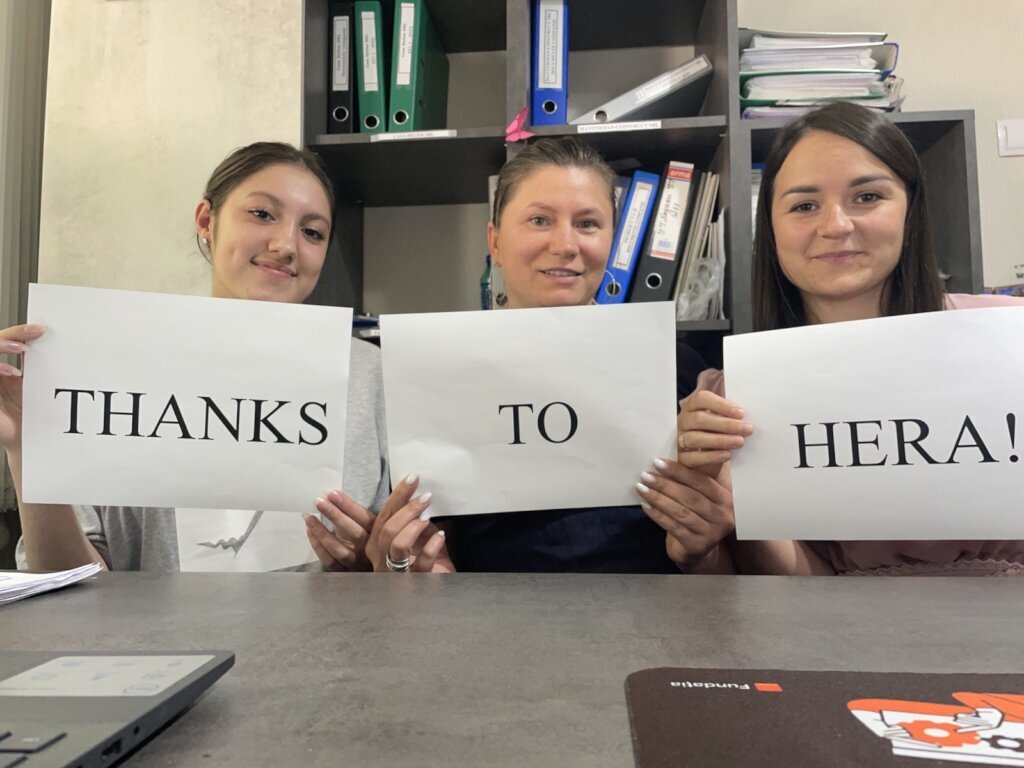
The recruitment for this year’s programme has been easier in the past because after ten years in London, HERA’s work is widely known amongst our partner charities. Over 12 charities and an NHS Trust have referred women to this year’s programme. Many counselors actively helped in identifying and supporting the women’s applications. We especially want to thank Medaille and PanArts, for their active support and engagement as well as all the counsellors, who best understand when women may benefit from this course. All have made excellent referrals this year.
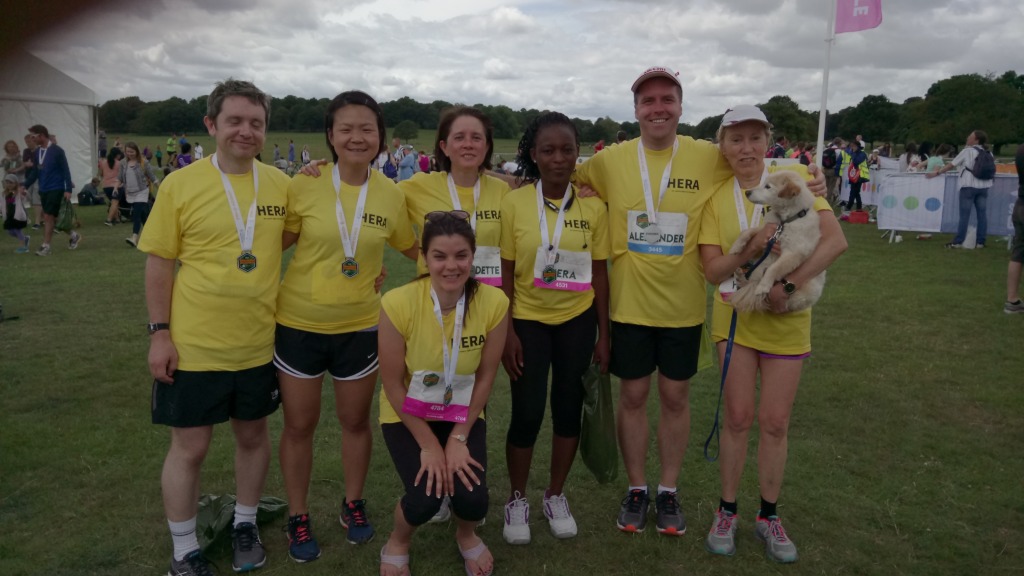
To help fund this summer’s programme, many of our sponsors generously supported the London 10 Mile Charity Run that nine members of the HERA Community ran in early June in Richmond Park. Our running team included mentors, organisers, trustee, former student, two new volunteers, and a spouse. We were cheered on by two HERA organisers. Every team member finished the race and we raised over GBP 2000 for this event. Many, many thanks to all our supporters!
In addition to working to prevent re-trafficking and reintegrate survivors in the UK, HERA’s international Grants programme has released its 8th International Grants Competition for Central and Eastern Europe. With these grants, we provide support to women-owned ventures to increase vulnerable, young women’s training and employment to prevent trafficking in that region. In June, HERA France also completed its first pilot entrepreneurship training programme for eight survivors in Paris. The HERA Coordinator also matched six of the students with mentors. Written feedback from those who completed the mentoring was that the “mentoring was very useful”, they received “good practical information” and they “appreciated the monthly meetings that the Coordinator organised.” As one mentee wrote, “they helped us keep a structure for the development of our projects.”
Given difficult and uncertain times, HERA is fortunate to organise our 10th Year in London with Imperial Business School and 17th Entrepreneurship training worldwide. We depend entirely on private support. Thank you for helping to sustain and grow HERA’s work to prevent trafficking and retrafficking of women through entrepreneurship and good business alternatives. Recently one of our referral clinical psychologists wrote, “Terrible times. Thank heavens for HERA to remind us all what hope feels like before we forget!”
Project reports on GlobalGiving are posted directly to globalgiving.org by Project Leaders as they are completed, generally every 3-4 months. To protect the integrity of these documents, GlobalGiving does not alter them; therefore you may find some language or formatting issues.
If you donate to this project or have donated to this project, you can receive an email when this project posts a report. You can also subscribe for reports without donating.



Support this important cause by creating a personalized fundraising page.
Start a Fundraiser