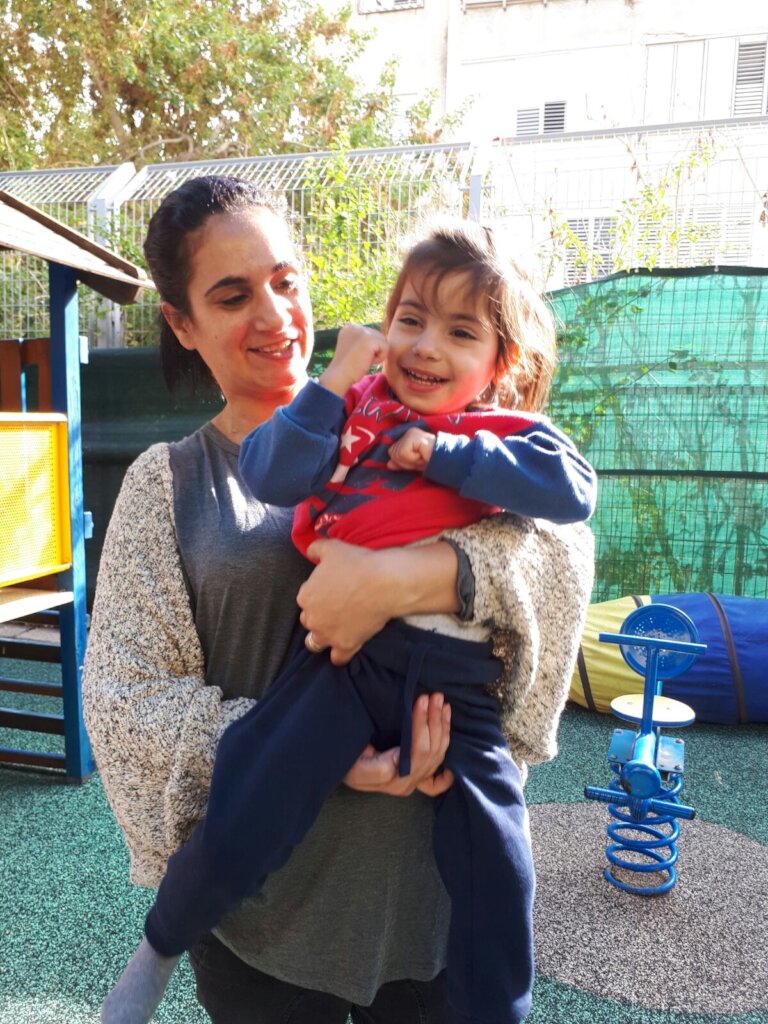
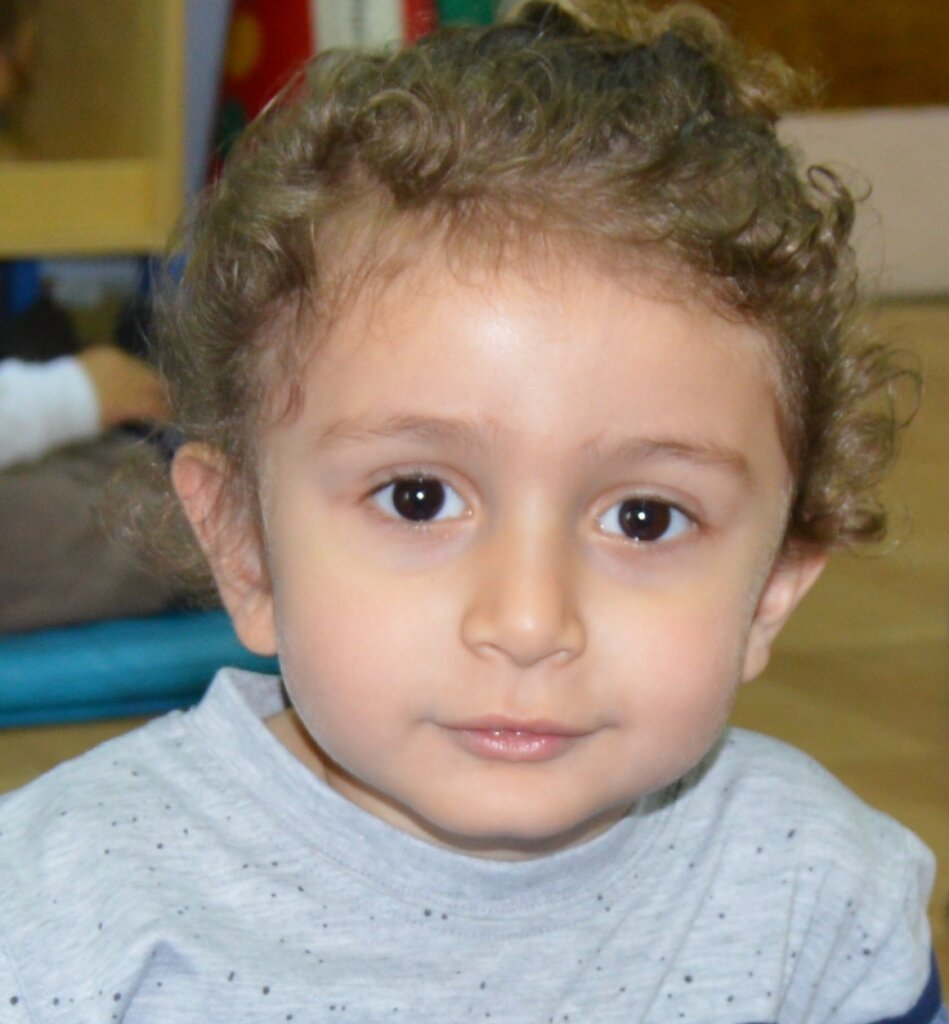
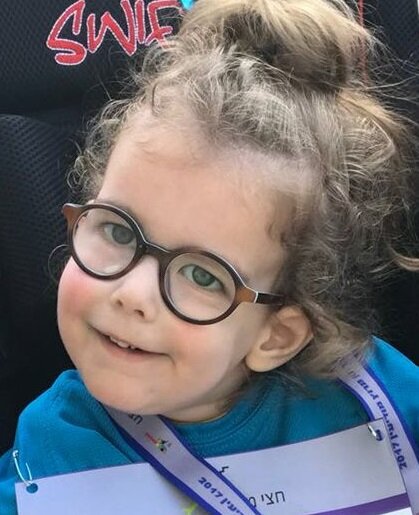
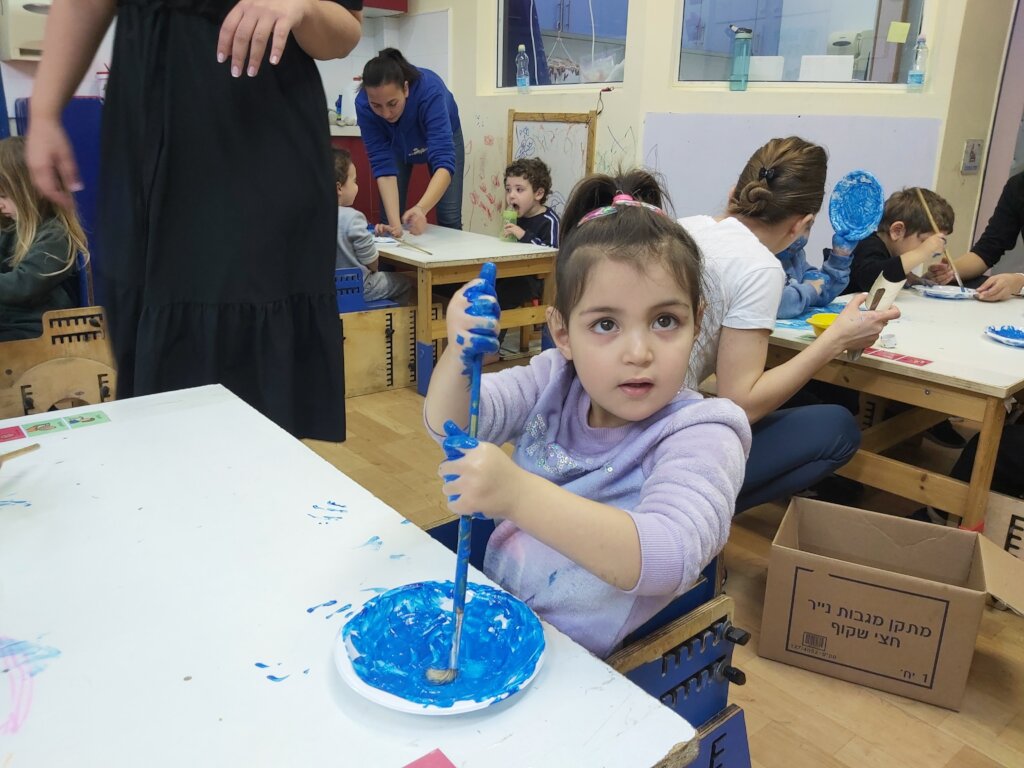
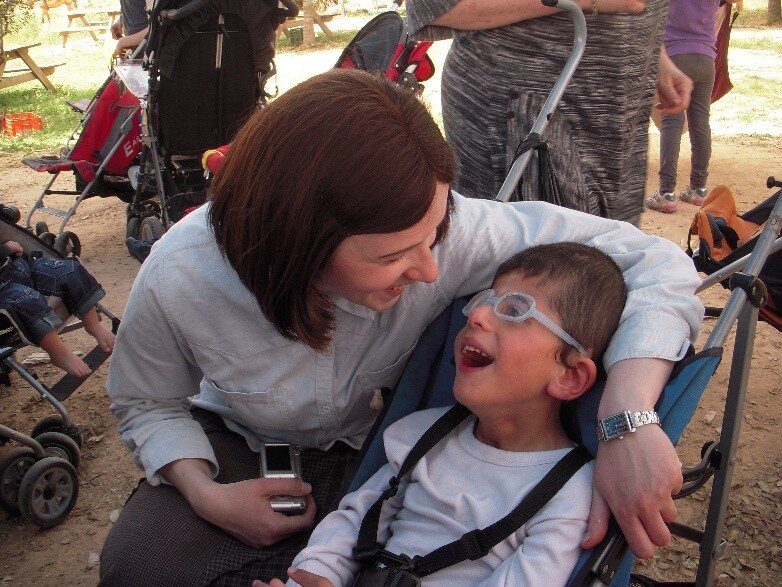
Recognizing that lasting protection requires strengthening families rather than separating children from their homes, Chimes Israel created the Families in Growth program. The program sends multidisciplinary professional teams into the homes of preschool children who receive therapy at our early childhood centers.
Professionals model effective caregiving strategies and coach parents as they practice the skills themselves. Parents learn how to recognize early signs of distress, manage sensory and emotional overload, set clear boundaries, and establish predictable routines that support their child’s development.
The program focuses on the daily situations that shape family life, including meals, play, communication, transitions, bedtime, and moments of emotional distress. Across participating families, parents report renewed confidence, reduced stress, and a stronger belief that they can care for their children without reaching a crisis point.
The most recent cycle of the program launched in Holon, where many participating families were new immigrants and refugees facing language barriers and challenging living conditions. Home visits proved especially important in helping parents adapt caregiving techniques to meet their child’s specific needs. Staff documented meaningful changes that continued long after the formal program ended, as families integrated new parenting approaches into daily life.
Below are several brief stories illustrating the program’s impact. (Names and identifying details have been changed to protect privacy.)
Finding Calm and a Voice
Amy is a two-year-old whose developmental disability made everyday transitions extremely difficult. Through in-home coaching, her parents learned to prepare her for changes, set consistent boundaries without physical punishment, and guide her through routines using structure and verbal support. Over time, Amy’s distress during transitions decreased and she began communicating more consistently through words and gestures.
Creating Safety Through Structure
Ari, age two, lives with his family in a crowded apartment near a noisy intersection. Sensory overload and frequent rocket sirens during the war made it difficult for him to regulate his behavior. With guidance from Families in Growth professionals, his parents introduced simple routines, reduced background stimulation where possible, and created visual cues that helped Ari anticipate changes, leading to calmer daily functioning.
Growing Through Play
Adi and Lev are one-year-old twins with developmental delays affecting balance and attention. Families in Growth professionals coached their parents on how to use play as a gradual learning process rather than a performance task. As a result, the twins began engaging in longer periods of play, improving coordination and communication during interaction.
Reclaiming Life after Medical Trauma and War
Tommy, age two and a half, spent much of his early life in hospitals due to kidney failure. When the war disrupted medical access and medication supplies, Chimes Israel helped secure lifesaving medication, assisted the family with relocation during power outages affecting dialysis, and provided in-home support during recovery from a kidney transplant. Today, Tommy is stable and attends a mainstream preschool.
Restoring Connection and Preventing Family Breakdown
Arnon is a one-year-old with a developmental disability whose father initially struggled to accept the diagnosis and withdrew from caregiving. Through Families in Growth home visits, staff guided the father in simple ways to reconnect with his son through conversation, play, and daily interaction. Over time, his involvement increased, strengthening the parent-child bond and restoring balance within the family.
Support Families in Growth
The Families in Growth program has proven that when parents receive practical guidance and support inside their homes, families become stronger, children make greater progress, and crises can often be prevented. Our goal is to expand this program so that every family in our early childhood centers can receive this level of support. Raising a child with disabilities is demanding under any circumstances, and the added pressures of war, financial strain, and daily uncertainty make this guidance even more essential.
With your help, we can continue providing in-home coaching, professional guidance, and emotional support to families who need it most. Your support allows us not only to sustain this life-changing program, but also to expand it so more parents gain the tools and confidence to care for their children safely at home. Thank you for standing with these families and helping them build stable, hopeful futures.