By Deutsches Rotes Kreuz e.V. | Team Corporate Partnerships
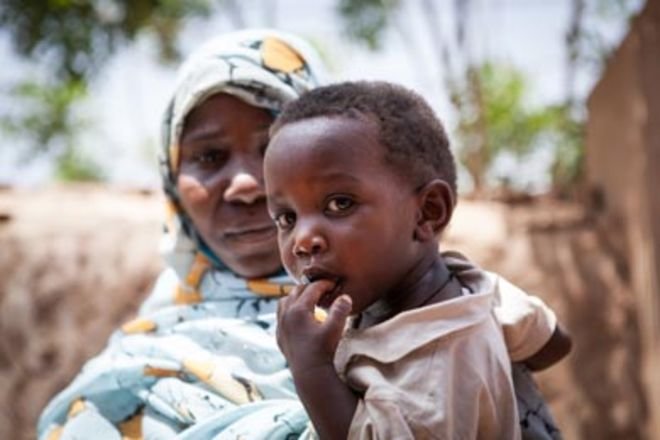
After natural disasters people in the affected regions are often left with nothing. Earthquakes, flooding or storms quickly destroy whole regions and livelihoods. In the event of armed conflicts, the civil population suffers above all from violence and lack of food and medical care. In such dramatic events, every minute counts. That is why the emergency relief of the German Red Cross runs like a clockwork: Immediate aid and emergency relief try to mitigate the consequences of the crises.
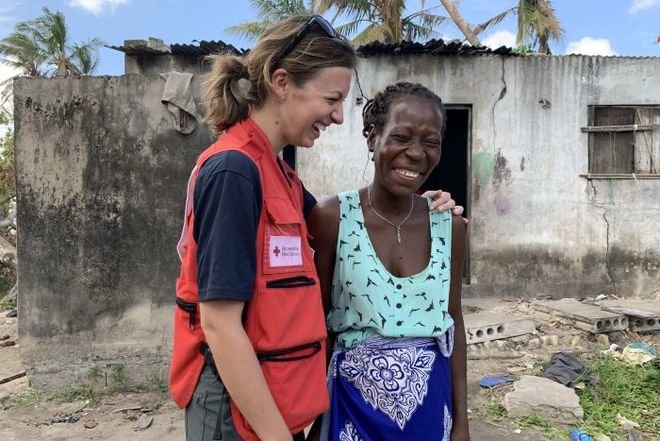
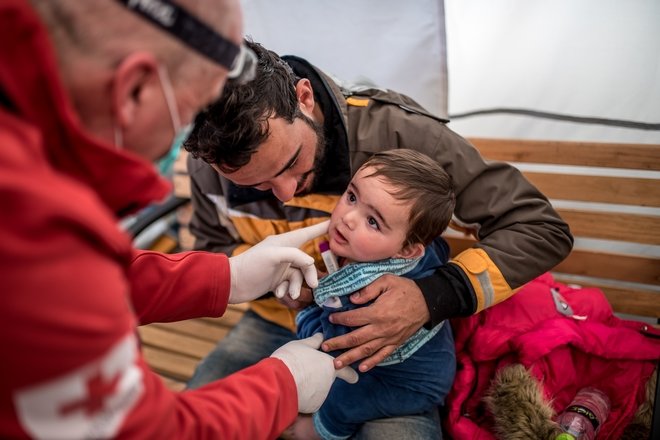
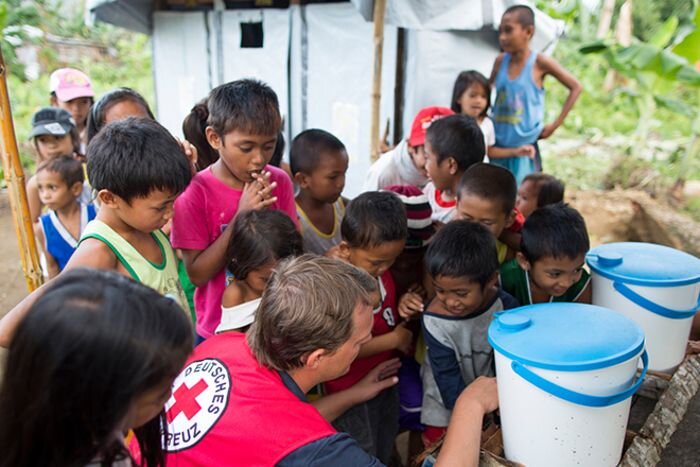
The German Red Cross brings aid to the injured, to refugees and displanced persons and the sick, provides medicine, water and food or supports the building of shelters, usually via the local sister Red Cross or Red Crescent society. We also support them in establishing their own structures for the management of volunteers.
Relief supplies on site and in stock
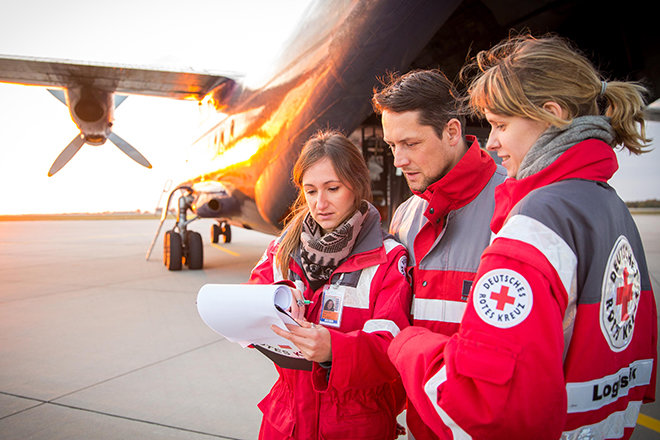
If possible, relief supplies like food, tarpaulins and clothing are locally procured and transported to the crisis region on the shortest and quickest way. Alternatively relief supplies for 300,000 people are available in the logistics centres of the International Federation of Red Cross and Red Crescent Societies in Kuala Lumpur, Panama and Dubai. Relief supplies from Germany are usually flown-in only if the capacities of these international logistics centres are not sufficient.Above all, relief flights from Germany will start if the basic needs of the affected population shall be secured and if relief can only be brought into the country from outside, primarily in the case of large-scale disasters.
This starts with clean water and basic medical care. Therefore the German Red Cross provides three different types of Emergency Response Units in its logistics centre in Berlin: The mobile Red Cross hospital, the mobile health care unit and water- and hygiene units.The emergency relief units, tents and hygiene packets are stored in the logistics centre and are delivered on request. Relief supplies with an expiry date such as food and medicine are bought within the shortest period of time. For this purpose the German Red Cross has concluded framework agreements with numerous suppliers in advance. In the case of an emergency, the suppliers will deliver the relief items immediately.
The modular system—flexible and fast emergency relief
In an emergency the German Red Cross can react quickly and flexibly with its emergency response units. These mobile modules are deployed for the supply of a large number of affected people and in the first few days help to create the most important prerequisites for efficient humanitarian aid. Flexibility, speed and need-orientation are the skills that are required in a disaster situation.The German Red Cross has therefore developed together with other national societies a unique modular system for worldwide disaster relief. The various modules can be adapted to the situation and to the specific needs in the disaster region.The German Red Cross keeps three different emergency response units available for this purpose: the mobile Red Cross hospital, the mobile health care unit and the mobile DWS units for drinking water supply and disease prevention.
In addition, basic technical equipment, emergency vehicles and tents are kept available for the Red Cross aid workers.
These mobile units have proved themselves in practice in disaster relief operations. They are designed for deployments of between three to four months in crisis areas, during the first two weeks of which the team is completely self-sufficient. In addition the units can be operated self-sufficiently in terms of energy by using their own power generators. Even the packing material of the units is part of the utilisation plan—it is used to construct tables and shelves.The modules are compliant with international standards. Handling is simplified to enable disaster response staff and volnteers from different countries to work together. These Emergency Response Units (ERUs) are known by this name internationally and they have often proved themselves in practice to be a well-conceived system of the International Red Cross and Red Crescent Movement.
Project reports on GlobalGiving are posted directly to globalgiving.org by Project Leaders as they are completed, generally every 3-4 months. To protect the integrity of these documents, GlobalGiving does not alter them; therefore you may find some language or formatting issues.
If you donate to this project or have donated to this project, you can receive an email when this project posts a report. You can also subscribe for reports without donating.



Support this important cause by creating a personalized fundraising page.
Start a Fundraiser