By Martha Huntley | Partnerships Manager
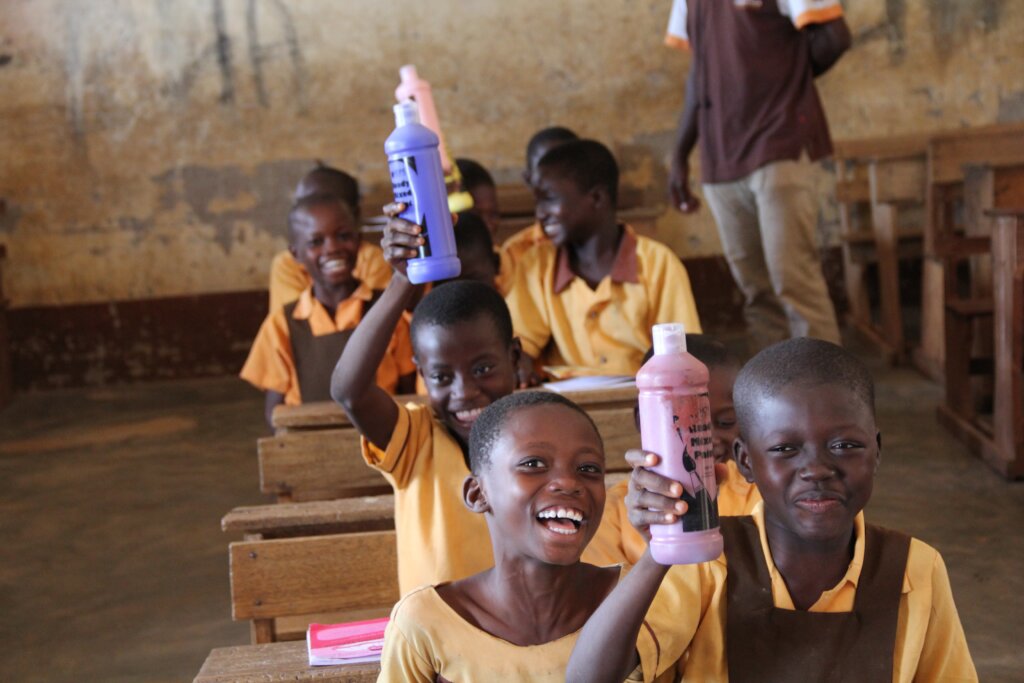
We would like to thank each and every one of our supporters through GlobalGiving for your commitment and investment in transforming children's lives in northern Ghana with AfriKids this year.
2023 was a year that bought unimaginable sadness, fear and economic turmoil, felt by so many families across the world. We hope we will never see another year like it.
It was also the year that the world developed a new malaria vaccine that can be produced at mass scale, providing a ray of hope for Africa where 95% of malaria cases around the world are suffered. In fact, this new vaccine was first approved by Ghana. With inflation at 40% in the country driven by price rises in food, fuel, and fertiliser, the World Bank revealed in June that the cost-of-living crisis is estimated to have pushed 850,000 Ghanaian’s into poverty, joining the six million people already living on less than a dollar a day. An affordable vaccine against malaria - their biggest killer - could dramatically change life in Ghana.
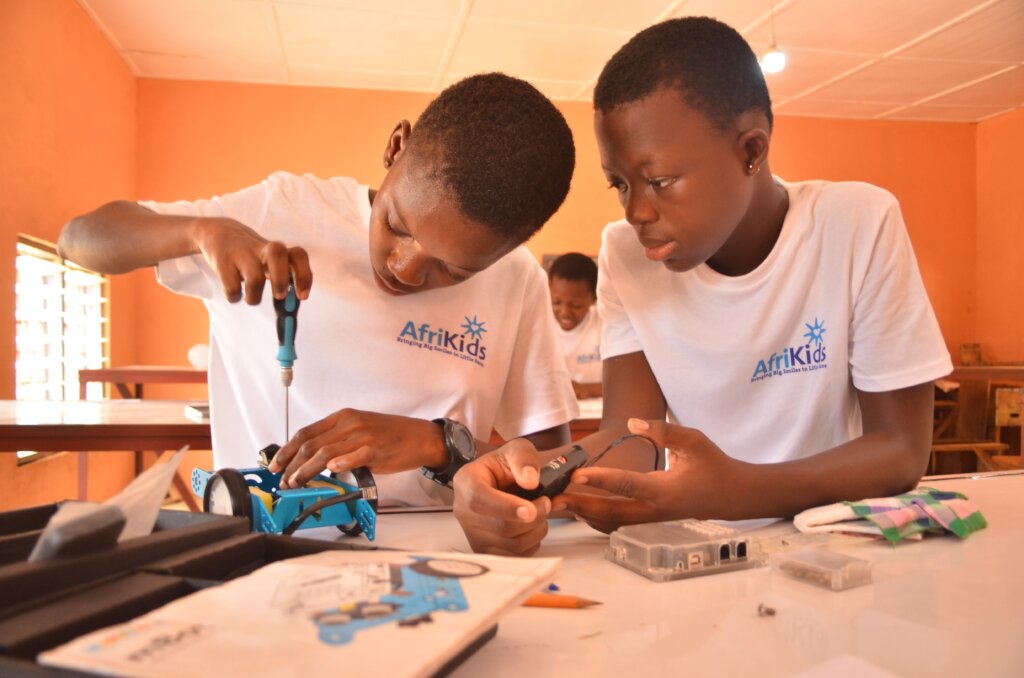
And let’s not forget, it was the year that Google turned fabulously pink and Barbie sparked global conversations on female empowerment and equality for all, a message resonating loud and proud with space scientist Dr Maggie Aderin-Pocock who worked with AfriKids to give girls in northern Ghana the chance to be the world’s next scientists.
The difference you’ve made
Your donation was so important for us and the thousands of families we supported in 2023. It supported us to reach 78,190 children and community members across northern Ghana throughout the year, including:
The context
Your funding came at a critical time - not only to increase AfriKids’ footprint in northern Ghana but to be there for families at a time when the World Bank estimated that 850,000 Ghanaians were pushed into poverty as a result of the cost-of-living crisis. Many of these families are living in the more marginalised northern regions of Ghana where your funds ensured that the crisis did not affect the chances of children being healthy, safe and in school. Further challenges of climate change and local conflict this year also threatened children’s safety and futures, particularly as 70% of families in the region rely on subsistence farming for their income and to feed their families and your partnership enabled us to help them adapt and mitigate these challenges.
Your impact
Our focus this past year was on expanding AfriKids in three new districts (60 communities) of northern Ghana: Builsa South, Binduri and Mamprugu-Moagduri. We looked at the multiple barriers facing children, in particular the most vulnerable such as girls, children with special needs and children living in extreme poverty. We used our proven three-tiered holistic approach to tackle these barriers at their root: 1. Provide means, 2. Build motive, 3. Create opportunity – all the while keeping the AfriKids’ philosophy of listening to local communities and empowering them to make sustainable changes very much at the heart of our theory of change. Here are some of the highlights of how your funds were used to transform children’s lives:
PROVIDE MEANS
BUILD MOTIVE
CREATE OPPORTUNITY
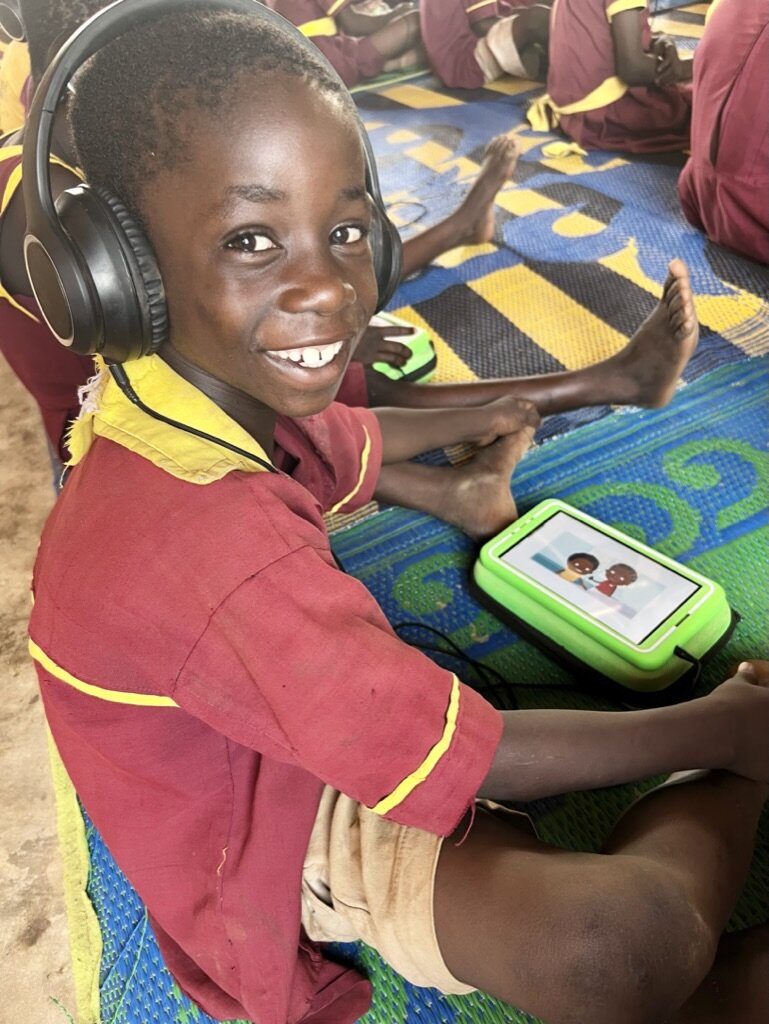
Looking ahead, we are using lessons from our work last year in the new districts to inform and refine our model to focus on the most high-impact, sustainable solutions. Going forward, we see more emphasis on ensuring that children are learning as the best investment to break the cycle of poverty, as well as using our position as the leading NGO for children in the region to influence policy changes that can make transformational change for all children across Ghana. As we’re testing our model in new environments, thanks to your support, we are growing the evidence of what works and what doesn’t work, which will be a powerful tool to build support for change. We also know the importance of collaboration to deliver solutions at scale and we’re excited to grow our partnerships with the likes of UNICEF, WaterAid, USAID as well as local governments and leaders in 2024.
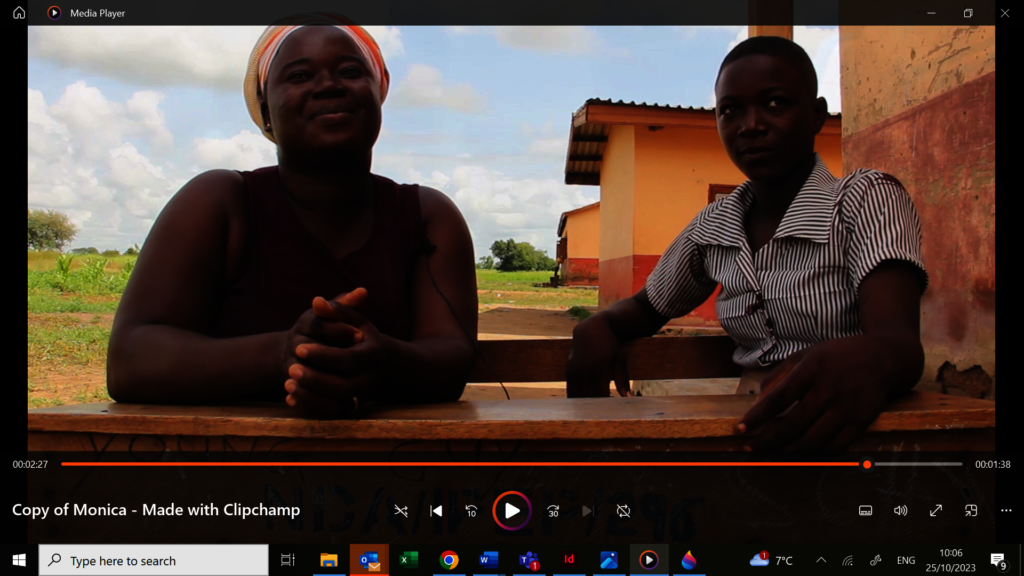
Monica's story
Last year, Barbie took over our screens championing the message that women can achieve anything. Each day, strong women across the world defy gender constraints and prove this in their communities. AfriKids is working with the next generation of girls in northern Ghana to fearlessly pursue their dreams and break barriers. One of these girls is Monica.
Last year Monica, pictured below, was abducted for forced marriage. She is 14 years old.
She was taken with her friend, Erica, from their village in Mamprugu-Moagduri, one of AfriKids’ three new districts. Earlier in the year, AfriKids launched a Child Rights Club* in Monica’s school and her and Erica were two of our first members. Through activities such as drama, dance and quizzes, they accessed stigma-free learning about the dangers of forced marriage and young pregnancy, and how to protect themselves from gender-based violence.
Forced marriage often increases when the cost-of-living rises, when families have to make unimaginable decisions to survive. Education and community awareness are essential for protecting girls during these times. After all, children whose mothers have no education are 15 times more likely to be married before their 15th birthday. Yet, today 1 in 3 girls are not in school.
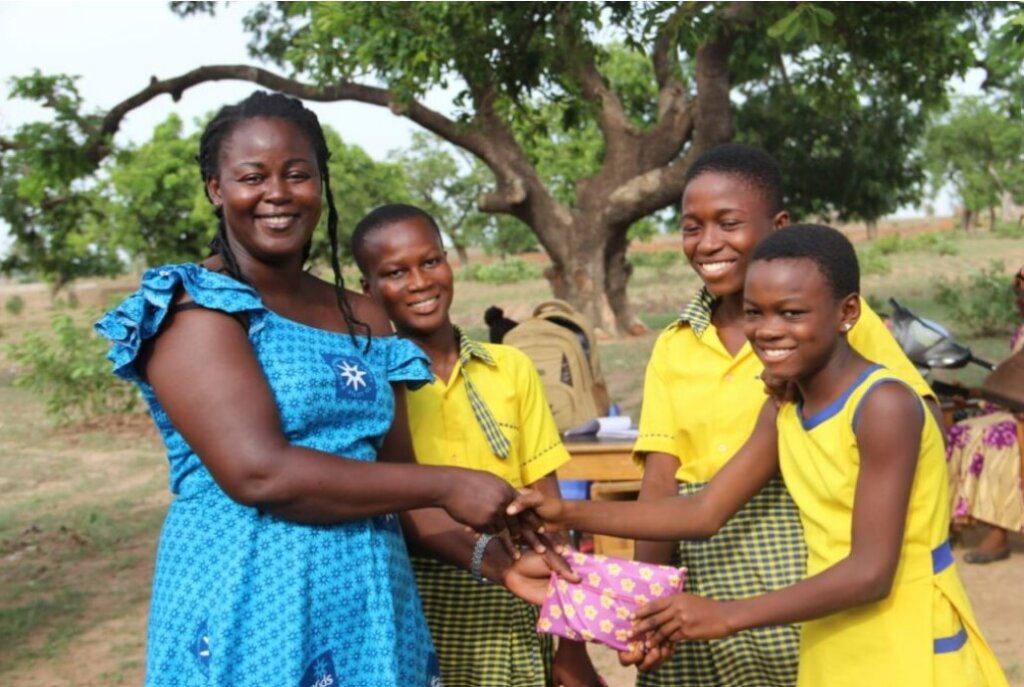
Monica’s abductors took her and Erica to another village but on the journey Erica managed to escape. Having got away, she ran straight to her AfriKids Child Rights Clubs to get help. As a group, the Club members marched to the Chief, the most influential figure in their community, for his support. After two days in the abductor’s home, Monica was rescued with AfriKids’ help. She is now back with her family going through counselling and back in school with Erica. We’re continuing to support her - and hundreds of other vulnerable girls like her - with uniforms, schoolbooks and food packages to help them stay in school. We are also giving them reusable sanitary pads free of charge as these items have been classified as luxury goods and incurred huge taxes this year, making them unaffordable for many girls and resulting in missed school days.
Having settled back into school, Monica tells us that she wants to be Police Officer, saying “I want to fight for justice for girls like me”.
Children seen and heard to be standing up for their rights is a powerful sign of change. As a result of our Child Rights clubs, there was a 90% increase in girls’ enrolment in primary school.
M'pusiah - Thank you
We’re really excited about our plans for the coming year and hope that you will continue to join us to bring even more smiles to little faces.
Sincerest thanks and big smiles from everyone at AfriKids.
Project reports on GlobalGiving are posted directly to globalgiving.org by Project Leaders as they are completed, generally every 3-4 months. To protect the integrity of these documents, GlobalGiving does not alter them; therefore you may find some language or formatting issues.
If you donate to this project or have donated to this project, you can receive an email when this project posts a report. You can also subscribe for reports without donating.



Support this important cause by creating a personalized fundraising page.
Start a Fundraiser