By Sultan Ahmed | Project Lead
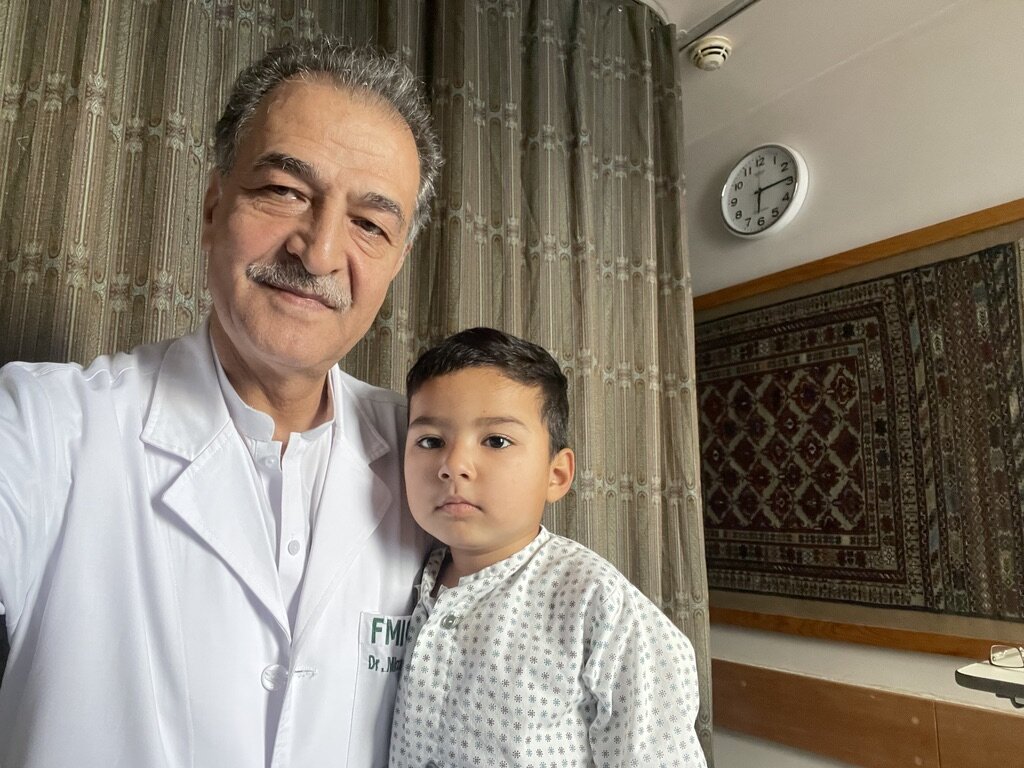
For four-year-old Zahidullah from Paktika Province, walking had become impossible.
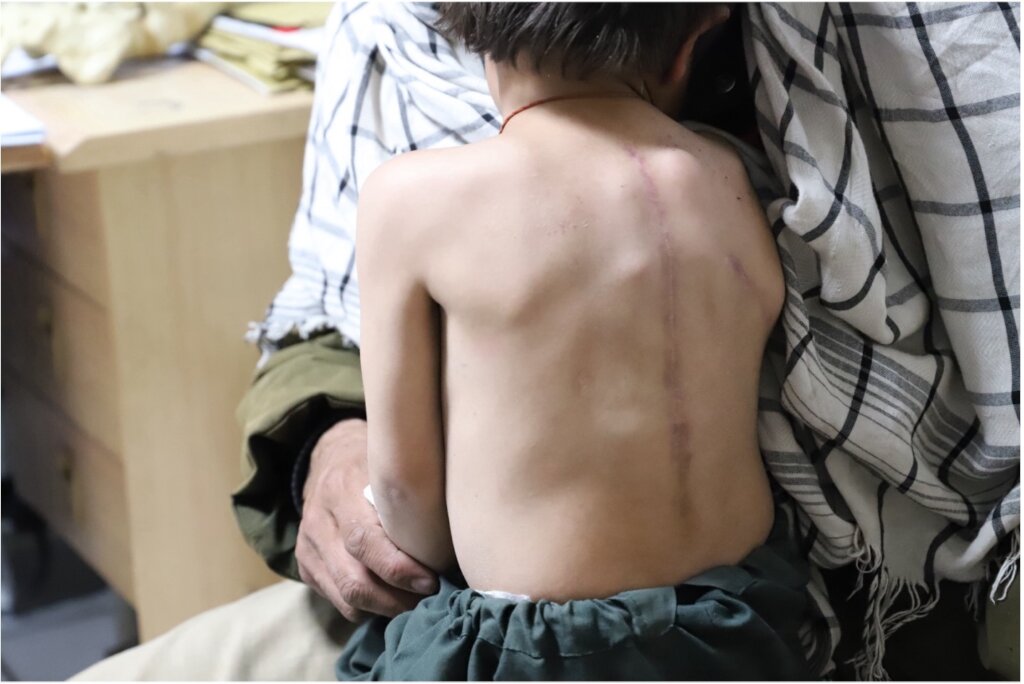
For nearly a year, he had suffered from a progressively worsening deformity of his back. His condition gradually became more severe, eventually leaving him unable to move either of his lower limbs. His family sought help from several healthcare facilities, but despite their efforts, his condition continued to deteriorate.
A Critical Diagnosis
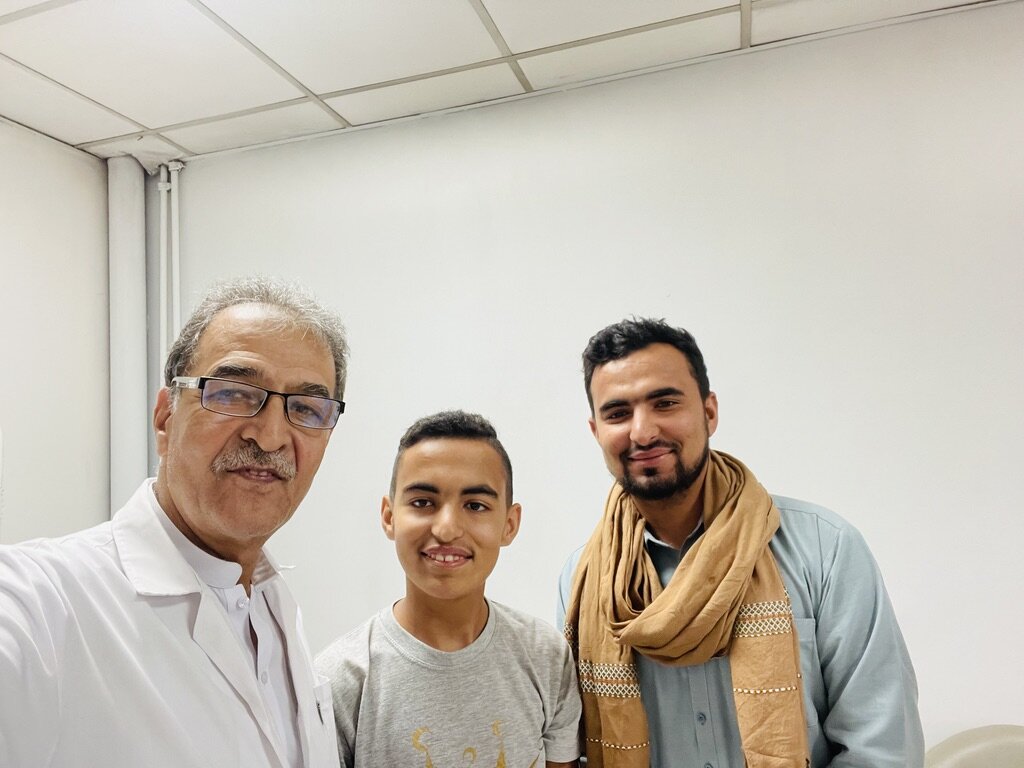
When Zahidullah arrived at the French Medical Institute for Mothers and Children (FMIC), he underwent a comprehensive clinical assessment and advanced diagnostic investigations under the care of Dr. Mirza Mohammad Nijrabi, Head of the Orthopedic Department.
CT and MRI scans revealed extensive destruction of six consecutive vertebrae, from D7 to D12, caused by previously undiagnosed spinal tuberculosis. The infection had resulted in a severe kyphotic deformity of the thoracic spine and significant neurological impairment affecting the child's ability to move his legs.
For Zahidullah and his family, the diagnosis explained the severity of his condition—but it also opened a path toward treatment.
A Complex Surgical Journey
Given the extent of the spinal damage and the severity of the deformity, the medical team developed a carefully planned two-stage surgical approach.
The first procedure focused on stabilizing the spine through instrumentation and posterior fixation. This was followed by a second surgery involving thoracotomy and anterior bone grafting to provide additional support and stability to the damaged spinal column.
Both procedures were successfully completed through careful planning and coordinated teamwork among the surgical and clinical teams at FMIC.
From Immobility to Independence
Following surgery, Zahidullah began to show gradual and encouraging improvement.
Movement slowly returned to his lower limbs, while the severe spinal deformity was significantly corrected. After being discharged in stable condition, he continued to receive follow-up care.
Over time, his progress became increasingly evident. At follow-up, Zahidullah was able to stand and walk independently, and clinical examination confirmed recovery of strength in both lower limbs.
For a child who had once been unable to move his legs, these first steps represented far more than physical recovery. They marked a return to independence, childhood activity, and hope.
Care When Financial Barriers Stand in the Way
While FMIC has not yet received any support through GlobalGiving specifically for the Heal Spines, Heal Futures in Afghanistan project, the hospital continued to provide assistance to patients with urgent and complex medical needs who faced financial hardship.
FMIC is committed to ensuring that financial circumstances do not become the reason a patient in critical need is left without appropriate care. This commitment is made possible, in part, through the generosity of FMIC's supporters, partners, and philanthropic donors, whose contributions enable the hospital to extend critical financial assistance to vulnerable patients when they need it most.
Zahidullah was one of the children who benefited from this support. Given his family's financial circumstances and the complexity of his treatment, he received partial financial assistance toward his care at FMIC, helping his family access the treatment he urgently needed.
His story illustrates why sustained philanthropic support matters. Behind every contribution is the possibility of helping a child receive timely, specialized care that might otherwise remain beyond the reach of their family.
Restoring More Than Mobility
Zahidullah's journey demonstrates what access to specialized medical care can mean for children facing complex and potentially disabling conditions in Afghanistan.
For his father and family, seeing him stand and walk again was a moment of profound relief and gratitude. His recovery also reflects the importance of maintaining access to specialized spinal care and ensuring that financial hardship does not prevent vulnerable children from receiving treatment.
Through its orthopedic and surgical services, FMIC continues to provide complex care to children and families from across Afghanistan.
Zahidullah's recovery is a reminder that restoring mobility can mean restoring much more: the ability to move, to play, to learn, to participate, and to imagine a future with greater independence.
With continued support from partners, donors, and GlobalGiving supporters, more children facing complex spinal conditions can have the opportunity to receive the care they need—and take their own steps toward recovery and a healthier future.
Links:
Project reports on GlobalGiving are posted directly to globalgiving.org by Project Leaders as they are completed, generally every 3-4 months. To protect the integrity of these documents, GlobalGiving does not alter them; therefore you may find some language or formatting issues.
If you donate to this project or have donated to this project, you can receive an email when this project posts a report. You can also subscribe for reports without donating.



Support this important cause by creating a personalized fundraising page.
Start a Fundraiser