By Laura Soucy | Annual Giving Coordinator
We are so grateful for your support of Partners In Health and our work to prevent and treat cholera in Haiti. We are pleased to share a brief update around some of the current successes and challenges that our colleagues are seeing on the ground in Haiti.
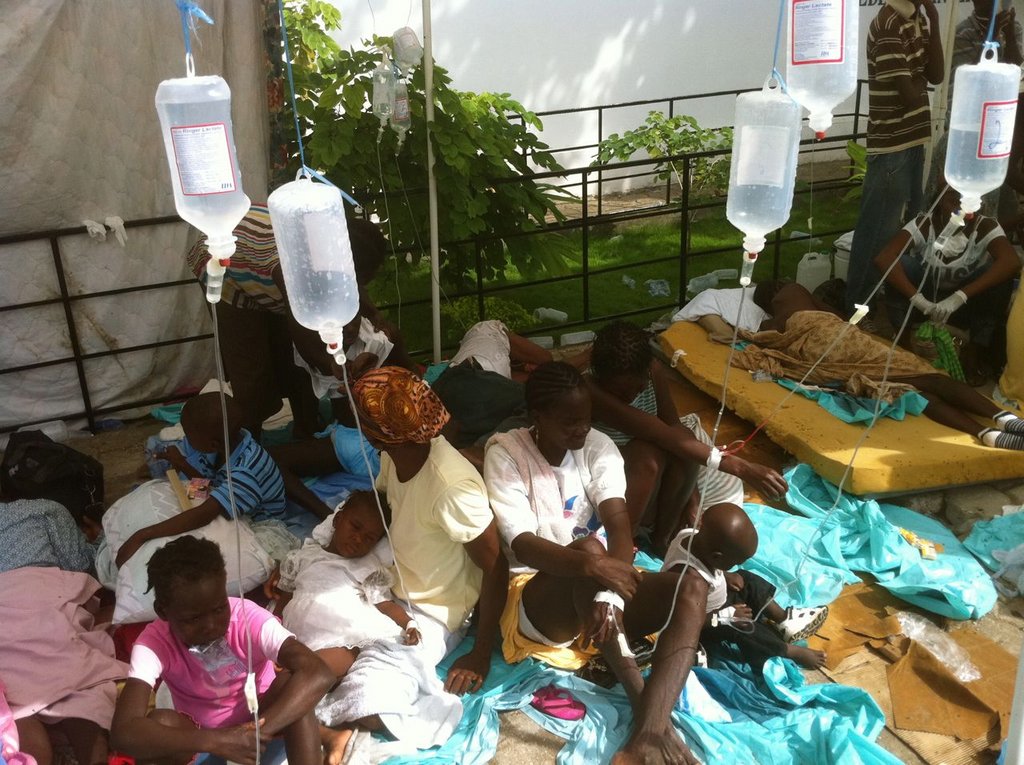
Since January, the number of cholera cases and fatalities have decreased across PIH's 11 facilities in Haiti, but the epidemic continues to sicken thousands across the country, hitting the most vulnerable populations the hardest--like malnourished children who have low immunity. With rainy season quickly approaching, the need for basic treatment and prevention tools has never been greater.
Below is an excerpt from a New York Times article authored by Randal C. Archibold and Somini Sengupta, discussing the current situation in Haiti, and citing examples of how PIH's approach is working:
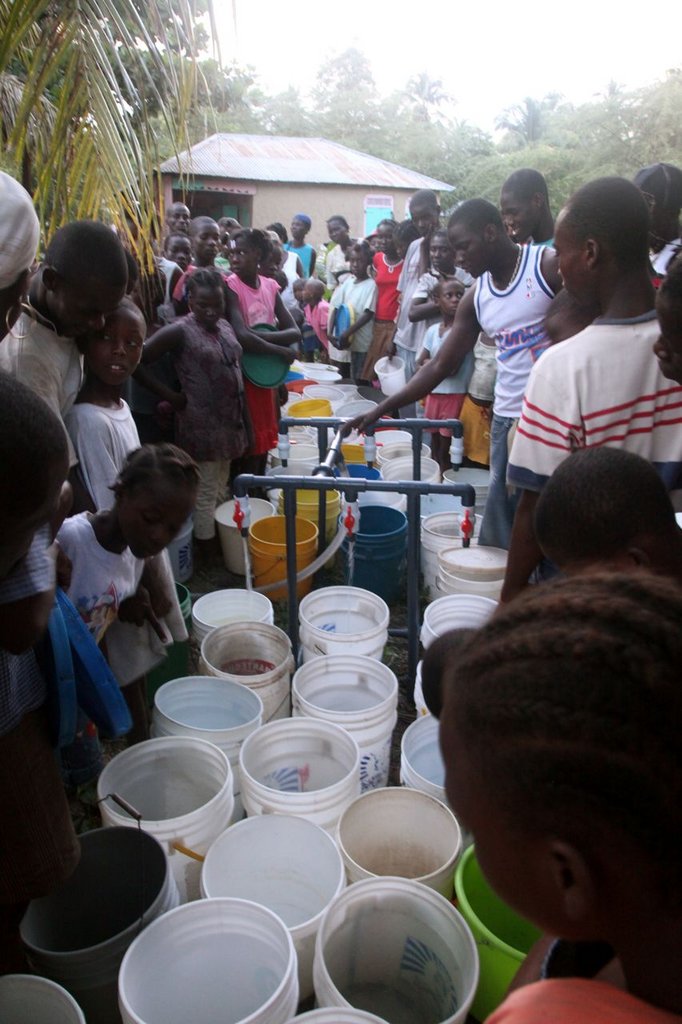
The United Nations raised barely a fourth of the $38 million it needed last year to provide lifesaving supplies, including the most basic, like water purification tablets. Clinics have run short of oral rehydration salts to treat the debilitating diarrhea that accompanies the disease. Some treatment centers in the countryside have shut down as the aid groups that ran them have moved on to other crises. And a growing share of patients are dying after they finally reach hospitals, according to the United Nations’ own assessments.
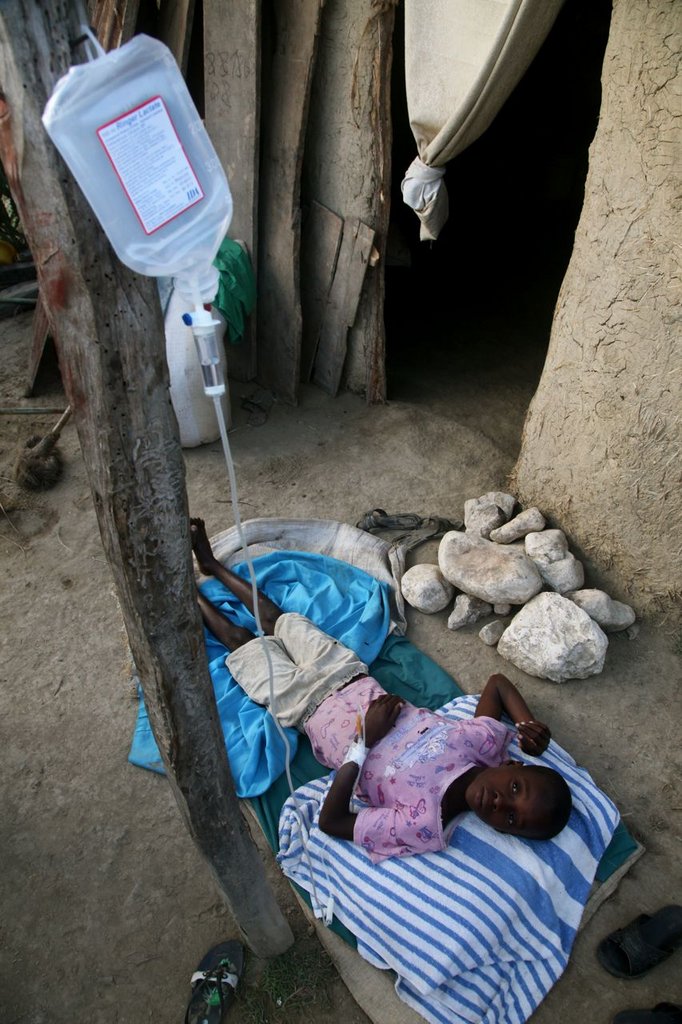
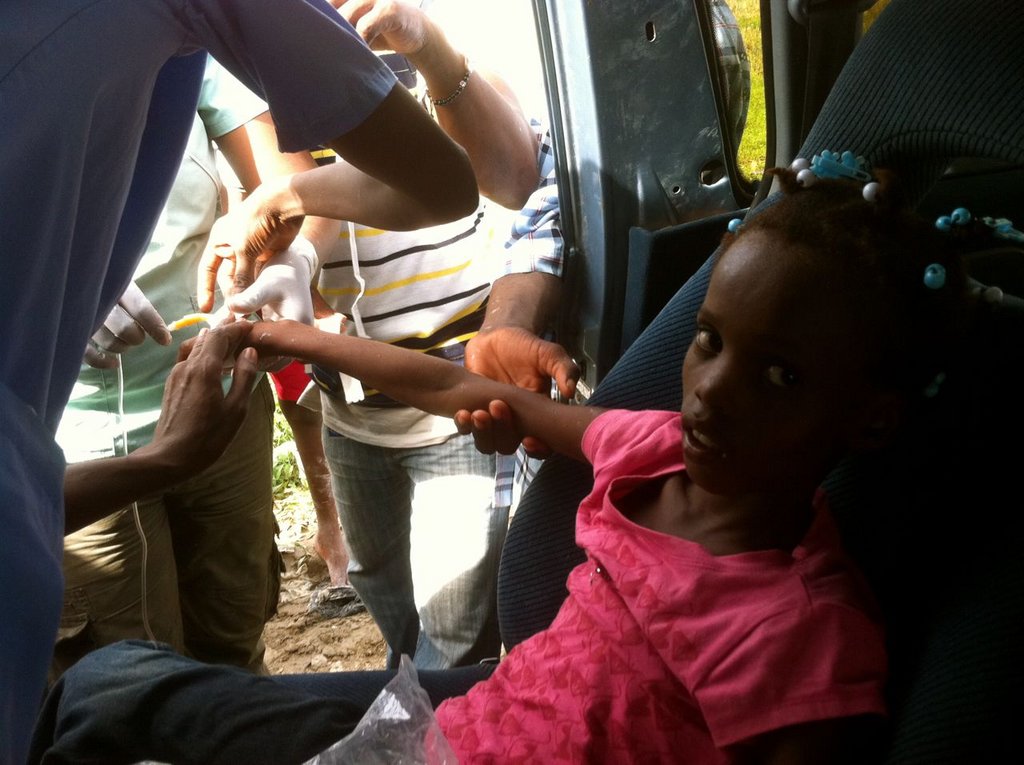
Josilia Fils-Aime, 11, who lives in this village on an isolated spit of land near the Artibonite River, where the epidemic first began, knows these shortcomings all too well. Her family had run out of water purification tablets, and she drank water from what must have been a polluted stream nearby.
“I felt dizzy and sick,” the girl said. She was struck by sudden vomiting and diarrhea. Doctors diagnosed cholera.
Her predicament has multiplied across Haiti, which has had the most cholera cases in the world for three years in a row.
The United Nations has yet to raise the $5 million necessary to vaccinate 600,000 vulnerable people right away — as the rainy season approaches and the threat of waterborne illnesses like cholera looms — let alone the $2 billion that it promised to raise from rich countries to build Haiti’s water and sanitation infrastructure, which public health experts say is vital to ridding the country of cholera.
Pedro Medrano Rojas, the United Nations secretary general’s newly appointed envoy for the cholera outbreak, attributed the shortfall to global “donor fatigue” in the face of other humanitarian crises.
“Had we had the resources it would have been different,” Mr. Medrano said. “It’s not expensive. No one should be dying from cholera.”
Since the outbreak began in October 2010, 8,562 people in Haiti have died of cholera. New infections have declined, following the typical trajectory of an epidemic, from a peak of more than 350,000 reported cases in 2011 to a little more than 50,000 cases in 2013.
The United Nations is essential to solving the problem because, like many of the country’s institutions since the January 2010 earthquake, Haiti’s own health care system remains in shambles. Clean drinking water and sanitation remain as scarce as when the epidemic began. And where international nonprofit groups, along with the government, once operated 120 cholera treatment centers across the nation, the number has shrunk to barely 40 as aid groups have pulled out.
Perhaps that most troubling measure of all is the rising percentage of cholera patients who die in the treatment facilities that remain. As the United Nations mission said in its report to the Security Council in March, “That reflects weaknesses in the capacity of health centers to provide timely and adequate health services to patients affected by cholera and the longer travel time required for treatment as a result of the closure of many cholera treatment centers.”
Josilia Fils-Aime, for instance, most likely survived because Partners in Health, a nonprofit that has worked in Haiti for years, opened a satellite clinic near her home. The next closest cholera treatment center would have required a two-hour trek, including a boat ride.
“In any other country, you would declare it a humanitarian disaster,” said Dr. Louise Ivers, a health policy adviser for Partners in Health. “What’s going to happen when the rainy season starts?”
By Mr. Medrano’s estimates, as many as 40,000 people could become infected once the clouds break and the rivers swell.
Haiti’s cholera outbreak has spread to three countries across the region: the Dominican Republic, Cuba and Mexico. The fatality rates have been much lower in those countries, which have far better public health systems; it is a measure of how easy it can be to treat the disease.
Project reports on GlobalGiving are posted directly to globalgiving.org by Project Leaders as they are completed, generally every 3-4 months. To protect the integrity of these documents, GlobalGiving does not alter them; therefore you may find some language or formatting issues.
If you donate to this project or have donated to this project, you can receive an email when this project posts a report. You can also subscribe for reports without donating.