By Libby Henrickson | Global Conservation Programs Coordinatoram
Dear Friends,
Happy fall!! It’s so hard to believe that we are already moving through October and towards 2027. I hope that you and your loved ones are doing well.
As always, in Colombia, we have been busy! In my last update, we talked about women rangers who are protecting and restoring Colombia’s magnolia forests. This time, I want to tell you about the Indigenous Kogui women who have been protecting the páramo ecosystem on the peaks of the Sierra Nevada de Santa Marta.
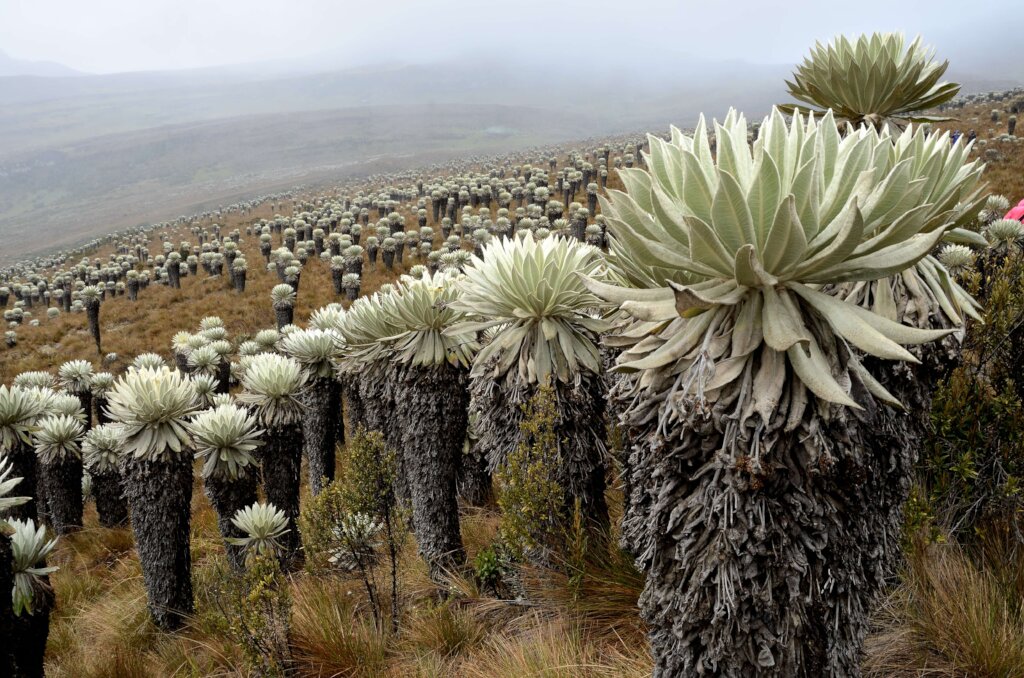
The páramo is a highly unique keystone ecosystem that is only found in the South American Andes, between 3,000-5,000 meters (10,000-16,000 feet) above sea level. It is characterized by peat soil which acts as a sponge, soaking up, filtering, and storing water from rains and fog, and slowly releasing it to downstream rivers. The peat soil also acts as a carbon sink; storing up to 300 tons of carbon per hectare. Frailejone plants, which can grow twice as tall as a human with thick, shaggy stems and wide, pointed leaves that form a spiky round ball at the top of the plant, are also characteristic of the páramo (don’t worry, I’ll include a picture!). This hyperspecific ecosystem is home to many endemic species including Oxypogon cyanolaemus, or the Blue-bearded helmetcrest. The Oxypogon is a critically endangered hummingbird species, recognizable by a white-striped crest atop its head and what resembles a brilliant blue goatee. It nests within frailejones, and is one of the plants’ primary pollinators.
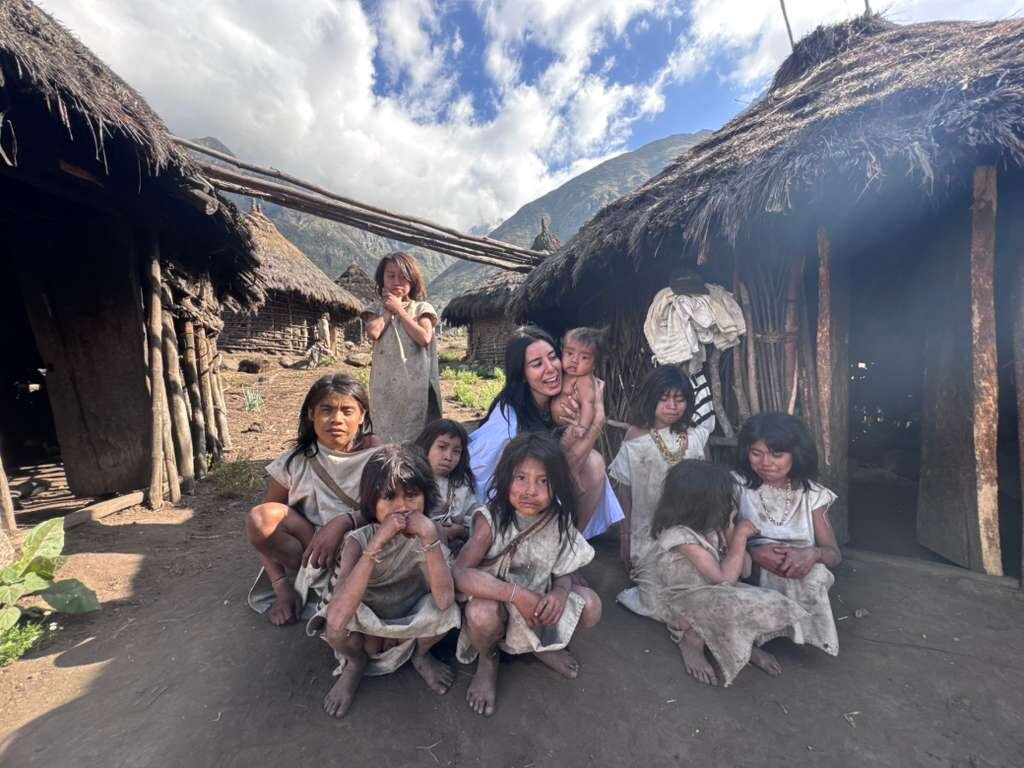
The Oxypogon is the focus of our long term project in partnership with the Kogui Indigenous group that lives in the páramo. The project intertwines on-the-ground páramo conservation and restoration efforts with environmental education, community monitoring, sustainable livelihoods, and Indigenous leadership in an effort to strengthen the Kogui people’s capacity to protect this threatened species and its highly valuable habitat.
Many families in the Sierra Nevada depend on livestock farming for their livelihoods. Unfortunately, fires set to clear the land for herds, combined with the livestock’s heavy trampling and grazing, are both extremely harmful to the páramo. It is quickly disappearing, along with its essential functions of water and carbon storage. As the paramo shrinks, the surrounding ecosystems will experience (and already are experiencing) water and resource shortages and increased effects of climate change.
We have partnered with women from the Kogui community to monitor the páramo, report fires, and establish conservation agreements creating protected areas that limit human activity and allow the paramo to regenerate. These agreements have already prevented fires and further damage to designated sections of the ecosystem. Several women received training in species identification, and have become leaders within the community regarding endangered species.
Building these relationships is a vital first step to protecting the páramo. We are cultivating trust, community support, and a network of partners so that together we can prevent fires, learn more about the Oxypogon, and support this keystone ecosystem. Going forward, we are collaborating with Kogui authorities to organize a community monitoring and restoration project to ensure that the páramo and the Oxypogon continue to exist for future generations.
Our work would not be possible without you, so thank you for being part of our team! I hope you enjoyed learning about the impact that your donations have had in the peaks of the Sierra Nevada de Santa Marta, one of the most remote and biodiverse places on Earth. Together, we are making a tangible difference for nature.
Follow along on our social media and website for more updates about this project!
With gratitude,
Libby Henrickson
By Emily Knudson | Director of Outreach and Philanthropy
By Emily Knudson | Director of Outreach and Philanthropy
Project reports on GlobalGiving are posted directly to globalgiving.org by Project Leaders as they are completed, generally every 3-4 months. To protect the integrity of these documents, GlobalGiving does not alter them; therefore you may find some language or formatting issues.
If you donate to this project or have donated to this project, you can receive an email when this project posts a report. You can also subscribe for reports without donating.