By SHARE NGO | Project Leader
Street children are some of the most vulnerable children on the planet
Street Children and Homeless Children – In everyday speech, people may use lots of different words or terms. ‘Street children’ and ‘homeless children’ or homeless youth might be used interchangeably, but there are some differences.
Not all children who are homeless end up living in the open on the street. Many end up sleeping in very inappropriate but out of sight places – on the floors of friends or strangers, or sleeping in temporary accommodation like hostels. For example, many homeless children have spent their Christmas in the streets or accommodation, often in a toilet, bathrooms and kitchens of residents who they don’t know or trust.They may work, play or spend their time on the street, but may go back to sleep with their family or parents.
Street children, mostly young girls, Depend on the streets to live and / or work, either on their own, or with other children or family members; and Have a strong connection to public spaces (e.g. streets, markets, parks, bus or train stations) and for whom the street plays a vital role in their everyday lives and identities. This wider group includes children who do not live or work on the street but regularly accompany other children or family members in the streets.
In other words, ‘street children’ are children who depend on the streets for their survival – whether they live on the streets, work on the streets, have support networks on the streets, or a combination of the three.
Why do some children live or work in the street?
The answer is complex — as many street children as there are in the world there are as many reasons for them being there. Every single child has their own unique story. The reasons for their connection to the streets will vary from country to country, city to city, and from person to person.
These factors will also vary over time, such as poverty, displacement due to natural disasters and conflicts or family breakdown all lead to increases in the numbers of street children in a given area.
Economic poverty plays a major role, although other factors are of equally high importance. These can include: parental deaths, parental neglect and other social factors such as violence and abuse of children at home or within communities.
Discrimination, lack of access to justice, a lack of legal status (due to a lack of birth registration for example) all contribute to a situation where a child is living or working on the street.
We have found that children may migrate to the streets for other reasons as well, including:
. sexual, physical or emotional abuse,
. urbanisation,
. HIV / AIDS,
. being forced into criminal activity,
. being rejected from their family for so called “moral” reasons,
. mental health issues,
. substance abuse,
. sexual orientation or gender identity.
While there is no doubt that there are common themes and reasons that push children onto the street, dealing with each child as an individual, with their own backstory and identity, is key to understanding their situation.
How many street children are there?
This is an important question to answer in order that governments are able to devote the resources needed to address street children’s needs. A commonly quoted figure is 100 million street children worldwide, however given that this estimate is from 1989, it is considerably outdated. The true numbers are unknown.
Why don’t we know how many street children there are? Estimated and counting street children are other hidden populations is not easy.
Street children are a dynamic and mobile population, which requires specific methodologies other than standard household surveys or census.
Estimates or counts that are done at a fixed point in time can be misleading depending on when the counts takes place – numbers of children in the street can fluctuate either with seasonal change or if the government removes street children ahead of big events international sporting events or global meetings or celebrations.
They are often invisible – while researchers can take a snapshot of the children currently on the streets, they won’t capture the children who are indoors at that particular day or moment.
Some groups of children can be less visible on the streets, for example girls, or children with disabilities
Street children experience high levels of stigma and often are suspicious of attempts to count them, fearing negative consequences as a result of being counted and preferring to remain below the radar.
Despite these challenges, it is crucial to establish reliable numbers of street-connected children and the realities of their lives.
1. Organizations working with street children need accurate data to better design their programmes.
2. Donors need data so they can ensure their health, education and justice funding also reach street children.
3. Governments need accurate data on street children so that they can devote the resources required to fulfill their obligations to these children, under the Child Rights Convention and its specific guidance.
What are the risks of children being on the streets?
No child should ever be harmed by those who have the duty to protect them.
While children should not be forcibly removed from the only home they know and detained for “their own good”, leaving children exposed to danger with no protection or recourse to justice is also not acceptable.
Many street-connected children are harmed on a daily basis by adults, including government officials and the police, other children, and even their own families. They are also denied access to education and healthcare, which is their right. If national laws criminalize begging or loitering, they can face jail just for trying to survive.
Street children suffer violence
Children who are already vulnerable due to not being registered, not having an adult being in a position to advocate for them, or not having appropriate shelter can leave them vulnerable to abuse by those who know they have no protection from family or the law, and no recourse to justice. Children are often robbed, beaten or otherwise targeted even by law enforcement or government officials in some cases.
Street children are targeted by abusers
Street-connected children are vulnerable to exploitation by abusers who may sexually assault them, forcibly recruit them into criminal activities, traffic them and send them out into the streets to beg and steal.
Street children can get recruited into gangs
For many street children street gangs can act as ‘surrogate families’ which can protect them from outsider violence or harassment and offering support, however it draws children into violent criminal activities and drug use.
Street children may become addicted to drugs
While the image of all street children being addicted to drugs is inaccurate, some street-connected children do engage in substance use to cope with the realities of living on the streets, trauma, illness, hunger, stigmatisation and discrimination. Long term use at the age when children are still physically and mentaly developing can cause long term problems in adulthood.
Street children can suffer from mental health issues
Although many street children show incredible resilience in the face of unspeakable hardships, many studies show their sense of well-being to be generally low. Street-connected children often suffer from depression, anxiety and trauma, which then may lead to substance abuse and a risk of suicide.
The stigma and social exclusion faced by street-connected children has a negative impact on their mental well-being. This may also vary from country to country. For example, one study showed street children presented as ‘poetic’ daydreamers surrounded but not corrupted by violence, whileb other researchers found that children internalise strong negative images of themselves, mirroring society’s view of them as delinquents.
Street children get punished by a legal system that has a discriminatory effect on being homeless or not registered at birth, other researchers demonstrated that the vast majority of street-connected children processed through justice systems were either children in perceived (rather than actual) conflict with the law (arrested for begging, vagrancy, commercial sexual exploitation, truancy or running away from home) or children in need of care (detained ‘for their own protection’ and not on suspicion of committing a criminal activity).
In many countries, street-connected children an criminalised for so called ‘status offences’, i.e. a noncriminal act that is considered a law violation only because of a youth’s status as a minor. For example, children may be arrested just for being on the street under a loitering charge.
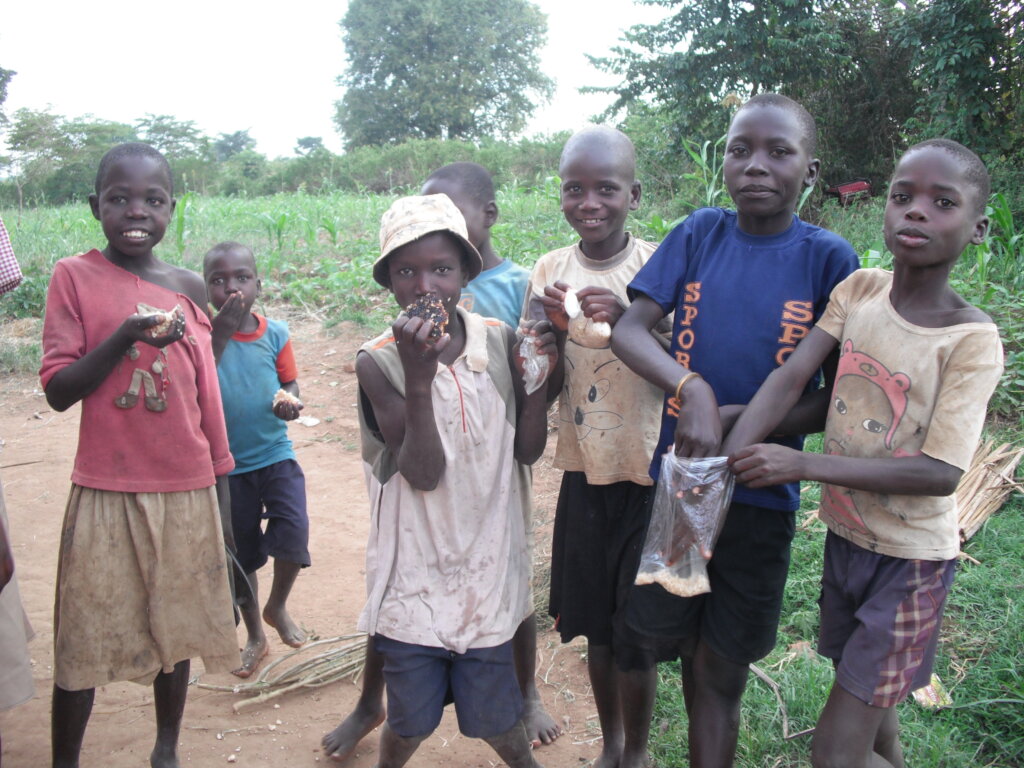
Uganda has one of the largest populations of young people in the world: over 56% of its population of 37 million people are under the age of 18, over 52% are under the age of 15. The number of children living on the streets but the total number of street children is unknown.
Street children face a number of risks: abuse and brutality from police, officials, and older street children; starvation and illness; the criminal element and work in hazardous conditions - which they live, which are harsh, bleak and often violent.
Key recommendations are made to the Government of Uganda, to each relevant ministry in turn. Recommendations are also made to the Uganda police force as well as to Uganda’s international partners.
SHARE NGO believes that the task of providing street children adequate care – and halting the harsh and violent treatment against them – is seen as a communal enterprise, dependent on cooperation and contributions from every sector of society.
How to deal with the problem!
Owing to rampant migration from the hinterlands, Uganda’s street children population is growing steadily in urban areas. thereby increasing the number of at-risk children in slums. 27.4 percent children (between the ages of 7-18) live in slums, yet they lack access to infrastructure. For example, only 17 percent of schools set up base in these areas. It is only awareness and intervention by NGOs and aid workers that can translate into actual change.
Here is how you can add to the change needed to give these children the possibility of a better life
1. Talk to them in a positive tone, and inquire about their well-being
While street children are taught to only communicate while begging and thus expect a brusque refusal, you can give them a kind voice by asking them their name, background and other particulars. But don’t give them food or alms – instead donate online to organised child welfare initiatives. Their personal details can be used to introduce them to a benevolent NGO system which will seek to give them nutrition, health, and healing.
2. If the child looks distressed then report to local Child Welfare Committee or police
Using the rapport you have built with the child, you can inquire about how their parents or caretakers are treating them. If the child mentions abuse, or shows signs (include violence, drug addiction, or malnutrition), you should immediately report him to the relevant authorities. These include the local Child Welfare Committee or the police.
3. Volunteer at a Centre for street children
After money, your time is the most valuable resource you can gift these children. Donate to
marginalised children– benches, blackboard, a classroom, library, toilet, house to live in, games, and a TV-DVD player. This is an attractive proposition to motivate them to leave behind their life on streets.
4. Donate to our charity and do fundraising for SHARE NGO on GlobalGiving.
Donating is the easiest, and fastest act of support you can participate in. The equivalent of a cup of coffee or the next movie you’re watching can go towards giving a child a better future. And, you can also sign up and be a part of an NGO’s various fundraising initiatives – either on social media, or in on-ground activities at malls, kiosks, and public places.
5. Campaign for SHARE NGOs
It is the ordinary people who are seen as the most sincere voices of children and their needs. Through social media, as well as by reaching out to people in your network, you can drive awareness of SHARE NGO campaigns, their goals, etc.
Conclusion
Due to the increasing number of urban street children, the incidence of crimes like trafficking and kidnapping increases. It is fuelled by a disruption in schooling and lack of parental care.
Presence of SHARE NGOs is essential in such a scenario, working with local authorities to ensure that these children don’t find themselves trapped in substance abuse or victims of abuse and exploitation. Without the knowledge of their rights, they experience torture, harassment and even sexual abuse.
You can give a precious few minutes of your time, and work with SHARE NGO to make a difference. The NGO ranks among an illustrious list of organisations which have shown commitment to making a difference to lakhs of underprivileged children in Uganda.
Thank you again for your kind sincerest Support and follow ups!
Project reports on GlobalGiving are posted directly to globalgiving.org by Project Leaders as they are completed, generally every 3-4 months. To protect the integrity of these documents, GlobalGiving does not alter them; therefore you may find some language or formatting issues.
If you donate to this project or have donated to this project, you can receive an email when this project posts a report. You can also subscribe for reports without donating.



Support this important cause by creating a personalized fundraising page.
Start a Fundraiser