By Bruce Gardiner | Project Director
Continuing the story of my wonderful trip to Praveen's farm in the Bundelkhand area of India, in this report I will focus on the solar work I was able to complete.
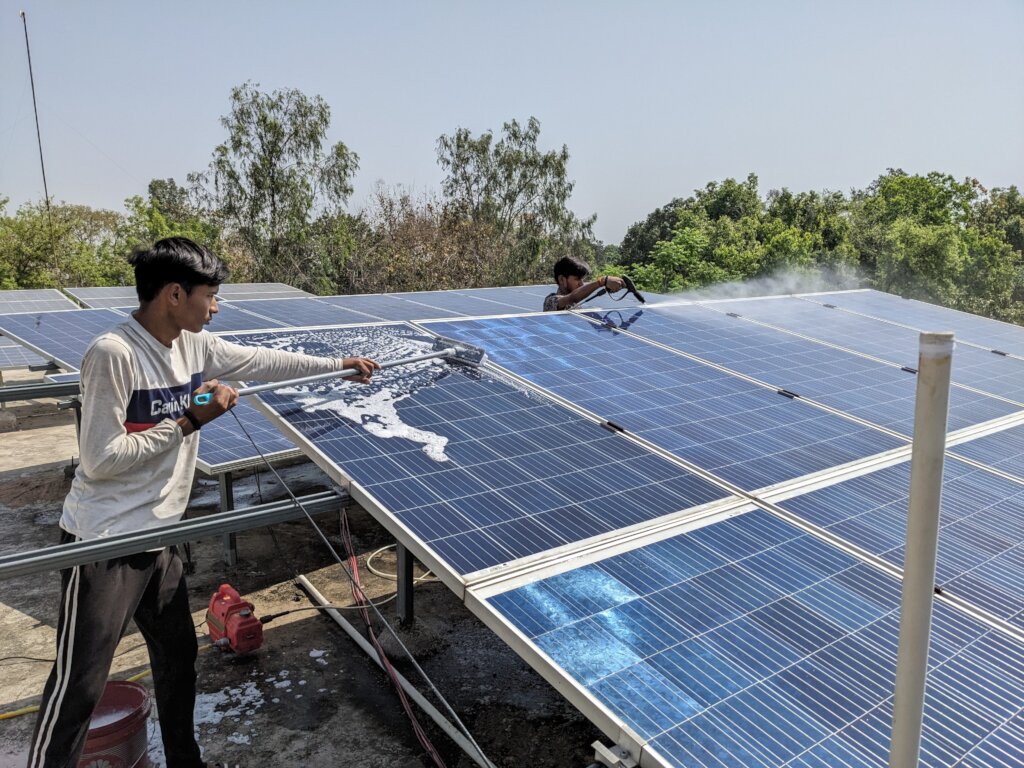
One of the intriguing things that drew me to Praveen's farm was that he already had 14kW of solar panels on the farm, but 3kW worth of panels were unconnected and unused. I sensed a golden opportunity to make a worthwhile contribution. 14kW is alot of solar power - something in the region of 35 to 40 large panels and this is enough to operate several large agricultural machines or air conditioners at the same time. 8kW of panels were already deicated to the Grid-Tie system and 3 more kW were used in an Off-Grid system with batteries. The extra 3kw of panels were unused because they had a different voltage rating and no-one knew how to make them work with the two other systems. I quickly saw that if I bought another MPPT Charge Controller, that could modify the voltage to work with the Off-Grid battery system.
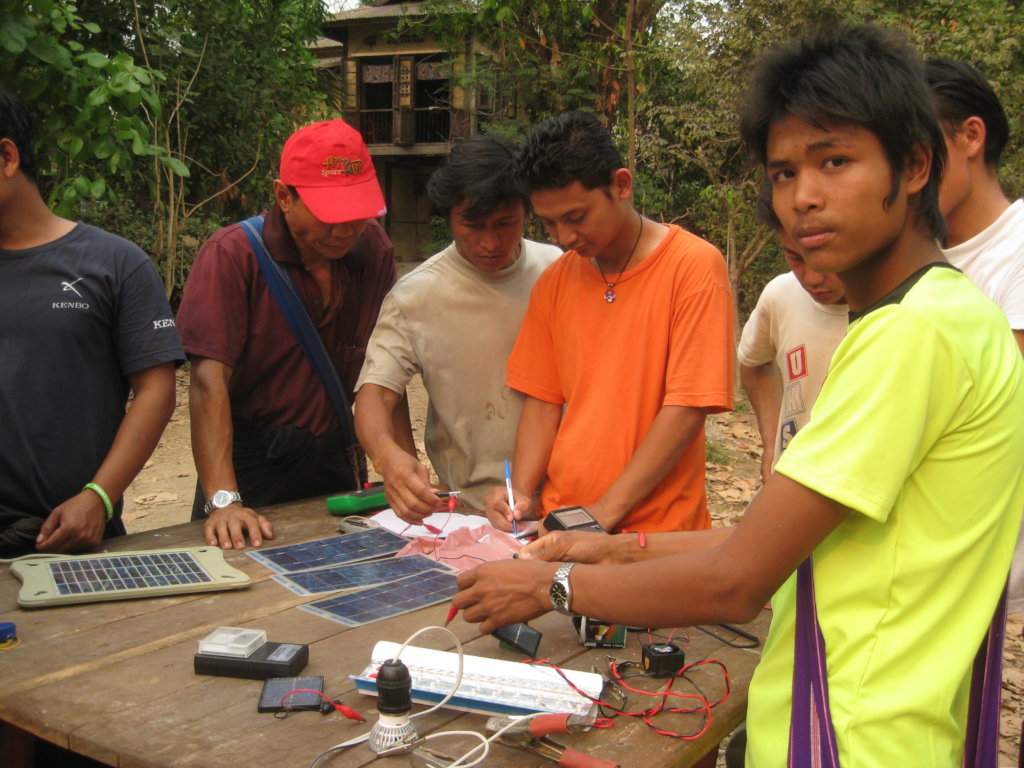
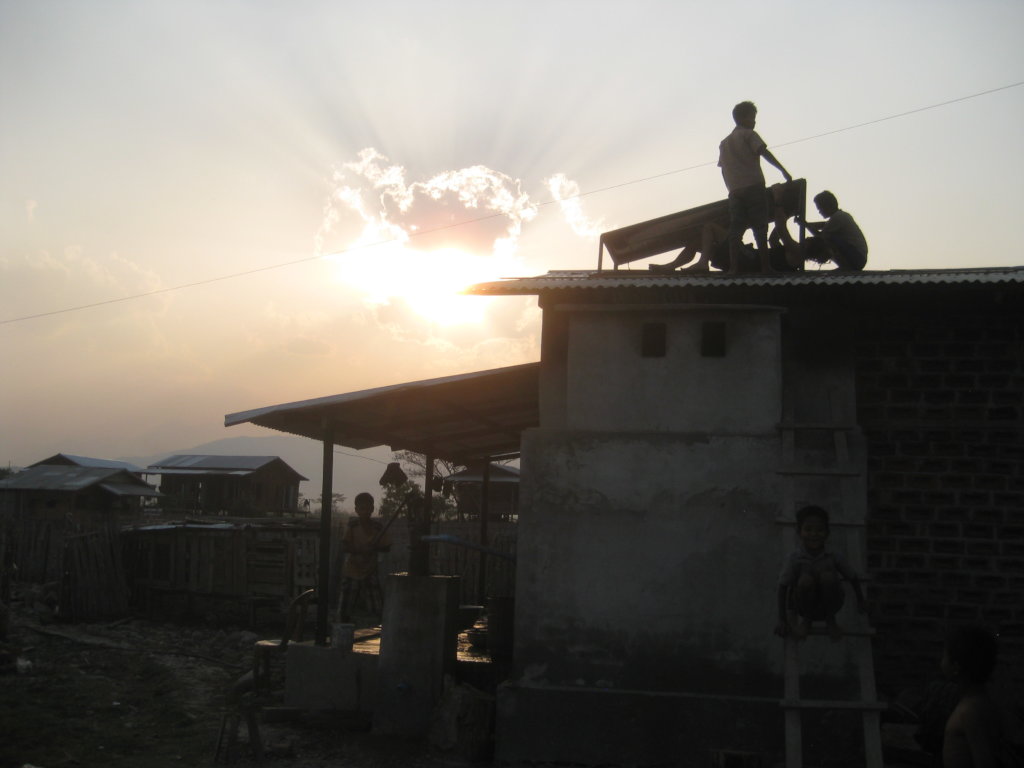
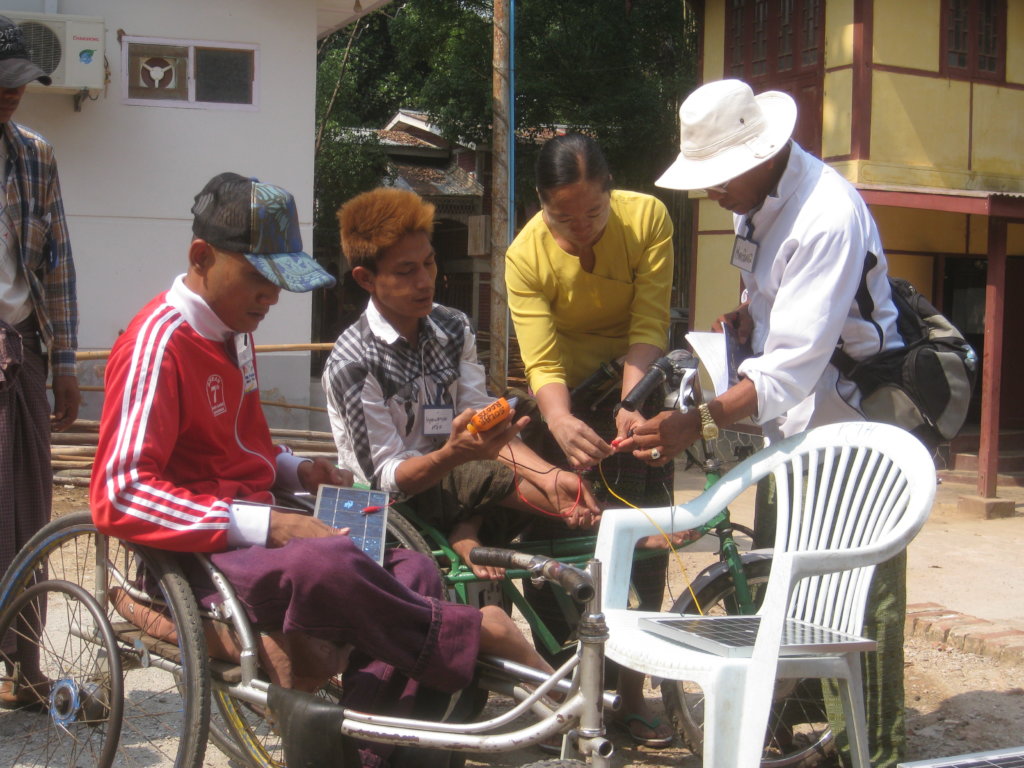
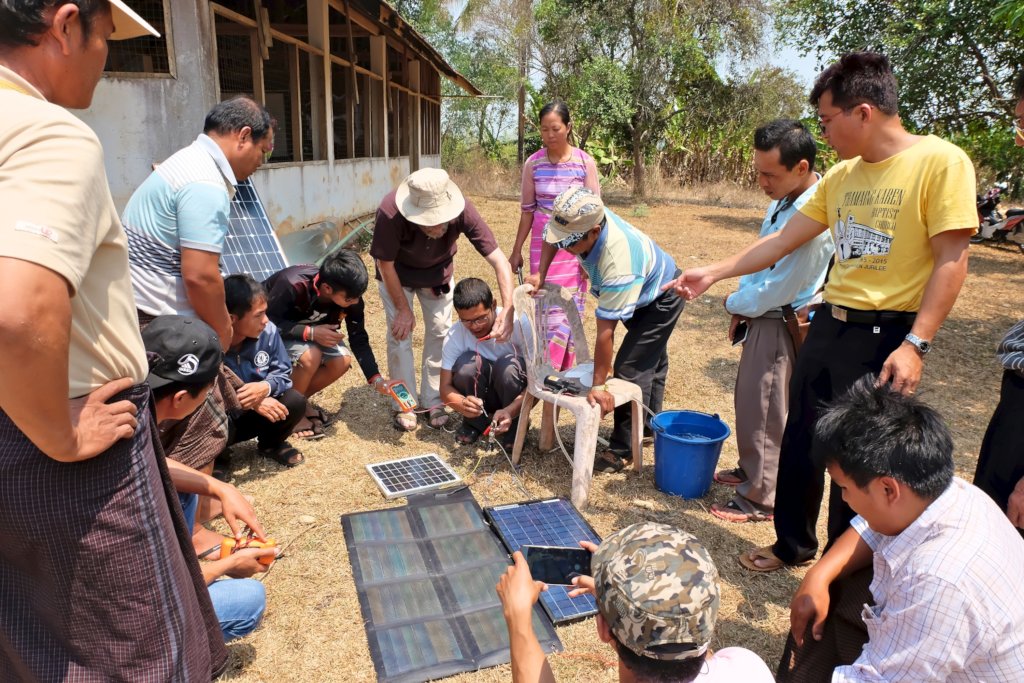
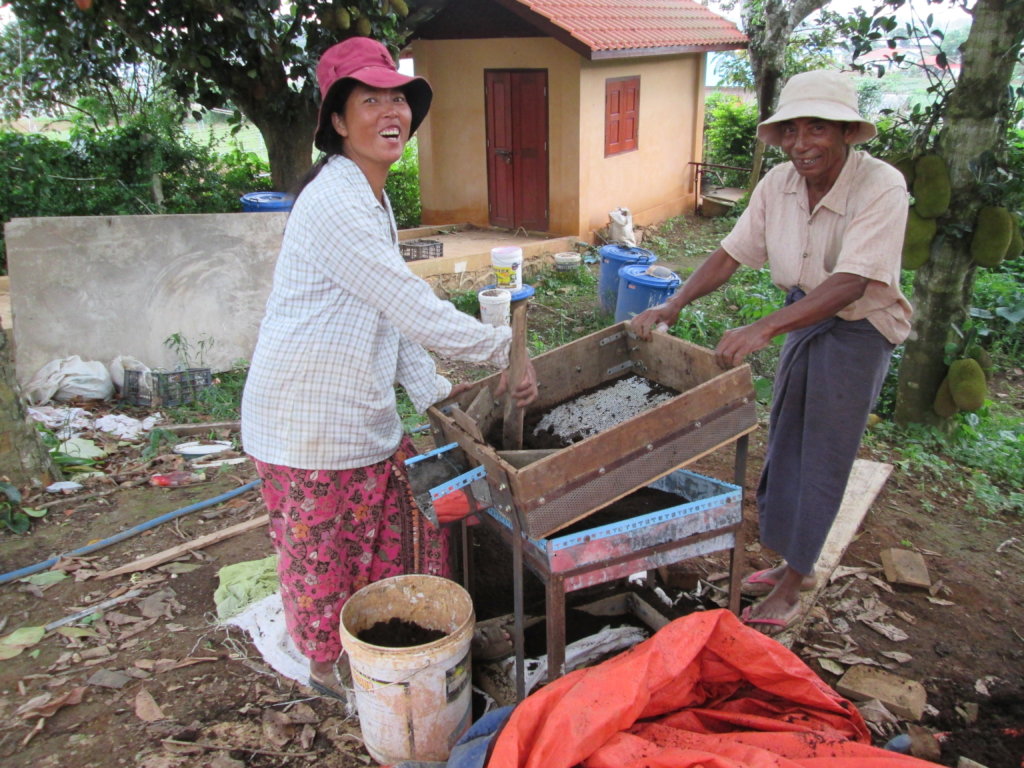
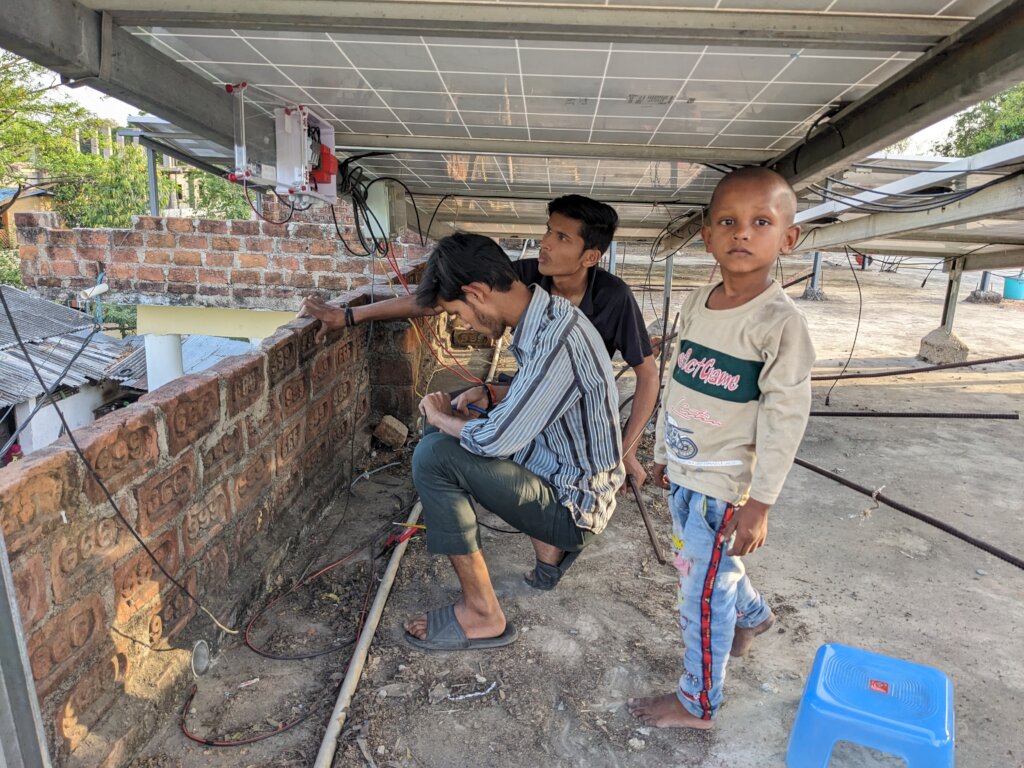
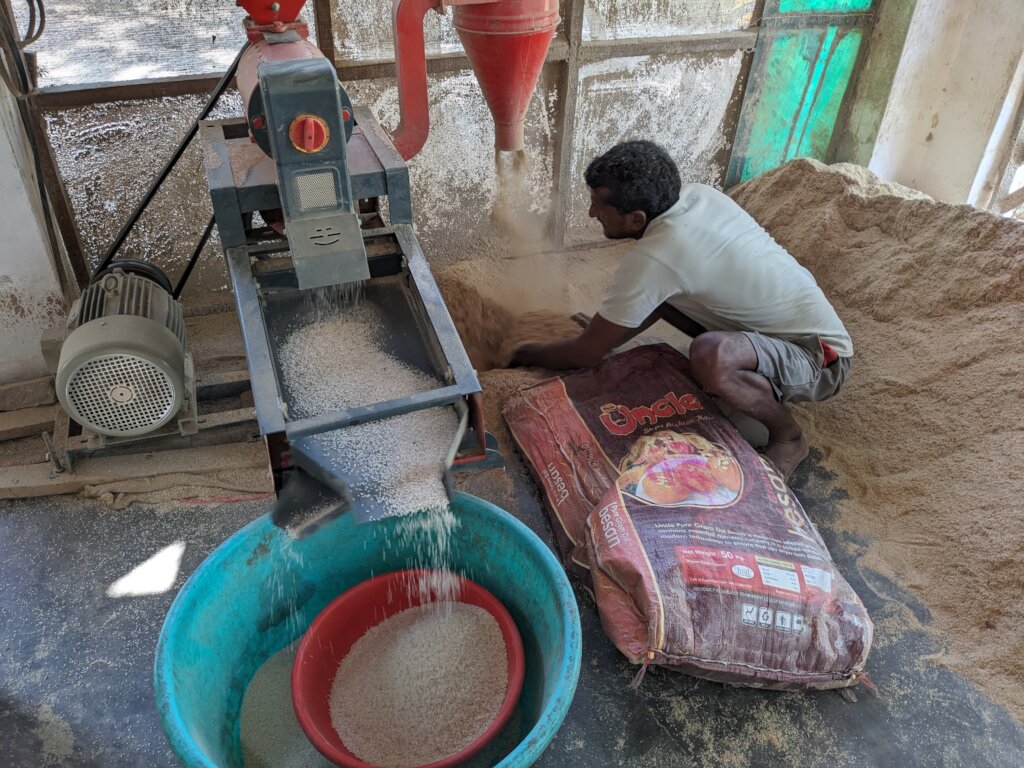
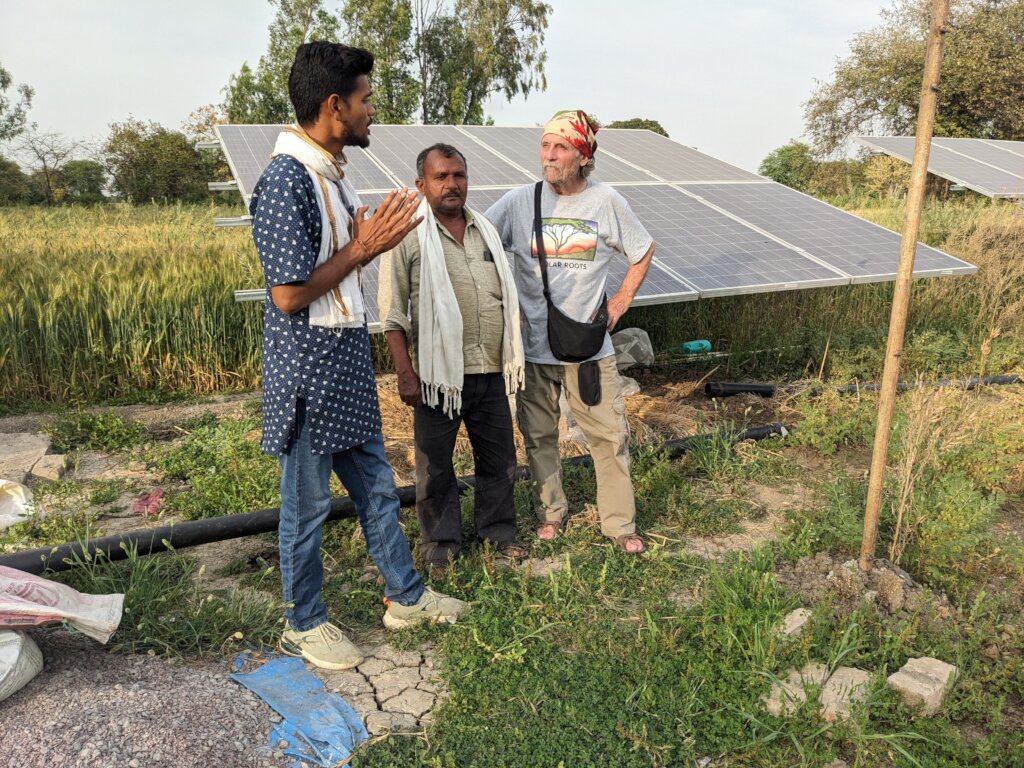
Luckily, Amazon operates in India and within 10 days I had the Controller and the other tools to complete the job.It was also fortuitous because several of the young men hanging around the farm were interested to learn more about solar and this was a great opportunity to teach them, while also giving them real-world hands-on experience, (see photo of students woking under the panels). I taught them how to use the Multimeter tester and how to configure the panels to match the battery system. One student, who tragically lost his father to Covid, was particularly interested in solar and I was able to arrange for him to take a solar course at a local government college, with Solar Roots covering the tuition fees. Adding this extra 3kW to the Off-Grid system allowed the farm run another large machine on solar power, (see photo of rice milling).
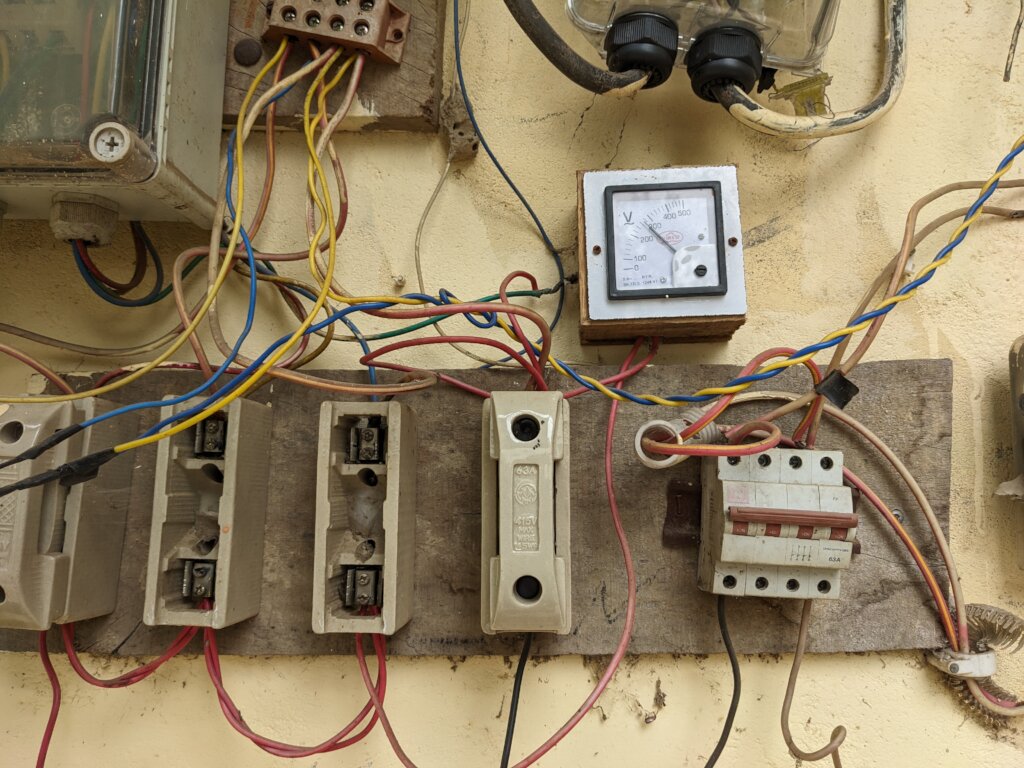
Although solar systems are now to be seen all over India and the government is vigorously supporting the development of the industry, electrical wiring standards, techniques and materials are manfestly lacking, (see photo of rats nest wiring). Both my students and myself received electric shocks while working on the exisiting ground system, which normally has no voltage or current present. Naturally, a large part of my instruction focused on safety, both for the technician and the end user.
Both the government and private NGOs have recently been promoting the use of solar-direct water pumping systems and I saw several of these on nearby farms. Each time, the farmer's question was the same - "can you adapt this solar system to charge batteries, as well as pump water?" I believe that this is possible, if the pump can run on 48V. I need to visit more sites to see if the existing systems are all the same or not. This could be a great project for my return visit to India, scheduled for April 2025.
If you like this report and would care to support our work, please consider making another donation.
Best wishes, Bruce
Project reports on GlobalGiving are posted directly to globalgiving.org by Project Leaders as they are completed, generally every 3-4 months. To protect the integrity of these documents, GlobalGiving does not alter them; therefore you may find some language or formatting issues.
If you donate to this project or have donated to this project, you can receive an email when this project posts a report. You can also subscribe for reports without donating.



Support this important cause by creating a personalized fundraising page.
Start a Fundraiser