By Bruce Gardiner | Project Director
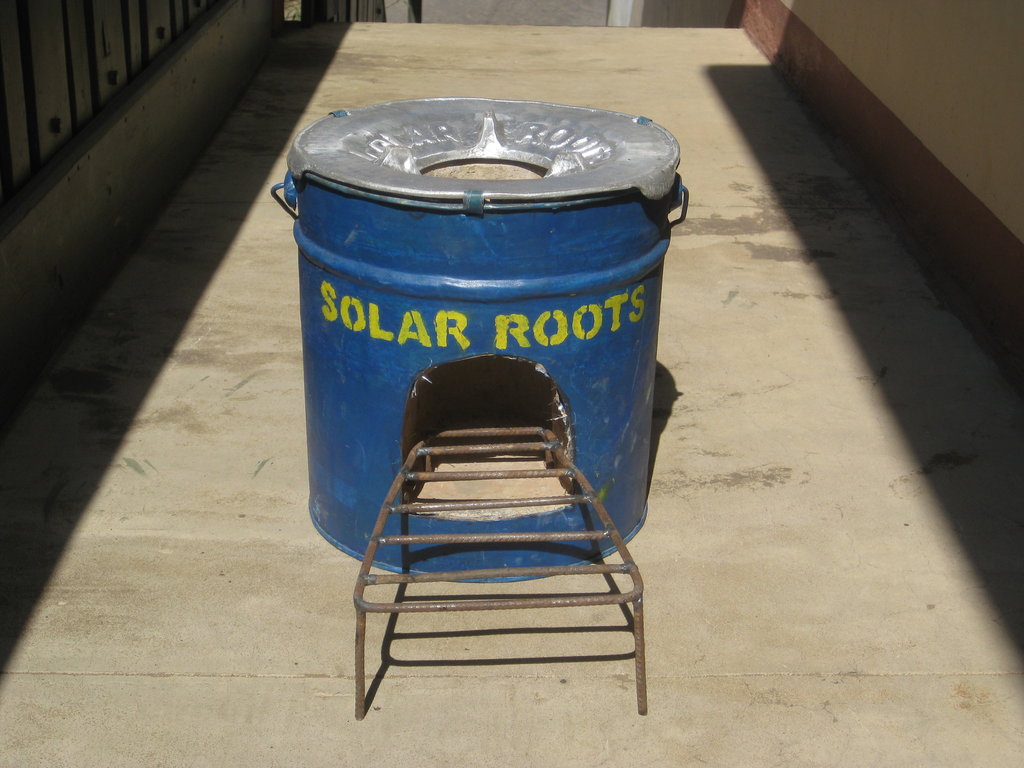
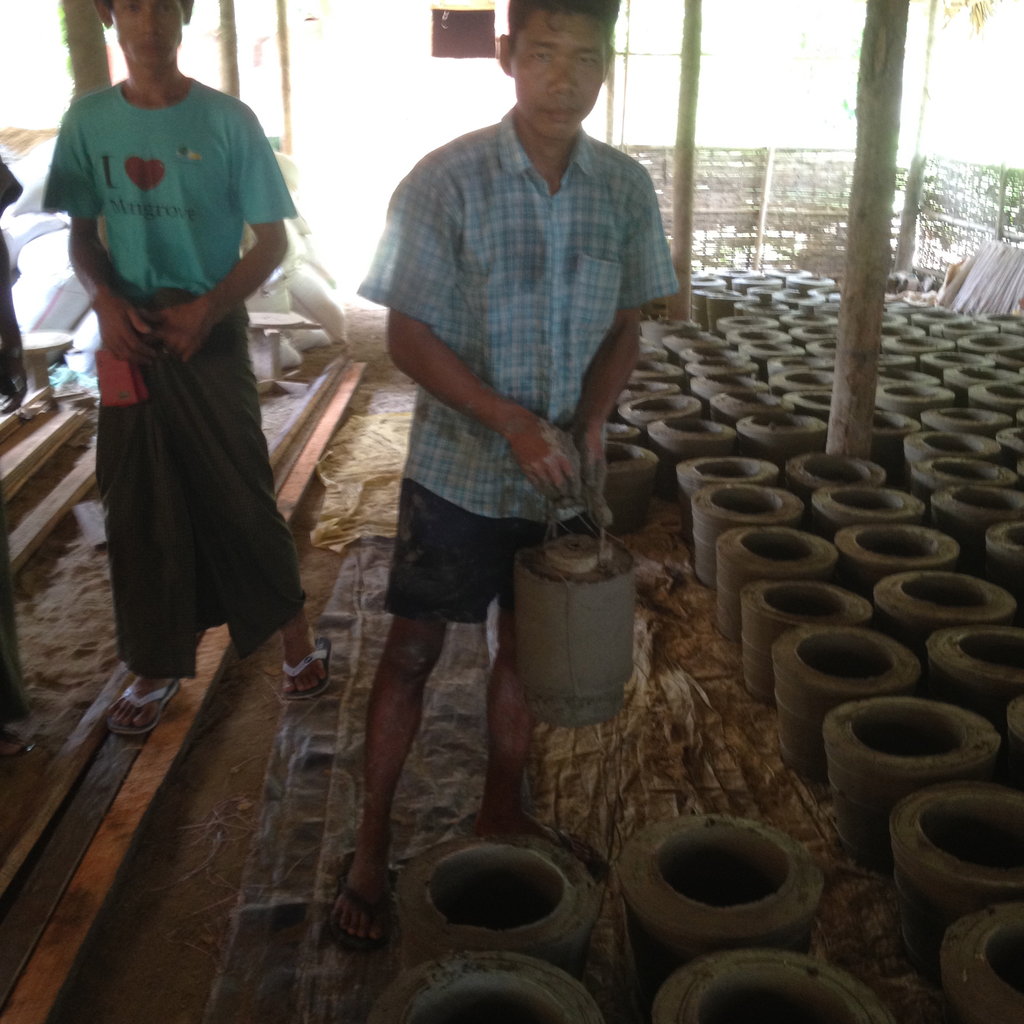
During my trip to the Mangrove Services Network (MSN) in the Delta region of Bogale, I had the great fortune to visit a small stove factory that they had helped establish. The mangrove forest, which used to grow extensively on the shores of the Ayerwaddy River Delta has been decimated in recent years by people establishing shrimp farms and cutting the trees for conversion into charcoal. I was shocked to learn that shrimp farms only have a limited productive life and are often abandoned after only 5 or 6 years. Of course, once removed, the mangroves take decades to re-establish themselves by natural regeneration, if they ever do. The loss of the mangrove forest was a significant contributing factor intensifying the extensive destruction and loss of life caused by Cyclone Nargis in 2008. To counteract this, the work of the Mangrove Services Network has two main thrusts. The first is to identify the strongest mangrove species that will re-establish quickly and permanently and help the local people to plant these trees in their community. The second thrust is to help local inhabitants develop alternative sources of livelihood, so they are not forced to cut the mangroves for income.
One of these MSN livelihood projects was a stove building factory using a kiln that burns rice husks as fuel. Rice husks are a low value by-product of rice growing in the Delta and are freely available everywhere. Without a good draft of air, they tend to smolder and produce a great deal of smoke. However, MSN overcame this drawback by using a 30ft high chimney which creates a huge draft that helps the husks burn cleaner. They have a damper in the system that allows them to control the burn and thus, the temperature of the firing. A wonderful by-product of this process is the ash that is left when the burning is complete. Rice husk ash is high in silica content and when added to the clay mix, it gives the stoves added insulation and resistance to heat. For me, this a win-win situation: a waste product from agriculture is being used productively, then the by product from its combustion is helping the stoves perform better and last longer.
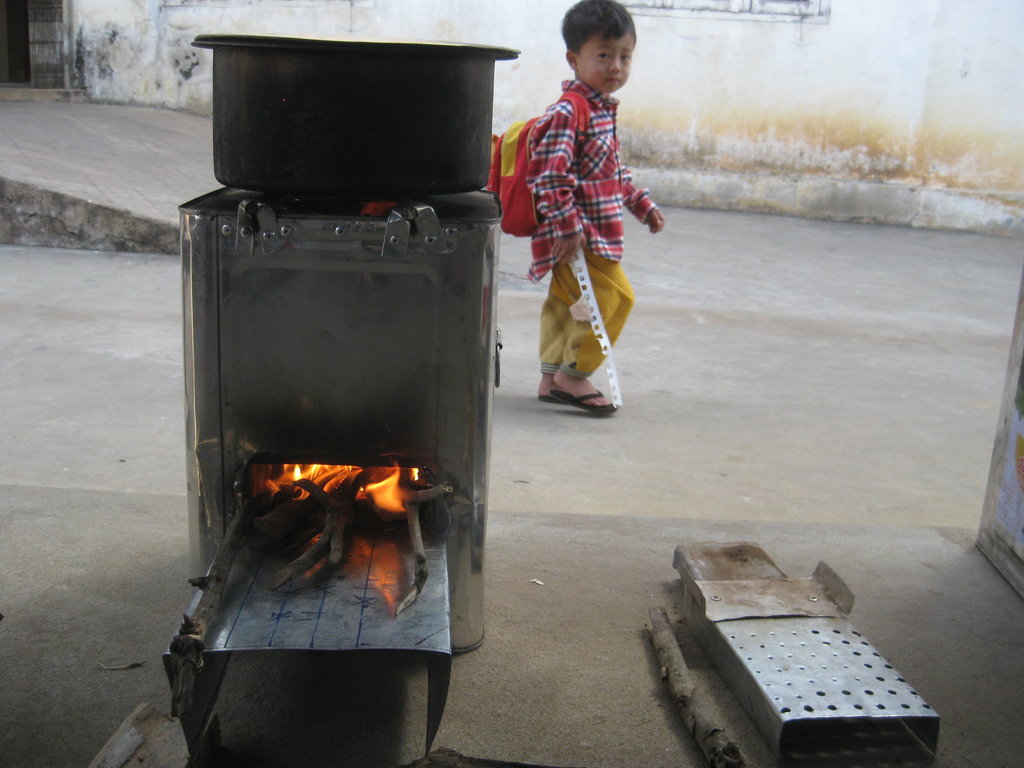
But there is still room for improvement. In the future, I hope to work with MSN to improve the design of their stoves. At the moment, they are using a knock-off version of the Thai bucket design. While cheap to produce, it is not a very efficient or clean burning design. On my next visit to Bogale I hope to help the stove builders learn about the principles of the Rocket Stove and develop with them a design that will fit their production facilities and be popular in the local market. Please help Solar Roots and the people of the Ayerwaddy Delta to preserve the mangrove forest and to improve the lives of the local inhabitants. Your support is greatly appreciated.
Links:
Project reports on GlobalGiving are posted directly to globalgiving.org by Project Leaders as they are completed, generally every 3-4 months. To protect the integrity of these documents, GlobalGiving does not alter them; therefore you may find some language or formatting issues.
If you donate to this project or have donated to this project, you can receive an email when this project posts a report. You can also subscribe for reports without donating.