By Katy Allen | Director
A very happy 2026, and I hope the new year finds you well and in good spirits.
The new year started with the usual changes to the status quo which governments seem unable to resist.
In Rwanda the new term started on Monday 5th January. Nearly 900 head teachers were removed from their positions because of inefficiency. However, all head teachers in the schools in which we work remain in post. That is good for the continuation of, and support for, our work. Perhaps it is no surprise that they remain in post, as by accepting our programme of using the NOEC (New Original English Course) they have long since shown their commitment to the learning outcomes of their pupils and the progress of their school.
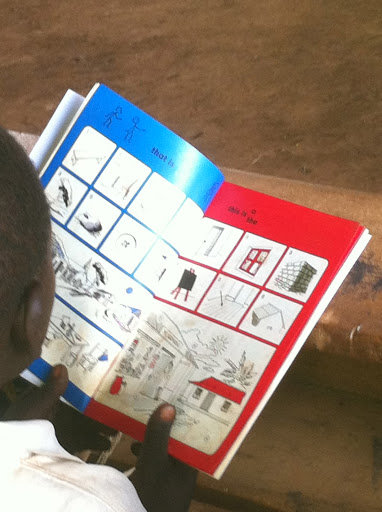
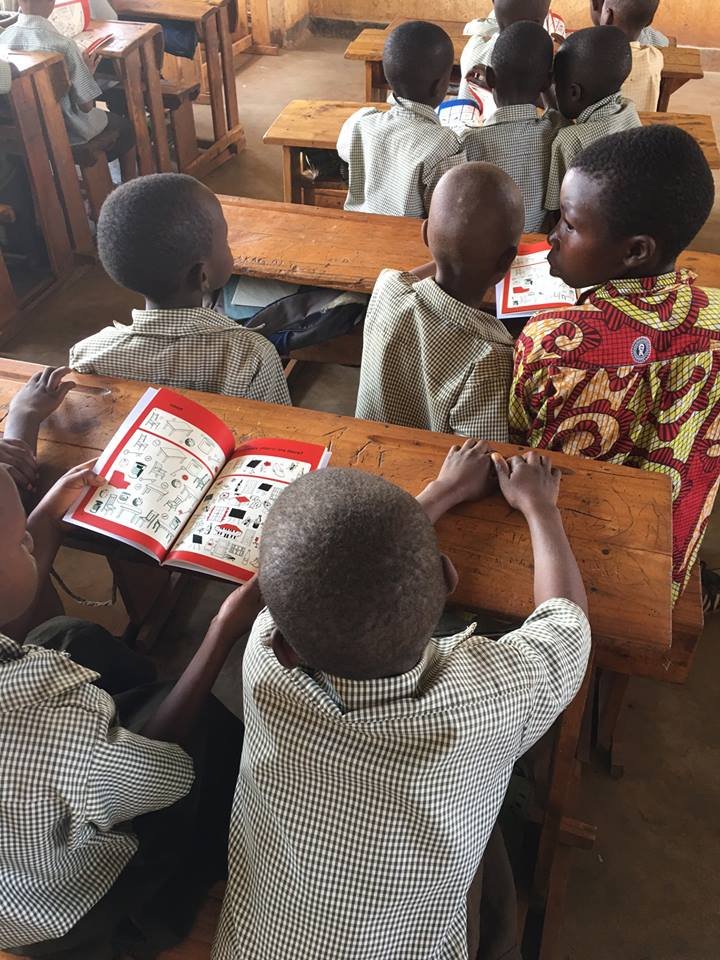
One enormous surprise is the government announcement that English teaching in Primary 1 will be oral only. In other words, pupils will be taught only listening and speaking and they will be assessed accordingly. This follows the approach used in the NOEC, as pupils in P1 are still learning the skill of writing, and to start writing in English at such a young age is counter-productive especially as English is not a phonetic language. The curriculum had insisted on writing in every lesson, but we had discouraged the teachers from adopting this and guided them instead to follow the NOEC books. In NOEC Book One, the pupils work orally until Lesson Twenty-One when they start to read short sentences guided by very clear pictures. There are also quite a few exercises which aim to develop the skill of word recognition. That is an important skill in order to develop fluent reading. The attached image of a page of NOEC Pupil’s Book One shows examples of this, and the pupils find this fun.
It is doubtful that SPER (our partner organization, Support to Primary Education Rwanda) will be given credit for this important change to English teaching in P1, but it might seem that the papers I wrote and submitted to the Ministry of Education and to the Rwandan Education Board were not all wasted. Indeed, during our last meeting with the previous Minister for Education, Hon. Gaspard Twagirayezu, he said that he had read all the papers I had written on various aspects of the primary curriculum for teaching English, and that he agreed with most of what I had written. Indeed, not so long ago the new Director General of the Rwanda Education Board, Dr Nelson Mbarushimana, referred to us as, “the small giant SPER”, and so perhaps we have been influential in this new development.
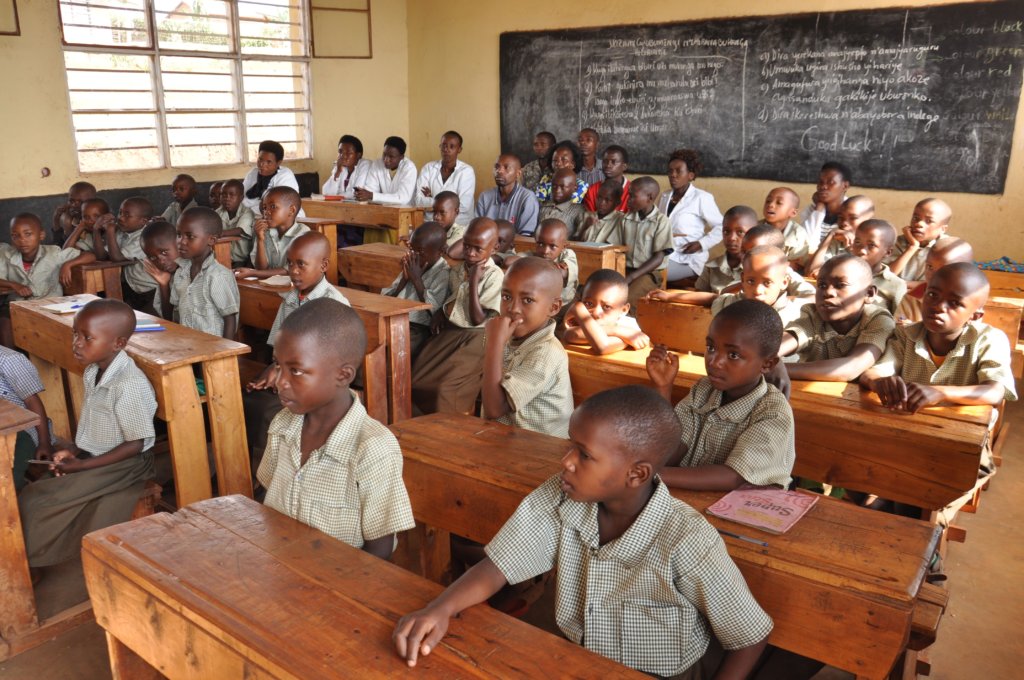
In the classrooms the young pupils continue to enjoy their English lessons using the NOEC books. Pupils in P3 are being given photocopies of the stories that appear in NOEC Book Two to take home and read and then come back and give a summary of the story to the class. The story which is causing joy and amusement at the moment is David and the Lorry. David is part of a school outing to another school and all his class are taken in a lorry. David sits at the front next to the driver. When they stop for petrol and the driver gets out, David touches a button and the lorry is set in motion. The pictures that illustrate the story are funny, and the pupils love the runaway lorry with everyone screaming. A double page of part of the story is attached.
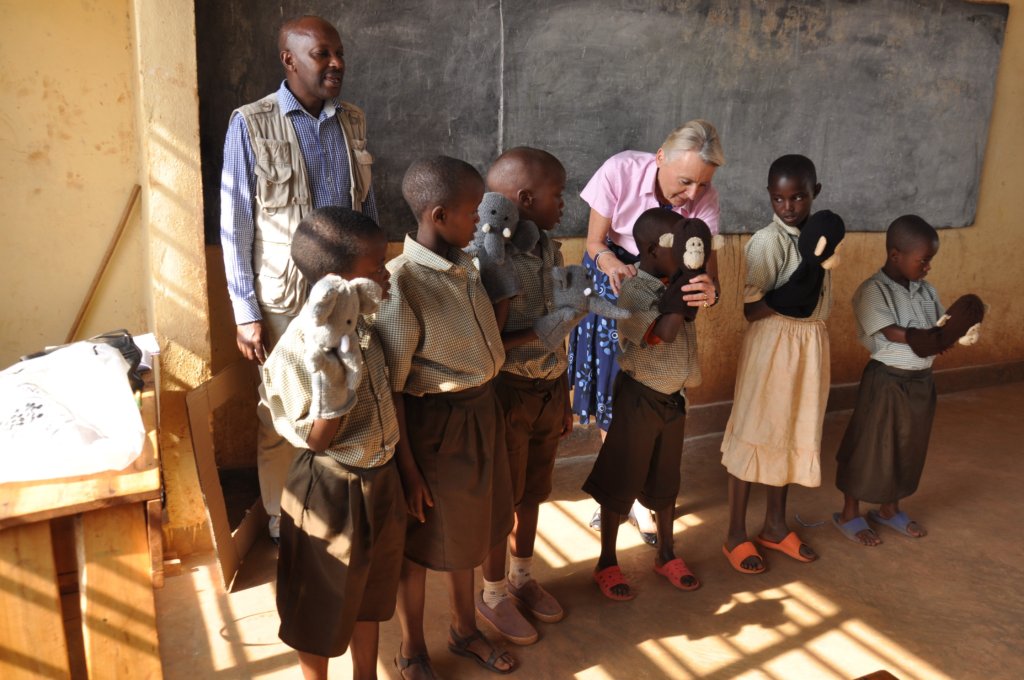
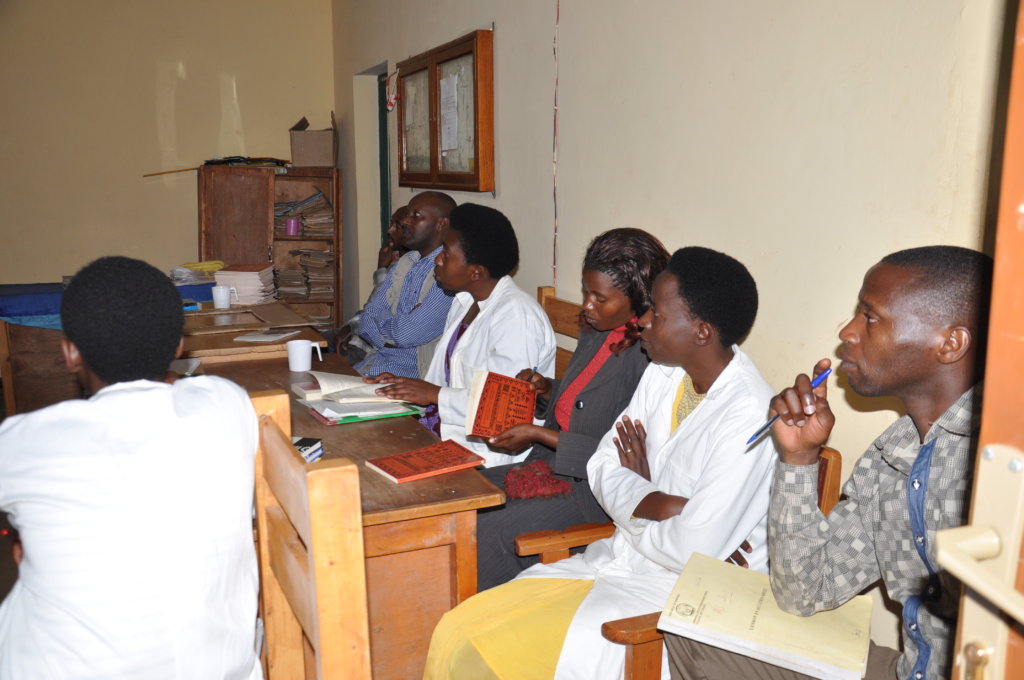
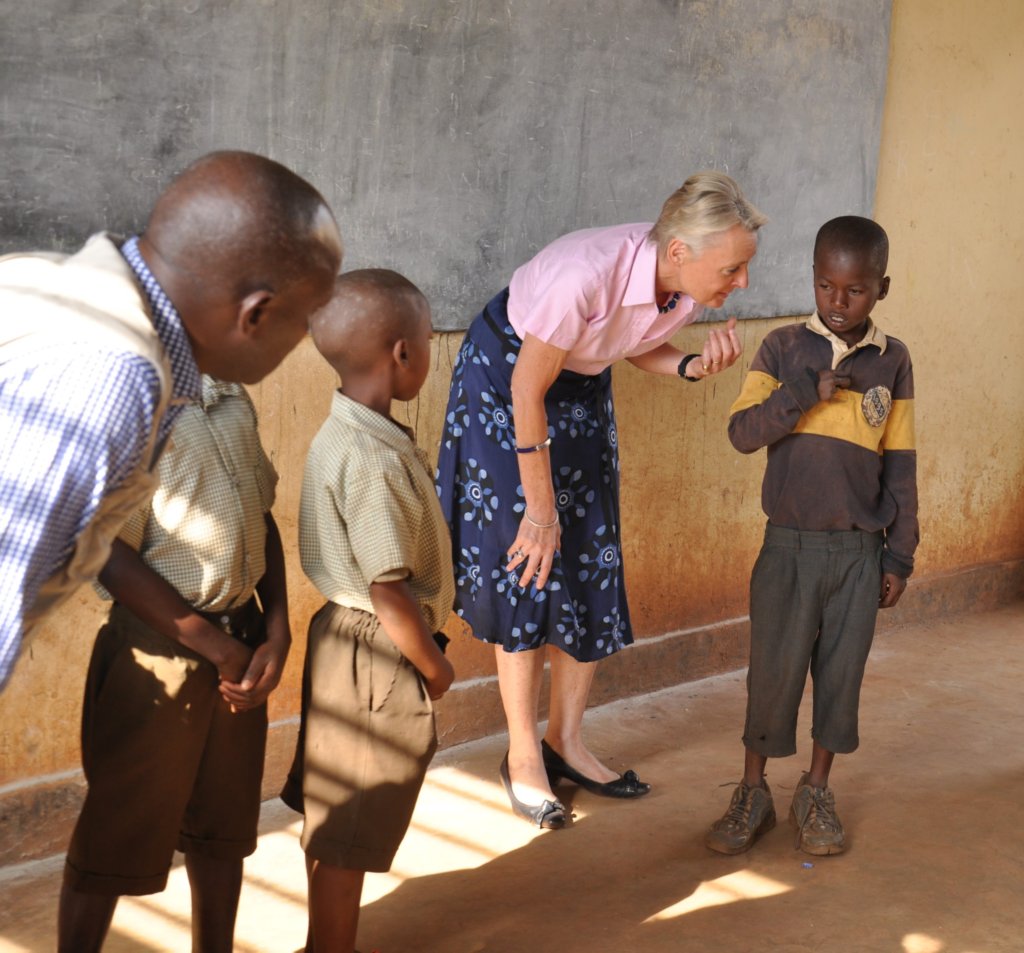
At Cyili primary school the head teacher, Enoch, received a certificate from the current Minister for Education, Hon. Joseph Nsengimana, for appreciation of the good basic communication skills in English of his pupils. That is all credit to the teachers there who are using the NOEC books.
In Tanzania the country recovers from the October 2025 general election and the shocking events that ensued. It was with relief that Kilimanjaro was not a region affected, but nevertheless schooling was interrupted, and the internet and social media was not available for nearly 10 days.
The new school year in Tanzania started on Tuesday 13th January. Again, changes are afoot.
The government has now stated that primary education will be from primary class one to class six and continue to senior form four. The system was that primary was from class (or ‘standard’) I to standard VII, and then there followed four years in a secondary school in Form 1 to Form 4. The change means that each primary school should construct more classrooms so that its pupils can progress to Form 1 to Form 4 (secondary education) on the same campus. Those that cannot build sufficient classrooms must know with certainty which school will take all their pupils in Form 1 to Form 4.
At Bright School, we are working with the school administration to help with more classrooms. One new classroom has been handed over to the school, although it was originally to be a room for computer learning. The computers are now housed in the library. Another new classroom is being adapted from a large storeroom which is in a building adjacent to the school buildings.
Enrolment for the new school year is ongoing as parents gather the school fees. At Bright its full capacity is 570 pupils, and as I type this they have 56 pupils in pre-primary, and 417 in the other classes. More teachers have been employed for the year which brings the total of the school’s employees to 45. Bright school is keen to maintain its good reputation, as in the 2025 National Primary School Leaving Examinations it took 4th place out of 260 schools in the District. 76% of Bright’s examination candidates gained overall Grade A, and 24% gained Grade B. This is most encouraging.
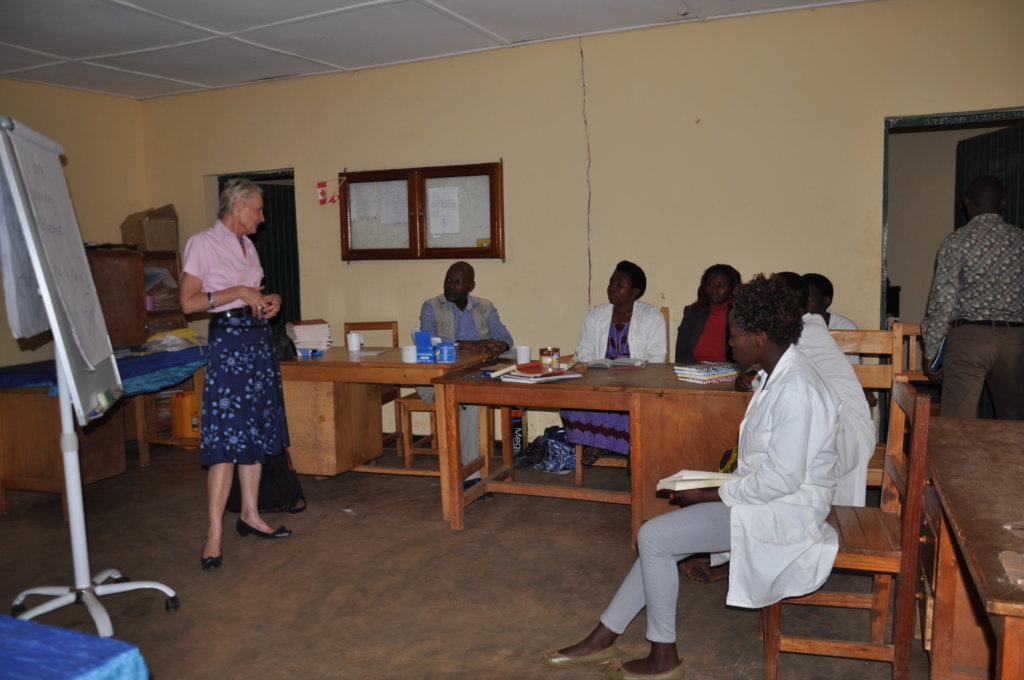
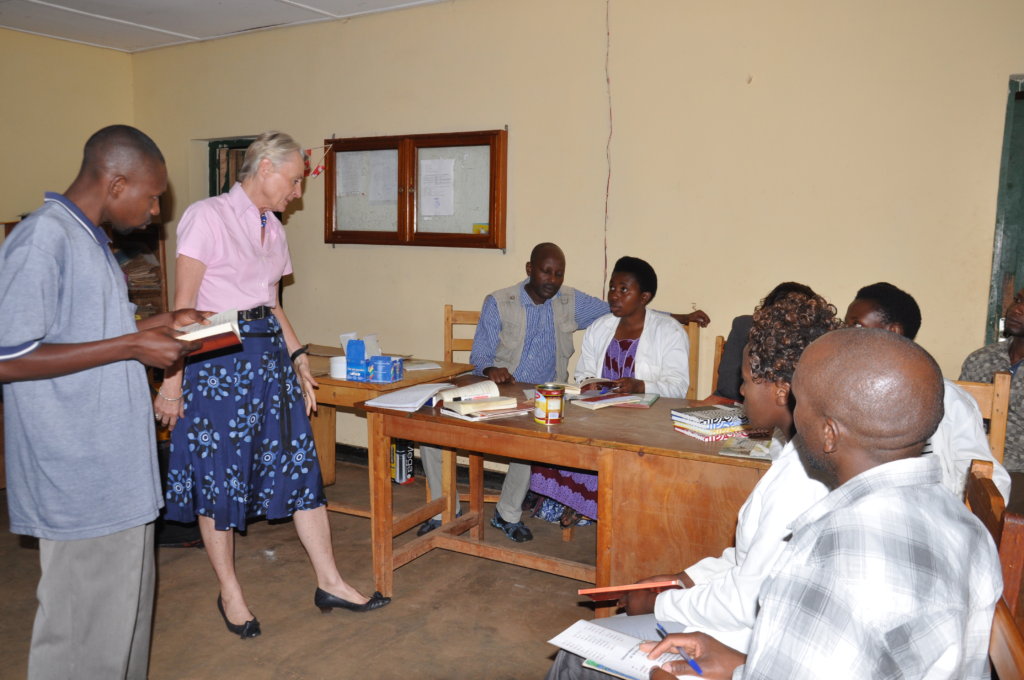
In the government primary schools it has been decided to teach English as a subject from Standard 1, and no longer from Standard 3 as has been the case for many years. The government is under pressure to improve the English language learning of the pupils, as there are now so many private schools where English is the medium of education in all classes. However, the private schools recruit teachers who have sufficient proficiency in English, whereas many teachers in the government schools struggle to speak English well. The District is using Bright School to help in giving seminars to the government school teachers of nearby schools in order to improve their English.
All these changes are not necessarily for the best though. Indeed, in my experience which now spans over thirty years, changes have been introduced year on year and yet the overall result is that the level of understanding and cognitive ability has steadily declined in pupils, and certainly does not match that of pupils who were in the education system over 60 years ago. It is, of course, more intricate as many more pupils are in school these days and now will be in school until the end of Form 4. The main problem is the knee-jerk nature of many of the changes and the speed at which implementation is expected. In the face of it all, our work continues in the knowledge that every pupil needs a good grounding in English in order to cope in the education system.
Thank you for your continued support which is crucial for our work to continue.
I, and all involved, fully appreciate your generosity and kindness and hope that 2026 enables us to continue to help pupils to fulfil their potentials.
With all best wishes,Katy
Katy Allen-Mtui
Director
Project reports on GlobalGiving are posted directly to globalgiving.org by Project Leaders as they are completed, generally every 3-4 months. To protect the integrity of these documents, GlobalGiving does not alter them; therefore you may find some language or formatting issues.
If you donate to this project or have donated to this project, you can receive an email when this project posts a report. You can also subscribe for reports without donating.



Support this important cause by creating a personalized fundraising page.
Start a Fundraiser