By Katy Allen | Director and Trustee
I hope this finds you in as good spirits as possible.
The Easter holidays are long gone, and now the schools are in another term. In Rwanda it is the last term of the school year which ends on 3rd July. In Tanzania it is nearly half way through the school year with the long holiday beginning on 5th June and the schools reopening on 6th July.
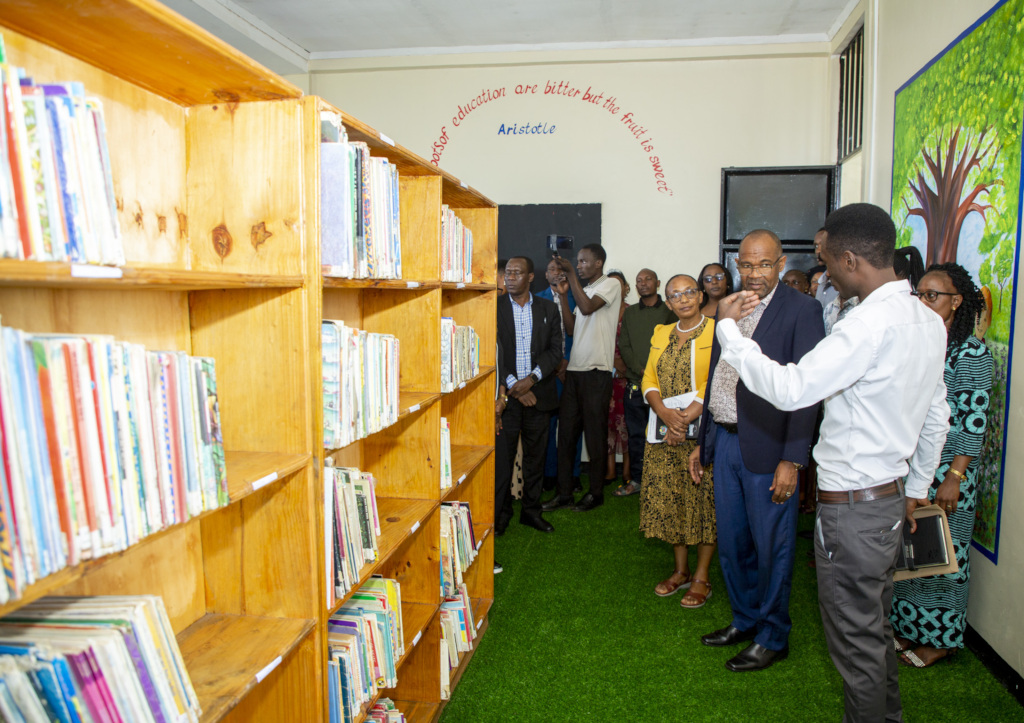
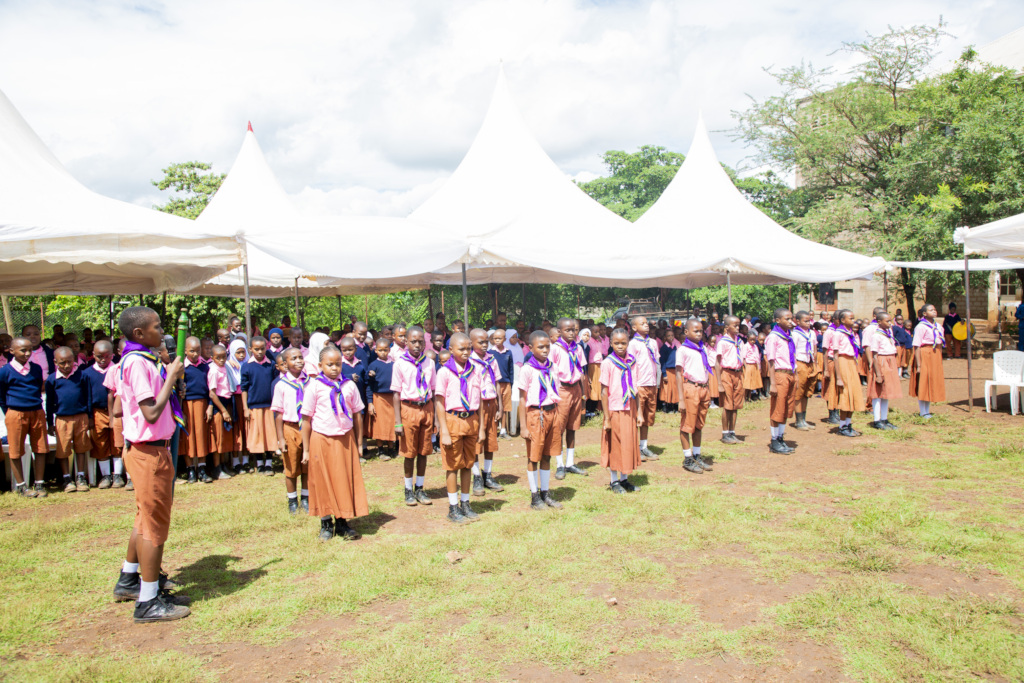
In Bright Pre and Primary School in Tanzania the latest excitement was the official opening of the new library. The District Education Officer for Moshi Rural, Mr Gaudens Assey, was the guest of honour. He opened the library officially and spent time talking to pupils and looking around the school. All the pupils honoured him with some marching and singing in the school grounds. They are now back to serious studies and preparing for national examinations for Standard IV and VII pupils next term.
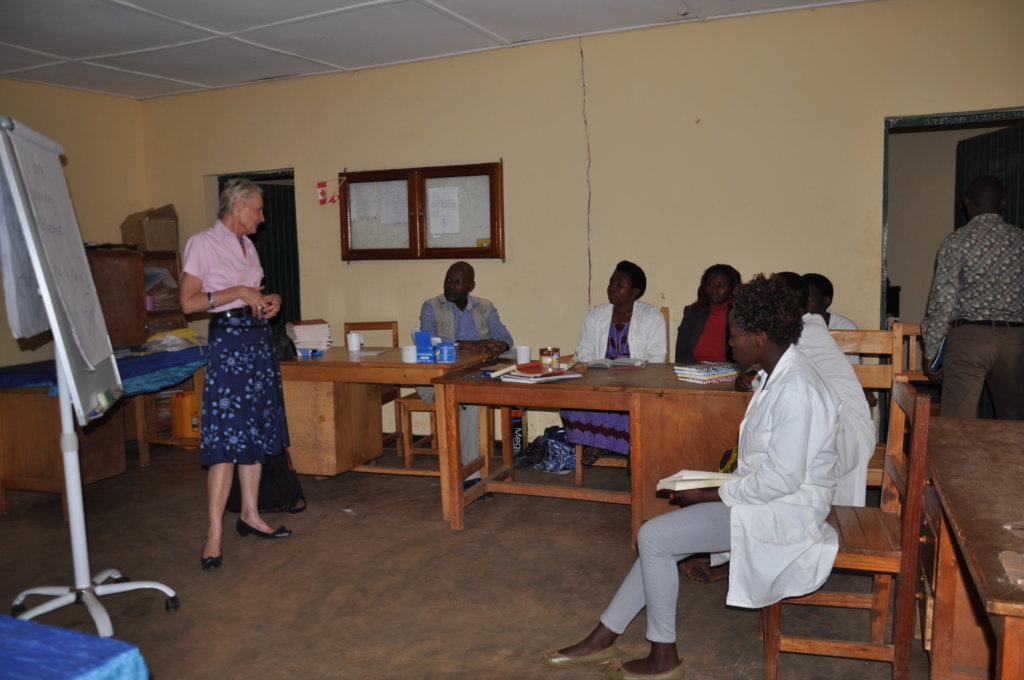
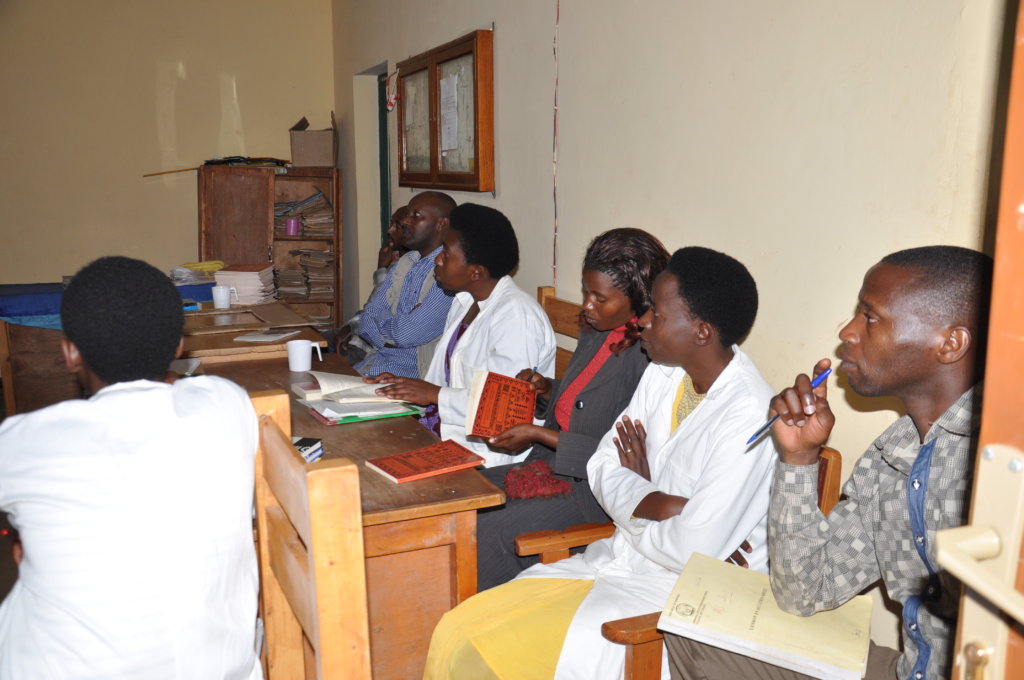
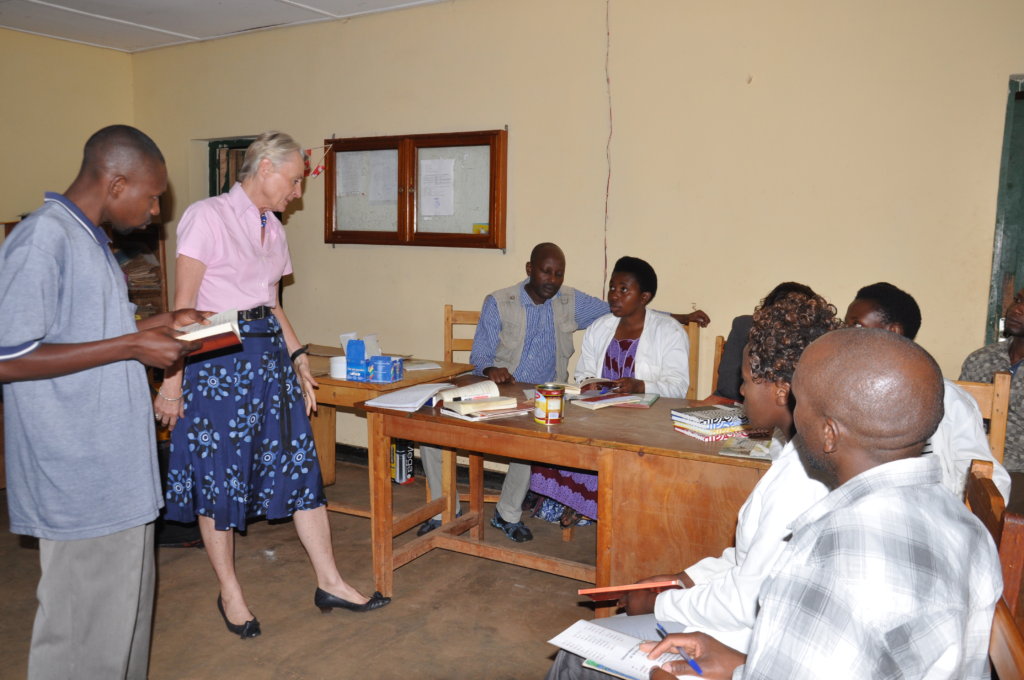
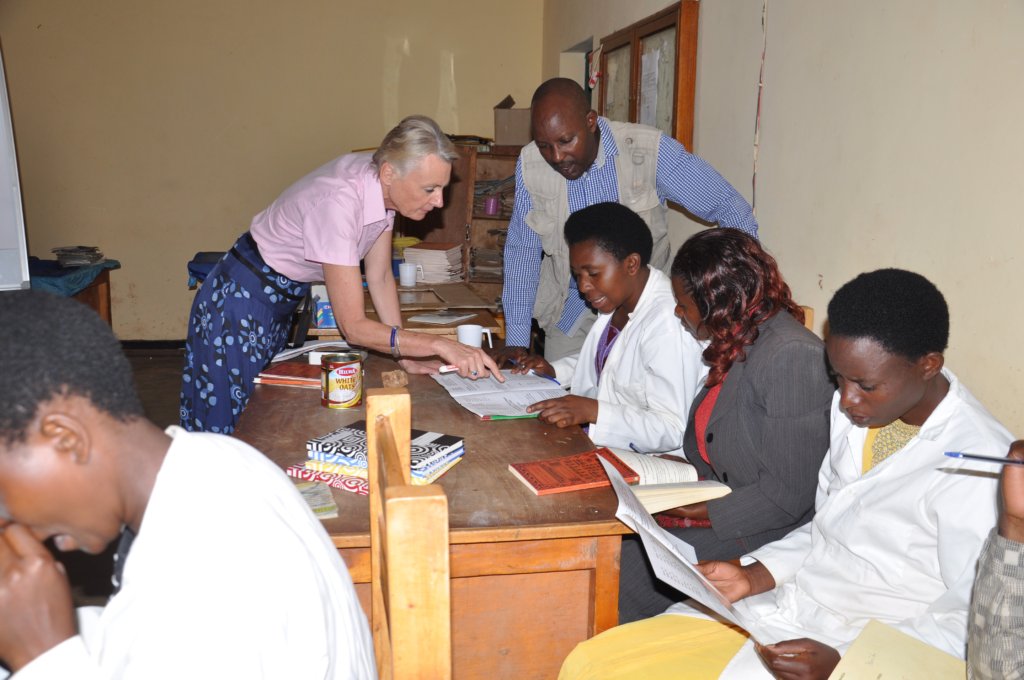
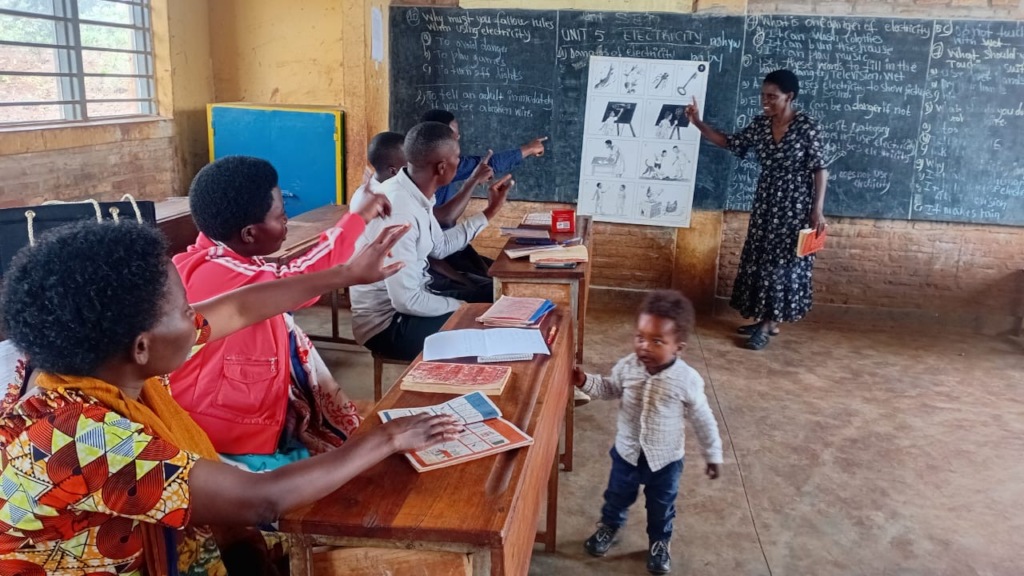
In Rwanda it was most heartening when the teachers themselves organized some professional development and asked us to help facilitate the training session. Five new teachers were not fully getting to grips with using the New Original English Course (NOEC) books. These teachers were from Rudakabukirwa and Cyili primary schools. Teacher Josephine from Rudakabukirwa and Teacher Florence from Cyili have mastered the use of the books and decided to offer training. This took place on a Sunday and all were keen to attend.
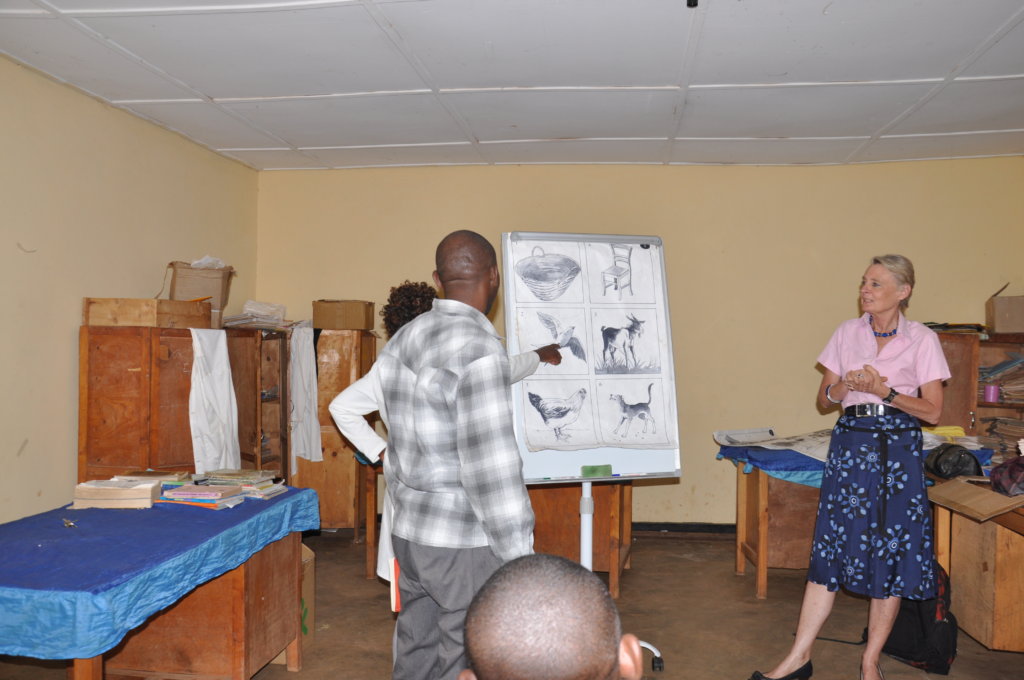
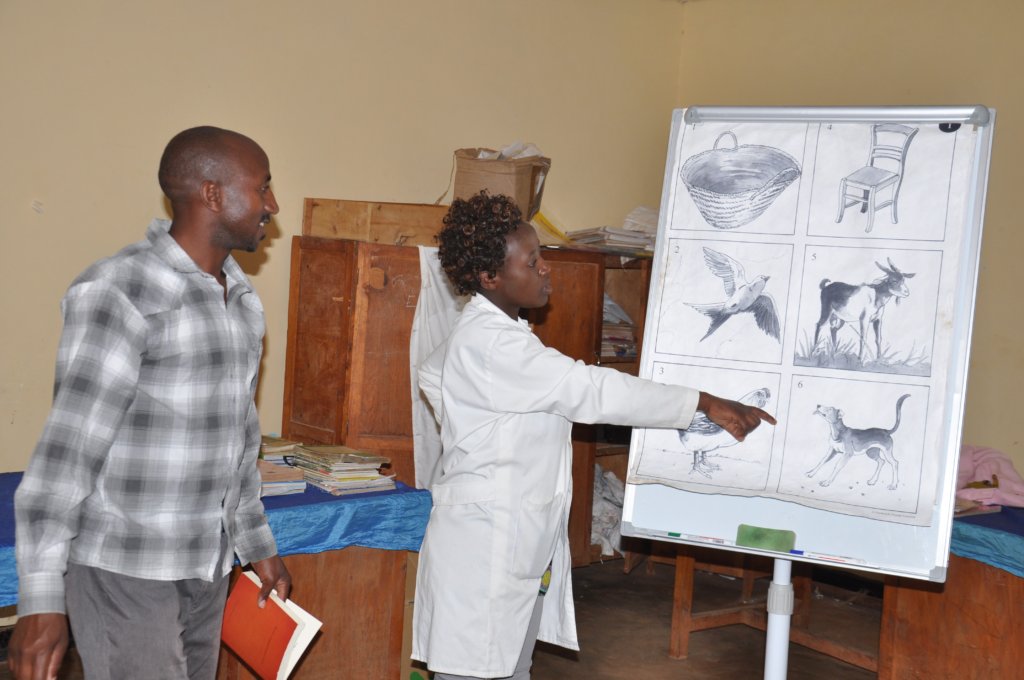
Josephine and Florence demonstrated the use of the Wall Charts and the methodology of how to ensure pupils participate in large classes. The use of the Teacher’s Notes was emphasized, as that is where everything is set out for the teacher. The teachers played the part of pupils during the training session, and that helped them to see how much demonstration by the teacher is needed in order for the pupils to ‘see’ the meaning and to hear the correct pronunciation and sentence structures. It also helped them to see how the teacher uses the Teacher’s Notes during the lesson. It was a very good day, and even Teacher Florence’s young son, who could not be left at home, seemed to enjoy it.
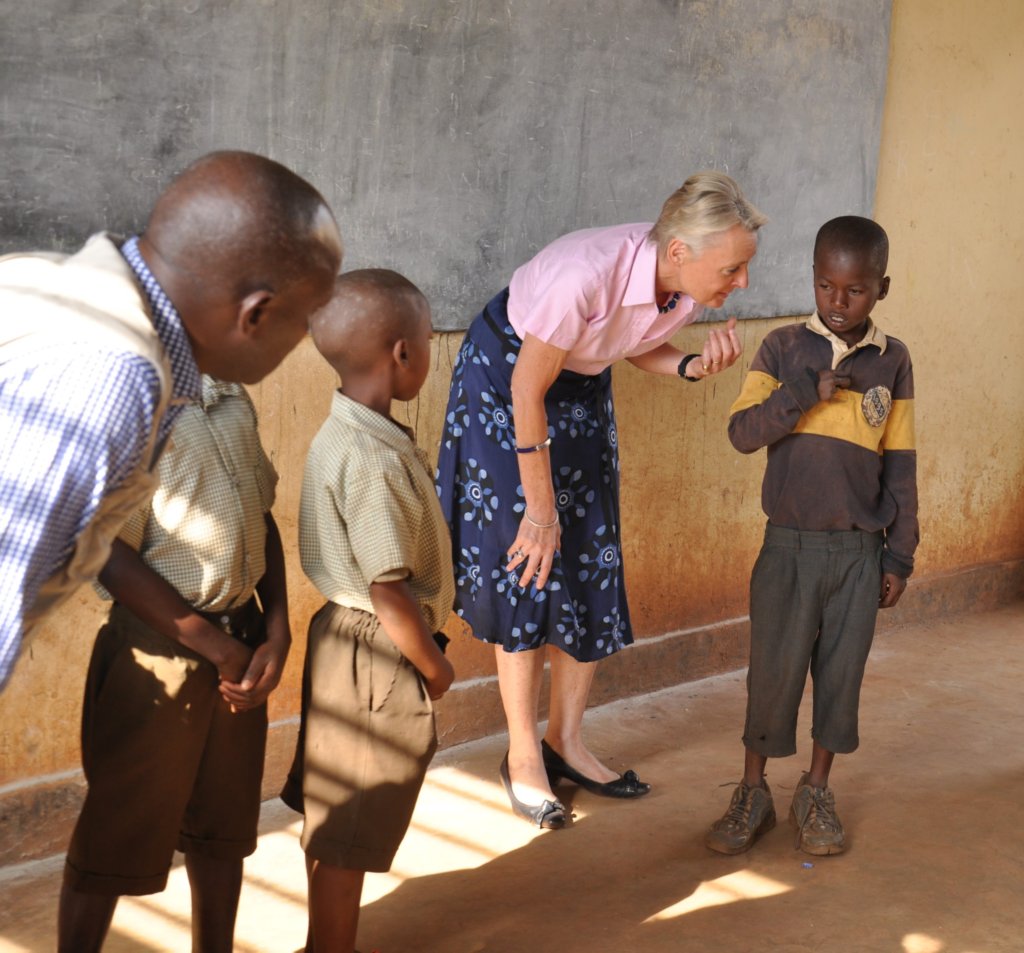
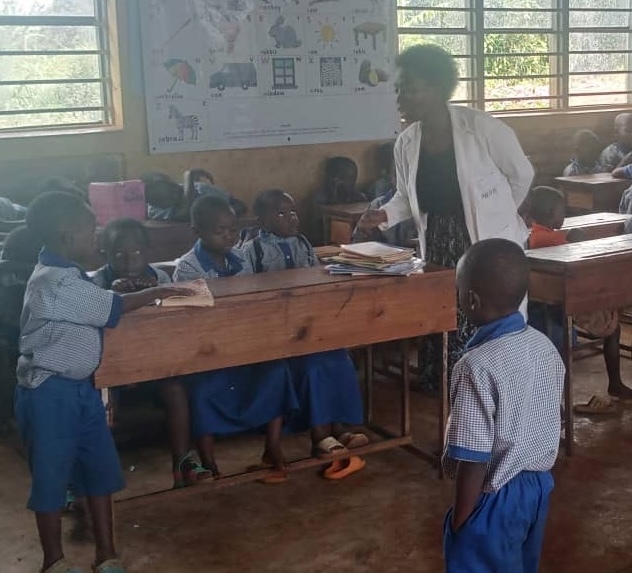
Teacher Olive from Rudakabukirwa primary school was one of the teachers who attended. Observing one of her lessons a little time after the training session, it was clear to see the change in her confidence. This particular lesson was part of the teaching of ‘I am touching…..’ and ‘I am pointing to…..’ It is, of course, crucial that the pupil does, and continues to do, the action whilst saying the sentence. In this lesson, the sentence structure had advanced to another pupil telling that class that, ‘s/he is touching the….’ or ‘s/he is pointing to the …….’.
This is one of the meanings or uses of the present continuous tense, and is good to teach as all the pupils can see what is happening. The teacher instructs that the ‘touching’ or ‘pointing to’ must continue while the sentence structures are being practised, otherwise all meaning is lost.
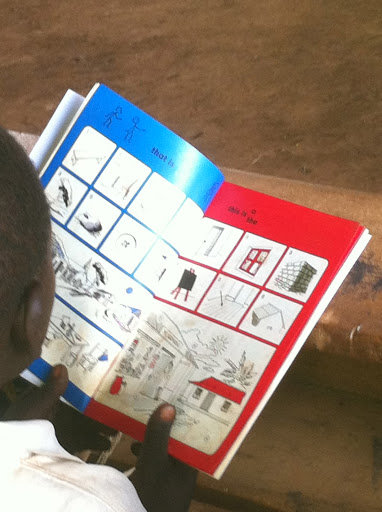
The NOEC in its very early lessons taught the difference between ‘this’ and ‘that’. For a pupil to say, ‘This is a book’ she or he had to touch it. That was demonstrated without the pupil yet learning the English word ‘touch’, although the teacher would say ‘Touch it’ as part of passive learning. For the pupil to say ‘That is a book’, she or he had to be pointing to it. Now much later on in the book, with the introduction of the present continuous tense, these verbs are actively taught. It is wonderful progression, as the concept is not new and the action is not new, but merely a new sentence structure is introduced.
Once the present continuous form has been practised sufficiently the pupils start to do what the NOEC calls an ‘action chain’. They then say, with the actions, ‘That is a chair. I am pointing to the chair. This is the chair. I am touching the chair’.
Along the way, the use of the word ‘the’ has crept in to their learning. In Kinyarwanda there is no equivalent of ‘a’ and ‘the’. The NOEC Teacher’s Notes has a small section on the three main uses of the word ‘the’, even though for the time being the teachers are only to teach two of those uses. The first use is taught fairly early on with, ‘the floor’, ‘the roof’, ‘the door’ and, assuming there is only one, ‘the blackboard’. The next structure is ‘the…of the…’, so, ‘That is the roof of the classroom’ etc.
In Olive’s lesson another use is to be introduced in the structure when the pupils practise the ‘action chain’: ‘That is a book. I am pointing to the book. I am touching the book’. A very brief explanation is given to the pupils in their mother-tongue about the change from ‘a’ to ‘the’ when a specific item is chosen and becomes the focus of attention. There are rare occasions in the NOEC when a short mother-tongue explanation is given. It should be said that all of the explanations to the teachers in the Teacher’s Notes are in their mother-tongue so that a good understanding is assured. This is the way in which the teachers are training on-the-job and improving their own English whilst teaching it to the pupils.
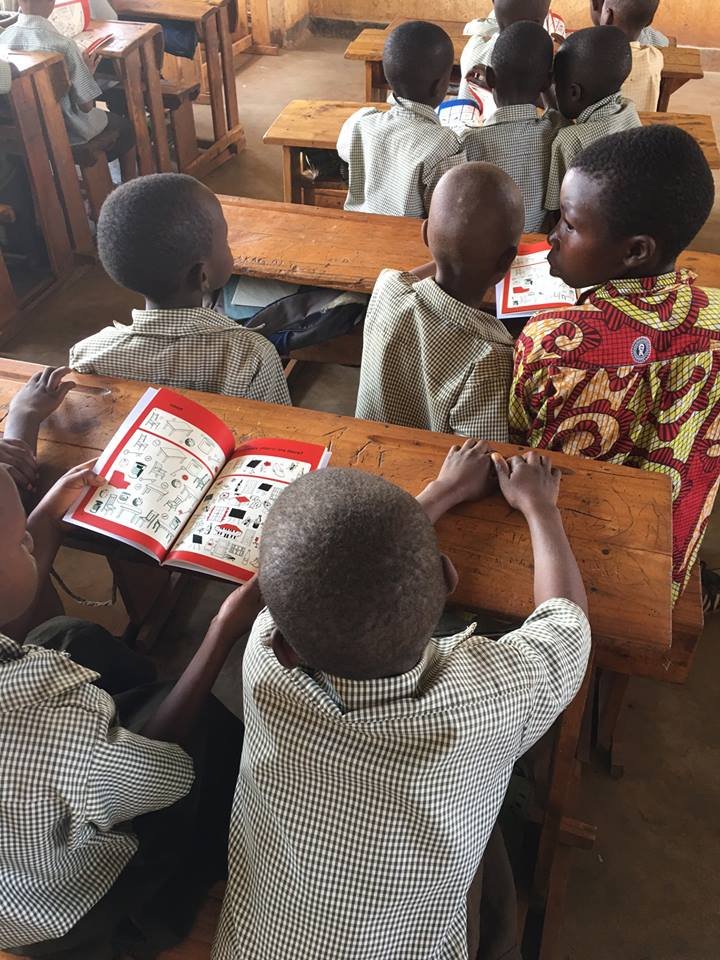
This careful development of sentence structures with inbuilt revision and practice is what sets the NOEC apart from other teaching material. The NOEC was based on the work of A. H. Hornby in his ‘A Guide to Patterns and Usage in English’. Early on when we started to resurrect the use of the NOEC books, I approached Professor Richard Smith of the University of Warwick who is the founder and curator of the Warwick ELT Archive which is a unique historical collection of materials relating to the history of teaching English as a foreign language. Indeed, Professor Smith’s main field of research is the history of English language teaching. He wrote, ‘…it is possible to make a strong case for the reintroduction of the NOEC books into primary schools’ in East Africa, and ‘I fully support (the) campaign for this to occur.’ Professor Smith also noted that the NOEC books have several advantages over many more recently published coursebooks.
It continues to be disappointing when new programmes enter the Rwanda primary schools backed by large donors. The latest is LIFT (Learning and Inclusion for Transformation) funded by the UK FCDO. The programme has a focus on inclusive education particularly for girls and children with disabilities but it also aims to support teachers to ‘strengthen foundational literacy and numeracy’ as well as ‘structured pedagogy and learning assessment’.
Two of the primary schools in which we work are part of this LIFT programme, and are told they have to timetable for both the LIFT material and the government’s Rwanda Education Board material. This is causing anxiety for the teachers, with the unfortunate result that they are reducing their use of the NOEC books. However, Headteacher Enoch of Cyili primary school is, we understand, influencing the headteacher of Murambi primary school to increase the use of our NOEC books in the knowledge that they work and bring results to both teachers and pupils.
It is a shame that our size cannot create the necessary influence in government circles. We continue with our advocacy but for the time being ‘money talks’. Soon we are hopeful that our track record of success will speak for itself. At present we are directly involved in the English language learning of 904 pupils. In the past thousands and thousands of pupils have benefited from the NOEC books, not to mention the many teachers whose language ability and teaching have been transformed.
I find the success and joy that the pupils gain from learning with the NOEC books heartwarming and uplifting. Once again, thank you so much for your kind and generous support which enables our work to continue. In our small way we keep fighting and bringing about change to the many lives that are touched by our work.
Many, many thanks and all best wishes.
Katy
Project reports on GlobalGiving are posted directly to globalgiving.org by Project Leaders as they are completed, generally every 3-4 months. To protect the integrity of these documents, GlobalGiving does not alter them; therefore you may find some language or formatting issues.
If you donate to this project or have donated to this project, you can receive an email when this project posts a report. You can also subscribe for reports without donating.



Support this important cause by creating a personalized fundraising page.
Start a Fundraiser