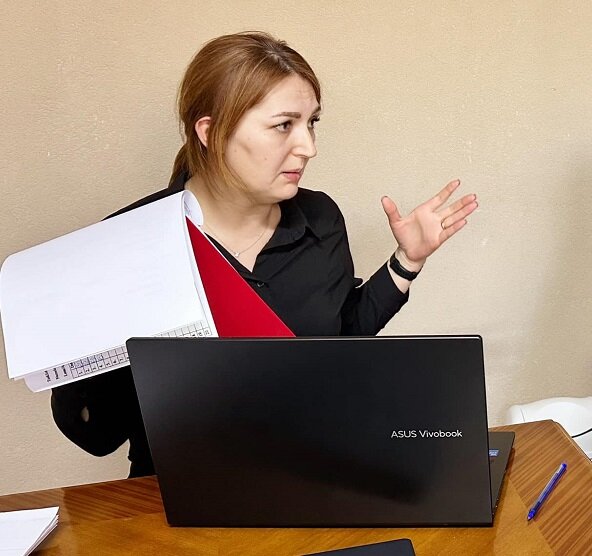
By Ana Cislaru | Lead therapist
Ana continues her training, giving her more tools to help autistic children and their families who otherwise would have nowhere to turn for support. Here she explains how her training helped her plan the programme of therapy for Alex. Despite a difficult start, she was able to find the key to his progress.
'I want to share the story of Alex, a 4-year-old boy who left a deep mark on my heart. He came to the center timidly, with wide eyes that avoided any eye contact. His parents, two warm and kind young people, were exhausted—not from a lack of love, but from uncertainty and helplessness.
When I first met Alex, he was non-verbal, cried at almost any change in routine, and walked on tiptoes. During the first few weeks, ABA therapy sessions seemed impossible—he refused to sit at the table, threw himself on the floor, and would self-harm. However, I noticed something essential: he was drawn to blinking lights and fascinated by musical toys.
Together with his lead therapist, we created an individualized intervention plan that focused on building tolerance, imitation, and functional communication. I successfully applied methods and principles I had recently learned during the behavior analyst training course organized by Autism Voice—especially techniques like systematic prompting, gradual desensitization, and differential reinforcement. I gained a deeper understanding of the role of motivation and the function of behavior, which helped me tailor the interventions more precisely and effectively.
After about six months, Alex began to accept the structure of the sessions. We introduced PECS (the Picture Exchange Communication System), and, surprisingly, he responded very well. He started using pictures to ask for his favorite musical toy or request water. Eye contact began to emerge gradually—at first fleeting, then more frequent. He started to laugh, to enjoy sensory games, and even to hug his parents.
How did I document these insights?
Every step was recorded in therapy journals, observation sheets, and progress charts. We used ABC analysis (Antecedent – Behavior – Consequence) and monitored behavioral functions, as taught in the course modules. I also integrated reflections and conclusions into internal supervision sessions and training workshops for new colleagues. Alex’s case became a valuable example in an internal workshop on adapting ABA strategies to meet the sensory needs of children.
What did I learn from this case?
I learned that no chart can replace empathy, that ABA is not about rigidity, but about adaptability and patience. That when we work with a child like Alex, we are also working with his parents—who need hope and real support. The course from Autism Voice gave me the tools to analyze more accurately, to plan more efficiently, and to support the therapeutic team in a structured and confident way.
Alex is now 5 years old and has started kindergarten with support. He still faces challenges, but he has a voice—even if it’s not always through words. But his eyes now seek the gaze of others, and his smile is proof that our work has meaning.'
Project reports on GlobalGiving are posted directly to globalgiving.org by Project Leaders as they are completed, generally every 3-4 months. To protect the integrity of these documents, GlobalGiving does not alter them; therefore you may find some language or formatting issues.
If you donate to this project or have donated to this project, you can receive an email when this project posts a report. You can also subscribe for reports without donating.



Support this important cause by creating a personalized fundraising page.
Start a Fundraiser