Project Report
| Jul 17, 2013
New Grow & Cook Program
By Paul Roberts | Director of Intercultural Education
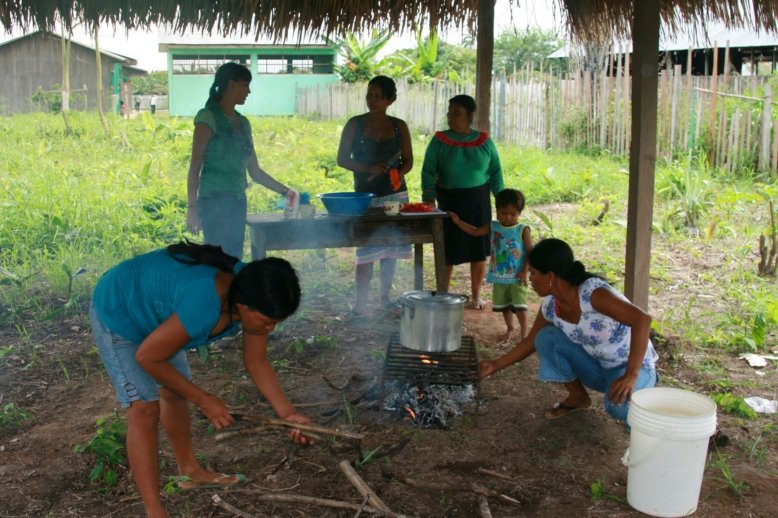
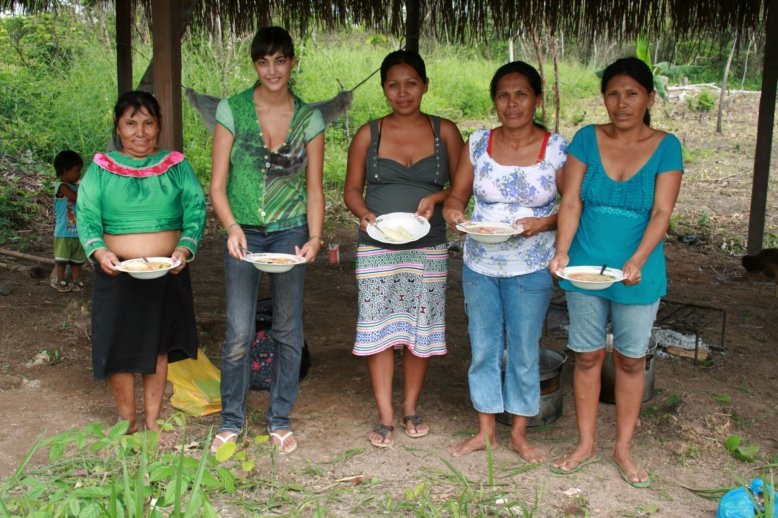
![Cooking Class]()
Cooking Class
Many thanks to our supporters, especially our regular donors, who have continued to contribute monthly donations since out first fund raising campaign last year.
This money has enabled us in the last three months to start a significant new project at the intercultural rural school in the Indigenous Shipibo community of Puerto Firmeza called “Grow & Cook”. This project is led by the nutritionist working full time with Alianza Arkana and has been made possible by the donations enabling us to build a traditional Shipibo model kitchen within the school grounds and to provide some of the food for the workshops.
This project is important because:
- It will provide classes in nutrition and cooking to students at the school and their mothers about the importance of a balanced diet. We have recently completed an in-depth study of the Shipibo diet in three communities, which has highlighted the need for good nutritional information to be made available and also indicated certain micro-nutrients that are lacking in the diet.
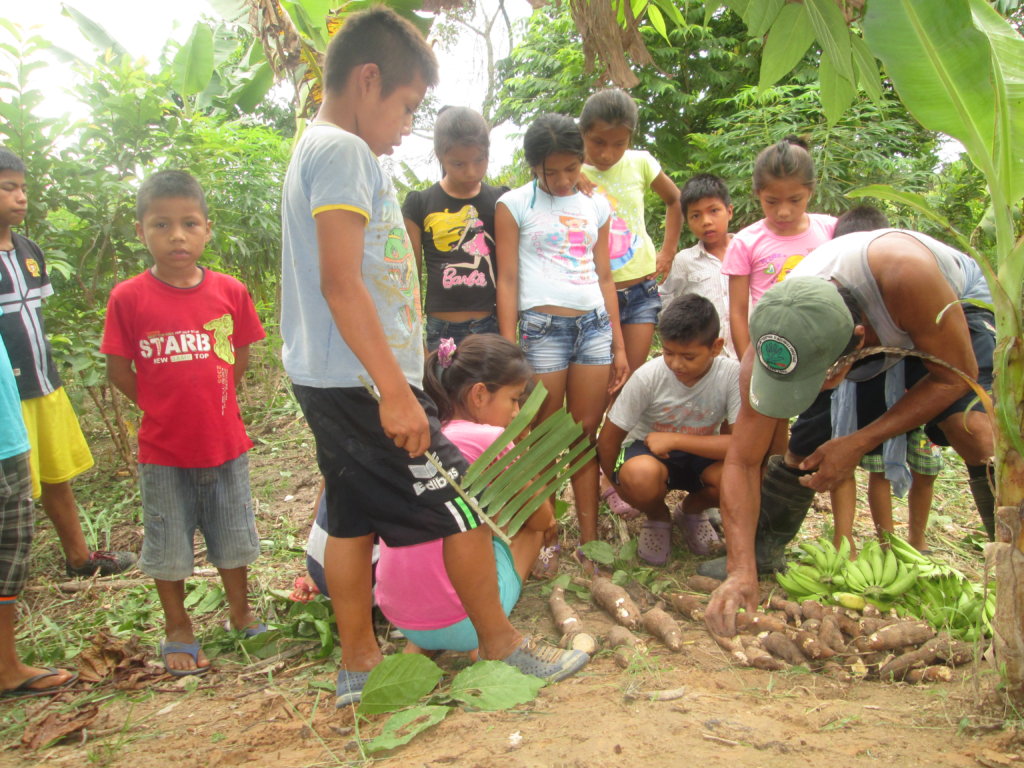
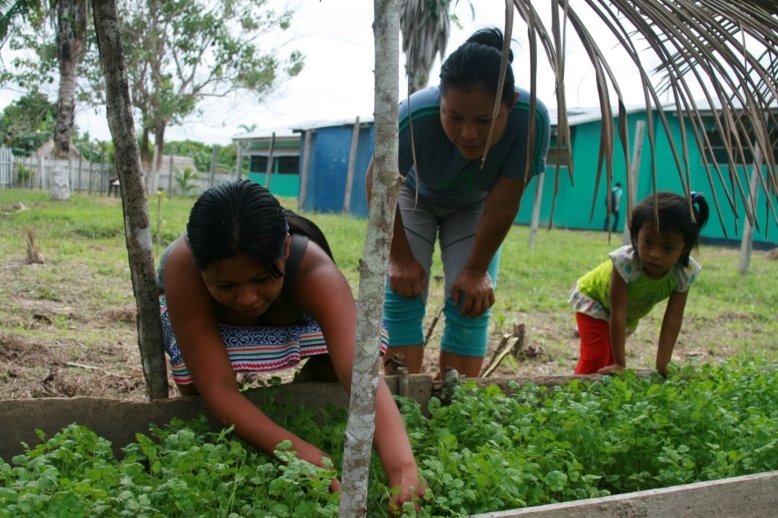
- It further builds school-community links by developing more connections between the work that is being done in the school grounds to grow fruit and vegetables, the teaching of the students about how to do this, and the mothers of the students who are attending the classes.
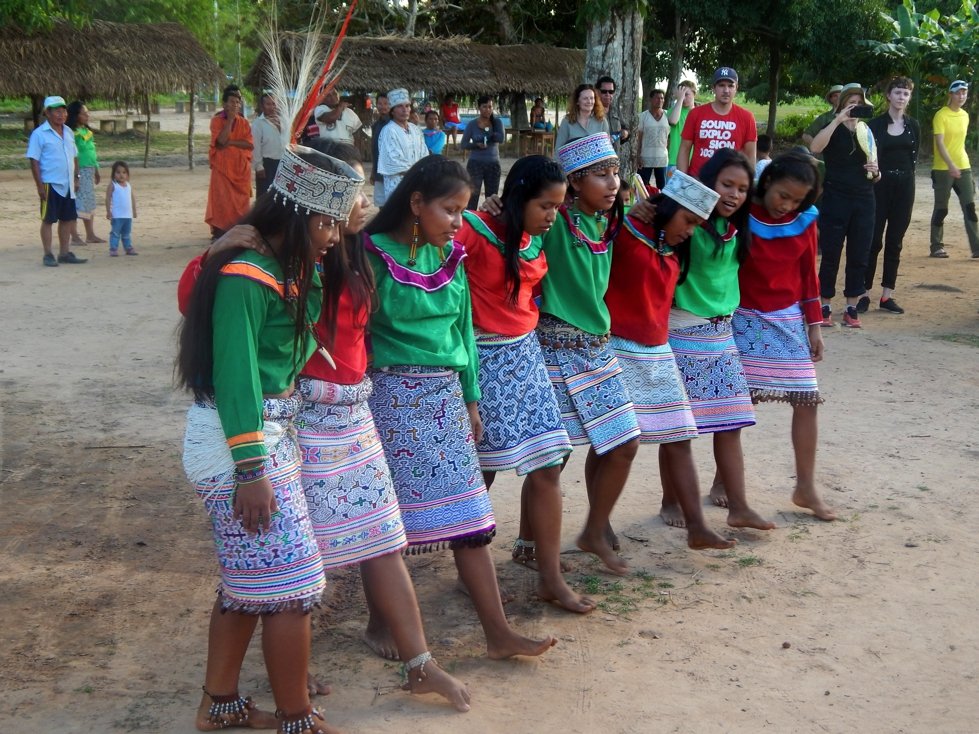
- It helps to reinforce traditional culture by using traditional cooking techniques and recipes.
The next stage of this project will be to run workshops for the mothers who are attending the cooking/nutrition classes on how to cultivate their own family orchards to guarantee a supply of healthy food for their families.
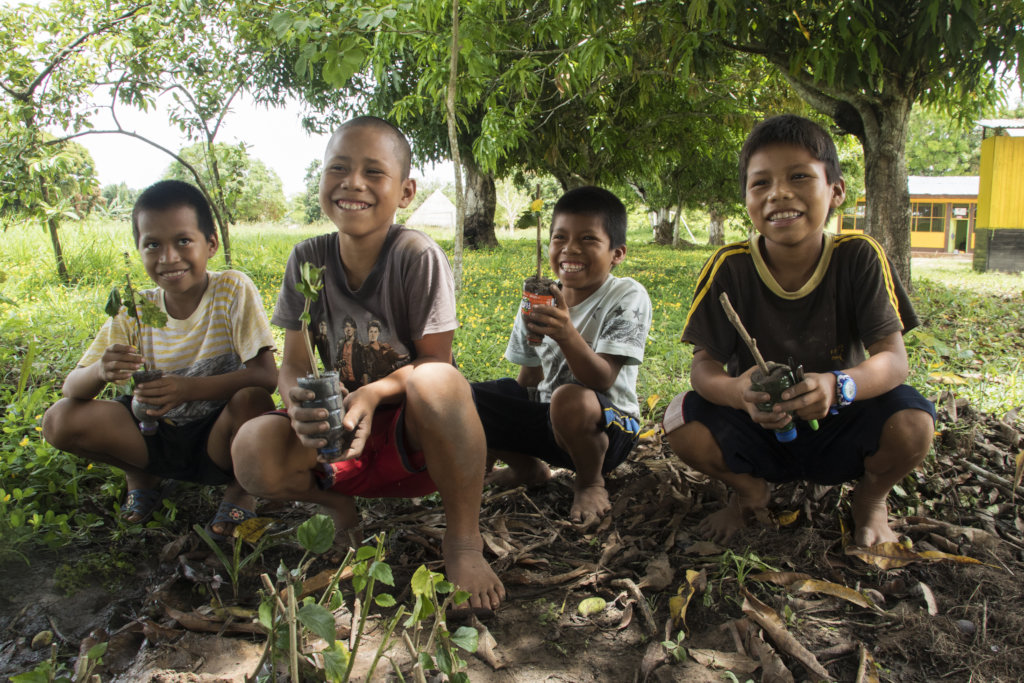
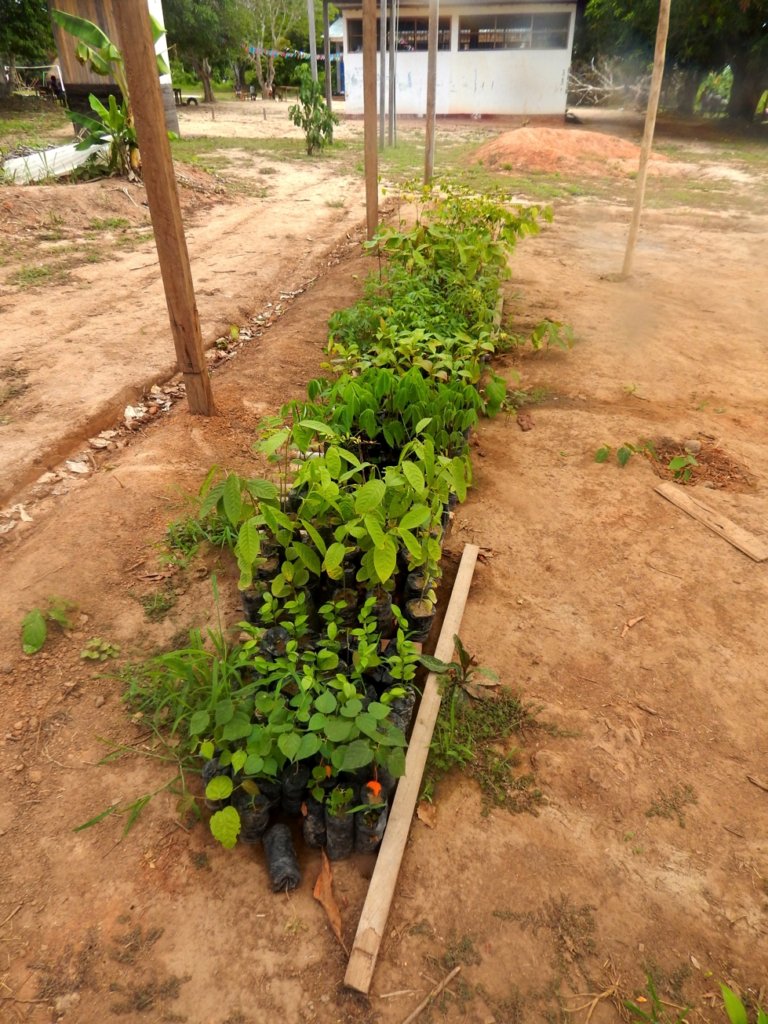
Another important development of the project in the last three months has been to clear an area to cultivate corn, which will provide food for the chickens that are being reared at the school. Over time, we hope to provide nutritious meals for the students at the school based on eggs and meat from the chickens, fish from the fish farm (which we plan to complete by the end of the year) and the fruit and vegetables, which are being cultivated in the school grounds.
![Cultivating Cilantro]()
Cultivating Cilantro
![Vegetable Soup]()
Vegetable Soup
![Share on Twitter]()
![Share on Facebook]()
Apr 23, 2013
Project Update Puerto Firmeza
By Paul Roberts | Director of Intercultural Education
![Composting Latrines]()
Composting Latrines
We are continuing to make good progress in creating a new model for intercultural education at this pilot school project known as “Soi Sani” of 120 students in the indigenous Shipibo community of Puerto Firmeza in the heart of the Peruvian Amazon.
Thanks to the generosity of our donors, we have been able to advance on four significant fronts in the last few months:
- We completed the construction of six organic compost latrines during the school holidays at the start of this year. On return to their school in March, the students were taught how to use these toilets. Apart from providing a much better experience than the dirty, unhygienic toilets that previously existed, these toilets will also produce manure that can used in the permaculture project in the school grounds.
- We have begun the construction of a traditional kitchen and workshop area on the edge of the school grounds. This kitchen will be used by the nutritionist working with us to give classes on nutrition and cooking for 15 people at a time to 80 children at the school and 30 of their mothers.
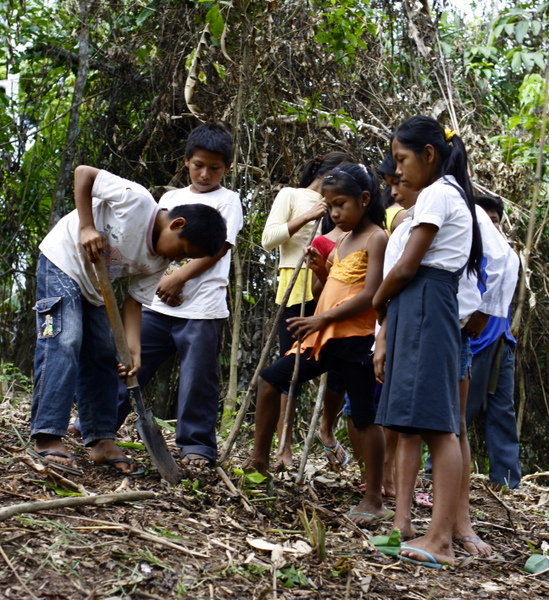
- We are planting vegetable crops such as carrots, onions, cabbage, spinach, lettuce and tomato to provide some of the basic ingredients for the cooking/nutrition classes. In addition, we will be running a three-day workshop to teach 15 members of the community how to plant and grow these crops for themselves.
- At the beginning of the new school year in March, we gave each one of the eight teachers at the school a small budget to enable them to purchase basic teaching materials such as pens and papers.
This new model of education is important as it combines the practical teaching of traditional agricultural practices based on permaculture principles with the Peruvian State education curriculum. By doing this, we are developing an innovative model of “productive education”. Additionally, the children will receive classes about the arts and crafts of their own culture and its cosmovision.
Many thanks to our donors who are enabling us to continue this important work, which helps preserve and strengthen a unique indigenous culture as well as help create food security and diminish malnutrition by developing the capacity of the students and their parents to grow their own nutritious food. And especial thanks to the donors who give monthly as this is invaluable in helping us plan ahead.
![Share on Twitter]()
![Share on Facebook]()
Jan 22, 2013
January Update
By Paul Roberts | Director of Intercultural Education
Many thanks to all our supporters who have generously donated via Global Giving. In total we have now raised $9,725 through this campaign.
This money has enabled us to do the following:
- Begin work on building a fish farm, which is a key part of our strategy to provide nutritive food to the children at the school, many of whom are suffering from malnourishment.
- Complete the building of an area to raise chickens. Each family has contributed one chicken. The children at the school will help rear these and, in time, apart from providing eggs and food for the school, two chickens will be returned to each family.
- Support two students on the Agriculture Degree Course at the National Indigenous University of the Amazon to attend a ten-week course on permaculture at the school during their three month vacations.
- Support the printing of material which is helping to introduce a new curriculum into the school closely linked to the Shipibo culture.
- Plant an area of fruit trees - some of which are for human consumption and some of which will feed the fish in the fish farm.
- Construct six new dry compost organic bathrooms for the school, which will provide manure for the cultivation of fruit, vegetables and medicinal plants.
Further donations will be used to:
- Build a traditional kitchen, combined workshop area and dining room on the school premises where a nutritionist employed by Alianza Arkana will teach the children and parents about nutrition, based on food that will be grown at the school and within the community.
- Begin to cultivate the additional three hectares the community have donated to the school with cotton that can be used to teach the children traditional weaving skills and further staple food crops such as yucca, platano and dale-dale.
![Share on Twitter]()
![Share on Facebook]()