By Valerie Baquerizo | Development Coordinater
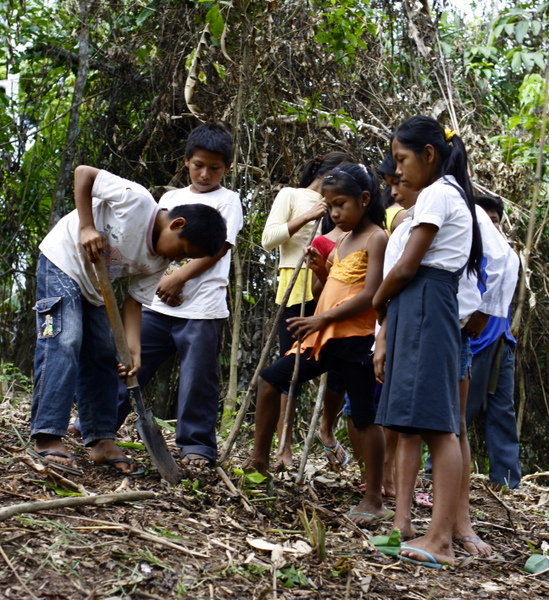
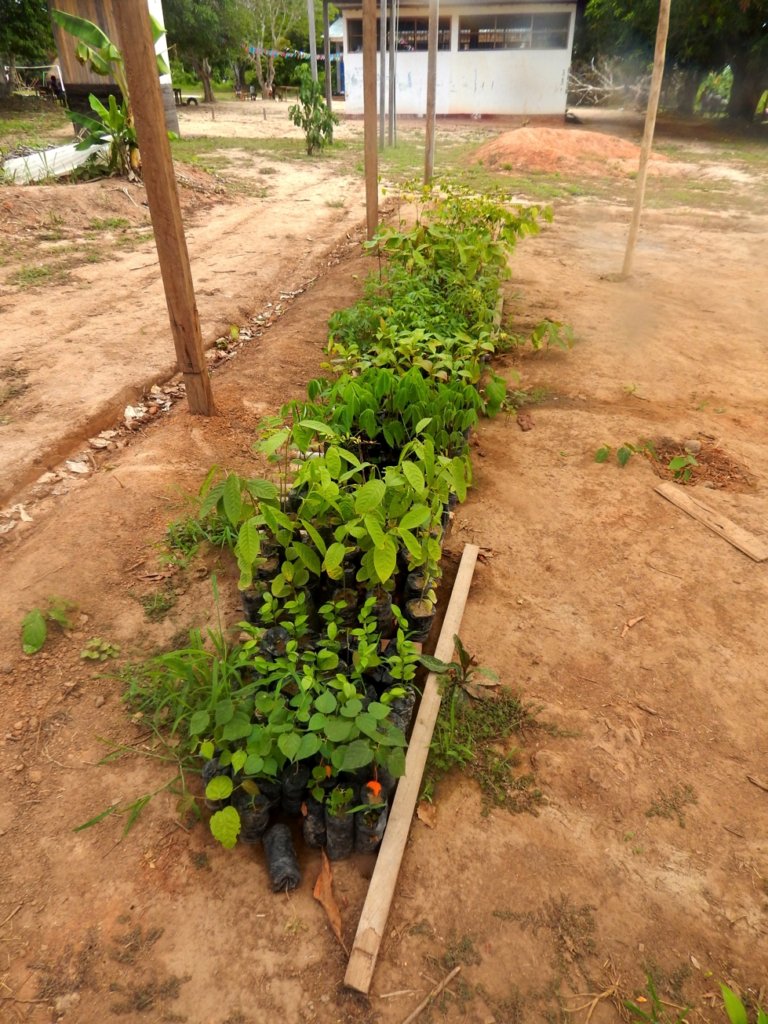
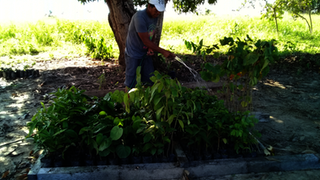
As soon as the rain was gone our activities started with the maintenance of the reforested area of 80,000 square meter. It was hard work, especially because everything grows faster with rain and the strong rainy season lasts over three month. However seeing how fast our planted trees, like mahogany, cedar, kapok and chihuawaku grow was rewarding enough to give us strength to continue the wok. With time, in a couple of decades, this small trees will became huge masters of the forest with highs between 50 and 70 meters.
Medicinal trees were also selected to be part of this reforestation initiative as a request of the youth to have better access to traditional medicines. Among the most popular is the Uvos, a big tree with sweet fruits used for juices, but also commonly used among Shipibo women to treat reproductive systems issues. While, Croton lechleri, another tree commonly known as sangre de grado or “dragon`s blood” has a thick red latex that is used as a liquid bandage to seal wounds, ulcers and other diseases.
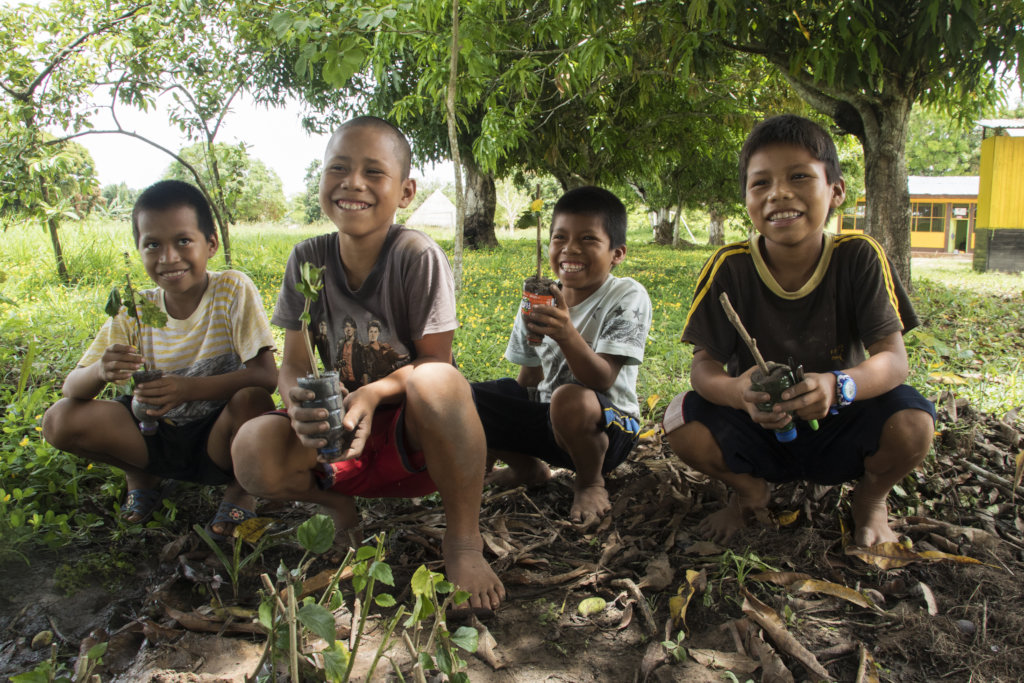
Since health is a mayor challenge among the community with great demand, this planting season was focused in one specific tree that has medicinal and food purposes: Ingas Idulis or guaba. This local fruit is widely grown and liked by indigenous people in the Amazon because of many reasons. For instance, the Tupi people call it the “ice cream bean” because of its sweet flavor and smooth texture of the pulp. However, it also provides medicinal treatments for diarrhea, arthritis and rheumatism. In total we planted 200 seedlings of the Inga Idullis and we can wait for people to benefit out of all of it.
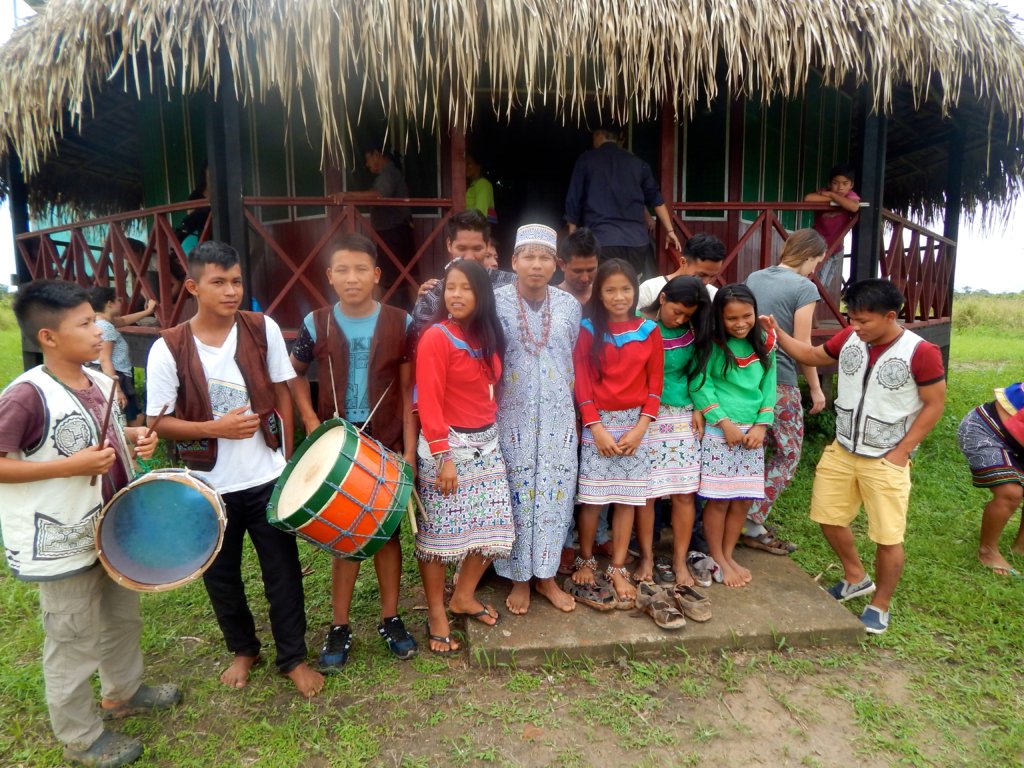
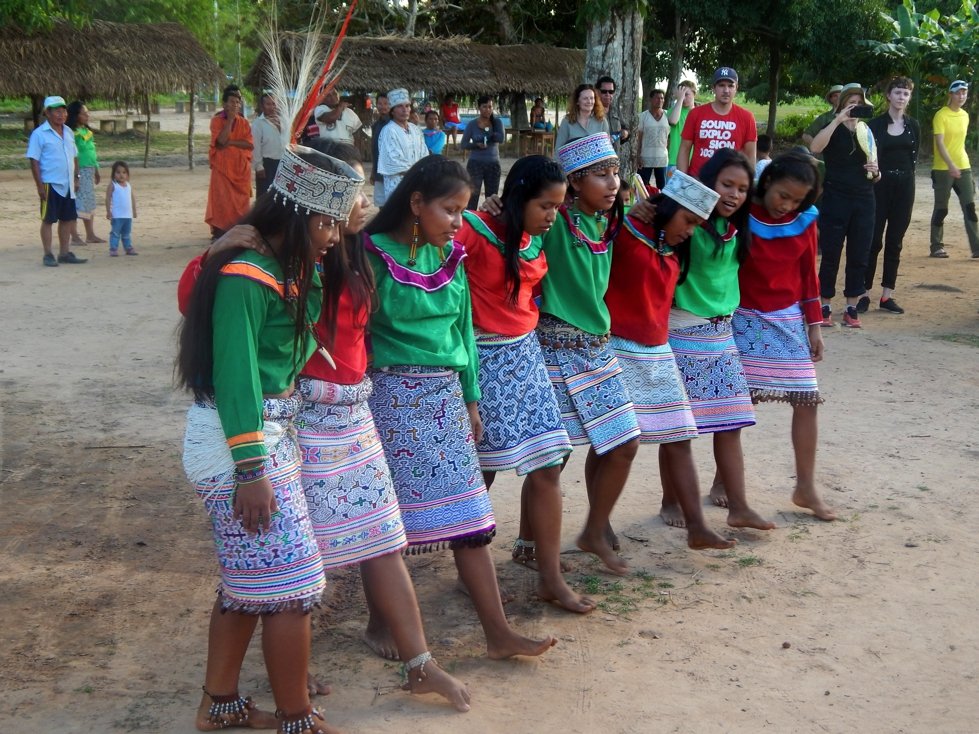
The Shipibo people believe plants have special powers to heal and maintain peoples` health. This highly motivates us in our mision of reforesting the Amazon, because we know we are not only supporting the environment, but also the health and traditional knowledge of this indigenous group.
Thank you for supporting this multifunctional endeavor,
Irake!
Project reports on GlobalGiving are posted directly to globalgiving.org by Project Leaders as they are completed, generally every 3-4 months. To protect the integrity of these documents, GlobalGiving does not alter them; therefore you may find some language or formatting issues.
If you donate to this project or have donated to this project, you can receive an email when this project posts a report. You can also subscribe for reports without donating.