By Anna Pacewicz | Chair
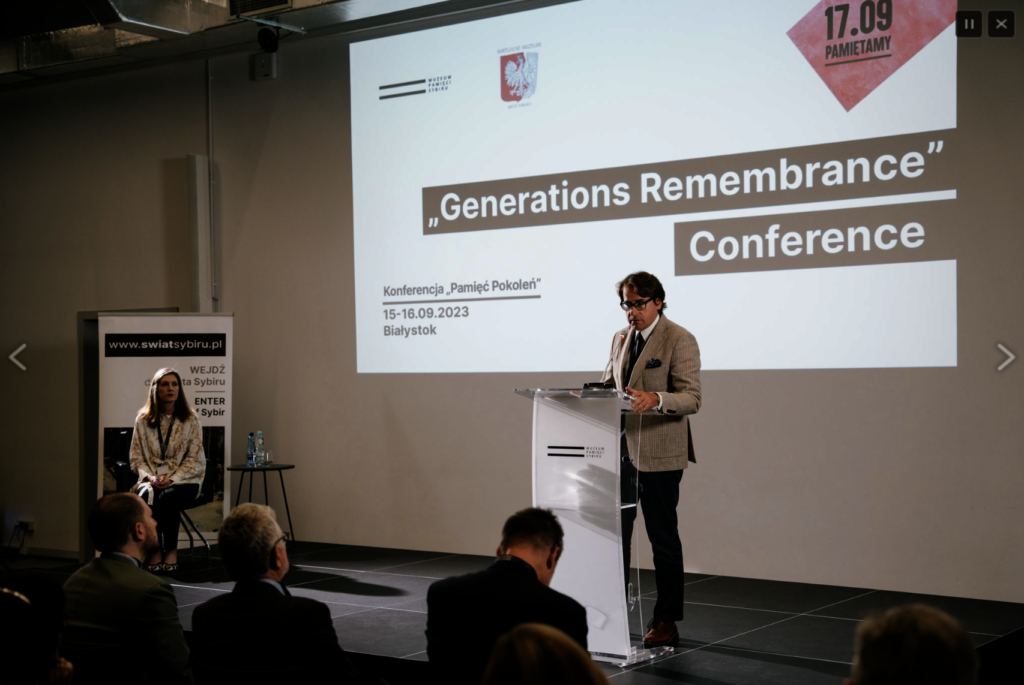
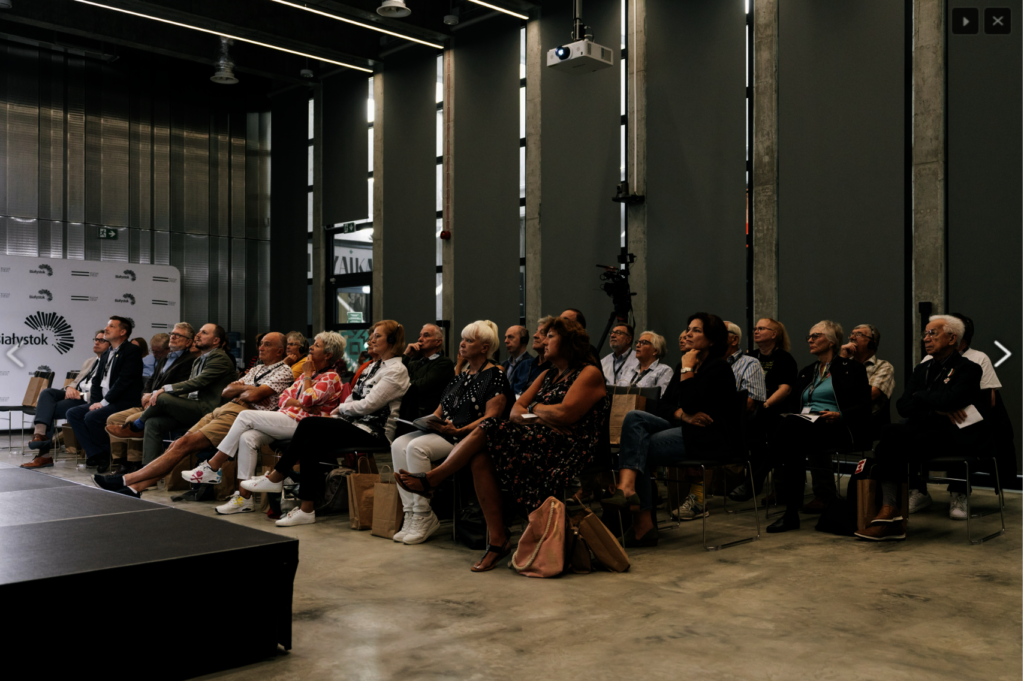
As the year draws to an end, we reflect on what a wonderful “Generations Remember” Conference we held from 15th-17th September in Bialystok this year. It was held in the newly opened Sybir Memorial Museum. The Museum Director, Dr Wojciech Sleszynski, was an exceptional host and partner, including our Kresy-Siberia participants in all of the Museum events for the 17th September weekend.
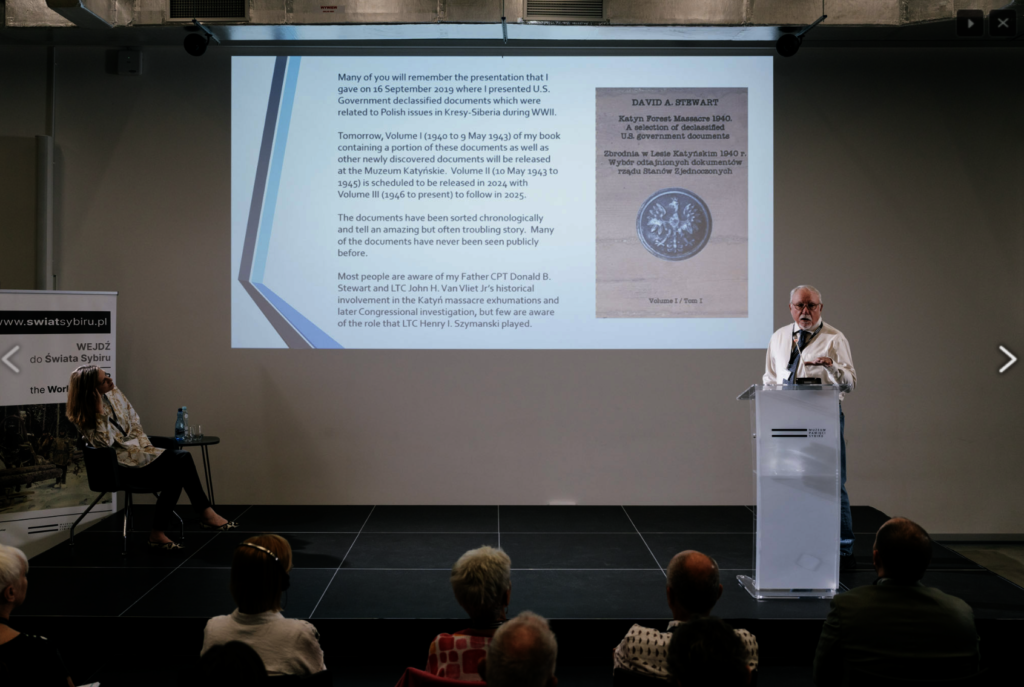
The conference began on Friday 15th September with our first speaker being Dave Stewart from the United States, who was preparing for the launch of his book at the Katyn Museum in Warsaw on the following day. Dave’s father, Donald B Stewart, was an American POW and among the witnesses to the exhumations at Katyn carried out by the Germans, and he later sent encrypted messages to the United States in which he identified the Soviets as the perpetrators of the massacre. A similar role was played by Lieutenant John H. Van Vliet.
Dave Stuart presented the results of his research on the U.S. government's knowledge of events in Poland's eastern borderlands during World War II, especially the Katyn Massacre. He focused mainly on the role played by Lieutenant Henry I. Szymanski who co-authored a report on the responsibility of the Soviets for the Katyn Massacre. However, the “Szymanski Report” was marked as top secret and archived by U.S. Military Intelligence. Dave Stewart’s exhaustive years of research in the U.S. archives brings the disappearance of the “Szymanski Report” to light and we are indebted to Dave for his dedication to historical truth.
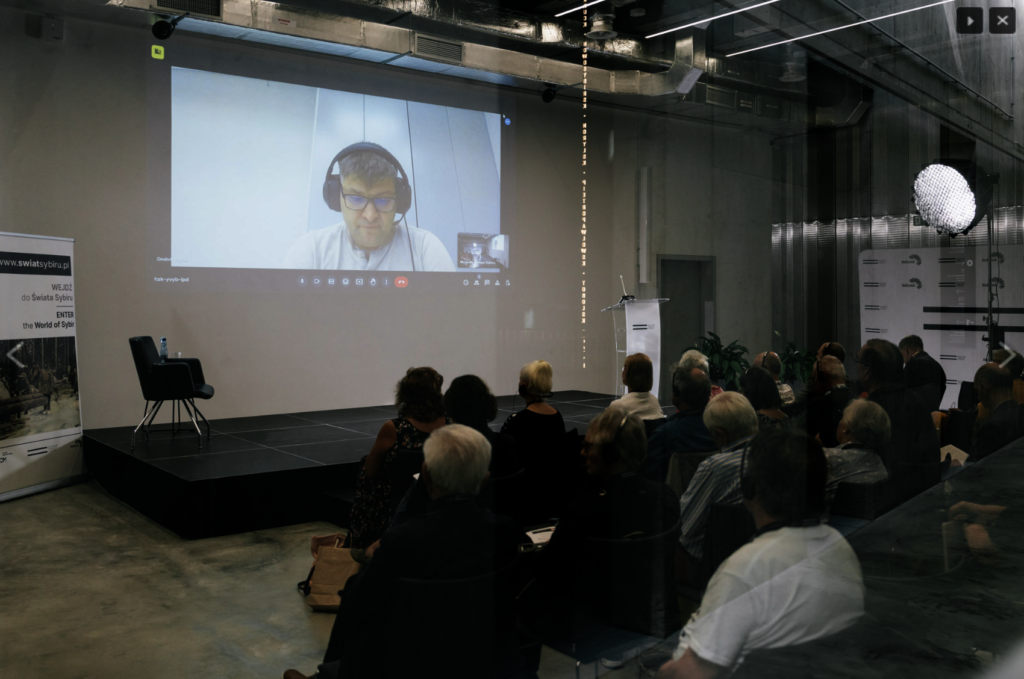
Our next session was a presentation by Dr. Dmitry Panto, a historian with the Museum of the Second World War in Gdansk, via an online videoconference. His lecture detailed the Polish delegations in Kazakhstan in the years 1941-1942. The network of Polish government delegations in the Soviet Union was established after the signing of the Sikorski-Mayski Agreement (30 July 1941). The delegations helped Poles deported to the USSR in several ways – with passports, financial assistance, clothing and food. There were orphanages, clinics, hospitals and even a Polish school. However, as Dr. Panto explained, the work of the delegations was obstructed by the local Soviet authorities. The liquidation of the delegations was a planned action which was completed on July 20, 1942. All delegates were placed under investigation by the NKVD and a total of 770 people were detained. Many delegation staff were sentenced to the gulags and many disappeared without a trace.
At the end of his lecture, Dr. Panto appealed for remembrance of the employees of the delegations, trustees and all those devoted to working for the benefit of their compatriots in the USSR.
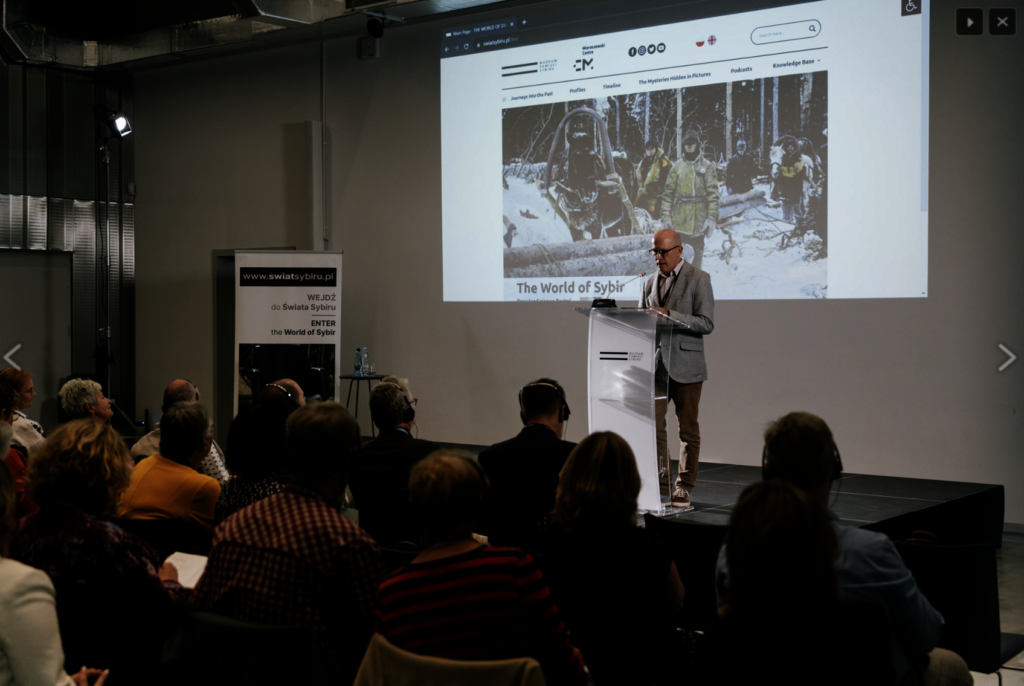
As part of the third lecture, Dr. Tomasz Danilecki from the Scientific Department of the Sybir Memorial Museum presented the popular science portal The World of Sybir. It is an initiative of the Museum carried out with the support of the Juliusz Mieroszewski Dialogue Centre. Texts, history, archival studies, ethnography, literature and art are regularly published here in addition to Podcasts, recordings and photographs. The portal also has the ambition to become a place for the exchange of information for Siberian descendants scattered all over the world. That is why it has not only a Polish, but also an English version.
The fourth presentation was given by Dr. Alison Urban from the University of California, San Diego. She discussed the phenomena of memory and post-memory, as well as the processes of passing on memories between generations. "We talk so much about memory because we have so little of it left" – was the motto of the lecture chosen from the book "Between Memory and History" by Pierre Nora. We all related so strongly to Alison’s own experience as a descendant of Sybiraks growing up in America and her point about how younger generations absorb the memories of their parents or grandparents: "I felt that the memories of my aunts and grandmothers were mine.”
Remembrance is necessary – so that we know our roots and can create our identity, but also to honour those who have been condemned to oblivion. "An act of remembrance is an act of resistance. It's a refusal to be forgotten”. Alison’s words strike a deep chord within all of us and reminds us why we are all on this journey of research and remembrance.
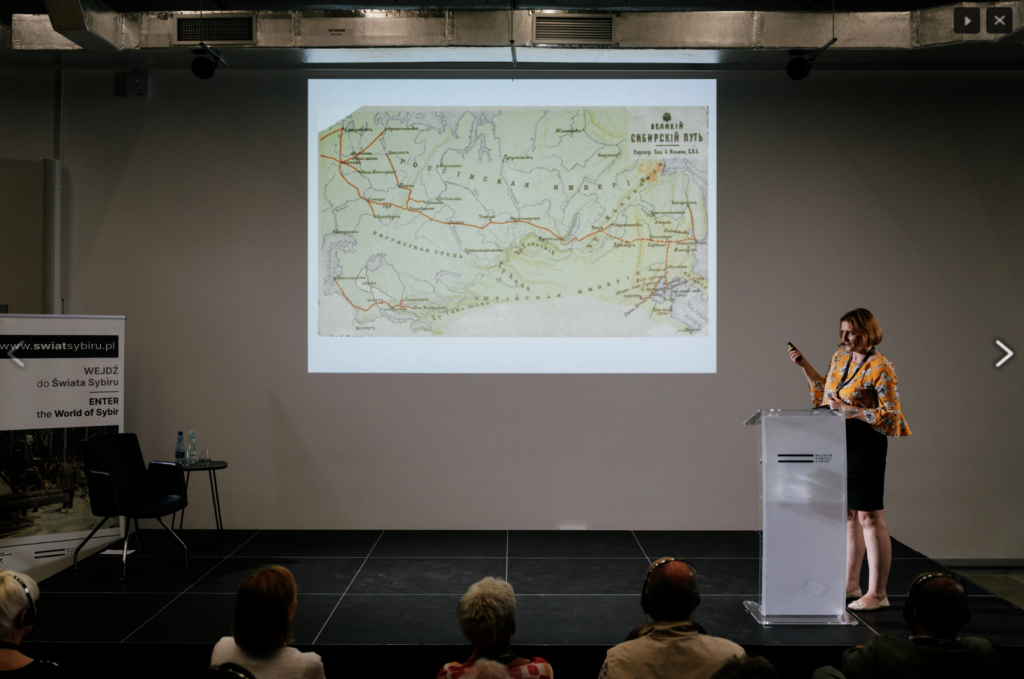
The fifth presentation was another fascinating journey through time and space – Marta Czerwonec-Ivasyk, who is preparing her PhD thesis at the University of Natural Sciences and Humanities in Siedlce, presented the profiles of Polish railwaymen building the Trans-Siberian Railway in the 19th century. "Over 15,000 people with Polish identity worked on the Trans-Siberian Railway. I'm preparing a biographical dictionary, there are 600 names on my list," said the researcher. A number of those people were presented to us in Marta’s presentation – for example: Kazimierz Falkowski (1875-1936) was the vice-president of the Directorate of the Aczynsko-Minusinska Railway; Hieronim Bejnar-Bejnarowicz, born in 1860, was the son of a post-January exile; Teofil Wostowski (1868-1930) was a socialist ideologue…
The part of Czerwonec-Ivasyk's lecture on Harbin (aka Charbin) was extremely interesting. "Today it is the sixth largest city in China," she said. And it was founded by a Pole and for years it was a centre of Polish culture. In fact, one of our conference participants from Canada – Paul Wojdak – is researching his own family history’s links with Harbin.
At the end of her lecture, the researcher invited everyone to familiarize themselves with her website, which is a database of historical information about Polish railwaymen.
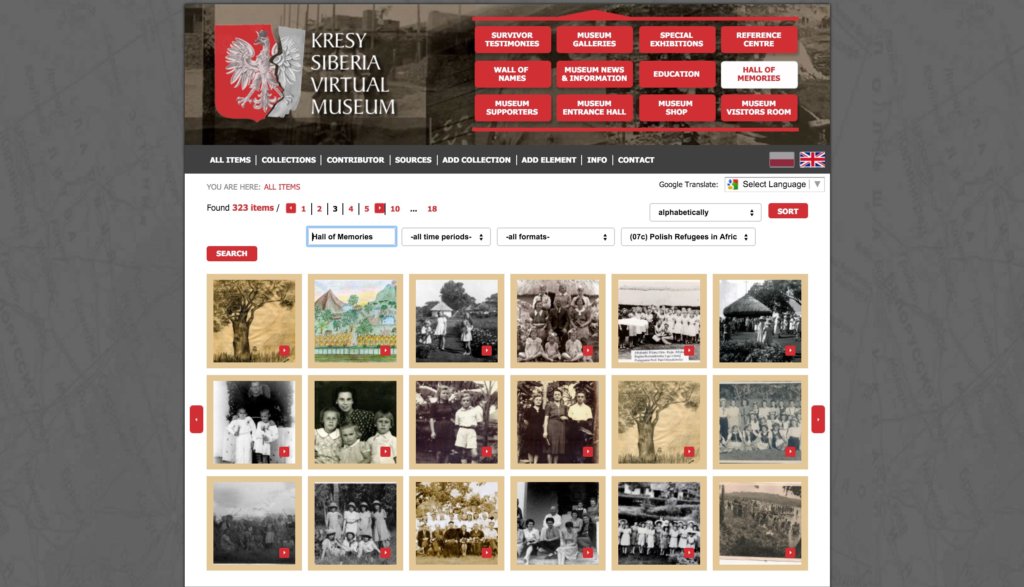
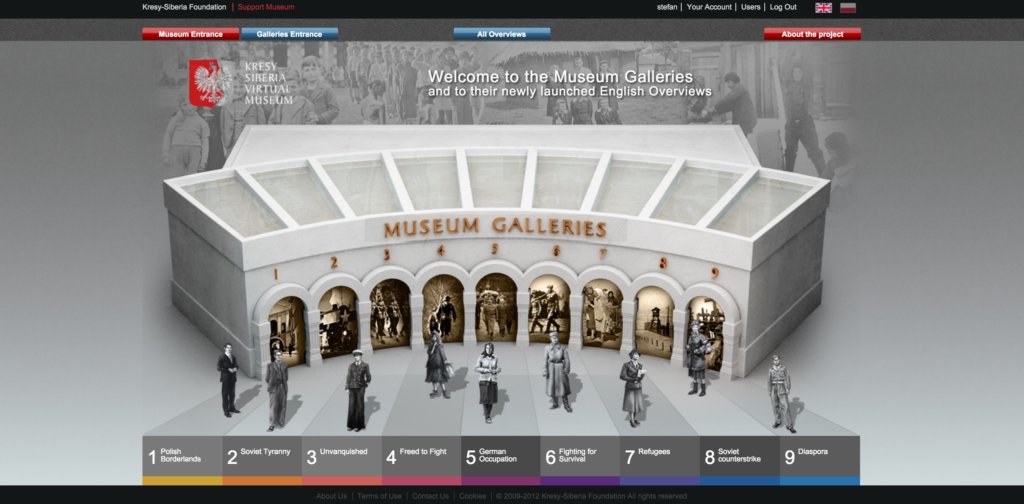
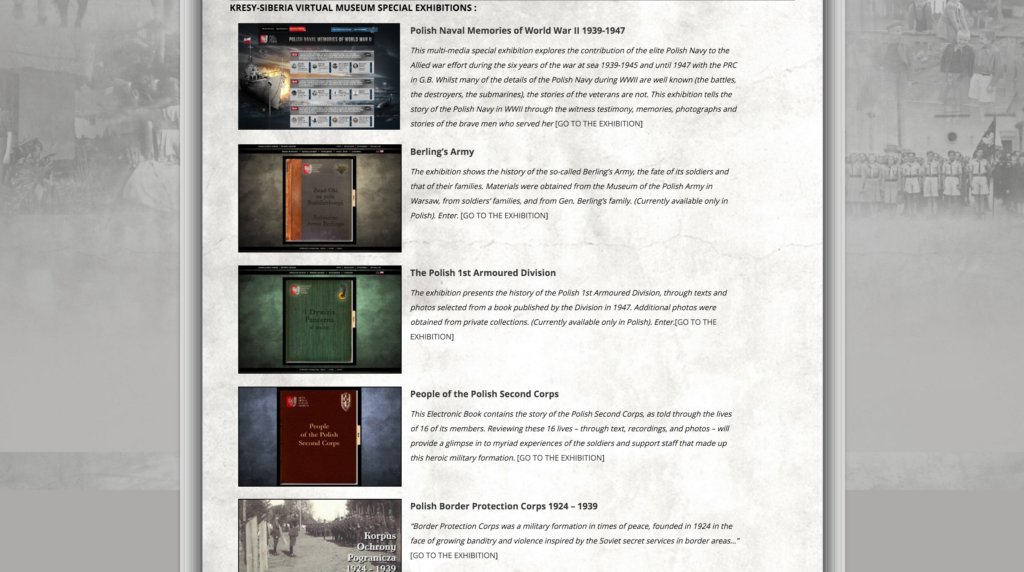
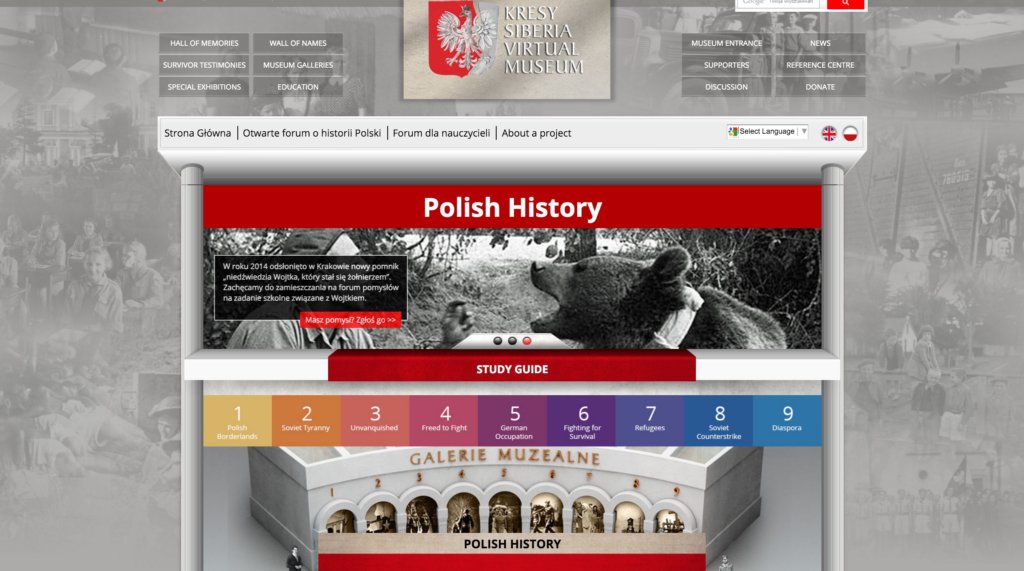
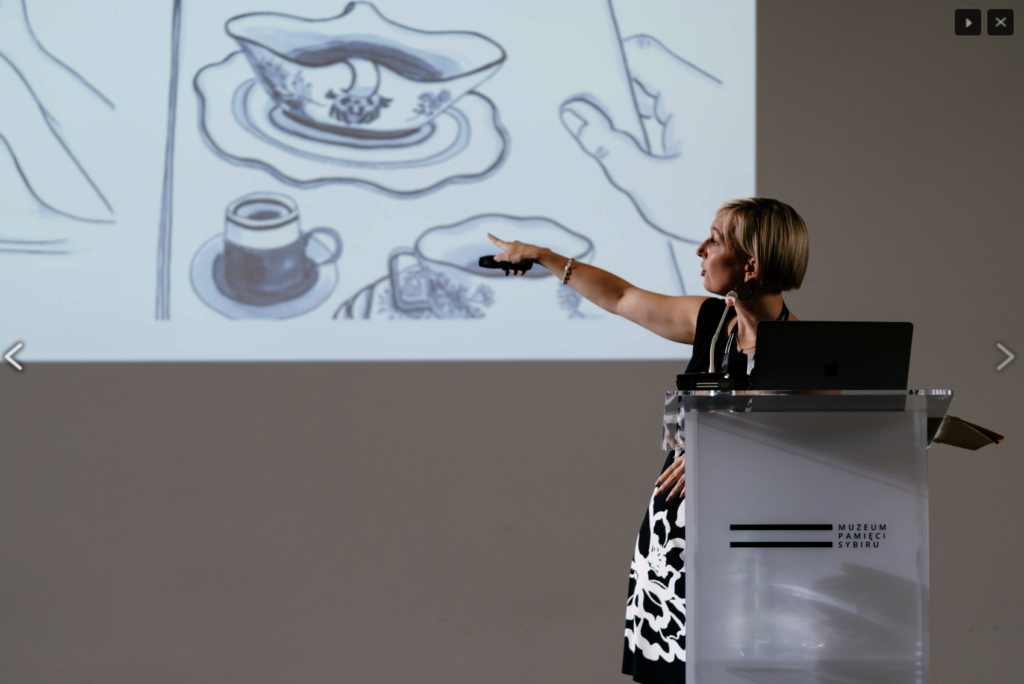
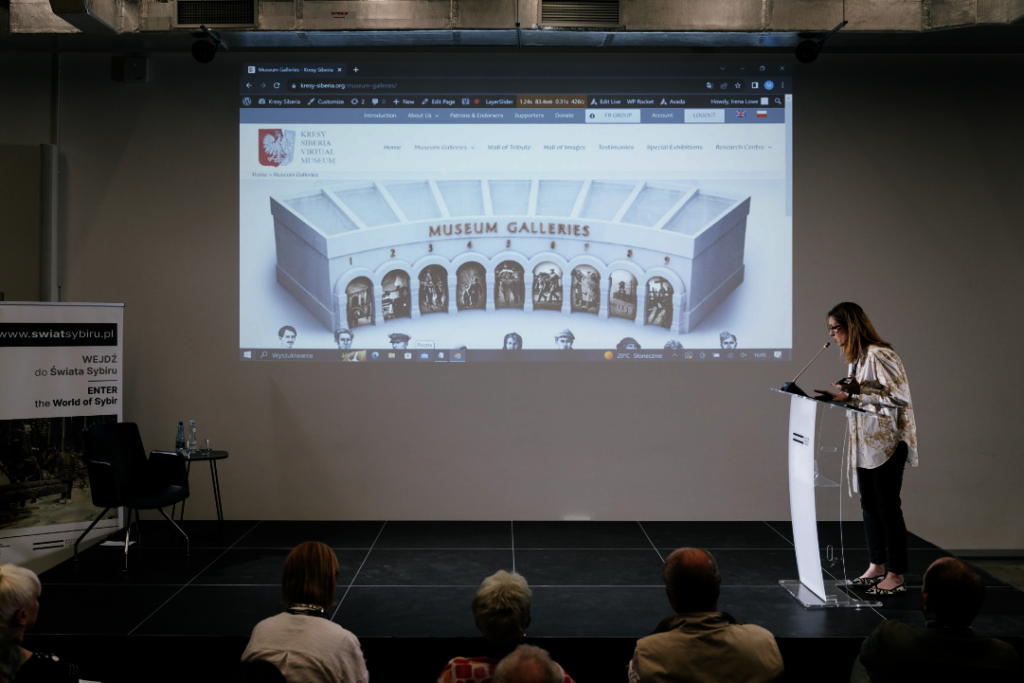
The conference ended with our own presentation of the Kresy-Siberia Virtual Museum. Irena Lowe from New Zealand and myself, Anna Pacewicz from Australia, took the audience on a virtual walk. We introduced the audience to the newly re-launched virtual museum and its Galleries - including the Hall of Tribute, Hall of Images and Survivor Testimonies.
Throughout the day our brilliant interpretor, Anastazja Pindor, simultaneously translated English to Polish and vice versa with the wonders of modern technology – a translation booth with headphones provided by the Sybir Memorial Museum.
The following day, Saturday 16th September, the Kresy-Siberia participants were once again hosted by the Sybir Memorial Museum – this time for a guided tour of the permanent exhibition which was both a fascinating and moving experience. Finally on Sunday 17th September we took part in the official commemorative ceremony with a military honour guard and local dignatories.
It was an exceptional three days and we were honoured to share such a generous and close collaboration with the Sybir Memorial Museum in Bialystok. It was also wonderful to meet so many old friends and meet in person so many "old" Facebook friends!
Post the global pandemic, the Kresy-Siberia team in the UK, in common with other such organizations, has been getting back into action. Notifications of events of interest and news, such as information about the closure of the Penrhos camp in North Wales or the on line zoom lecture series run by the Polish Historical Society on Polish Military History.have been shared with the group via face Book. A Military History Conference on the 7th October 2023 held at the The Polish Consulate in London on the “The II Corps in the Italian Campaign 1944-1945” was attended by Kresy-Siberia members, as was the conference . on the 1st and 2nd November at the Polish Social and Cultural Centre in London entitled "The Second World War through Anglo Polish Eyes" which was organised by the Anglo-Polish Cultural Exchange in partnership with the University of Oxford Their Finest Hour Project.
Links:
Project reports on GlobalGiving are posted directly to globalgiving.org by Project Leaders as they are completed, generally every 3-4 months. To protect the integrity of these documents, GlobalGiving does not alter them; therefore you may find some language or formatting issues.
If you donate to this project or have donated to this project, you can receive an email when this project posts a report. You can also subscribe for reports without donating.



Support this important cause by creating a personalized fundraising page.
Start a Fundraiser