By Khayat | Project Staff
I. Introduction
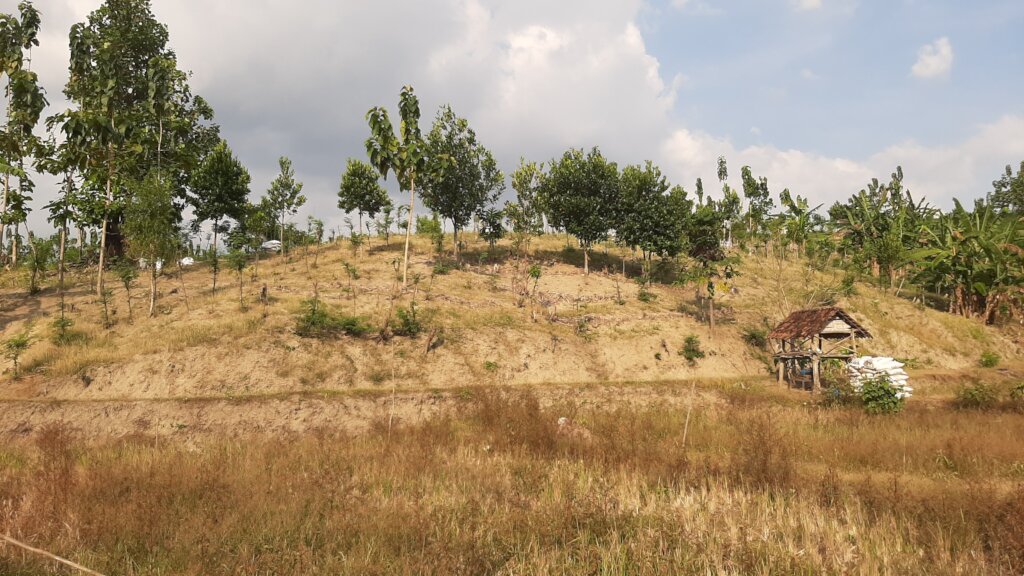
Forest landscapes in Java face increasing pressure due to seasonal monoculture farming, land degradation, and the economic vulnerability of forest-edge communities. Conservation strategies that focus solely on ecological protection without addressing rural livelihoods often struggle to achieve long-term sustainability.
Agroforestry offers a balanced approach by integrating ecological restoration with productive land use. This report outlines the main forms of agroforestry and describes the model currently implemented in Blora (Central Java) and Ngawi (East Java).
II. Forms of Agroforestry
Agroforestry systems can generally be categorized into three main types:
1. Agrisilviculture
This system combines forestry trees (Multi-Purpose Tree Species / MPTS) with agricultural crops.
Examples:
Coffee or cocoa grown under shade trees
Spices and food crops cultivated between timber or fruit trees
Key functions:
Maintaining tree cover
Reducing soil erosion
Diversifying farmer income
2. Silvopastoral Systems
This system integrates trees with livestock production.
Examples:
Sheep or goats raised within tree-covered landscapes
Use of understory vegetation as animal feed
Key functions:
Generating additional household income
Supporting organic fertilizer production
Optimizing land use without expanding into new forest areas
3. Agrosilvopastoral Systems
This integrated model combines trees, agricultural crops, and livestock within a single landscape system.
Key functions:
Creating a circular rural economy
Enhancing ecological and economic resilience
Supporting long-term land restoration
III. Model Implemented in Blora and Ngawi
Based on local ecological and socio-economic conditions, the approach adopted in Blora and Ngawi is an agrosilvopastoral model centered on Liberica coffee agroforestry.
1. Liberica Coffee Agrisilviculture
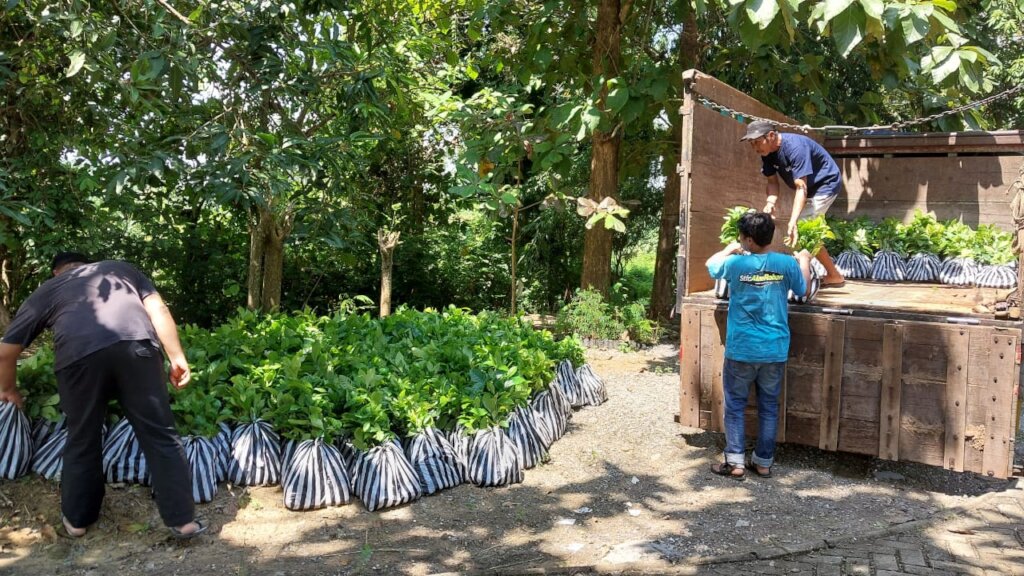
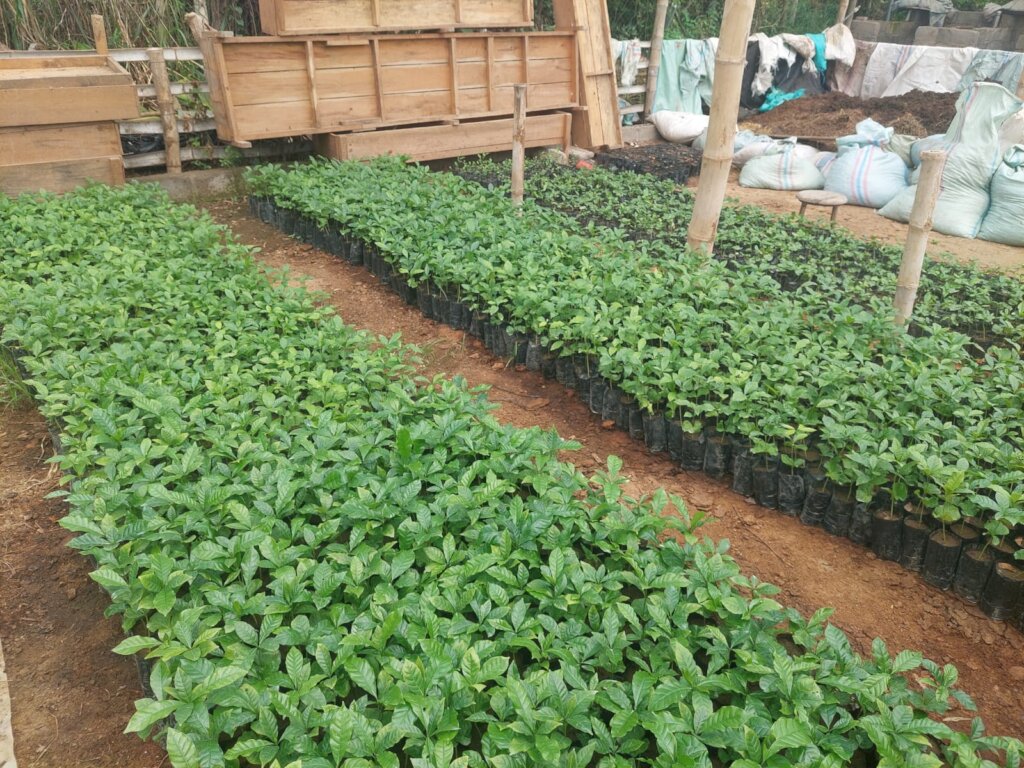
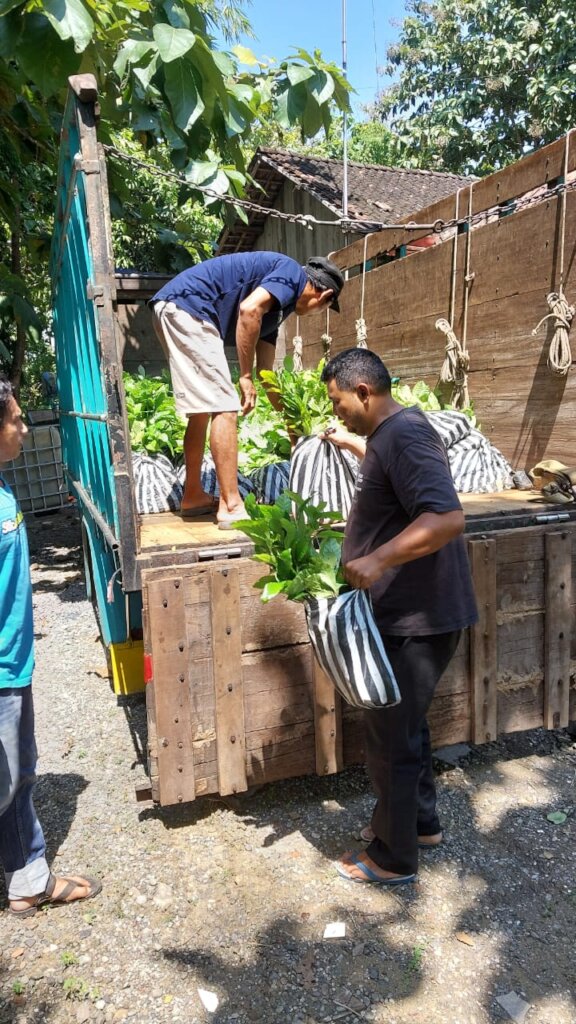
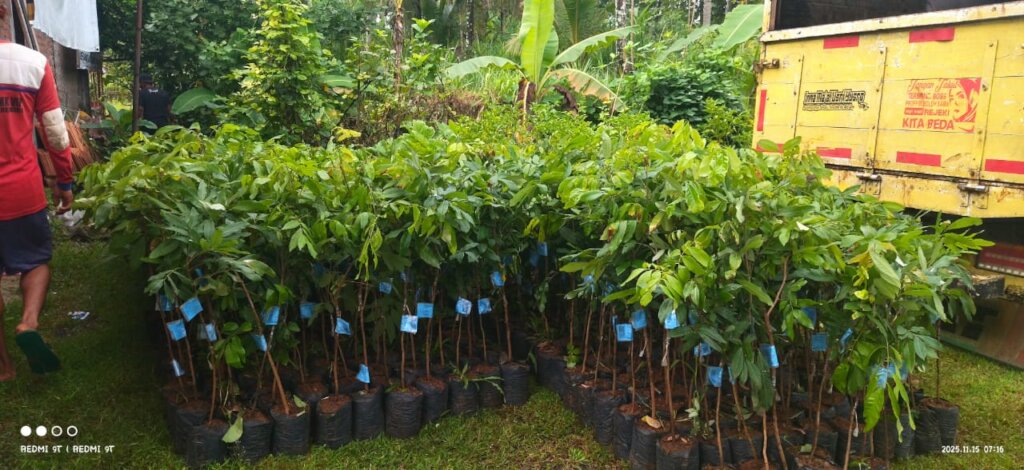
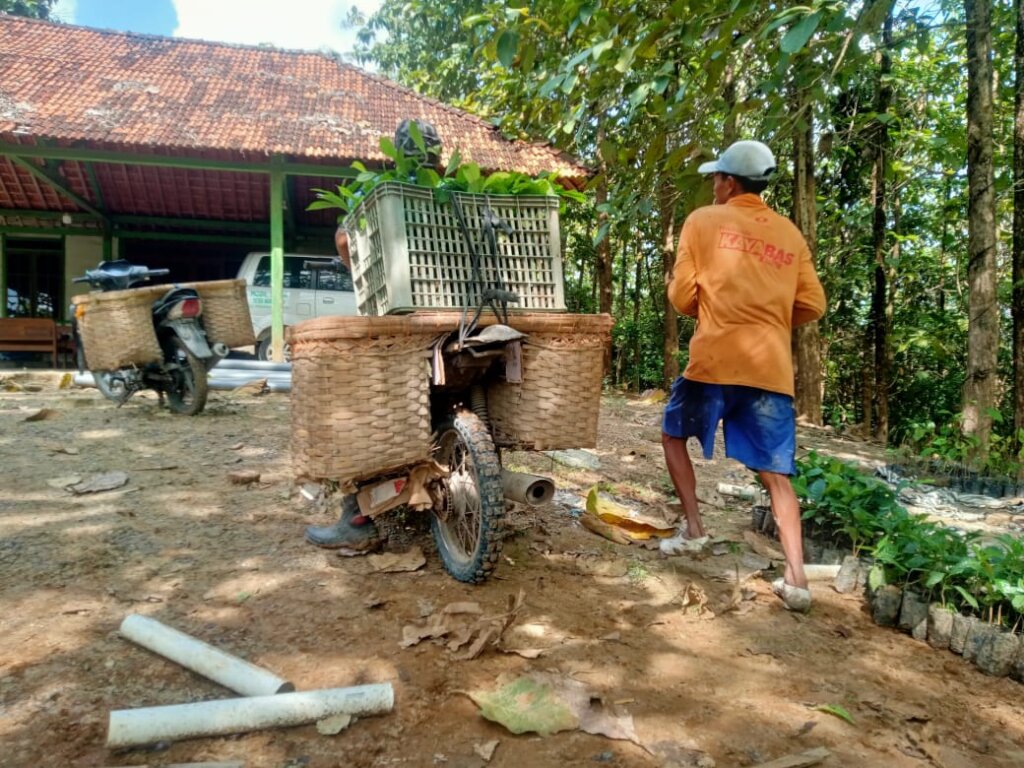
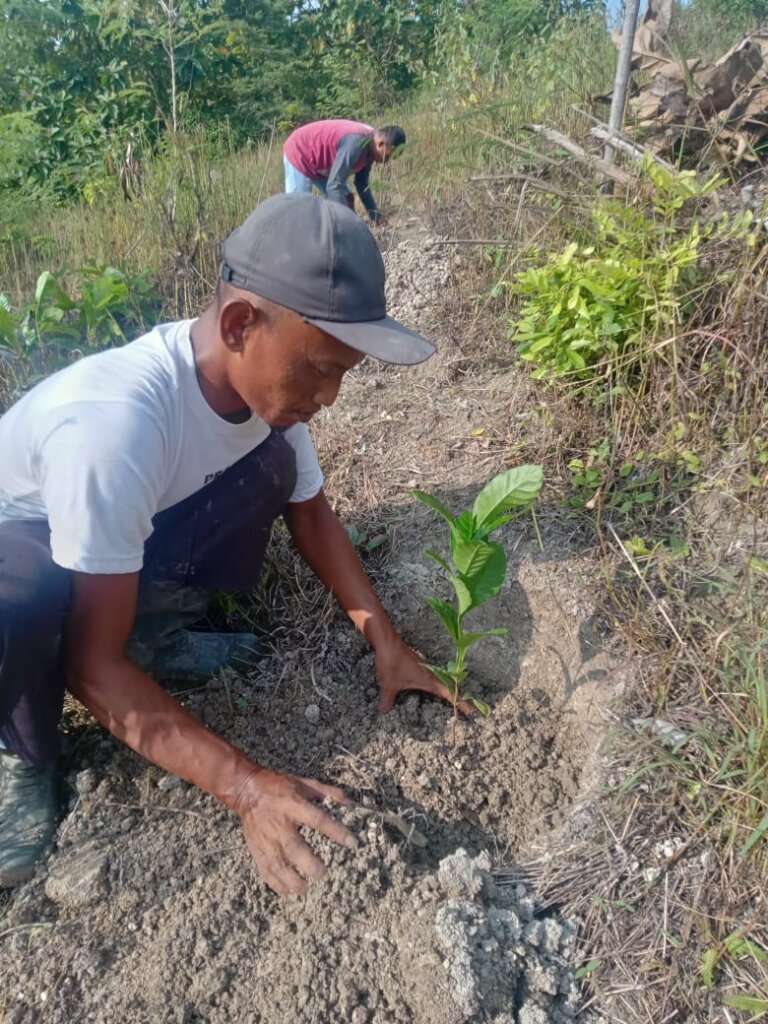
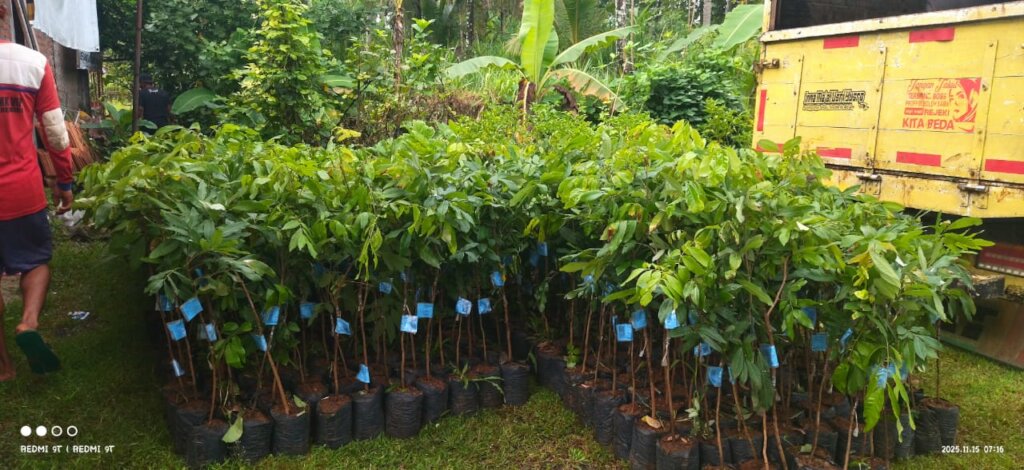
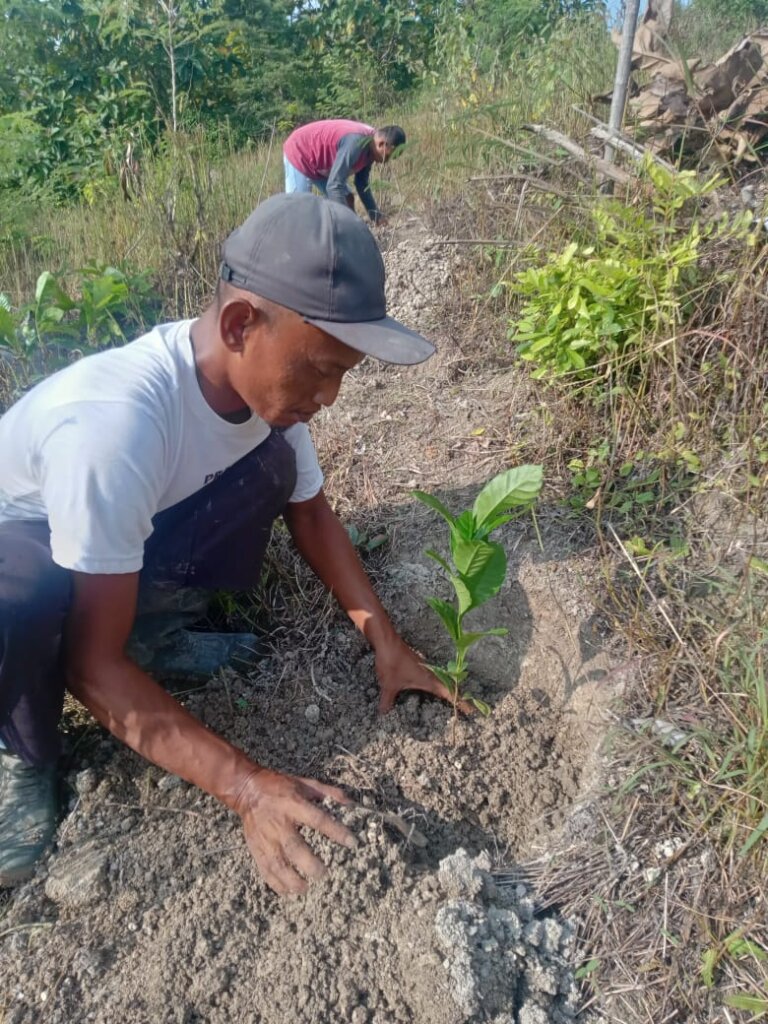
Liberica coffee was selected due to its adaptability to marginal lands and tolerance to shade. Coffee is planted under protective tree canopies and integrated with multi-purpose tree species, including fruit and timber trees.
Expected impacts:
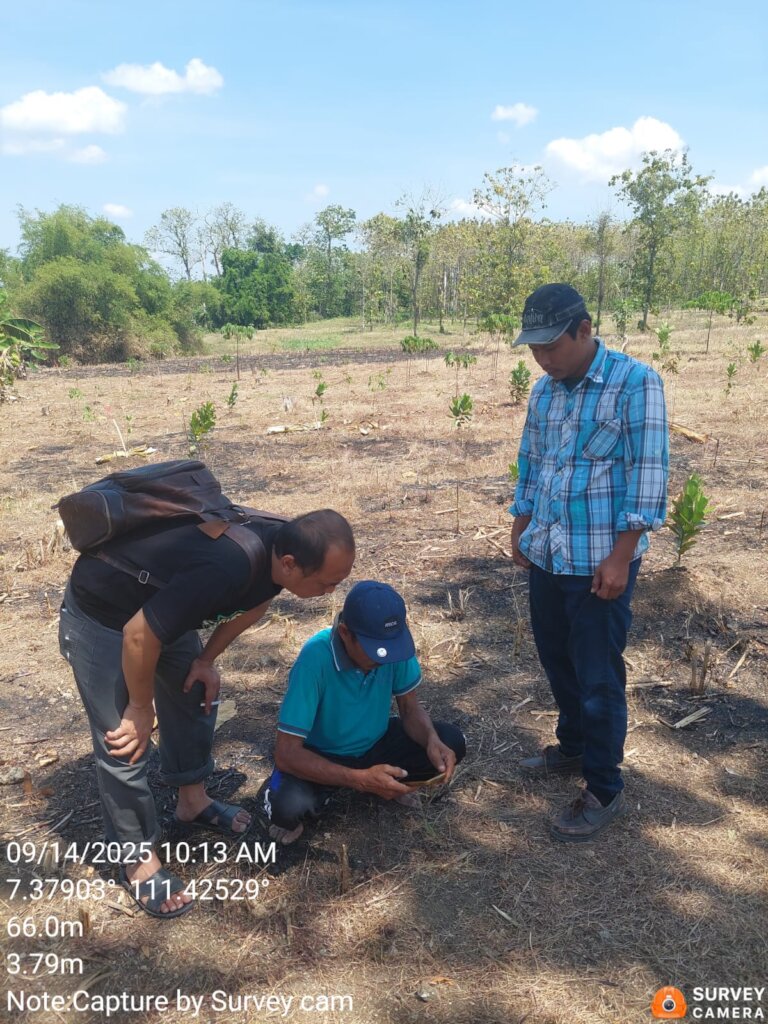
Increased tree cover
Reduced soil erosion
Short- and long-term income diversification
2. Sheep Integration (Silvopastoral Component)
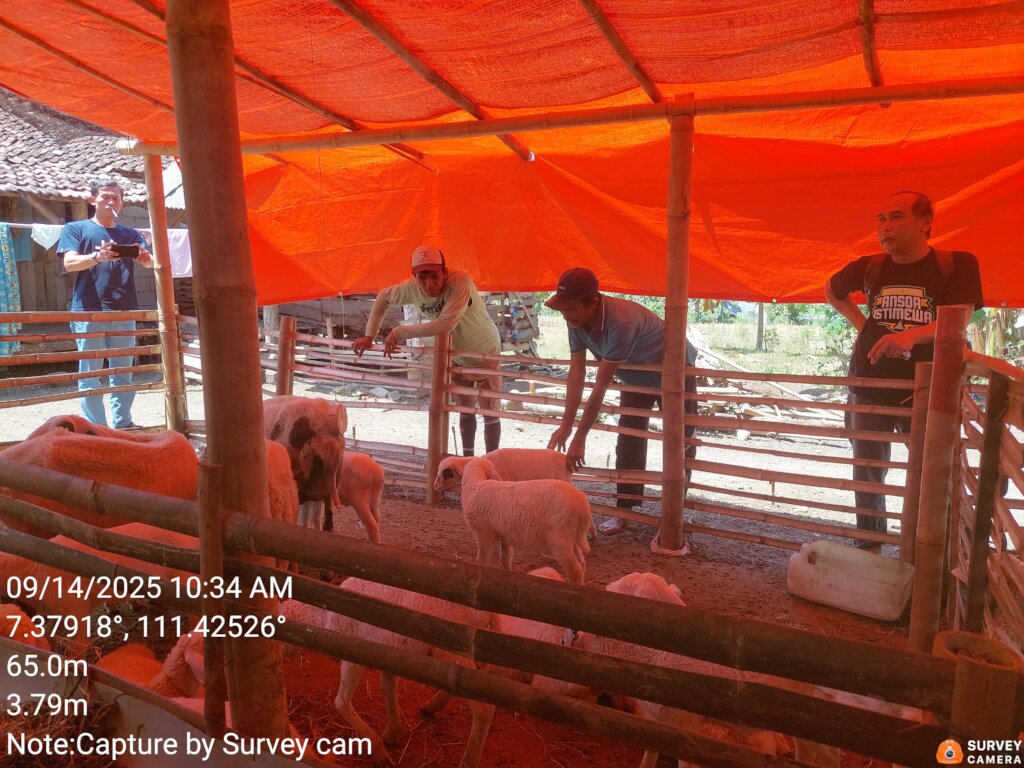
Each community group received 80 sheep as an economic strengthening initiative.
The livestock component contributes by:
Providing supplementary household income
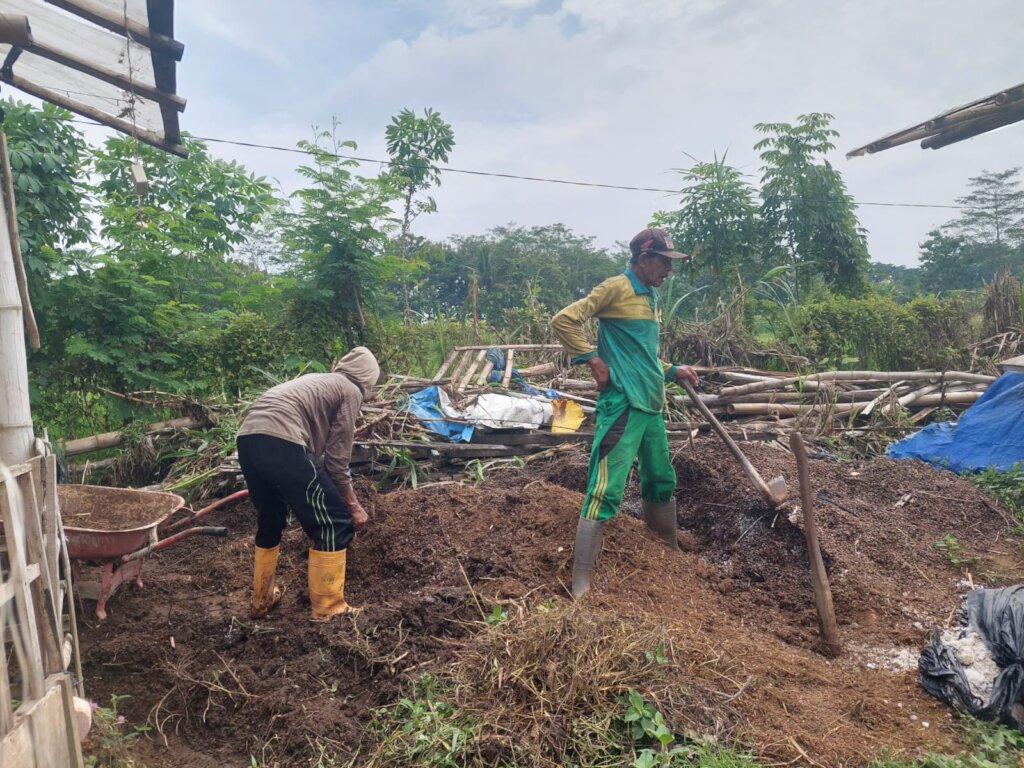
Producing manure for organic fertilizer
Supporting soil fertility in agroforestry plots
Reducing dependence on chemical inputs
This integration forms the foundation of a village-level circular economy.
3. Designated Conservation Areas
In addition to productive agroforestry zones, separate non-agroforestry conservation areas are established to focus on:
Watershed protection
Natural forest regeneration
Biodiversity conservation
This landscape-based planning ensures a balance between productive land use and ecological protection.
IV. Rationale for the Selected Model
The agrosilvopastoral model was chosen due to several contextual factors in Blora and Ngawi:
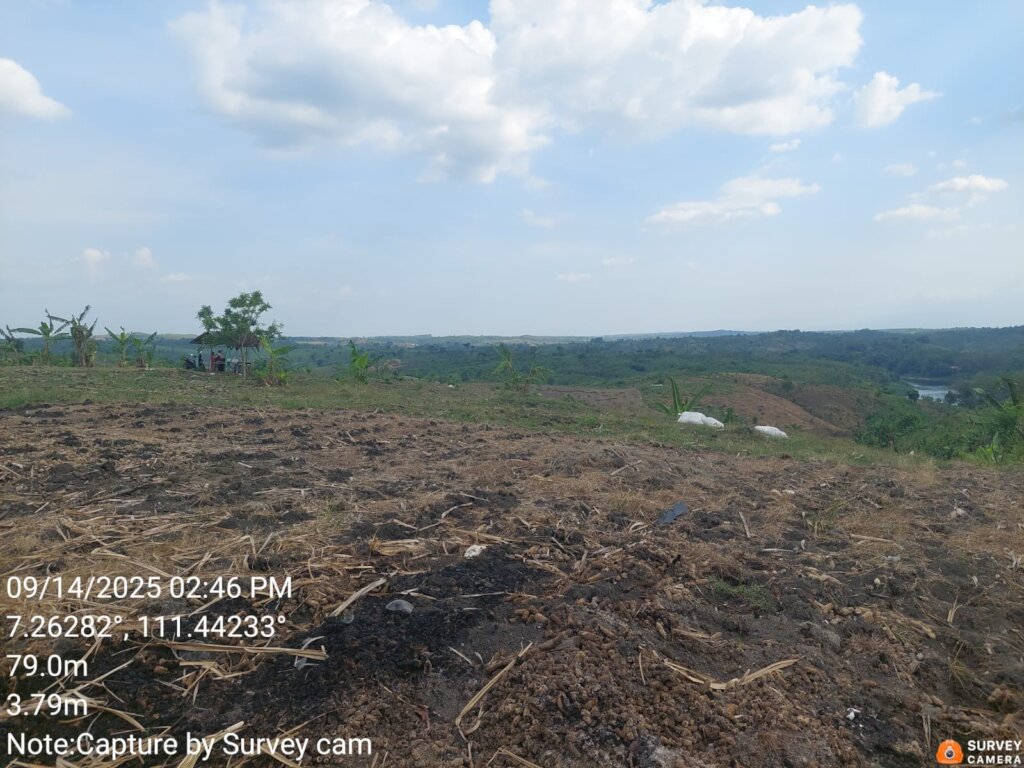
Hilly terrain prone to erosion
High prevalence of seasonal monoculture practices
Economic dependence on short-term agriculture
Villages managing extensive forest areas
This integrated approach:
Strengthens household economies
Reduces incentives for land expansion
Restores ecological functions
Promotes community-based forest stewardship
V. Conclusion
Agroforestry encompasses multiple system types, but in Blora and Ngawi, an integrated agrosilvopastoral model combining Liberica coffee, sheep farming, and designated conservation zones has been implemented.
This model demonstrates that forest conservation in Java requires simultaneous economic and ecological integration.
With the right system in place:
Production continues
Household economies strengthen
Forest ecosystems are protected
The approach provides a foundation for sustainable landscape transformation in Java’s forest regions.
Project reports on GlobalGiving are posted directly to globalgiving.org by Project Leaders as they are completed, generally every 3-4 months. To protect the integrity of these documents, GlobalGiving does not alter them; therefore you may find some language or formatting issues.
If you donate to this project or have donated to this project, you can receive an email when this project posts a report. You can also subscribe for reports without donating.



Support this important cause by creating a personalized fundraising page.
Start a Fundraiser