By Misbachul Munir | Project Staff
Background
Building resilient forest conservation systems requires more than ecological restoration alone. Communities living in and around forest landscapes need stable and sustainable sources of income that enable them to participate in long-term conservation efforts. Recognizing this, Yayasan INFEST and Faculty Of Social Science of Gadjah Mada University introduced a community-based livestock development initiative in 2022 by providing 84 sheep to the Wana Mulya Forest Farmer Community.
Since then, the initiative has grown significantly. Today, the community manages approximately 250 sheep, not including animals that have already been sold and generated income for community members. Sheep farming has become one of the group's most important livelihood activities, providing regular economic benefits while supporting broader conservation objectives.
Economic Empowerment as a Foundation for Conservation
Forest conservation and economic resilience are closely connected. Communities facing economic insecurity often have limited capacity to invest time and resources in long-term environmental stewardship. For this reason, economic empowerment remains a central component of the conservation strategy developed by the community.
The approach combines agroforestry development with a circular agriculture-livestock system, creating multiple sources of income while strengthening sustainable land management practices. Livestock production provides direct economic benefits to households, while also generating valuable resources that support agricultural and conservation activities.
Through this integrated model, conservation is not viewed as a separate activity, but as part of a broader rural development strategy that improves livelihoods while restoring ecosystems.
Transforming Livestock Waste into Economic Value
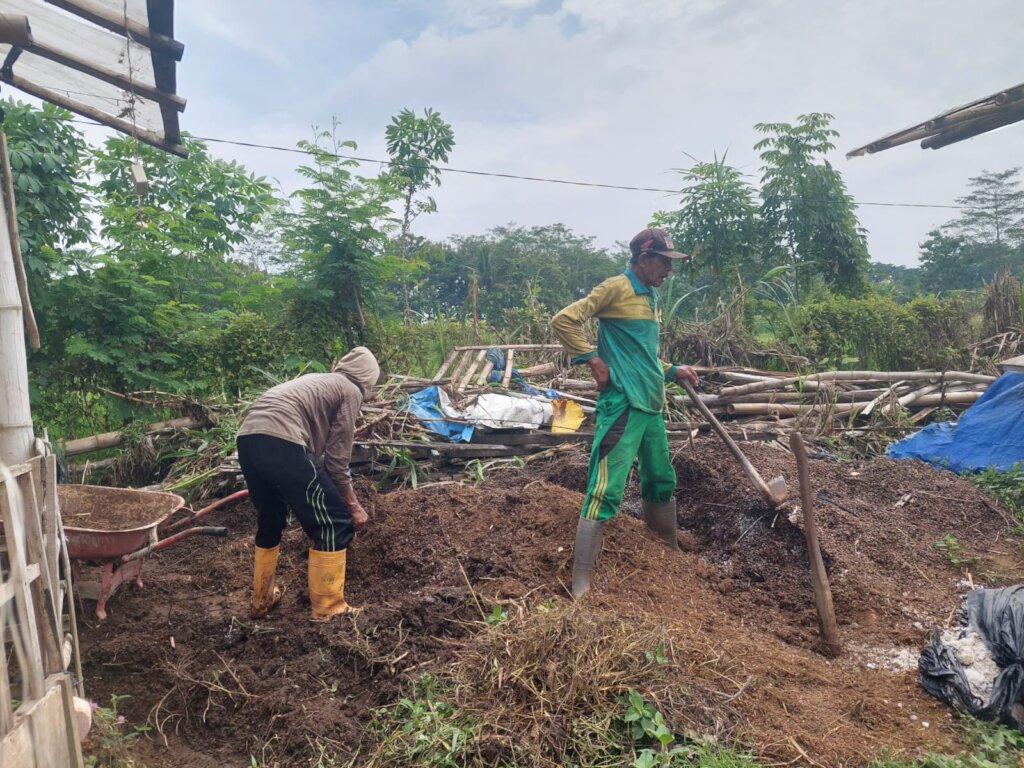
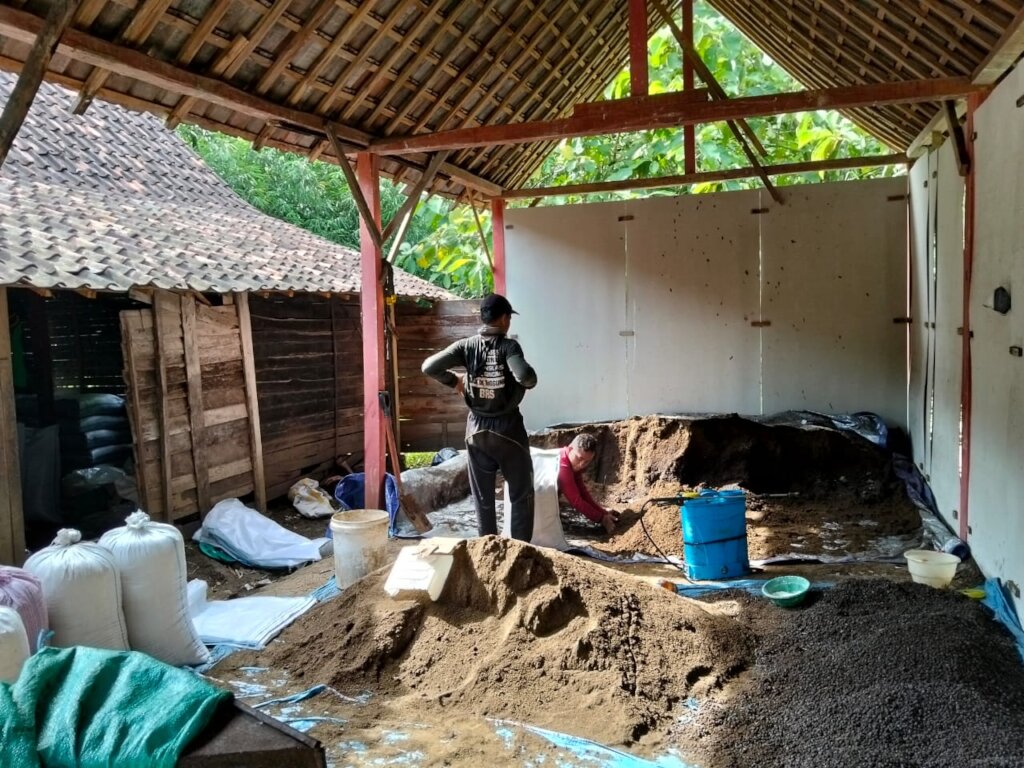
One of the most promising developments within the Wana Mulya Community is the establishment of an organic fertilizer production unit based on sheep manure.
Rather than treating livestock waste as a by-product, the community processes sheep manure into organic fertilizer that can be used to support agroforestry systems, agricultural production, and forest restoration efforts. This initiative creates additional economic value while addressing the growing need for affordable and environmentally friendly soil inputs.
The organic fertilizer serves two important functions:
This approach strengthens the economic sustainability of both individual households and the community organization as a whole.
Building a Circular Economy for Forest Restoration
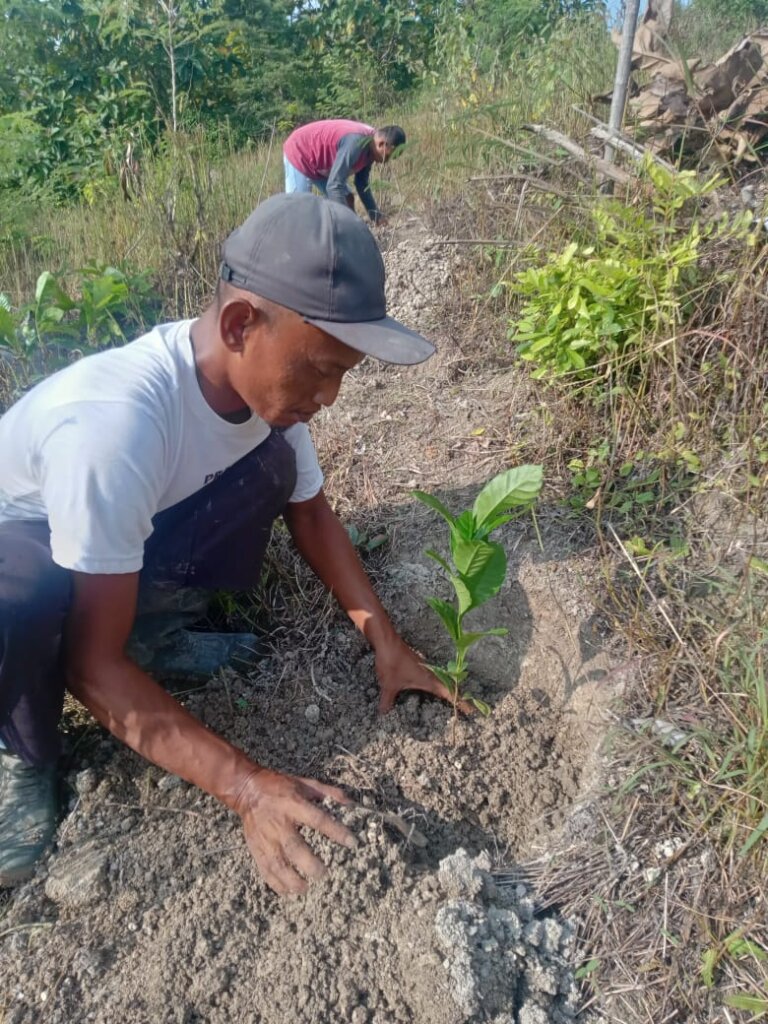
The organic fertilizer initiative demonstrates how circular economy principles can be applied in forest landscapes. Livestock provide income for households, while manure is converted into fertilizer that supports agroforestry and conservation planting. In turn, agroforestry systems produce fodder resources and improve landscape productivity, creating a mutually reinforcing cycle.
This integrated system contributes to:
By linking livestock, agriculture, and forest restoration, the community is building a more resilient local economy that supports long-term environmental stewardship.
Looking Ahead
As the Wana Mulya Community continues to expand both its livestock population and fertilizer production capacity, organic fertilizer is expected to become an increasingly important component of the local conservation economy. The initiative demonstrates that conservation can be strengthened when communities are equipped with sustainable livelihood opportunities that generate tangible economic benefits.
Through sheep farming, agroforestry, and organic fertilizer production, the community is creating a model where environmental restoration and economic development work hand in hand.
Project reports on GlobalGiving are posted directly to globalgiving.org by Project Leaders as they are completed, generally every 3-4 months. To protect the integrity of these documents, GlobalGiving does not alter them; therefore you may find some language or formatting issues.
If you donate to this project or have donated to this project, you can receive an email when this project posts a report. You can also subscribe for reports without donating.



Support this important cause by creating a personalized fundraising page.
Start a Fundraiser