By Austin Bowden-Kerby, Phd | Corals expert & strategist for Reefs of Hope

In conjunction with the broader plan, gaining support across the Atlantic/ Pacific divide and including land-locked and northern countries, our Canadian friend Leona Kustra has done some explanatory graphics. These are helpful as speaking points when conveying the message of inter-connectiveness of systems and the many fanning out points of coral system influences.
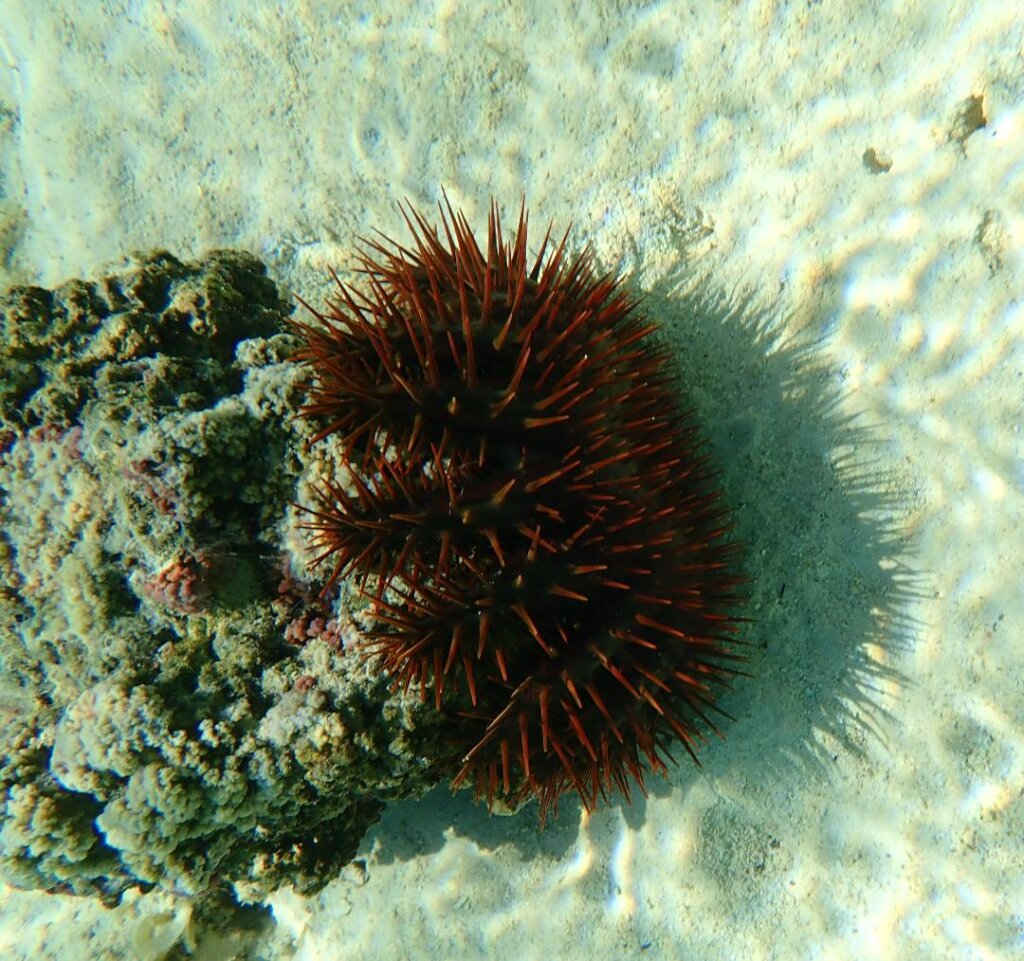
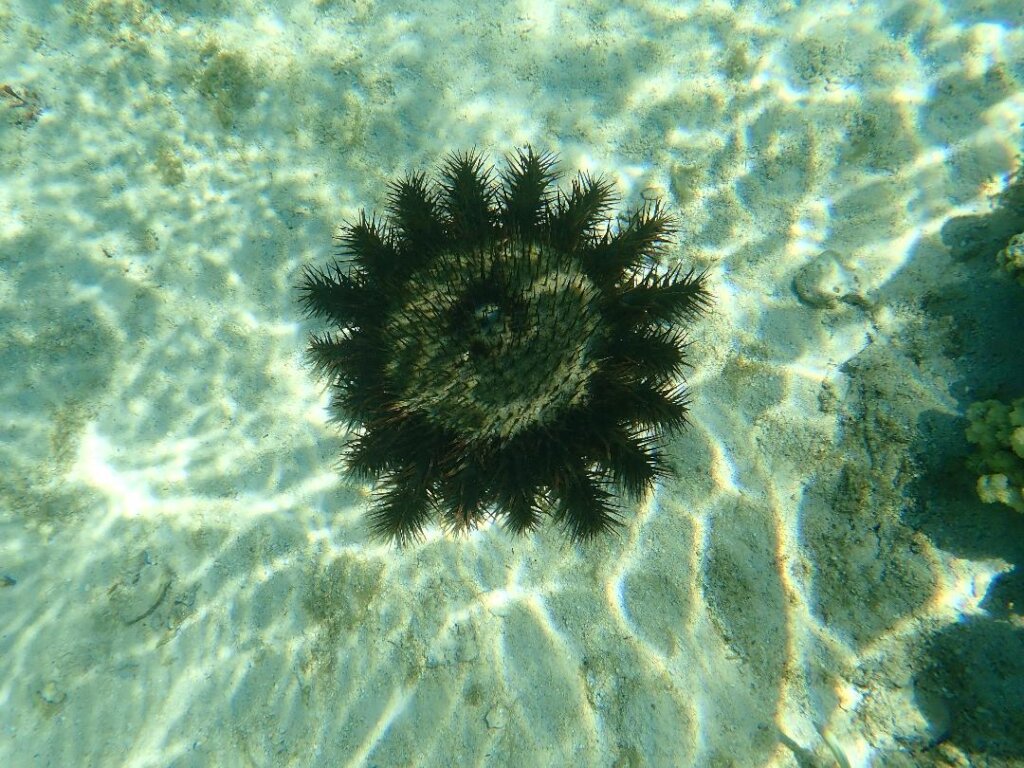
One part of the web of coral reefs is that corals can be weakened considerably by high temperatures and agricultural run-off. That's when Crown of Thorns multi-armed starfish take advantage. Ideally, the preditors of COTS also arrive to deplete the numbers. In my observations, most COTS predators only pick at them or eat an arm or two. I believe that the main predators of COTS adults--the ones that kill them--are Humphead Wrasses, Titan Triggerfish and Triton Trumpet snails. I suspect that nurse sharks might also eat them. When we find isolated COTS, we smash them in the water and many fish come to eat them. Culling COTS is tricky because of their ability to regenerate arms--in other words fight back.
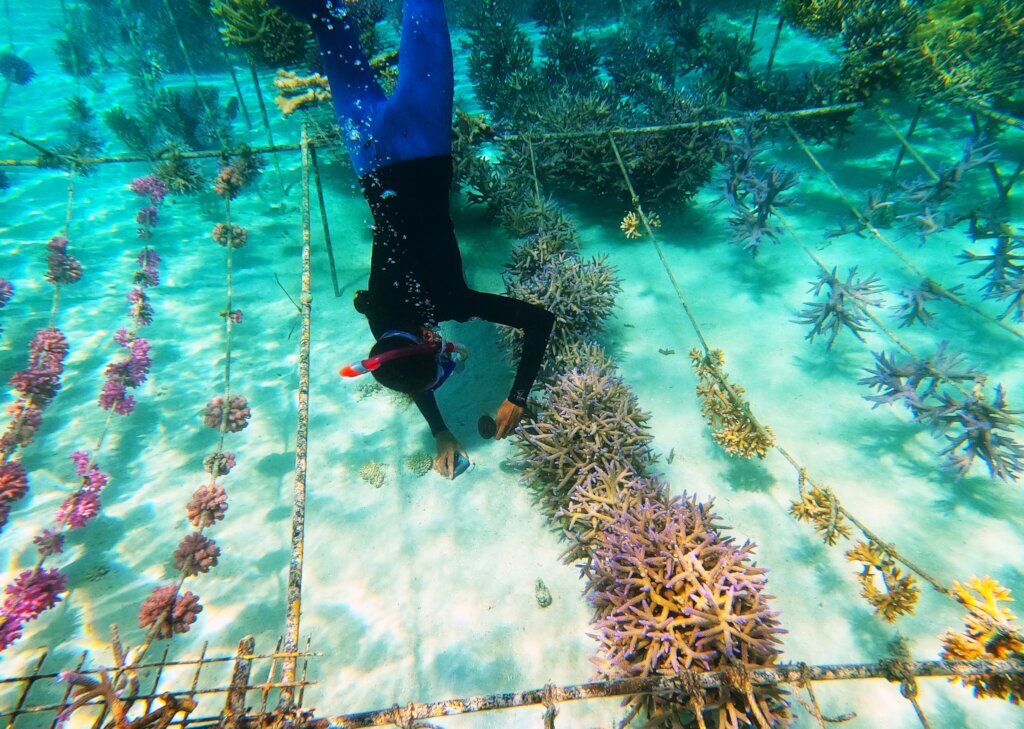
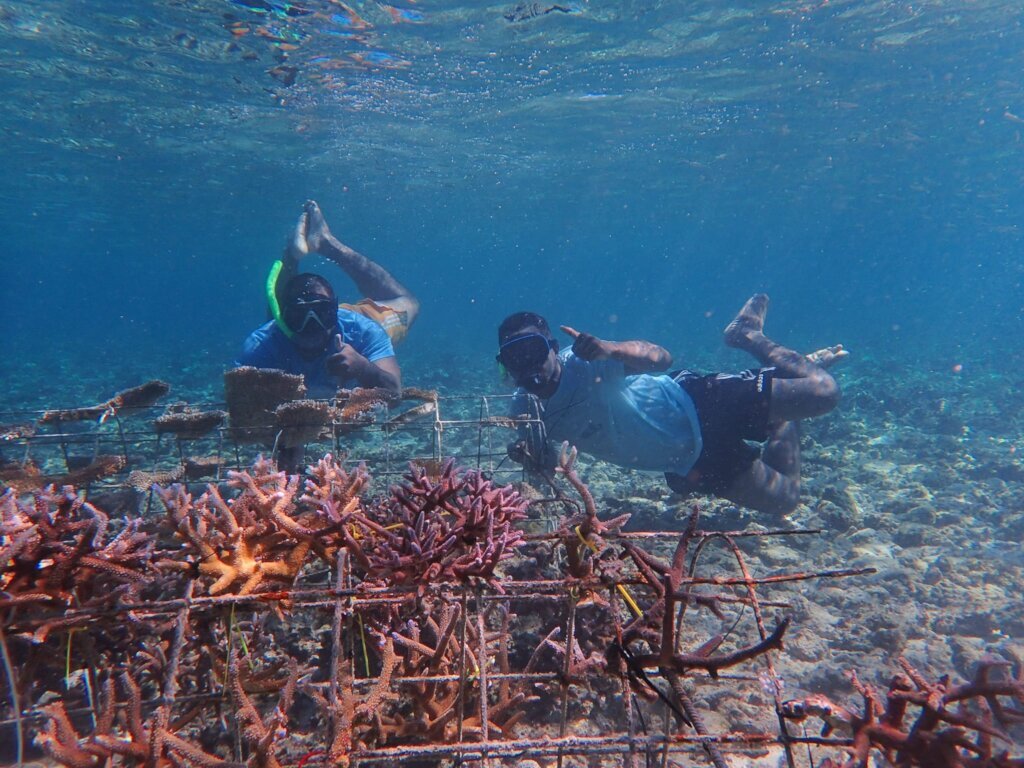
We need to make our sites shine, which is very challenging in the present marine heat waves which cause coral bleaching and death as well as disease outbreaks- also related to warming oceans. On top of this we get COTS outbreaks and harmful algae blooms which are both related to land-based pollution entering the ocean.
Thank you donors for keeping hope alive on our South Pacific reefs,
Austin
Project reports on GlobalGiving are posted directly to globalgiving.org by Project Leaders as they are completed, generally every 3-4 months. To protect the integrity of these documents, GlobalGiving does not alter them; therefore you may find some language or formatting issues.
If you donate to this project or have donated to this project, you can receive an email when this project posts a report. You can also subscribe for reports without donating.