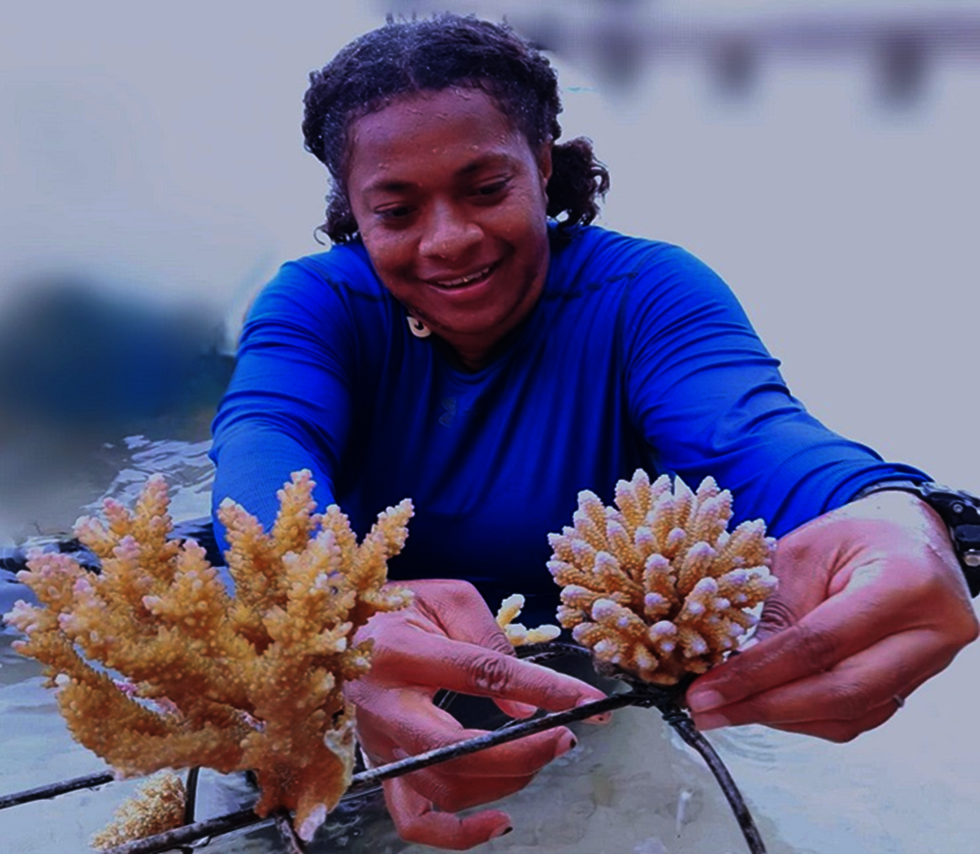
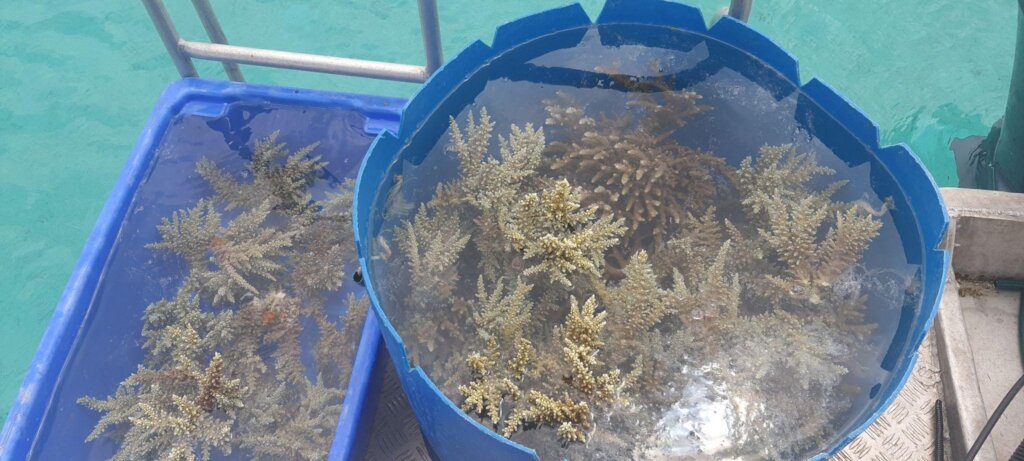
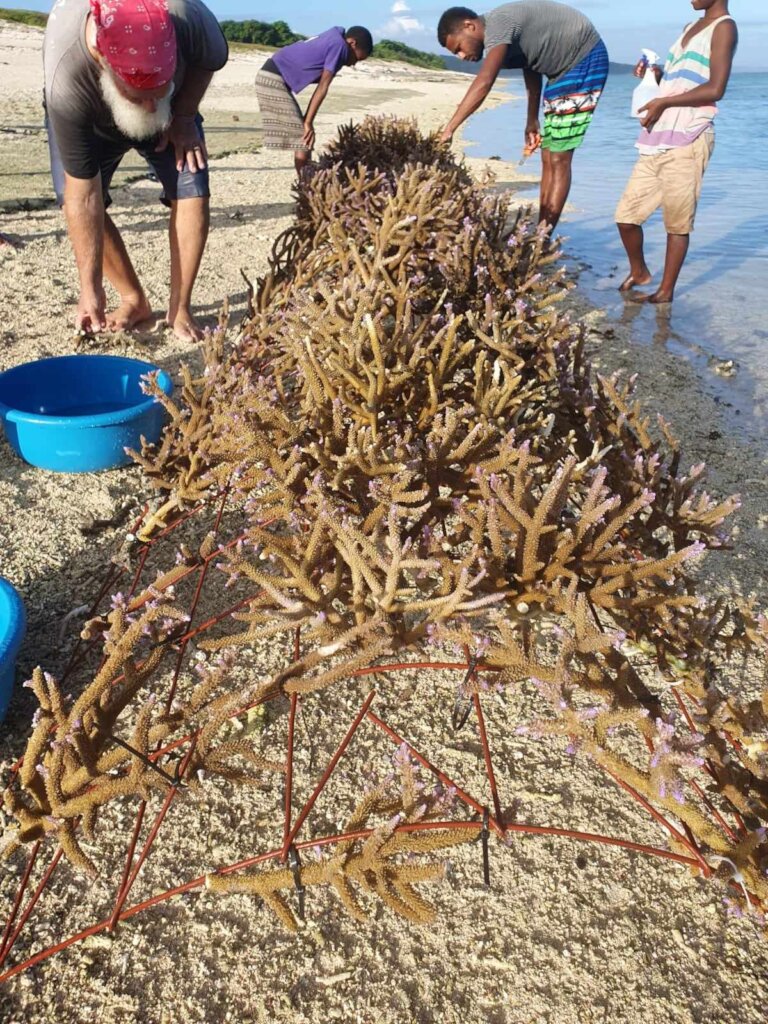
90% of coral reefs are predicted to die within 30 years due to ocean warming. Reefs of Hope rescues corals from hot reef areas at the upper limit of survival and in grave danger of dying out in the face of intensifying marine heat waves. Heat-adapted corals are moved to the safety of nurseries located in cooler reef areas nearby, and as they grow, are trimmed for use in creating breeding patches of heat adapted corals on degraded reefs, accelerating natural adaptation and recovery processes.
With unrelenting global warming, immediate, drastic action needs to be taken to expand our UNESCO endorsed strategy to Somoa, Kiribati, Tuvalu & Vanuatu. Corals in shallows are gravely jeopardized, as temps hit (>38C or 101F), too hot for even heat-resistant ones. Increasing heat stress is causing corals to lose their internal algae, to "bleach" and die. In 2025 an urgent manpower upgrade is needed to move corals in peril to cooler, protected waters. This innovative measure saves corals now!
Corals can not move themselves, and so we must move surviving heat resistant "super corals" out of areas of extreme heat stress and into the safety of cooler water nurseries. The coral nurseries are also safe from predators. The corals represent the same species of corals located on the cooler reef areas which are dying due to bleaching. As the corals grow larger they are trimmed and used to reproductive coral patches and fish habitat on degraded reef areas, rebooting natural recovery.
Moving heat adapted corals to cooler waters can help buy time for coral reefs. Coral reproduction is restored to degraded coral reefs, impacting down-current areas positively. Coral larvae are also attracted to the smell of the healthy corals and acquire heat resistant algae on settlement. An amazing cycle of life returns and the reefs become bountiful again within 5 to 10 years. Fish return to restored reefs, and community no-take areas are being established in tandem with the coral work.



Support this important cause by creating a personalized fundraising page.
Start a Fundraiser