By Robin Van Loon and Alejandro Zevallos | Camino Verde Team
Did you know?
30% of all known species on Earth are found in the Amazon.
And did you also know?
Camino Verde is one of the very few organizations actively planting to preserve and restore this unparalleled biodiversity.
Help us keep the diversity of life alive and thriving — donate to Camino Verde today.

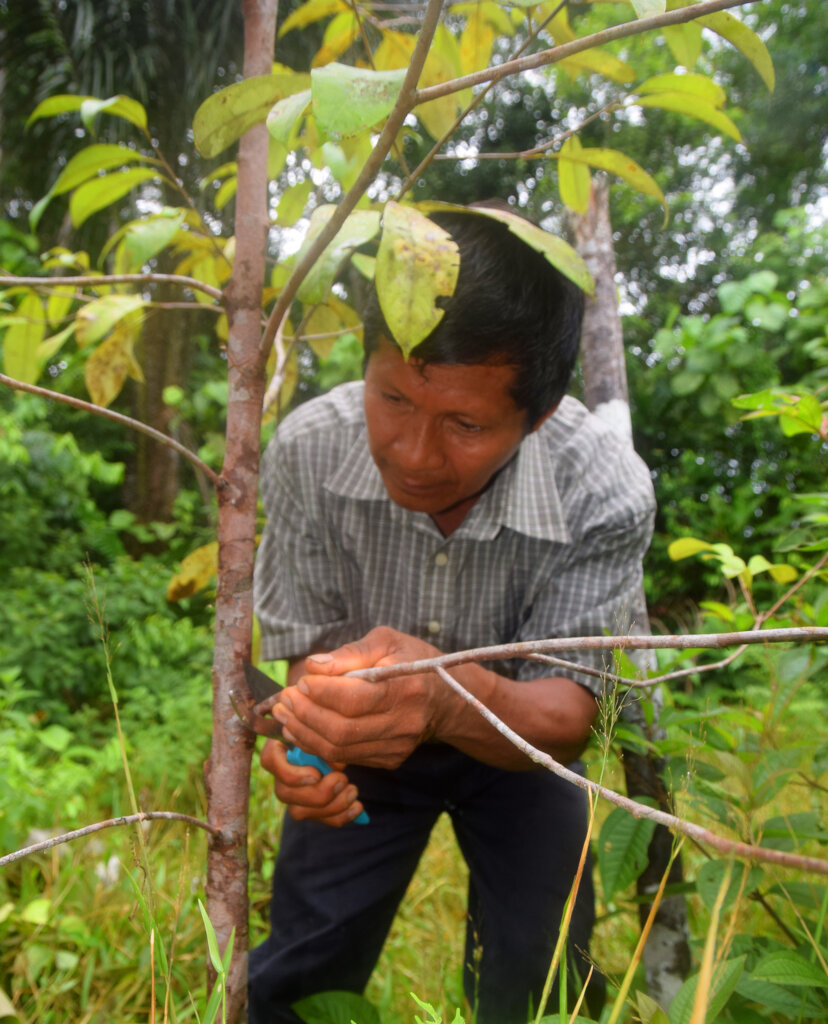
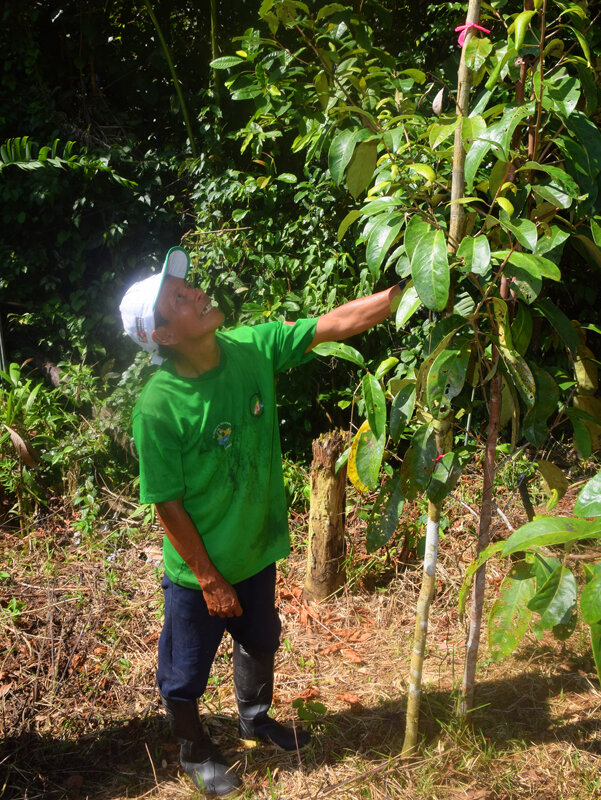
Rosewood grower Mélida, one of the most skillful of the 180 farmer families now working with CV to reforest this valuable endangered species
Our Appeal
Many worthy organizations make a year-end appeal to your heartstrings and pocketbooks. We know you have many choices.
But it’s no exaggeration to say that we can’t do this without you. Over a third of CV’s annual budget comes from donations from people like you.
Here are the most meaningful ways you can support our work:
• Tell others why you care. Share our work on social media – or, even better, spread the word in person.
• Come visit us and see restoration in action. You are invited!
We’re so grateful to all who answered the call for support in the last Missive, but we’re not out of the woods yet. We hope you will be inspired to include Camino Verde in your year end giving.
Together, we are building a stronger, more resilient Amazon – and in doing so, helping sustain life on Earth. Thank you for being part of this movement.
What your donation makes possible
• Our Living Seed Bank: 2 reforestation centers in the Peruvian Amazon, home to over 700 documented useful species of Amazonian plants.
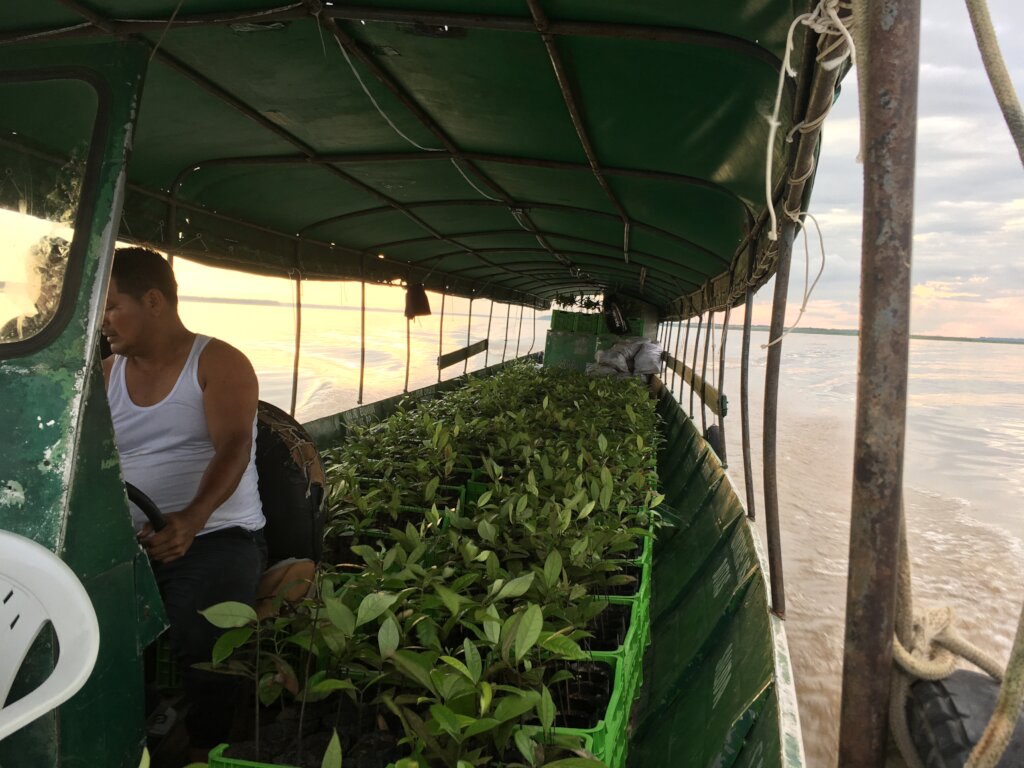
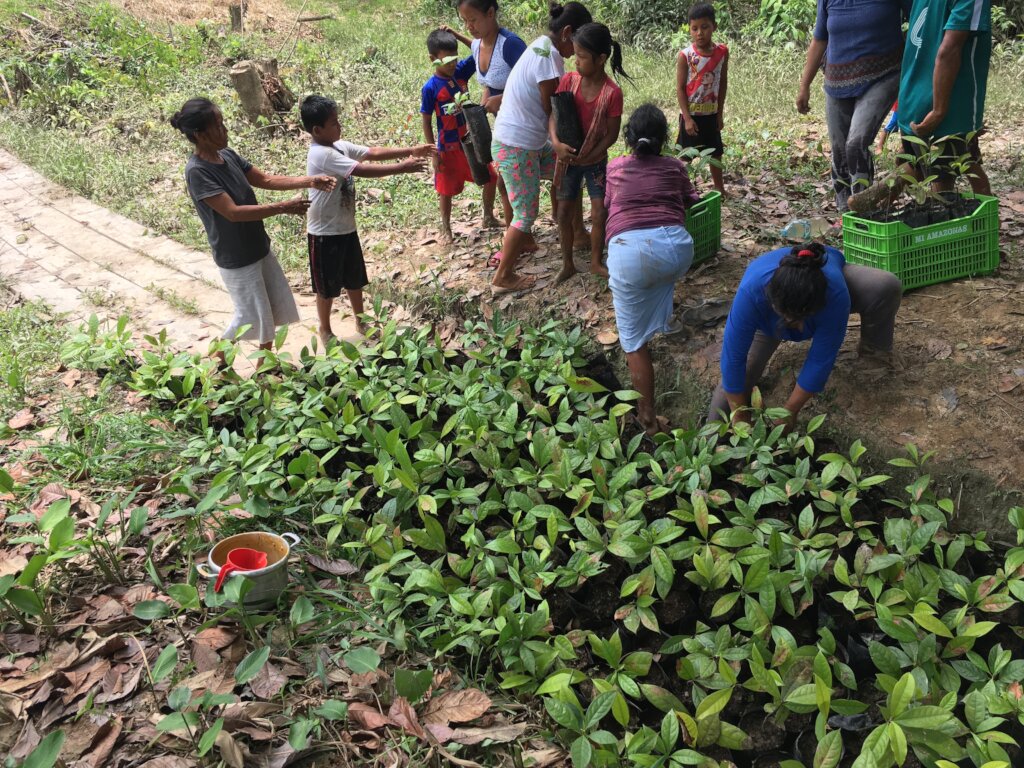
• Indigenous farmers cultivating diverse farms: close to 200 families in 12 communities planting with Camino Verde to restore endangered species and build regenerative livelihoods.
• Seed Centers: 3 tree nurseries producing 100+ native tree species annually, with a combined capacity of 200,000 seedlings a year.
• Enterprising Rare Botanicals: Products developed from dozens of underutilized Amazonian tree species. Camino Verde now produces chocolate, essential oils, and honey from over a dozen species of native bees.
Recent highlights
• Inauguration of CV’s first Community Distillation Center — the first-ever native community-run rosewood essential oil distillery, creating new income streams and building technical capacity.
• Beekeeping consultations with Conservation International and Yaguas National Park: CV’s team visited five native communities on the remote Putumayo River to train them in sustainable management of native Amazonian bees.
• New collaboration agreement with the Tambopata National Reserve: strengthening joint work in restoration, nurseries, environmental education, and community-based conservation across Madre de Dios.
• ECOTOP agroforestry training for our Loreto team: Bolivian agroforestry experts ECOTOP provided advanced training in pruning, harvesting, soil recovery, and agroforestry design. Five members of our Rosewood Farmer Livelihood Program also participated, expanding grassroots expertise.
• Camino Verde’s 1st ever New York City fundraiser was a great success! Thanks to everyone who came out! And, if you’re in the NYC area, read below about the next chance to catch us in your neighborhood.

Melipona bees drinking of their own –highly medicinal– honey.
Coming next year
• Making Noise in New York City: Join us on May 1st for CV’s first-ever benefit concert for Amazonian restoration! Stay tuned. Details coming in our first Missive of 2026.
• Camino Verde in Kenya: As a Regenerative Farms member organization, CV will share our native-species restoration model and visit allies at the Global Landscapes Forum and CIFOR-ICRAF.
• Hiring our new Volunteer Coordinator: After a rigorous selection process, we’ll soon be announcing the newest member of the CV team!
-------------------------------------------------------------------------------------------------
Report Main Course
In this quarter’s report, we are joined by Camino Verde’s own Alejandro Zevallos, coordinator of our primary reforestation center, Camino Verde Baltimori. In this dynamic, reflective post, Alejo shares how the center has transformed over his three-plus years of stewardship.

Camino Verde’s Loreto team with a gathering of rosewood farmers from a half dozen communities
Today I Noticed that Amasisa is a Beautiful Tree
by Alejandro Zevallos, Camino Verde Baltimori Coordinator
I remember the first time I arrived to the place called Filadelfia, a boat port on the Tambopata River. The midday sun shone brightly through cotton clouds. Don Juancito was waiting for us in his immortal canoe of catahua wood. Sliding through the mud, taking small, calculated jumps, we leaped into the nine-meter boat with its pekepeke motor, roofless and with a few leaks. I was completely covered head to toe, ready to protect myself from the relentless mosquitoes. The sound of the one cylinder pekepeke was loud, but louder still was the green color that separated the river from the sky. I remember arriving with Robin and finding Mauricio, Rosa with her son Jordi, and a large, empty house where future visitors would stay.
Thanks to the legacy of an old rubber-tapping camp, Baltimori is the name of the community that borders Camino Verde (since that old camp’s rubber was sent to Baltimore, USA). That is why the station is known as Camino Verde Baltimori. This is what Mauricio (a good friend from university with whom I studied agroforestry engineering and who was now the volunteer and research coordinator) explained to me. Years ago, we had finished university and each started working on different agro-industrial farms. These farms strove to produce export-quality fruit at the expense of people's wellbeing and the environment. That's another story, but it was thanks to a series of coincidences that I ended up in a place that was the complete opposite of the destructive regime of Peruvian agro-industry. I felt that the time had come to put my knowledge to work in service of something bigger – something not only non-extractive, but ideally reciprocal and fair.
Now, talking about who I am is a longer story, but it's easier to explain what I do here as coordinator of the Camino Verde Baltimori station. My role involves an intense, beautiful mix of management, research, technical support, and community building. When I arrived, my goal was to strengthen the station as both a living space for agroforestry research and a platform for sustainable production, collective learning, and restoring the link between people and forest. This place allows me to teach and learn that farming in the rainforest does not have to be unsustainable.

To tell the truth, I never thought Mauricio and I would make such a good team. Since those first days, we have been through many incredible experiences. I think it was because we started with a lot of momentum to make progress and solve any problem that arose. We started with the basics – our lodgings, the rooms, the bathroom. We cleaned every corner, repaired tiles, put up a mirror, a curtain, some shelves, becoming plumbers and carpenters. Little by little, we discovered that the window screens were green, not black. We got rid of the termites that were eating away at the wood and artfully covered the walls. With each passing day, this jungle cabin house became a home.
After the house, we moved on to the communal kitchen. We bought new tools, fixed leaks, changed the drain, and assembled furniture. We adapted a room to serve as a storage space. We cleaned solar panels, screens, and rooms. We undertook the heroic task of moving all the wood under the house to a new space, dislodging a family of possums in the process, and created a carpentry workshop to store it all.

Dawn over the rainforest of Tambopata
We worked as a team. And with each improvement, our spirits grew: the place became more welcoming for everyone. We made a space to leave shoes, built additional beds, patched holes in the nets, and in the meantime, we welcomed our first volunteers and interns, who helped us with ideas, opinions, and suggestions. It didn't take us long to ask them:
What would you improve about this place?
The showers, they replied.
So we went into the showers: we fixed the drainage, laid tile, improved the showerheads, put screens on the open windows, installed sinks, hooks, shelves, doors, and locks. We improved the grounds outside so that people no longer had to stand in the mud, built a better space for hanging clothes, and pruned the trees to let in more light. We transformed some unused tables into raised beds for vegetables between the water tower and the kitchen. We planted aromatic herbs and chili peppers along the paths. And little by little, we filled the green areas with flowers and edible fruits.
One day, a red puma arrived and ate two chickens. The next day, it ate four, then eight. When we tried to protect them by keeping them inside their pen, the puma waited outside just ten meters away, among the banana trees.
That's why we moved the flock (ducks and chickens) to a new area, fenced in with a hedge that hides our beloved animals. It was one of the most memorable moments – moving the chickens from their old pen to the new animal space with the help of volunteers and the team. Today they live much happier and plumper lives.

The puma is gone, but we continue with our work: we built a bridge, four little cabins, a chicken coop, a duck house, a water trough, we expanded the nursery, we put a roof over the germination area, we built an eleven-meter wooden boat, and we also expanded the vegetable gardens.
And, of course, after each step we resumed with agroforestry activities, planting more than 100,000 trees in three years, and diversified experimental plots with native species. Today we walk through forests that years ago were just degraded grasslands and are now living, diversified, rapidly expanding systems that produce more than 50 types of fruits, resins, oils, medicines, and flowers. We have also established new agroforestry plots from scratch, with designs that combine native species of high ecological and economic value, such as rosewood, cacao, copoazú, moenas, copaiba, shihuahuaco, palm trees, and so many more. We have improved planting, spacing, and maintenance protocols and taken strides in monitoring the growth and productivity of agroforestry systems.
As we moved forward with improving the facilities and agroforestry systems, we gradually began to venture deeper into the forest, discovering things that changed our lives.
And so the planting continued: cassava, vegetables, chili peppers, sugar cane, papayas, coconas, cucumbers, tomatoes, passion fruit, aerial potatoes, sweet potatoes, hibiscus, squash, turmeric, ginger, and pineapples.

A few weeks ago, I was about to return to Lima for time off. While coordinating the taxi that was going to pick me up from Filadelfia and loading my suitcase, I noticed a tree over towards the boat port on the river. Its bark and shape set it apart from the rest of the plants we have been planting over the years. It was an amasisa tree, surely my contemporary. I realized that despite having walked there several times, I had never stopped to look at it. So much has happened in my three years here. Now I get on the boat, and as it pulls away, I realize how much everything has transformed in three years – and how little the larger trees have changed.

Alejandro (upper right) and the Camino Verde Baltimori team


Tambopata, one of Earth’s most biodiverse forests
Project reports on GlobalGiving are posted directly to globalgiving.org by Project Leaders as they are completed, generally every 3-4 months. To protect the integrity of these documents, GlobalGiving does not alter them; therefore you may find some language or formatting issues.
If you donate to this project or have donated to this project, you can receive an email when this project posts a report. You can also subscribe for reports without donating.



Support this important cause by creating a personalized fundraising page.
Start a Fundraiser