By Robin Van Loon | Executive Director
Dear friends of Camino Verde,
For our report this quarter, we’re giving thanks especially to the women at the forefront of Camino Verde’s Amazonian regeneration work.
Our team wouldn’t be complete without their leadership and dedication, and we’re excited to share updates about just some of the many ways the women of our team lead the way, with grit, brilliance, and heart.
We’ll tell the story of Camino Verde’s growth and accomplishments in 2026 through the lens of our female “caminantes,” the women walking the green path. But first, a note on how Camino Verde sees gender in the context of broader inclusivity.

At Camino Verde Baltimori, Wendy Flores talks shop with her teammates and a room full of visitors and volunteers.
Women as Leaders
Did you know? Camino Verde’s hiring policy is about inclusion and representation. We prioritize offering jobs to talented, qualified, local Amazonian people. But this isn’t about checking boxes. We know that our team is better off as a result of including the perspectives of women, Indigenous people, and young people. And, given the scarcity of job opportunities in the conservation field, we want careers in the special field of restoration that Camino Verde represents to go to Amazonian people first.
This translates into a simple hiring policy: when two candidates of equal qualifications apply for a position, we give preference to the local, Amazonian candidate over a candidate from elsewhere in Peru or elsewhere in the world. And we give preference to women over men. It’s the right thing to do. And our team is so much the better for it.
This isn’t just about giving a chance to female professionals. It’s also about creating an organizational culture in which the men get used to respecting and learning from the leadership of women. In a machista society like that of the Peruvian Amazon, for some team members there has been a learning curve around taking orders from a woman. We believe this quiet culture shift is a small but important part of how we transform the world.
With this in mind, let’s look now to the women who make Camino Verde what it is.

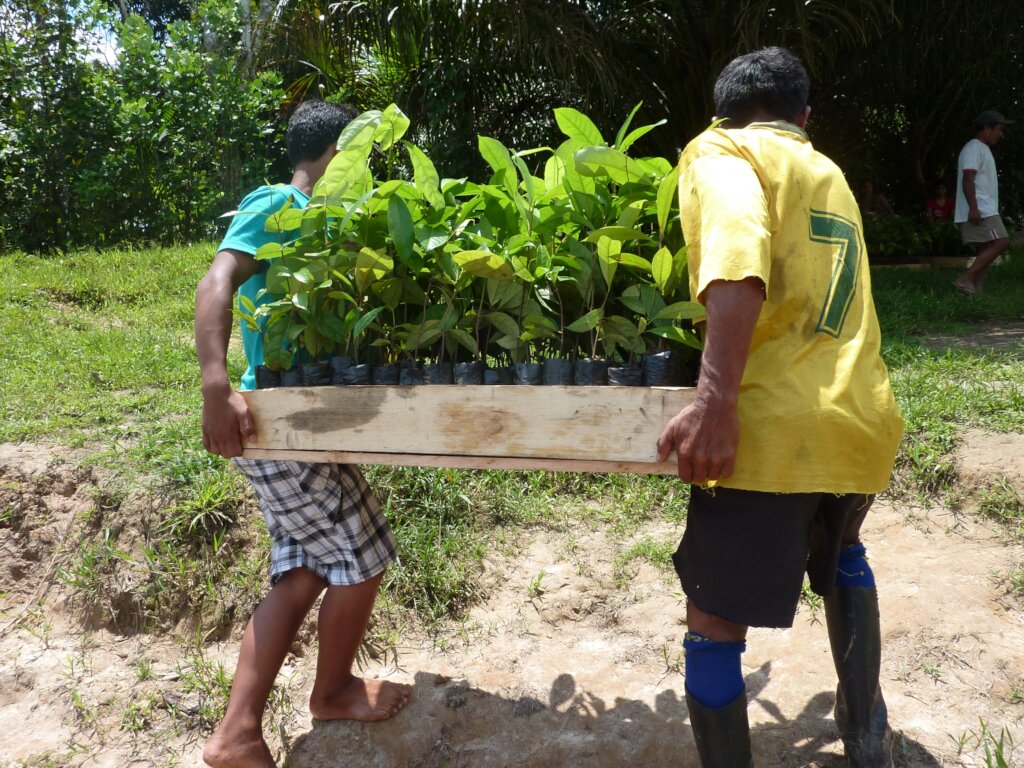
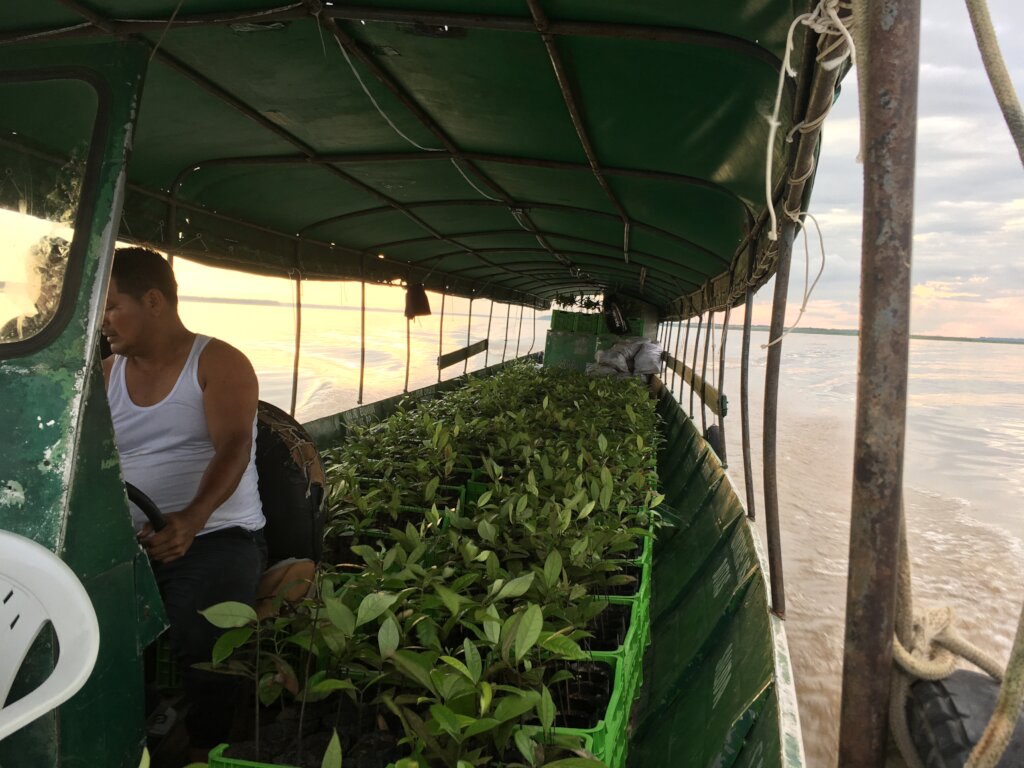
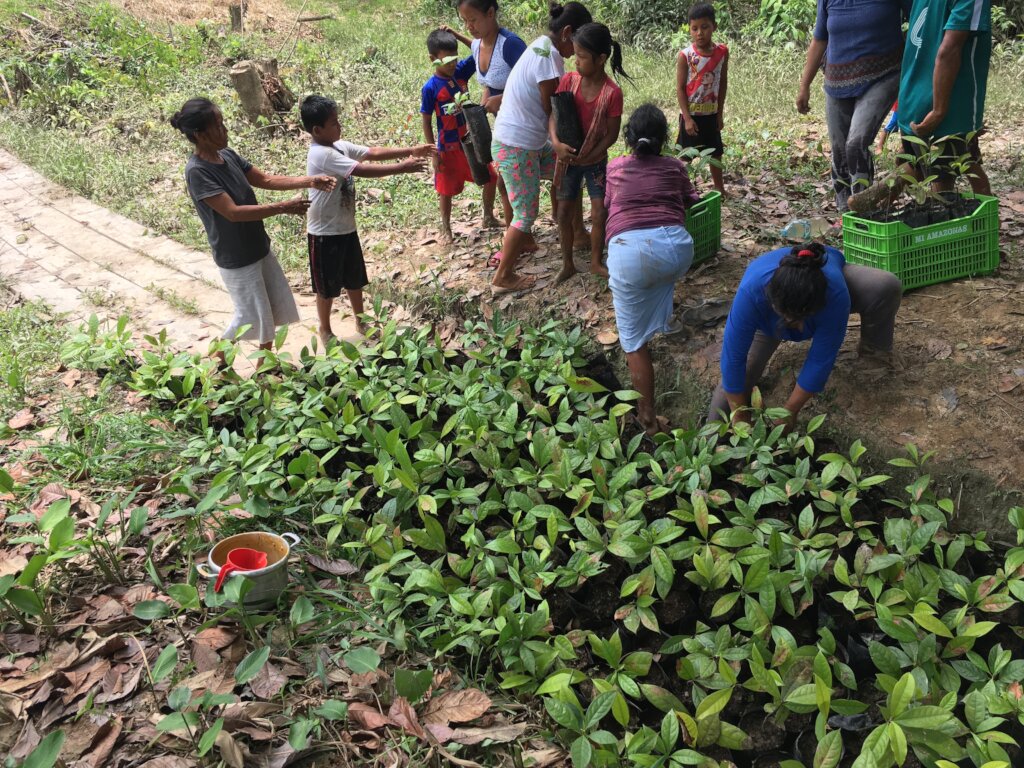
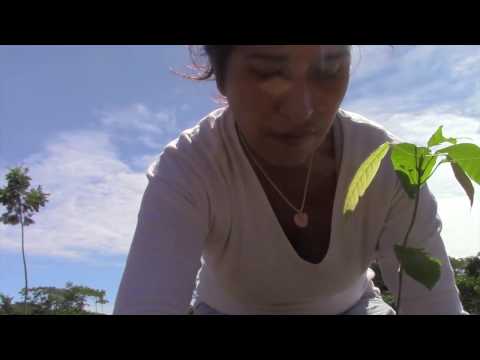
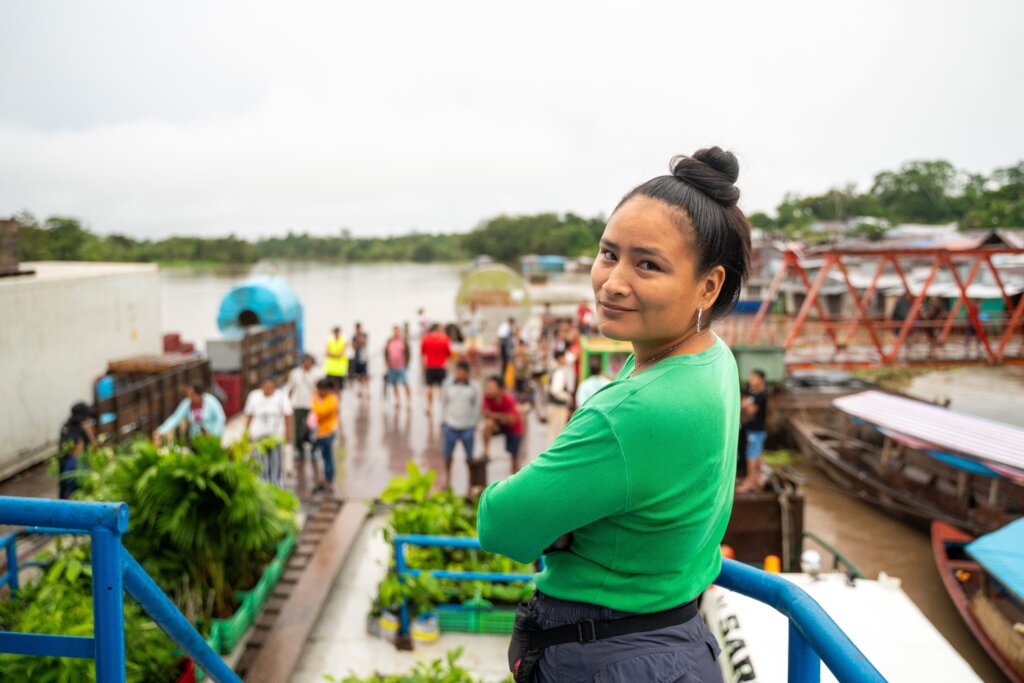
Lean Crespo, helping distribute over 12,000 tree seedlings to a half dozen native communities earlier this year.
Camino Verde Loreto: our Indigenous farmer- and community-facing program
CV History: After a seven-year-long pilot phase to rigorously ensure proof of concept, in 2020 Camino Verde began working in earnest with native Amazonian communities to grow native Amazonian trees and raise native Amazonian bees.
Two years later, Lean Crespo became the third person —and first woman— to be hired by Camino Verde in the Loreto region. In just four years, Lean has risen from thesis student and intern, to field assistant, to administrative coordinator for our farmer-facing program in Loreto, the largest and northernmost region of Peru, where we now collaborate directly with two hundred families in twelve Amazonian communities to plant trees and keep bees.
Last month Lean was joined by Karin Pinchi, a forestry engineer from Loreto, specifically the town of Requena on the Ucayali River. Before joining the CV team as a projects specialist, Karin worked in conservation and agroforestry, and brings her passion for the regenerative development of Amazonian communities.

Mélida: grower of rosewood trees, master craftswoman of chambira palm fiber, and now, beekeeping promotora for melipona native Amazonian stingless bees.
Rosewood Farmer Livelihood Program
In the Indigenous communities where we work, we also get to see the leadership of women in the programs we develop. You may recall the story of Bora native Mélida Álvarez, who, with support from Camino Verde’s team on her proposal, received funding from Conservation International’s Amazonian Indigenous Women program to help bring Amazonian stingless beekeeping to her home community and a dozen other native communities in her watershed. Recently, Mélida was featured in a Mongabay article on female-led, pollinator-focused initiatives. We’re honored to be a part of Mélida’s story, and grateful for the relationships we are able to form with so many Indigenous women in the communities where we work.
Stories like Mélida’s grow from seeds our donors plant. A gift to Camino Verde today puts native trees in the ground and leadership in the hands of Amazonian women. Make a donation today and be part of what these women are building.

Gladis and Percy enjoy taking a break after a strenuous day of tree planting.
Moena Botanicals: our brand of reforestation-based products
This year marks an exciting transition for Camino Verde’s production arm. Longtime collaborator and previously our programs and strategies manager, Clemencia Pinasco, will soon step up as manager of Moena Botanicals, our brand of products that come from tree planting, including essential oils, soaps, and chocolate bars. We can’t wait to see Clemencia’s keen intelligence and hard work directed toward helping grow Moena into a force for further reforestation. We know that with her at the helm, we’ll be able to sell more products, helping Camino Verde to become more self-sufficient, and less reliant on grant funding in the post-USAID, increasingly competitive world of environmental non-profits.
Camino Verde in Puerto Maldonado: our office and headquarters
The humble abode of Camino Verde’s legal personhood, our headquarters in Puerto Maldonado is run by local women from the Peruvian Amazon. A key team member since 2019, Estefania Wayna is our head office administrator and in-town operations manager. Those operations include the transformation of products from our reforestation areas like chocolate and frozen fruit pulps, processed in our efficient facilities at headquarters by longtime team member Lizbeth Chávez. She also handles fulfilment of finished products like essential oils and chocolate bars to clients local and international.

Lizbeth (pictured above) and Estefania have been joined this year part time by a new assistant in logistics, Dolly Gutiérrez, who fulfills the weekly purchases needed to keep our two dynamic reforestation centers in the Tambopata province stocked, fueled, and fed.

Camino Verde La Joya has trained dozens of Indigenous and local women in basic tree nursery management practices.
Camino Verde La Joya: our second reforestation center and largest tree nursery
This month marks the conclusion of a two-year-long program in which Camino Verde provided training in the form of paid internships in the effective management of organic tree nurseries. All told, twenty-five months of learning and apprenticeship by local women (majority Indigenous) in the propagation of native Amazonian tree species. Where? Five kilometers outside of Puerto Maldonado, at our second reforestation center and largest tree nursery, where we propagate over a hundred species of trees each year.
Special thanks to Magali, Zoila, and all the other women interns who learned with us and helped produce tens of thousands of tree seedlings over the last couple of years.
Camino Verde Baltimori: our original reforestation center
Chef extraordinaire, massage artist, fount of good cheer — Wendy Flores is the best. She has gone from running our main reforestation center’s kitchen to now stepping up to help guide the work of what had historically been an all-male team out on the farm. Equal parts no-nonsense and radiant joy, nobody can match doña Wendy’s ability to make people from all over the world feel at home.
And now we are thrilled to see Baltimori’s ranks filled out by forestry engineer and plant lover, Thalía Corahua, who joins the field team in everything from producing tree seedlings, to distilling essential oil from endangered native trees, to harvesting the bananas we send to market each week.
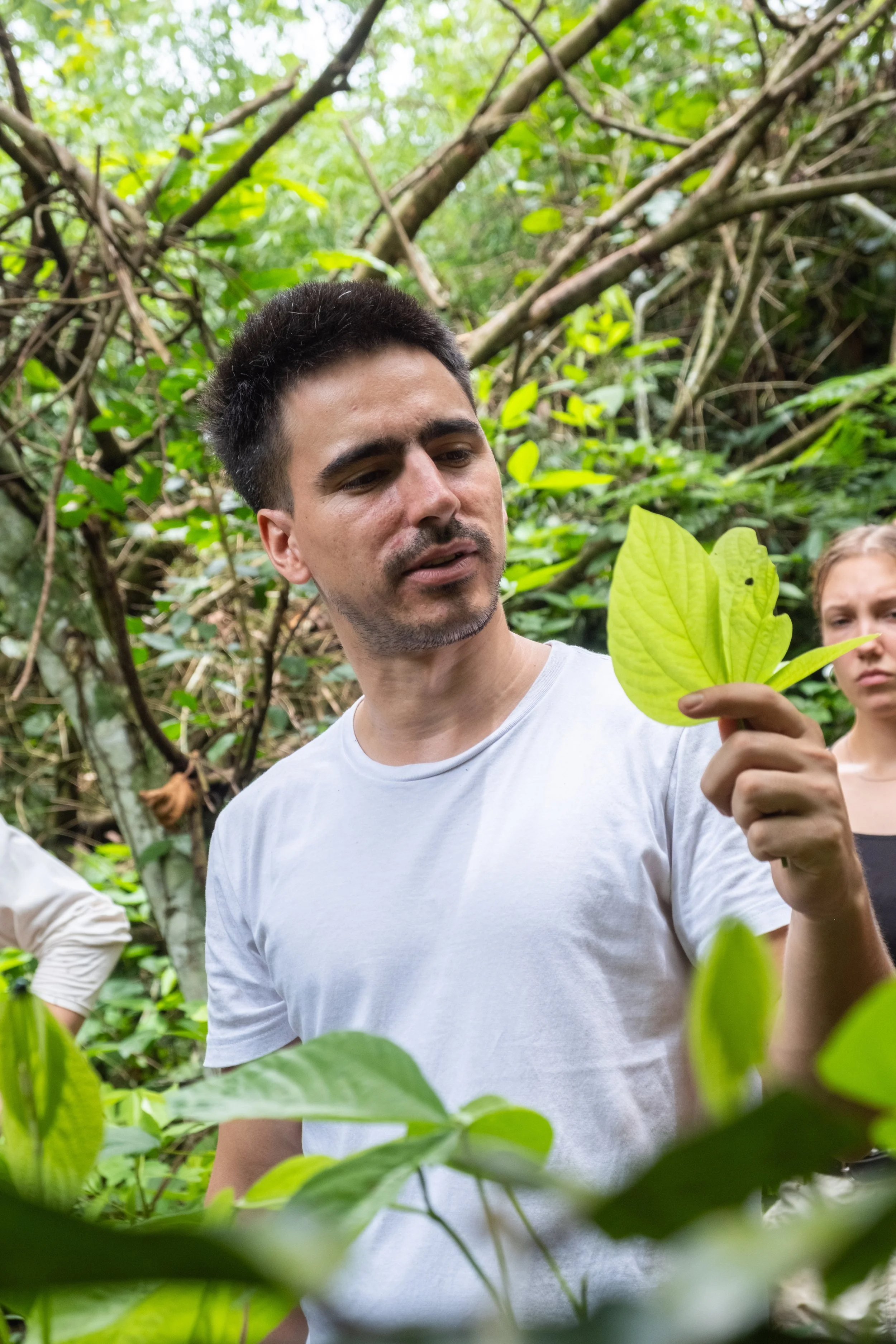
It’s so good to have a plant-lover like Thalía on board, and the whole team was impressed by how many of the hundreds of tree species we grow she was able to identify at first glance.

Wendy Flores with intern Paloma Álvarez, professor Miguel Hilario, and volunteers Sydney and Nikita
Meanwhile, on the intern side, we are very happy to welcome Paloma Álvarez of Cusco to the Baltimori family for the next three months. A forestry student at UNSAAC university’s rainforest campus here in Madre de Dios, Paloma is completing the internship required by her studies at Camino Verde Baltimori. Focusing on distillation as a value-adding process for non-timber forest products, Paloma is also a part of our volunteer management team, helping ensure a great experience for the people who come visit us from all over the world.
And speaking of which, we are sad to say goodbye to two volunteers who won the prize for CV’s longest volunteer placement ever. Brought in by the German association ADRA, we’ve had such a great time watching Luca Barkmann and Jarven Nieweler, grow in skills, knowledge, and confidence over these last twelve months. We are sorry to see them go! And we’re already looking forward to welcoming the next two year-long ADRA volunteers —also a young man and a young woman— who join us in August.

Environmental studies students from UC Santa Cruz marvelling at the wonder of a giant kapok tree.
UC Santa Cruz Environmental Studies visit
We were so thrilled to receive our first visit from the students and professors of the University of California Santa Cruz’s environmental studies department. Under the masterful tutelage of profes Miguel Hilario and Flora Lu, the first cohort of students was made up entirely of young women. Together we botanized, harvested bananas, climbed palm trees, played soccer on the beach of the Tambopata River, and enjoyed hours of insightful conversation about the Amazon and its people in the 21st Century. Thanks Natalie, Kaya, Tess, Sarah, and Sarah, for coming to explore the Amazon with us. (And special thanks to longtime CV supporters Brad and Andrea Hubbard-Nelson for connecting CV and UCSC in this way!)

Dr. Flora Lu (center) of UCSC taking the boat to Camino Verde Baltimori.
Thank you, Thank You, Thank YOU!

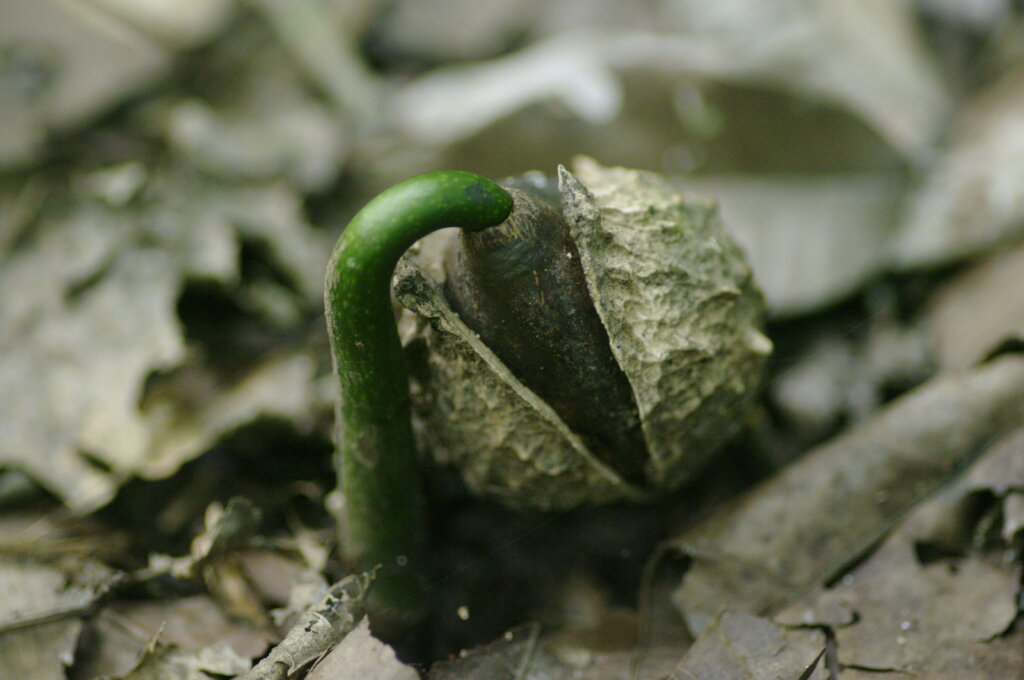
We are grateful to recent CV intern Serena Munro for her incredible images of the living work of reforestation at Camino Verde Baltimori.
By Robin Van Loon | Executive Director
By Robin Van Loon and Alejandro Zevallos | Camino Verde Team
Project reports on GlobalGiving are posted directly to globalgiving.org by Project Leaders as they are completed, generally every 3-4 months. To protect the integrity of these documents, GlobalGiving does not alter them; therefore you may find some language or formatting issues.
If you donate to this project or have donated to this project, you can receive an email when this project posts a report. You can also subscribe for reports without donating.



Support this important cause by creating a personalized fundraising page.
Start a Fundraiser