By Lori Brister | Resource Development Officer
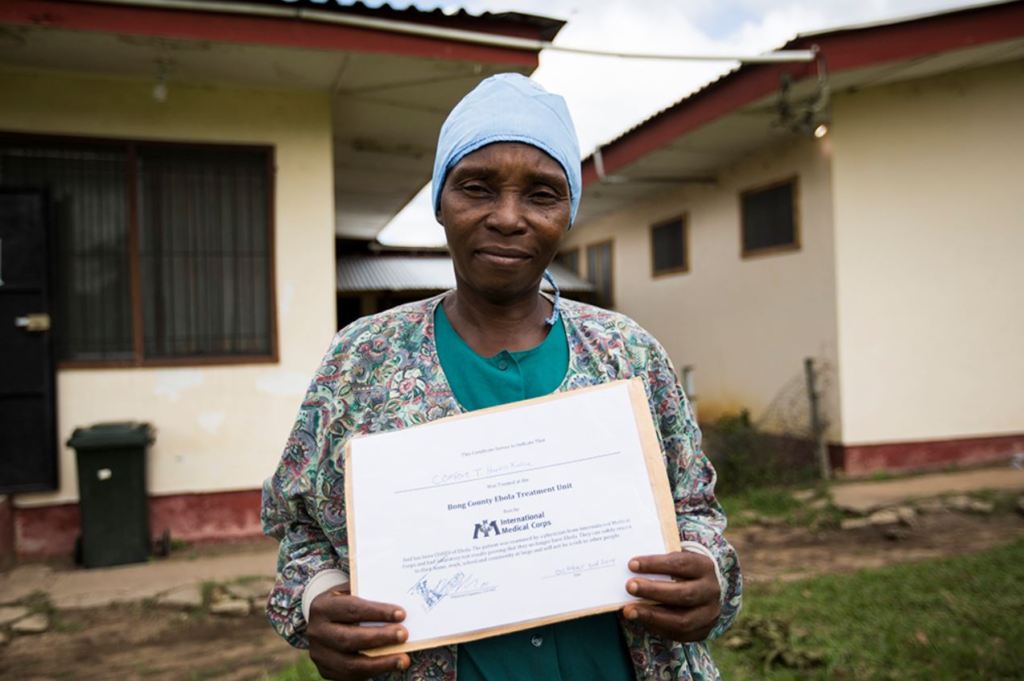
“It was like a big cloud over my eyes,” Comfort Kollie says, describing how it felt to slowly lose her sight. Comfort spent 17 days in International Medical Corps’ Ebola Treatment Unit in Bong, Liberia before being discharged with a clean bill of health. But not long after returning home to her family, Comfort began experiencing excruciating pain in her bones and joints, and then the world began to darken. She recalls, “I cried. I thought I would never see again.”
Comfort is one of some 17,000 survivors of the recent Ebola outbreak, most of whom live in Guinea, Liberia and Sierra Leone. During the outbreak, humanitarian organizations like International Medical Corps made tremendous strides in treating and preventing the deadly disease, and in the process raised new questions about the long-term effects of Ebola, which experts call Post-Ebola Syndrome. Like Comfort, many survivors experience Post-Ebola symptoms such as body pains, psychological trauma and vision problems.
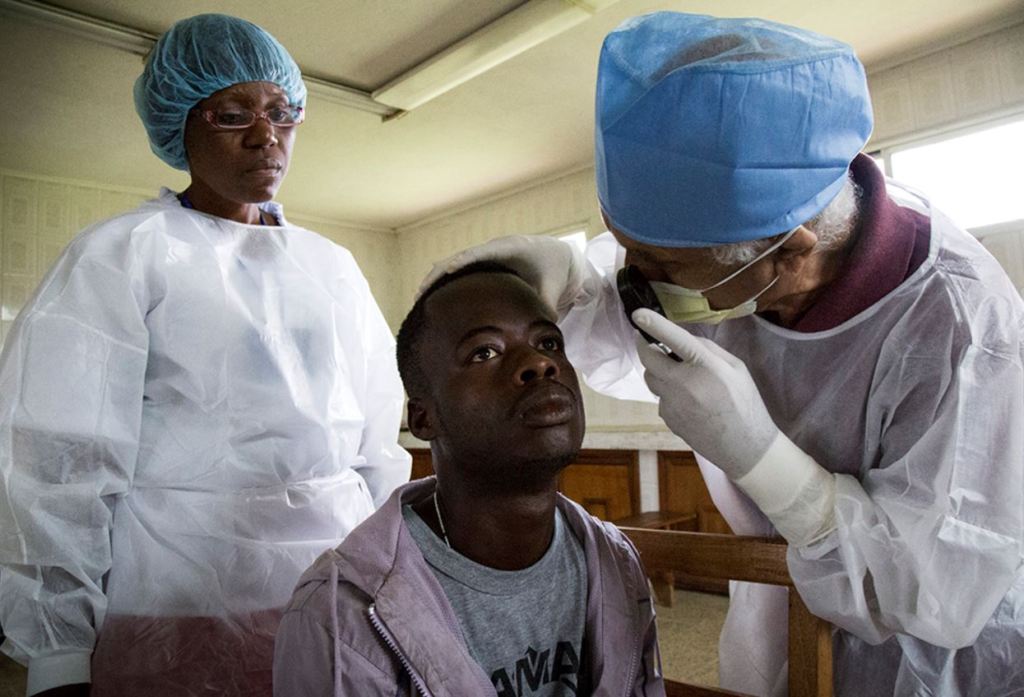
Megan Vitek, a registered nurse and program coordinator for International Medical Corps’ Post-Ebola Syndrome program says, “There is still so much unknown about what happens to a survivor’s body once their blood test is negative and they are discharged from the Ebola Treatment Unit.” Research into long-term side effects suggests that the virus can persist in bodily fluids, such as semen, and areas of the inner eye, where the virus causes blinding lesions.
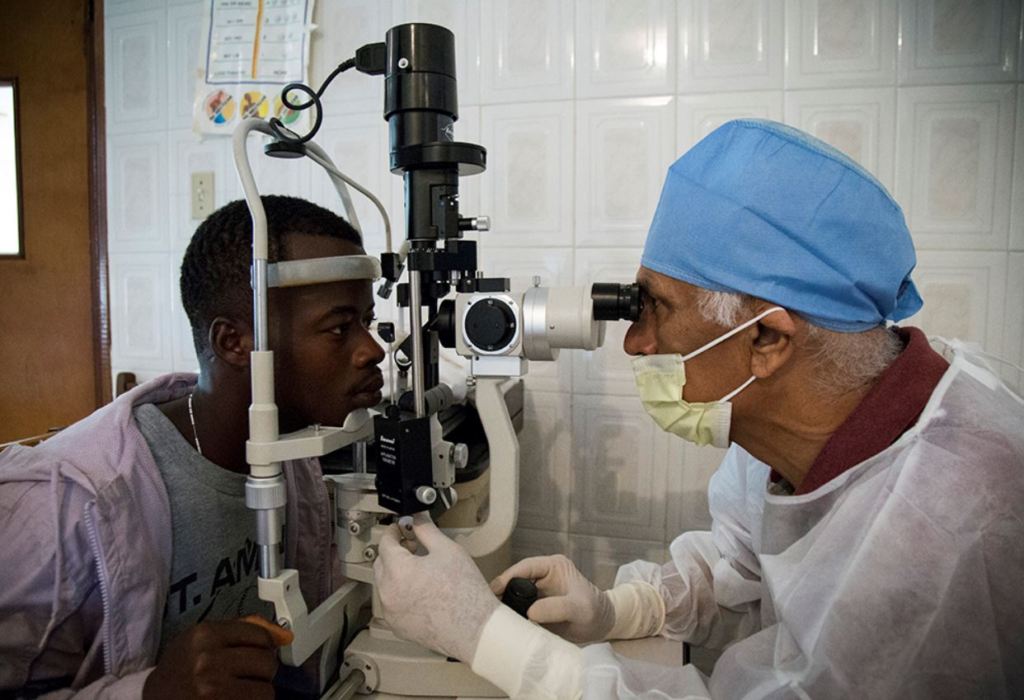
International Medical Corps takes an integrated approach to survivor care. Across Guinea, Liberia and Sierra Leone, we are leveraging our experience on the frontline of the fight against Ebola to rebuild devastated health systems by training health workers, providing primary care and fostering community engagement. Our outreach programs work with survivors to rebuild lives and communities by dispelling myths, leading health promotion activities and facilitating dialogue. In Liberia in particular, our team also works with ophthalmologists to treat lesions caused by Ebola, as well as physiotherapists to combat bone and joint pain. When Comfort’s symptoms grew worse, she turned, once again, to International Medical Corps. She still experiences some pain in her bones and joints, but she has fully recovered her sight, and has returned to her career as a nurse. She says, “Because of International Medical Corps’ help, I can see clearly now.”
We want to thank the GlobalGiving community for your support as we continue to promote infection prevention and control and provide healthcare to Ebola survivors who need it the most.
Project reports on GlobalGiving are posted directly to globalgiving.org by Project Leaders as they are completed, generally every 3-4 months. To protect the integrity of these documents, GlobalGiving does not alter them; therefore you may find some language or formatting issues.
If you donate to this project or have donated to this project, you can receive an email when this project posts a report. You can also subscribe for reports without donating.