By Kimberly Laney | Resource Development Officer
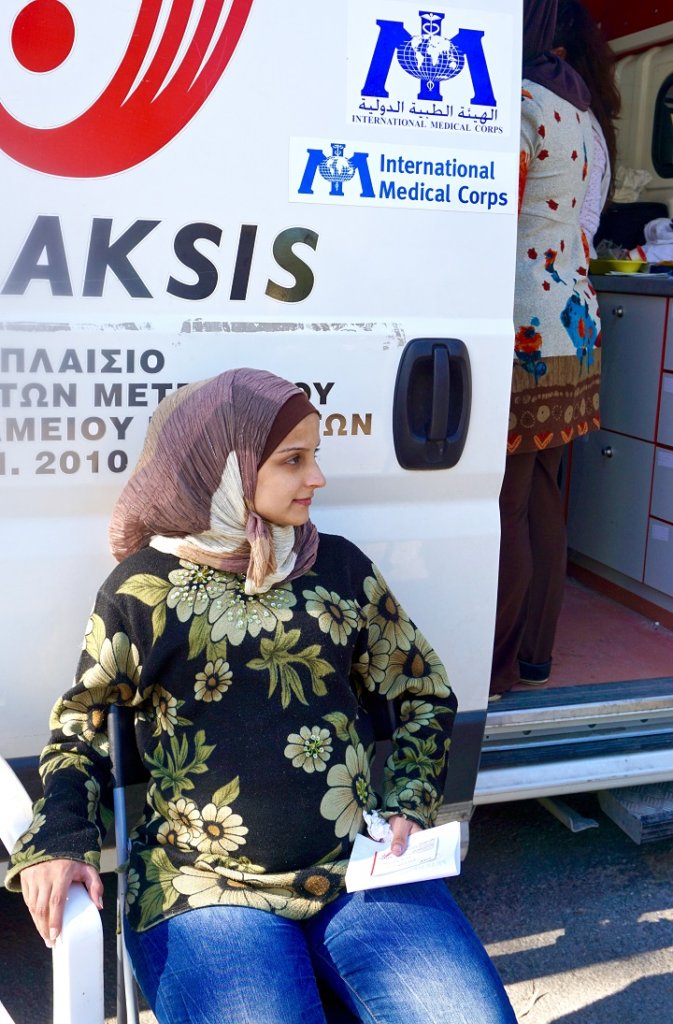
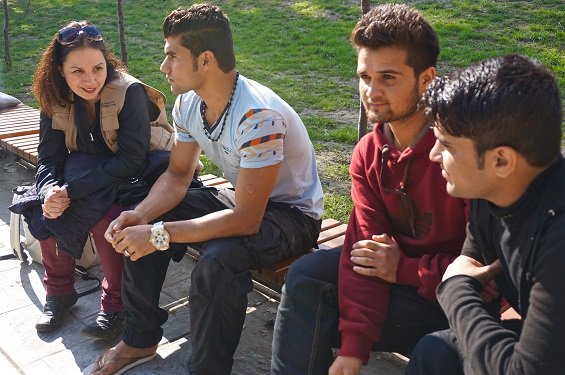
Eight months pregnant and traveling alone, Muna boarded a small boat in Turkey that was to take her to an island in Greece she had never heard of before. The trip would be dangerous, she knew, but it would bring her one step closer to her husband, who was already in Germany. “She told me she was terrified when she saw that the boat was being driven by a 14-year-old boy who had no experience and was under threat from the owner,” says Lenio Capsaskis, a member of the medical team provided by International Medical Corps’ local partner, Programs of Development, Social Support, and Medical Cooperation (PRAKSIS). “She said the boat nearly capsized four times before it ended up on a military island called Farmakonisi, and that she was stranded there for three days without food, water or shelter with hundreds of other refugees. Eventually the group was taken here, to Leros, and that’s where we met her.” Muna told the International Medical Corps and PRAKSIS team that she had stopped feeling her baby move a few days earlier and was afraid she might have lost it. After we referred Muna to the proper obstetric care, she was tearful when she learned that both she and her baby were healthy.
Muna’s story illustrates the dangerous journey so many refugee women face. By the end of 2015, more than 1 million refugees and migrants had crossed the Mediterranean Sea to reach Europe and more than 3,700 people lost their lives or went missing during the journey. With the generous support of GlobalGiving and other donors, International Medical Corps remains on the frontlines of this crisis, prioritizing lifesaving care as the refugee and migrant flow continues in 2016.
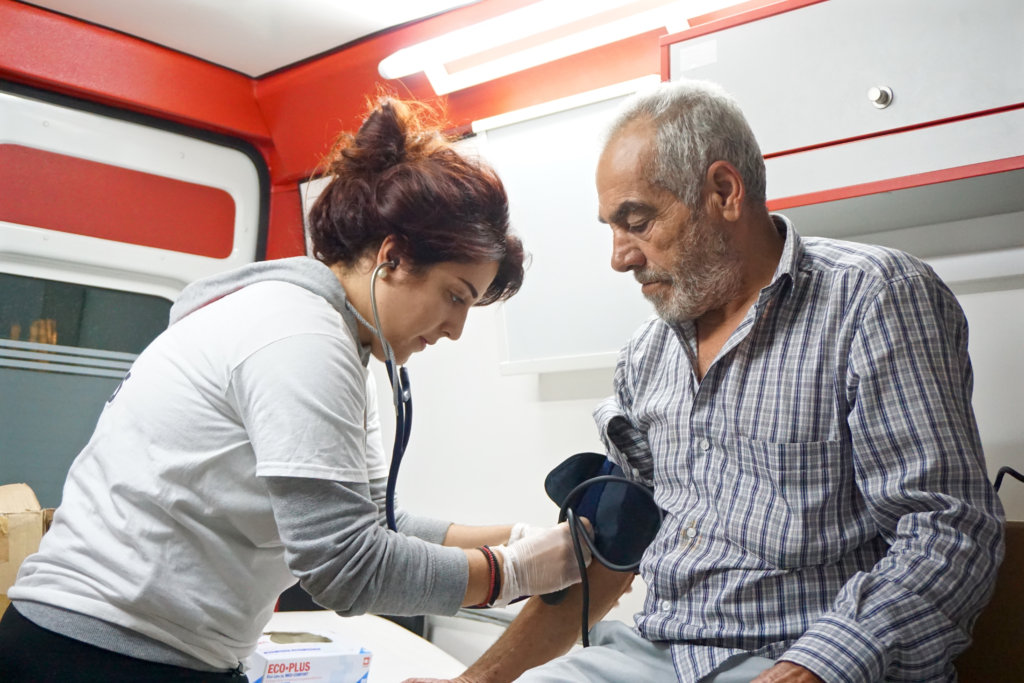
In Greece, International Medical Corps and PRAKSIS are providing medical, psychosocial, and hygiene and sanitation assistance to newly arriving refugees and migrants on the Greek islands of Leros, Kos and Samos. Two mobile teams have conducted medical consultations on these islands for 2,227 patients, who also meet with a social worker for psychosocial support and receive referrals for additional assistance. To thwart the spread of disease, International Medical Corps and PRAKSIS have distributed 454 personal hygiene kits, which include towels, shampoo, toothbrush, toothpaste, soap and bandages for treatment of wounds and injuries.
As refugees transit through Serbia by train headed for countries further north, International Medical Corps and local partner International Aid Network (IAN) are providing services seven days a week to those in need at the railway station in Sid, near Serbia’s border with Croatia. As of January 10, International Medical Corps and IAN had provided medical care for 4,683 patients, noting that acute respiratory infections were the most common illness. International Medical Corps and IAN have also provided 2,224 psychosocial support consultations, to impart positive coping strategies and provide information about stress reactions. Teams are continuously linking refugees to other available assistance, for example, with Serbian asylum procedures, and food and relief supplies as they continue their journey.
When reflecting on the crisis, Sanja, a member of International Medical Corps’ emergency team in Serbia recalls, “What you learn is that it doesn’t matter where you’re from, all displaced people suffer the pain of leaving what they love behind and even use the same phrases to describe what they’ve lost, what they need, what they hope for,” she says. “Whether you’re a Sudanese refugee fleeing to Uganda or a Syrian refugee fleeing through Serbia, you end up with a small bag in your hand and all you have from home is your memories.”
International Medical Corps thanks GlobalGiving and other donors for their critical support as we continue to respond to this refugee crisis.
Project reports on GlobalGiving are posted directly to globalgiving.org by Project Leaders as they are completed, generally every 3-4 months. To protect the integrity of these documents, GlobalGiving does not alter them; therefore you may find some language or formatting issues.
If you donate to this project or have donated to this project, you can receive an email when this project posts a report. You can also subscribe for reports without donating.