By Kimberly Laney | Resource Development Officer
“As crisis has evolved, refugees and migrants arriving in Greece have become more stationary, residing in government-established settlements. With individuals and families residing in Greece for the foreseeable future, the government and the humanitarian community are working to expand the services provided – for example: moving from providing emergency first aid to supporting comprehensive health services, including primary and reproductive care and increased psychosocial support,” notes our Emergency Program Coordinator, Sambhavi.
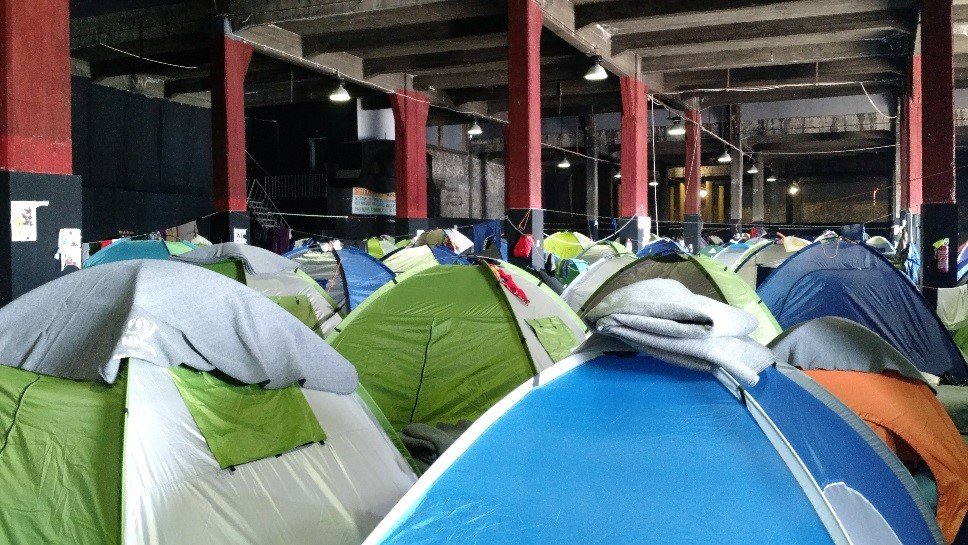
Just over two months after the European Union and Turkey launched a plan to limit the flow of refugees and migrants to Europe via the Mediterranean Sea, approximately 54,000 refugees and migrants are now in Greece. But most of them are in a state of limbo. As Greek authorities work to accommodate and process refugees and migrants stranded in the country, approximately 46,000 people on the mainland reside in displacement sites, some ill-equipped to host refugees and lacking access to basic services such as latrines, shelter and more.
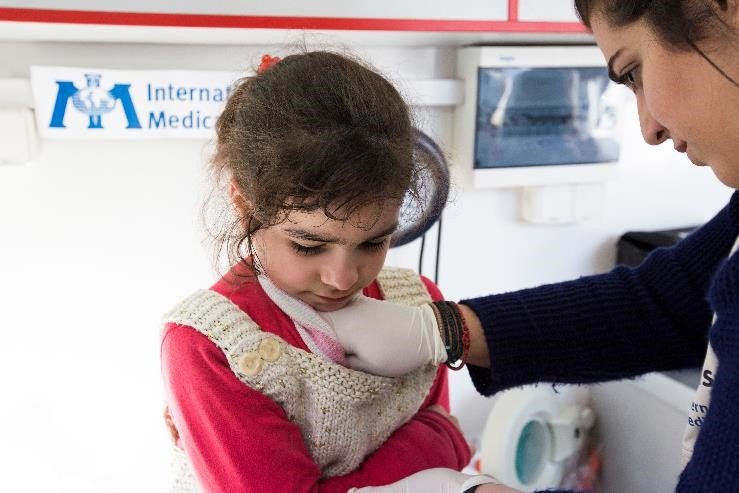
As the situation in Greece continues to evolve, International Medical Corps and our local partner, Programs of Development, Social Support, and Medical Cooperation (PRAKSIS), remain flexible in our response to meet the most urgent needs of families we serve. We recently relocated our mobile medical units from the islands of Samos, Leros and Kos, to Attica and Piraeus Port, where more than 5,000 refugees and migrants have established themselves. Since September 2015 our mobile medical teams have seen 5,272 patients, providing basic primary health care services, referrals when needed, linkages to other existing assistance, and basic psychosocial support.
Many refugees and migrants arriving or stranded in Greece have fled conflict in Syria, Afghanistan, and Iraq, and some have experienced trauma during their journey. Moreover, many refugees crossing into Greece suffer from stress resulting from basic needs not being met, such as for information, food or weather-appropriate clothing. Uncertainty about the future also causes high levels of anxiety, as can the trauma experienced by losing a home or family members, surviving violence and torture, and travel-related challenges. Sambhavi noted that, “As the crisis continues, the humanitarian community is seeing increased use of negative coping strategies like overuse of alcohol and use of drugs as well as increased inter-camp conflicts. Scaling up support for mental health is critical.”
To help meet their psychosocial needs, International Medical Corps’ mental health and psychosocial support specialists conducted 19 psychological first aid trainings for front line workers who interact with refugees and migrants to better enable them to provide initial support. Trainees learned how best to engage the refugees—offering a sense of safety, stabilizing them, gathering information, providing help with coping mechanisms, and connecting them with practical assistance, for example, related to shelter, food, water and clothing. A total of 286 participants attended the trainings, held in Athens, Lesvos, Samos, Leros, and Kos. The participants included personnel from the Greek coast guard, law enforcement, social workers, humanitarian staff, volunteers, and others.
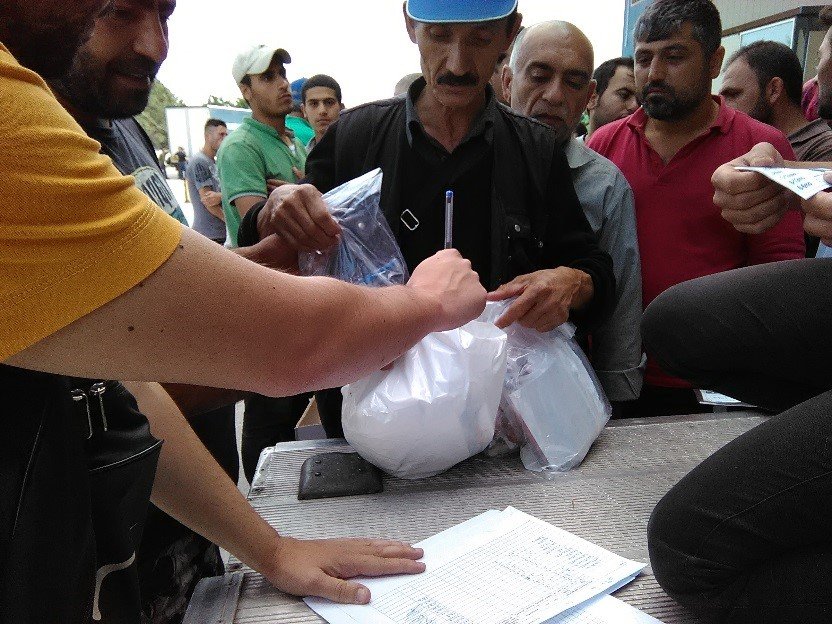
As refugees and migrants traveling to Greece by sea are able to carry very little with them and are in need of basic supplies such as clothing, sleeping bags, and hygiene items once they arrive, International Medical Corps also collaborated with PRAKSIS and other relief organizations to provide such supplies, ranging from mattresses to hygiene kits, which include items such as towels, toothpaste, toothbrushes, soap and feminine hygiene products. “With support from gift-in-kind donors and cash contributions International Medical Corps is able to position staff and materials to reach those in need.” says Sambhavi, “On one recent afternoon, we distributed more than 500 hygiene kits in new formal camps to people who had been evacuated from the informal settlement at Idomeni just that morning.”
Today, we are working to increase our primary and reproductive health services, as well as address gaps in water, sanitation and hygiene. We thank you for your continued support as we address the most urgent needs of families arriving in Greece.
Project reports on GlobalGiving are posted directly to globalgiving.org by Project Leaders as they are completed, generally every 3-4 months. To protect the integrity of these documents, GlobalGiving does not alter them; therefore you may find some language or formatting issues.
If you donate to this project or have donated to this project, you can receive an email when this project posts a report. You can also subscribe for reports without donating.