By Yoshida Toshimichi | Project Leader
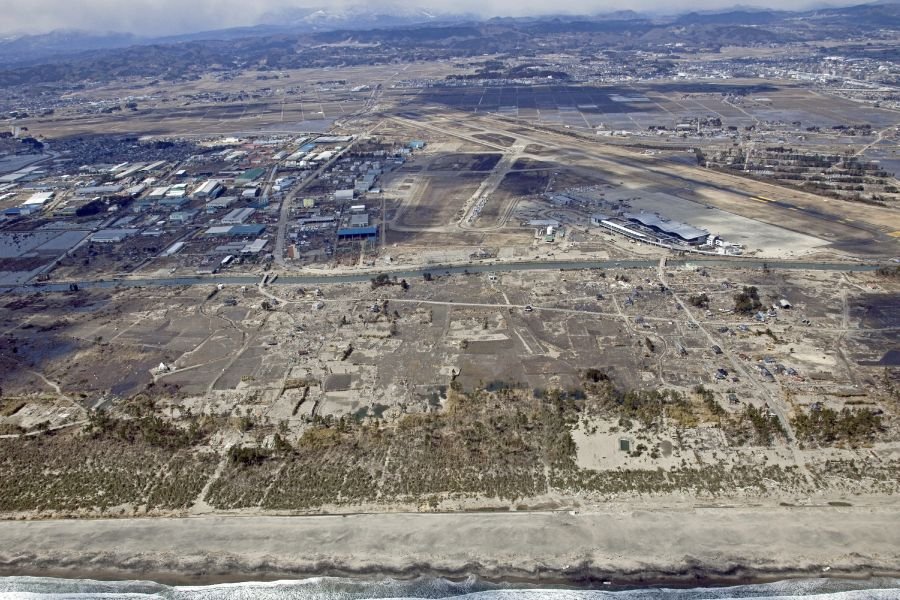
Fifteen years have passed since the March 11 Great East Japan Earthquake, which brought with it a gigantic tsunami that hit 700 km of the country’s Pacific coast.
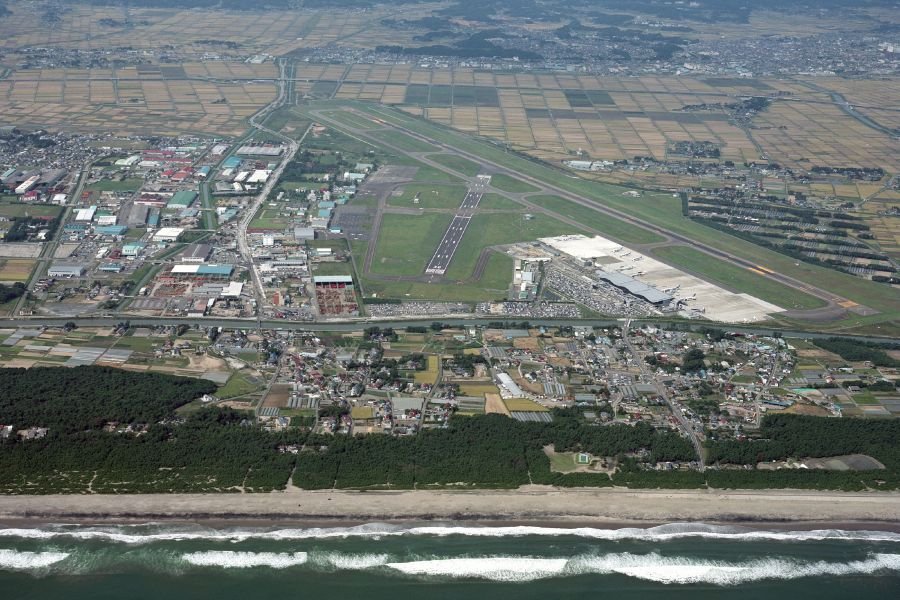
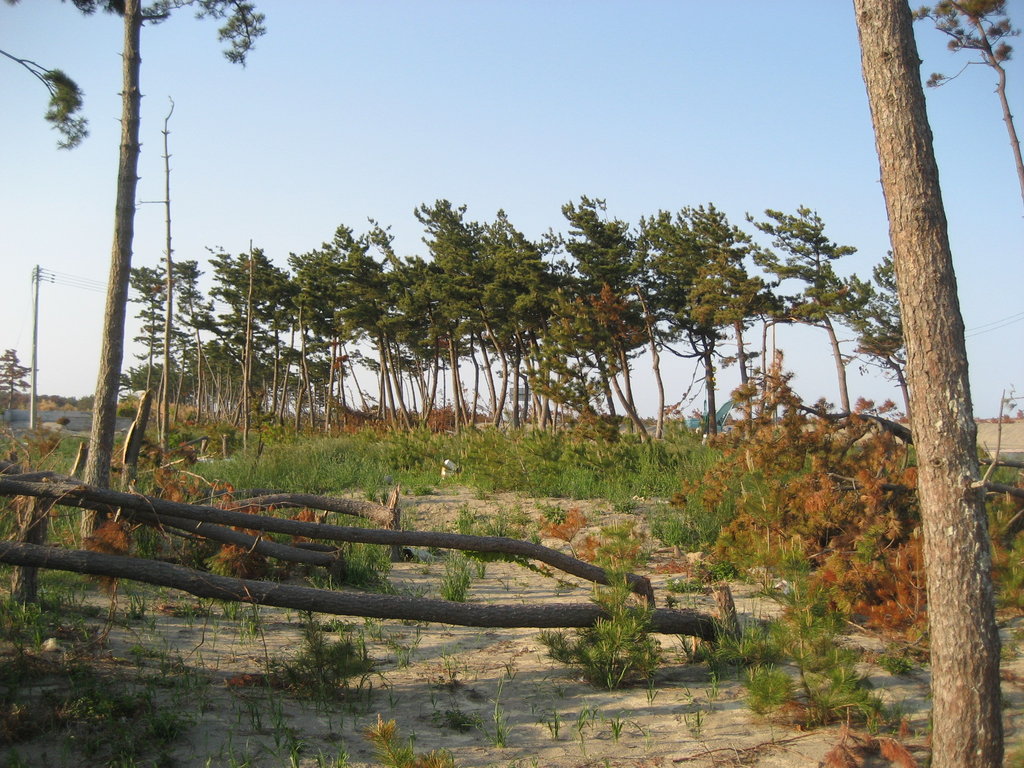
3,700 hectares of black-pine forest across six prefectures (Aomori, Iwate, Miyagi, Fukushima, Ibaraki, Chiba) were wiped out and uprooted by the 2011 tsunami. Of them, 1,700 hectares were in Miyagi Prefecture alone, with 1,100 hectares irreversibly destroyed. Some of those trees were said to be 400 years old.
Forests serve as natural barriers against natural disasters, such as strong winds, typhoons, high tides, wind-blown sand and salt sprays. Shielded from winds and salt from the seacoast, local communities in Natori used to sustain themselves by farming, which was now hindered in the absence of a forest barrier. Furthermore, as Natori is also home to Sendai Airport, wind-blown sand and fog affect flight schedules. All these factors combined hinder the economy of the city.
As the Natori community felt the urge to restore the coastal forest, it became apparent that local manpower and means were not sufficient to reforest the 5-km long and 200-m wide area.
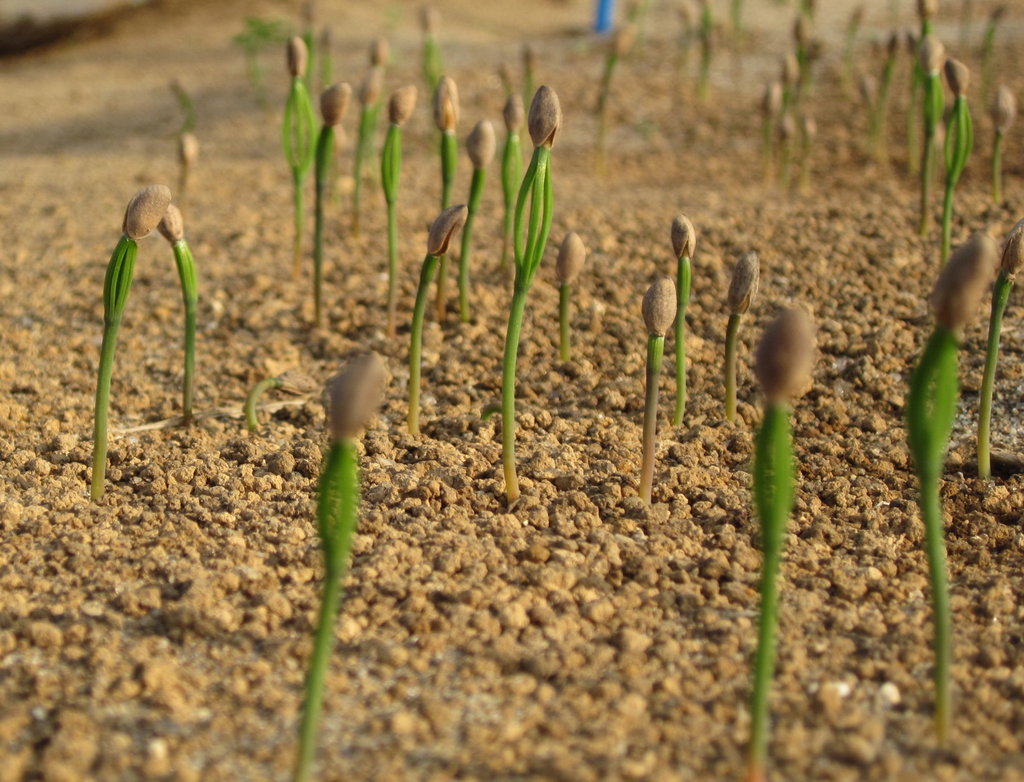
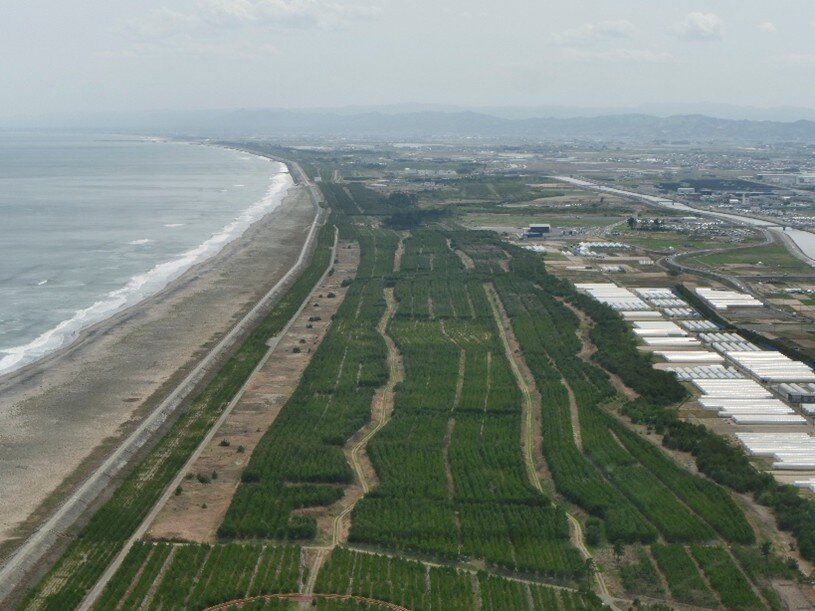
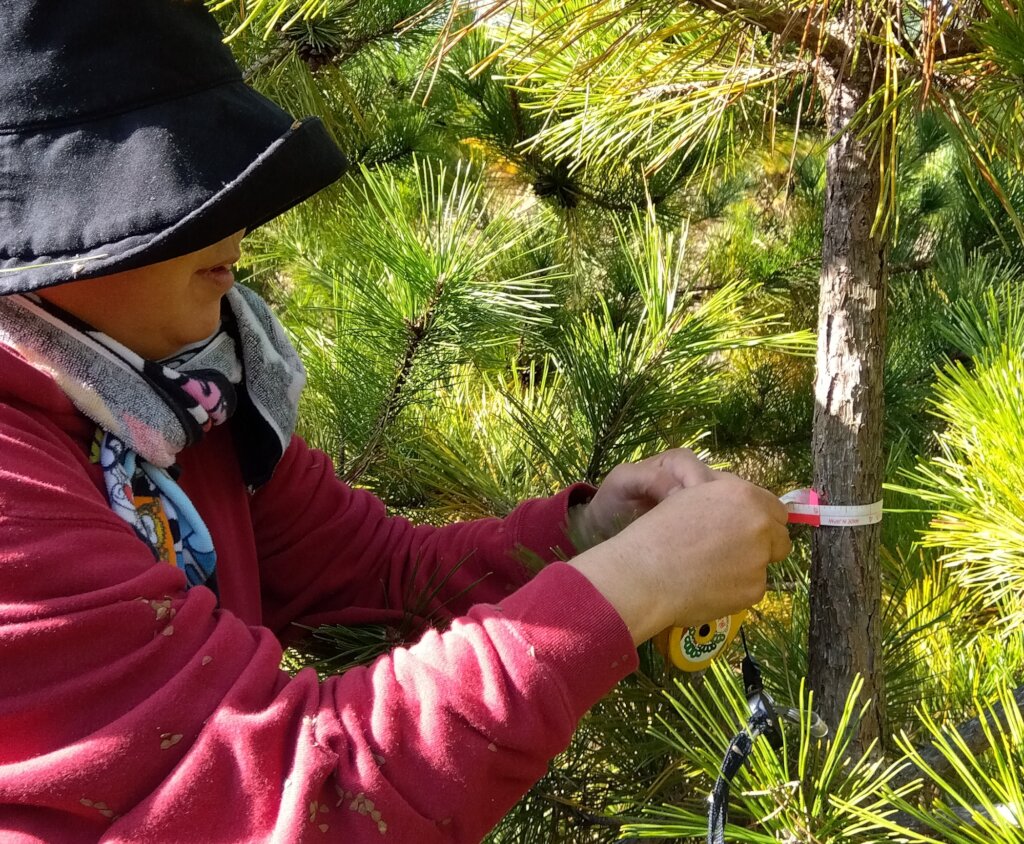
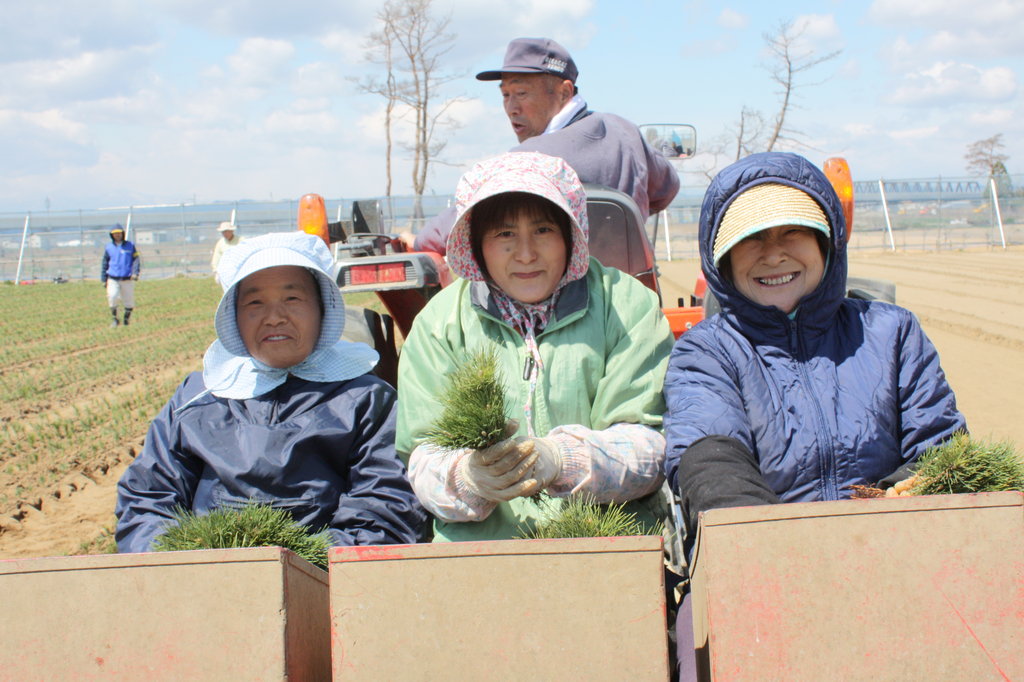
Five years ago, OISCA fully restored 103.05 hectares of tsunami-damaged forest, relying entirely on donations and the help of nearly 15,000 volunteers. More than 370,000 trees were planted, with the tallest of them now reaching 9 meters.
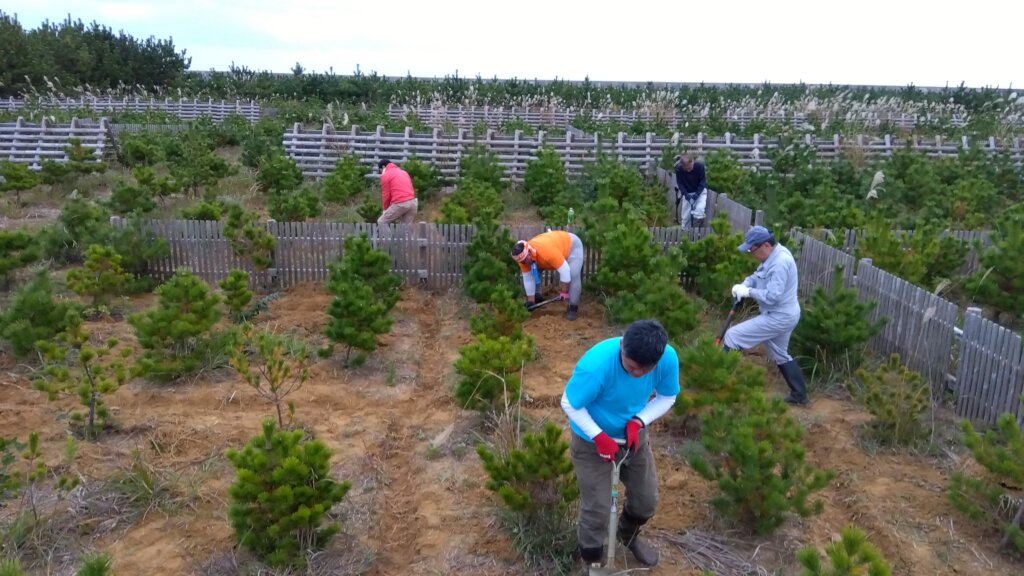
However, to accomplish OISCA’s mission of growing a coastal forest strong enough to shield communities from natural disasters, simply replanting the area is not enough. A year-round aftercare is vital until the trees are mature and well-established.
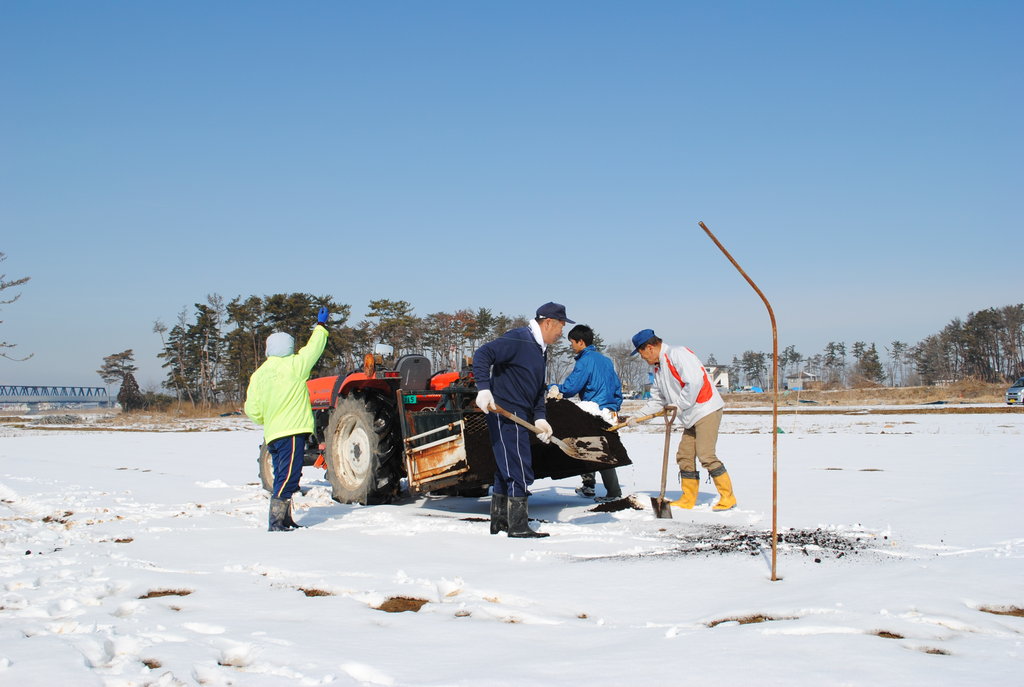
Winter is the season for tree thinning, which is vital to guarantee that the planted black pines grow with strong and sturdy trunks, and develop wide and deep root systems. In total, five rounds of thinnings have to be completed across the entire 100 hectares. At this point, the first round has been almost fully completed.
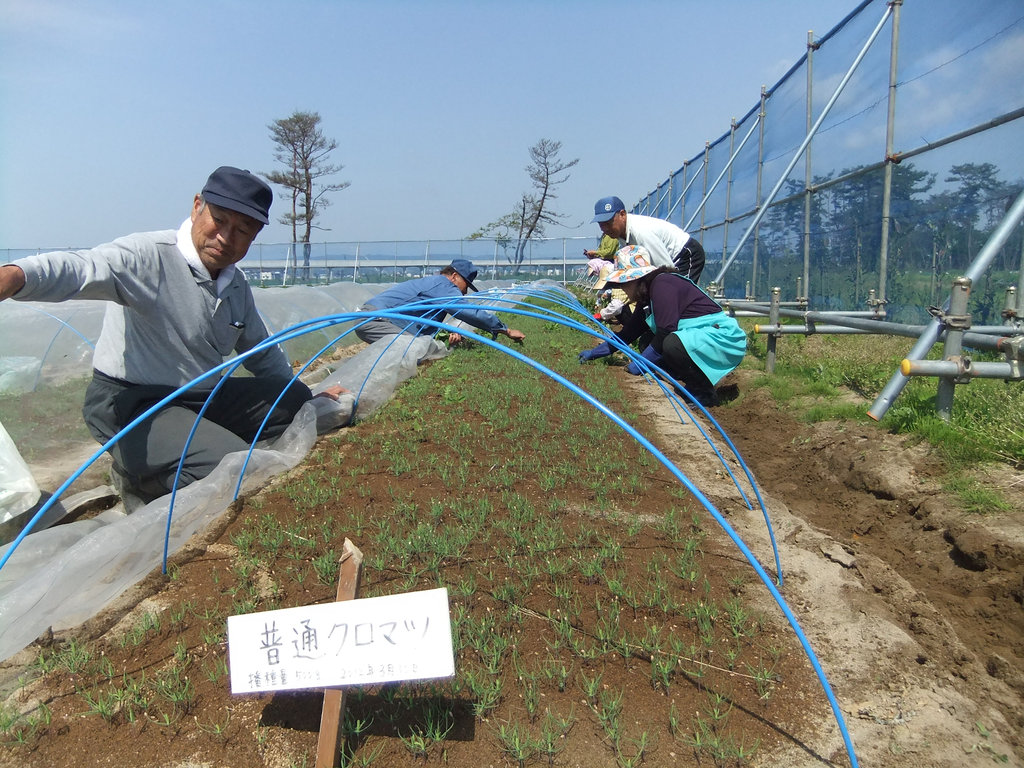
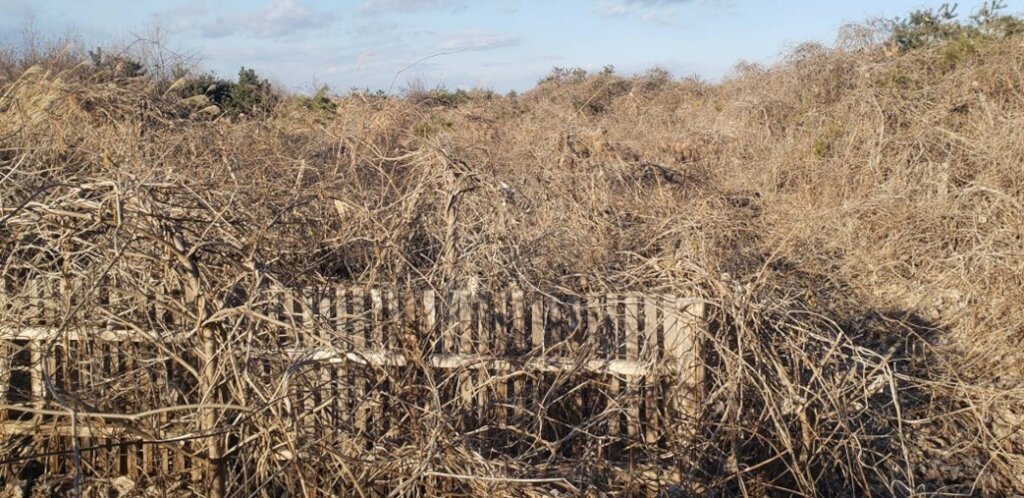
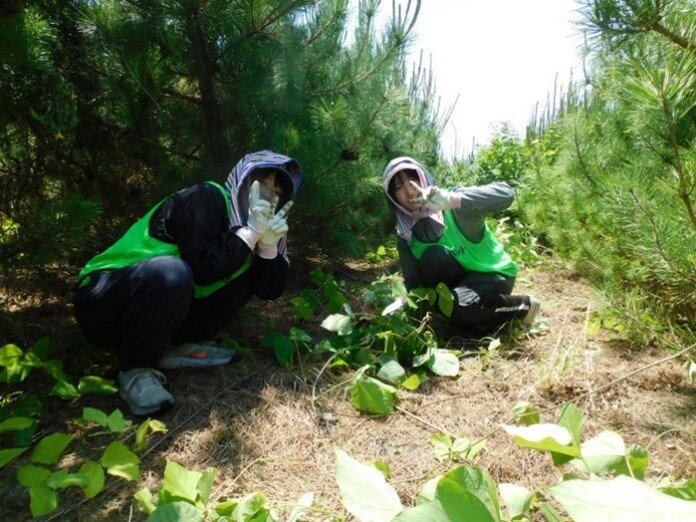
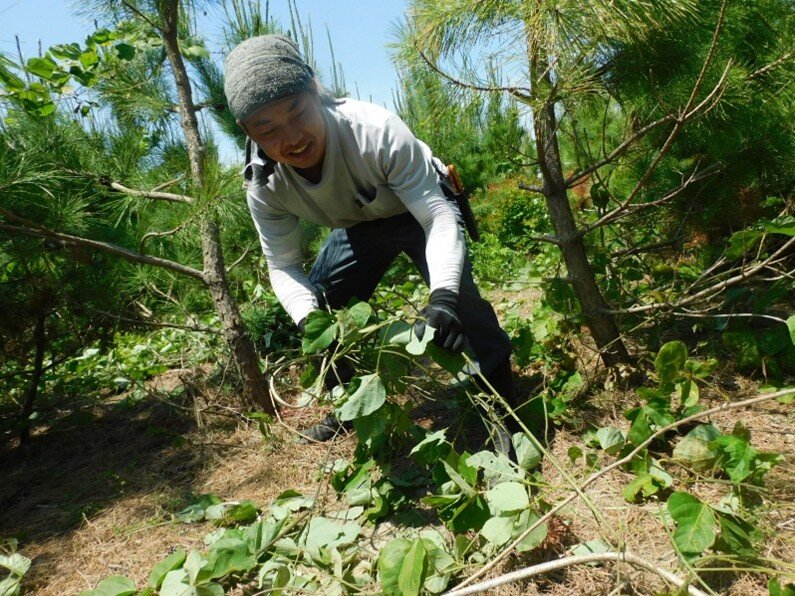
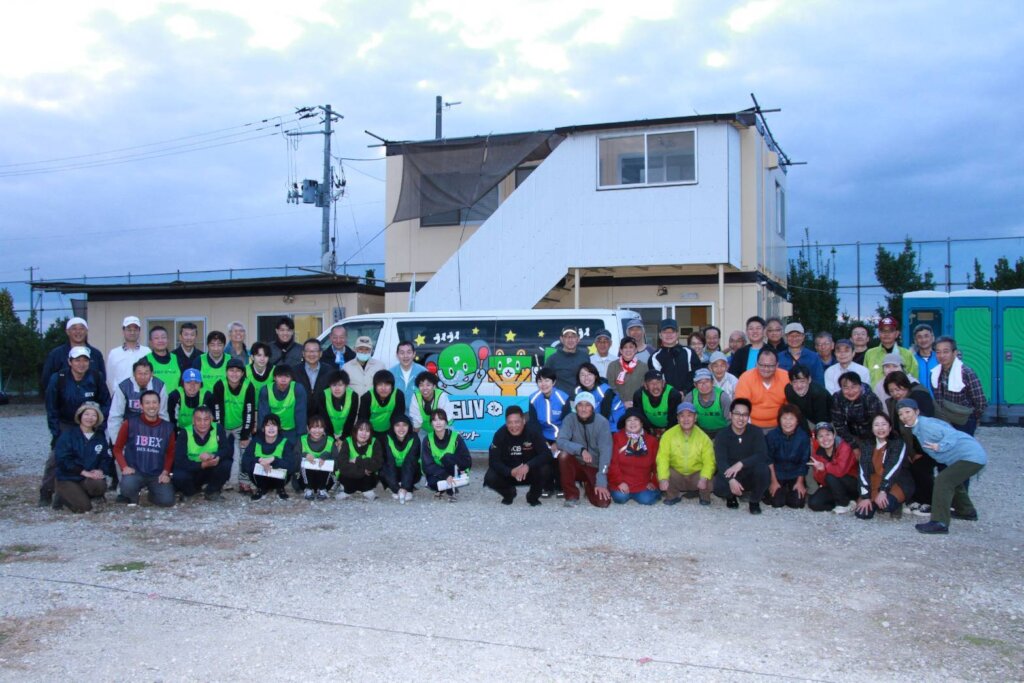
Spring to fall is the time for weed control, particularly the removal of “kudzu” - a vine plant that blocks sunlight and hinders the growth of black pines. This year, we will once again be using a “human wave” tactic for mass weeding, involving 500 professionals and over 1,000 volunteers working for eight hours a day.
Kudzu puts down roots along the ground, taking hold every few dozen centimeters, and spreading rootage from each point. Our professionals and volunteers do the meticulous job of tracking and cutting each one of them down with a sickle, as well as spraying herbicide directly onto the roots to control the regrowth of vines. All of this is done entirely on their hands and knees.
However, such rigorous work delivers results. Two years ago, it took us three sessions involving a total of 700 volunteers to clear 1.5 hectares overgrown with kudzu. Thanks to continued collaboration, kudzu infestation has dramatically decreased - next time, just 35 people can clear the same area in a single session.
Five years into a full restoration of the forest, we can already see the results. The highest trees have grown up to 9 meters, serving as an established barrier protecting agricultural lands, such as greenhouses, rice farms and orchards. Furthermore, we found a high salt concentration in the pellet ashes from the thinned trees in our project site. This demonstrates how effective the black pines are at absorbing the sea salt blown by the winds. As pines also now shield local residents from sand and salt sprays, corrosion problems can be rarely heard from local people.
We also estimate that the black pines at our project site absorb approximately 606 tons of carbon dioxide annually - equivalent to the yearly emissions of 93 households. Just as importantly, the project has created employment opportunities for 11,000 local residents over the past fourteen years.
This year, the National Tree Planting Festival (“Zenkoku Ikujusai”), hosted by the government, will be held in Miyagi Prefecture, bringing significant attention to the Natori Coastal Forest.
We will continue to work diligently with professionals and volunteers, taking all necessary precautions to prevent accidents and mobilizing collaborative efforts to create strong coastal disaster prevention forest.
We would like to express our deepest gratitude to each and every one for your continued support of our reforestation efforts.
By Yoshida Toshimichi | Project Leader
By Yoshida Toshimichi | Project Coordinator
Project reports on GlobalGiving are posted directly to globalgiving.org by Project Leaders as they are completed, generally every 3-4 months. To protect the integrity of these documents, GlobalGiving does not alter them; therefore you may find some language or formatting issues.
If you donate to this project or have donated to this project, you can receive an email when this project posts a report. You can also subscribe for reports without donating.



Support this important cause by creating a personalized fundraising page.
Start a Fundraiser