By Uma Athale | Project Officer
Makar Sankranti is a traditional Hindu festival celebrated in most parts of India and Nepal in a myriad of cultural forms. In some parts of India it is observed with great fanfare over a period of 3-4 days. It is celebrated with distinct names and rituals in different parts of the country. For example, in the state of Gujarat it is known as Uttarayan and in Haryana, Himachal Pradesh and Punjab as Maghi. In Assam it is known as Bhogali Bihu. The kite festival of Uttarayan (Makar Sankranti) is regarded as one of the biggest festivals celebrated in western part of India.
Kite flying during Uttarayan is now celebrated as a regional event in Gujarat. It is declared as a public holiday for 2 days. People often have competitions (also known as kite fighting) during which competitors will entangle the thread used while flying kites in the sky and try to cut the string off of each other's kites by pulling it.
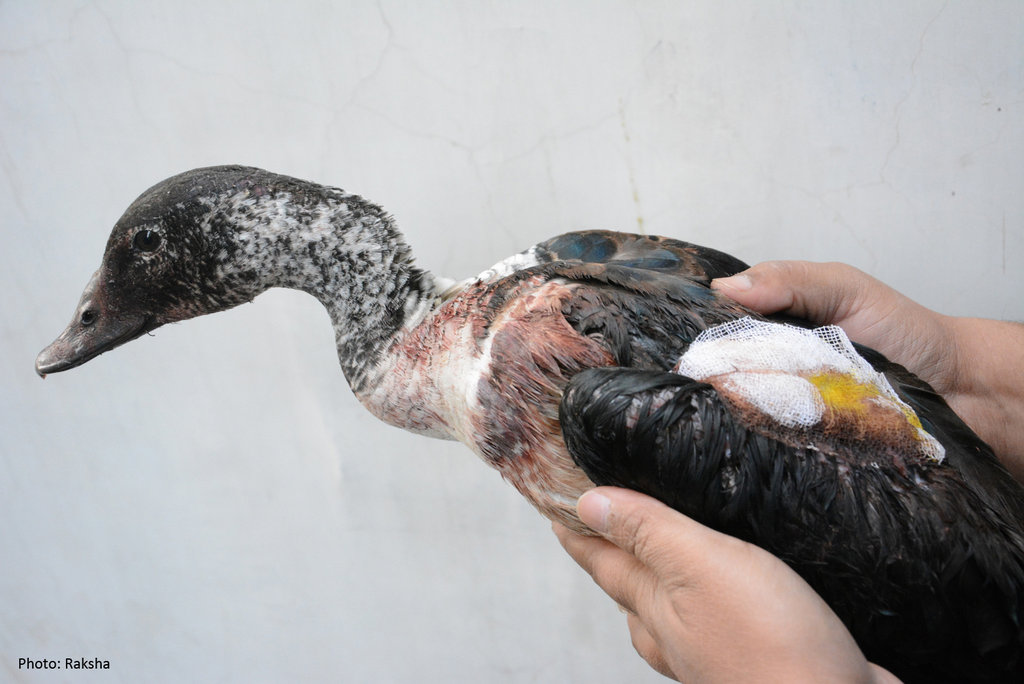
An abrasive thread (Manja) is used while flying kites to ensure cutting the competitors string during a kite fight. Manja is made by coating regular string in glass powder and gum. Thispractice of using an abrasive thread for kite fighting has posed a great threat to species including birds, fruit-bats, monkeys and even humans. The impact on birds however is much larger. Birds when in flight, fail to notice the fine glass-coated thread and get entangled in the Manja because of which they either get injured or killed.
There has been no systematic study to quantify the impact of bird kills due to kite flying. However, a rough estimate would suggest over 10,000 avian emergencies get attended during the month of January every year. The number of birds which get injured is much higher in urban areas due to higher density of kite flying. Often, kites after its line is cut off by an opponent, drifts and gets stuck in trees. The birds get entangled in these strings and get injured due to strangulation or in an attempt to set free. This is one of the biggest reasons why rescue calls of birds continue even after the festival is over.
These days cheaper and more durable “Chinese manjha” is available in the market which is made of nylon and is non-biodegradable. This thread unlike cotton manjha does not lose its strength even after getting wet and hence stays for a long time creating potential threat for the birds.
In order to address this, a workshop on handling avian emergencies during the kite flying festival was held in Ahmedabad. It involved representatives from all over Gujarat and also from the neighbouring state of Rajasthan where kite flying is considered as an important sport. One city in Gujarat, Bhavnagar, was found to have an acute shortage of veterinarians to treat the injured birds. The project team visited Bhavnagar to assess the facilities there. The city was unique in the way that it had large colonies of painted storks right in its centre. It also has a reserve forest area (Victoria Park) within the city limits with a pond where a number of wetland bird species can be seen. Victoria Park also had an aviary where injured birds could be easily housed. In spite of having a good infrastructure at their disposal, the shortage of avian vets and proper technical guidance affected their release percentage.
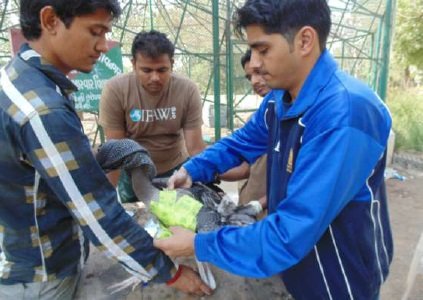
Essential supplies like suture materials, surgical tools, medicines etc were also procured. The facilities at a local animal shelter were examined and suggestions were made to them to help better their capacity to respond to injured birds. A meeting was held by the forest department along with the animal husbandry department and all the local organizations and volunteers from all over Bhavnagar district to discuss about the way rescues were to be conducted. First aid kits were distributed to all the volunteers after the meeting.
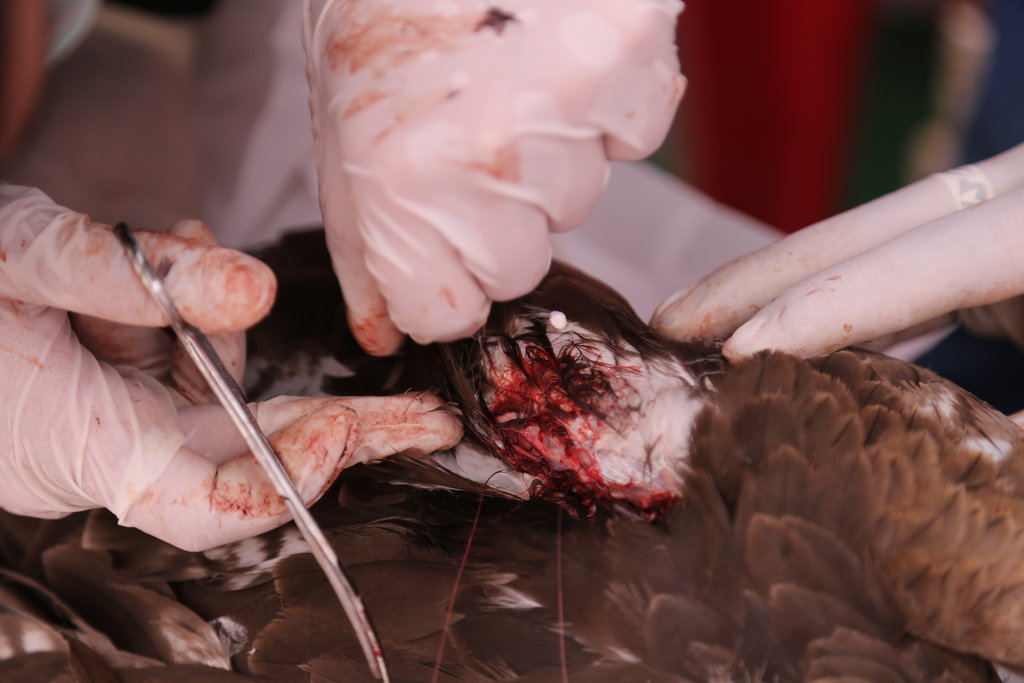
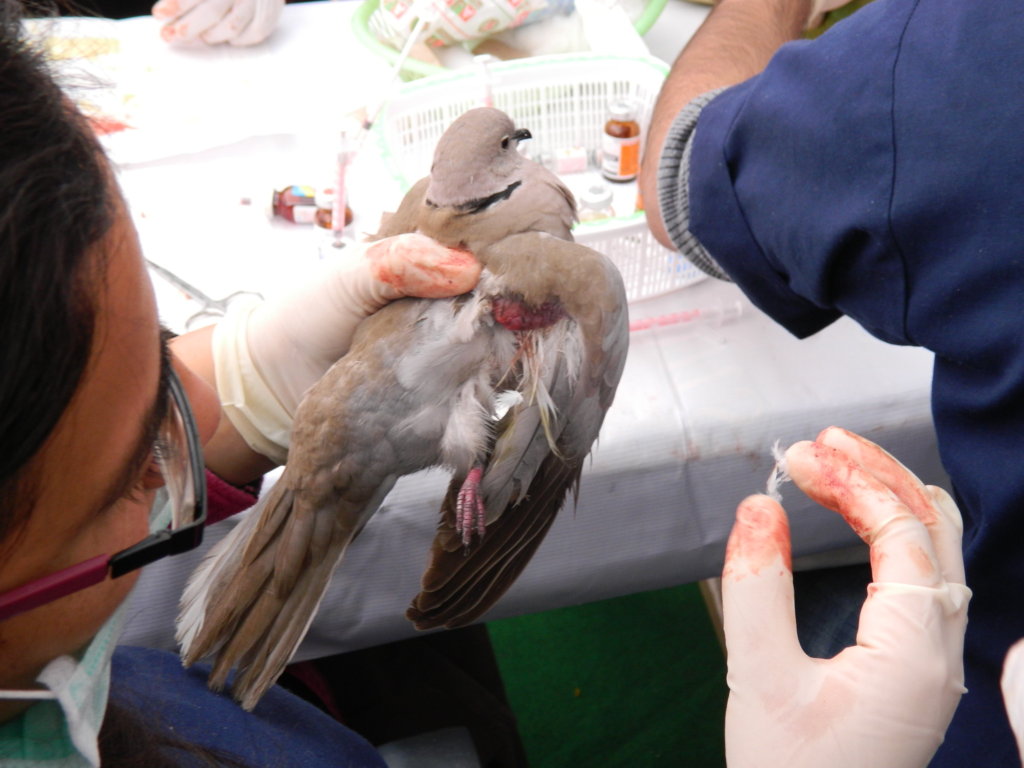
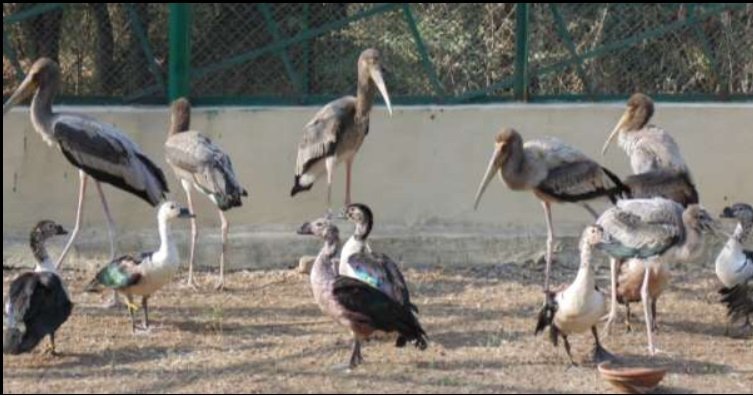
Mass awareness campaigns were also held in schools and colleges in Bhavnagar and students were urged to not use glass coated strings to fly kites. Volunteers and rescue teams patrolled Bhavnagar bringing in injured birds. Locals in Bhavnagar also rescued injured birds and admitted them to the facility for further treatment and care. All the birds brought in were recorded in a register maintained by the Forest Department and a bright coloured numbered tag was applied on every bird that was brought in. Most of the birds brought in for treatment had severely mutilated wing muscles and some were also presented with fractured bones. Vets attended to these birds and surgically repaired the injuries. The bird species found injured included comb duck, painted stork, black ibis, great white pelican, myna, francolin, black drongo, rose ringed parakeet, blue-rock pigeon, and house sparrow.
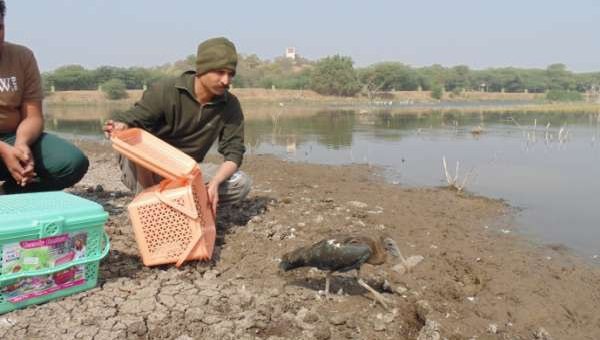
The birds were then shifted to the Forest Department aviary in Victoria Park where they were fed. Wounds were dressed regularly and wounds were re-bandaged promptly when the birds loosened their bandages. Those birds which had suffered minor injuries and were found fit upon physical examination were released in the Krishnakunj lake within Victoria park. This helped relieve the birds of undue stress of captivity and ensured adequate self feeding in natural conditions. This also helped prevent unnecessary injury to the weaker birds by the healthier dominant birds.
The rest of the birds were kept in the rehab facility till they were found fit for release. Feeding and wound dressing was taken care of by the volunteers and the Forest Department from thereafter. Those birds which could not fly again were released in Krishnakunj Lake after their wounds healed.
Over a 120 birds were treated in total.
The kite flying festival continues to threaten birds across a lot of Western India and more efforts like the one above along with sustained awareness programmes will continue in order to curb this issue.
Project reports on GlobalGiving are posted directly to globalgiving.org by Project Leaders as they are completed, generally every 3-4 months. To protect the integrity of these documents, GlobalGiving does not alter them; therefore you may find some language or formatting issues.
If you donate to this project or have donated to this project, you can receive an email when this project posts a report. You can also subscribe for reports without donating.