By Petronel Nieuwoudt | Founder & CEO
Thank you for continuing to support our vital work rescuing, rehabilitating, and rewilding orphaned and injured rhinos. This latest report reflects the impact your generosity has made over the past quarter, sharing how your support directly helped rhinos in need and strengthened their journey back to a life in the wild.
************
Havannah’s Rescue: Her Story So Far
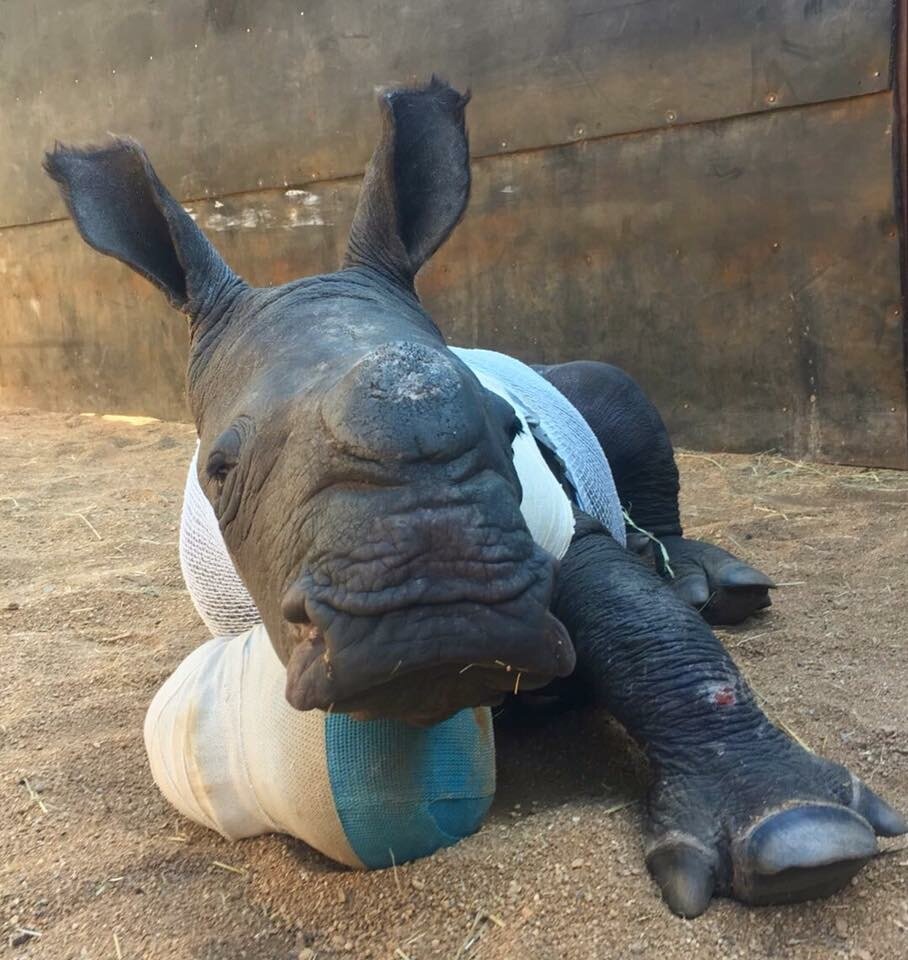
In mid October, Care for Wild received a new orphan whose story is both unique and deeply moving. Unlike many of the rhinos who arrive at our sanctuary as victims of poaching, this little calf’s journey began with a natural passing. Her mother, an iconic and much loved cow from the Timbavati Private Nature Reserve, lived a long life of more than four decades. Frail after the winter months, she passed peacefully, leaving behind a calf who could not survive alone.
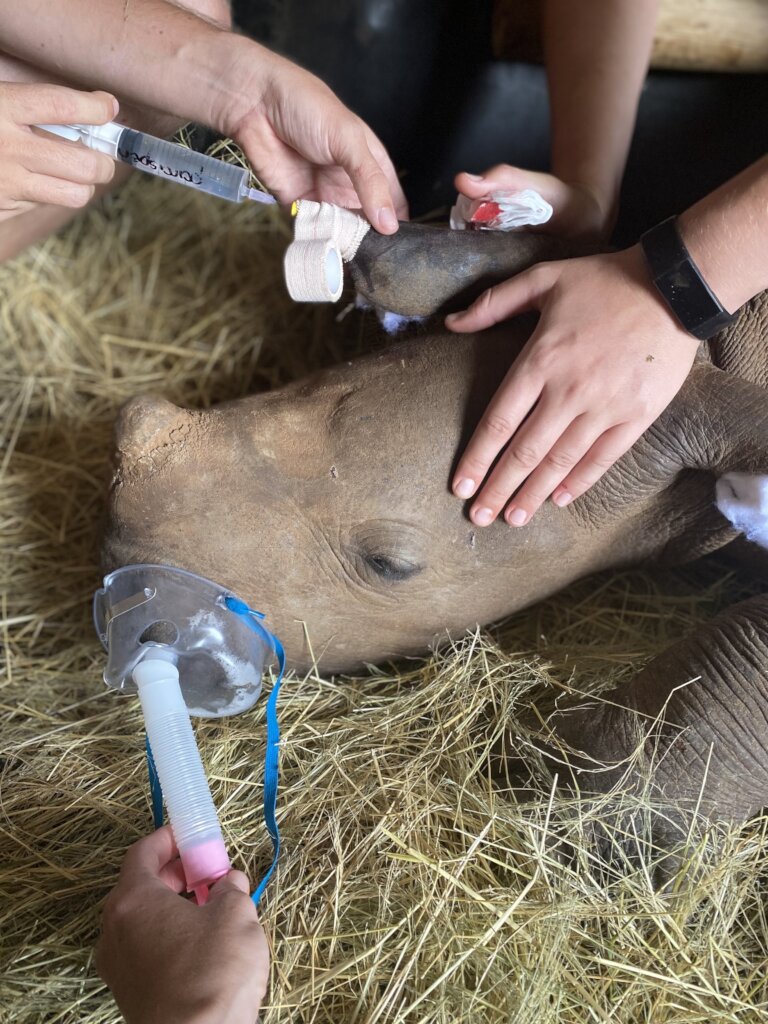
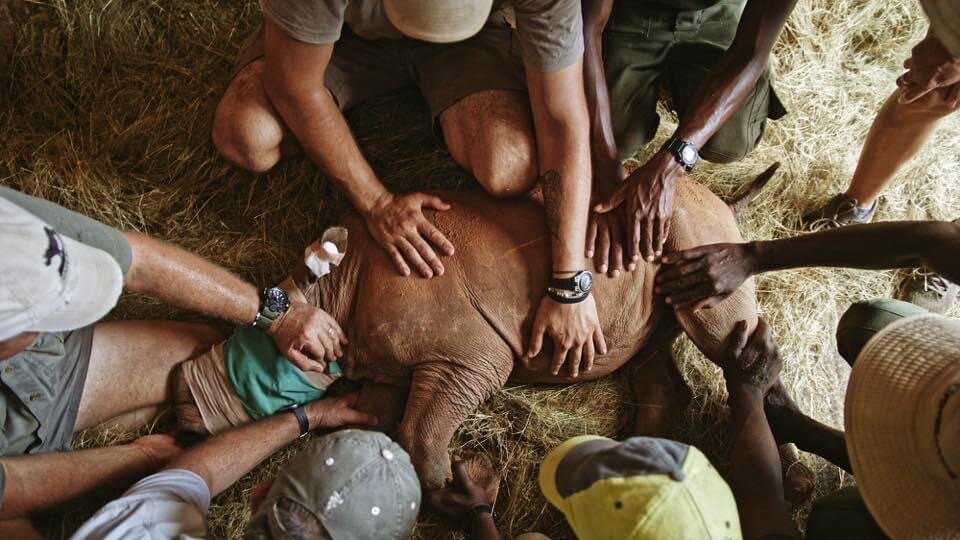
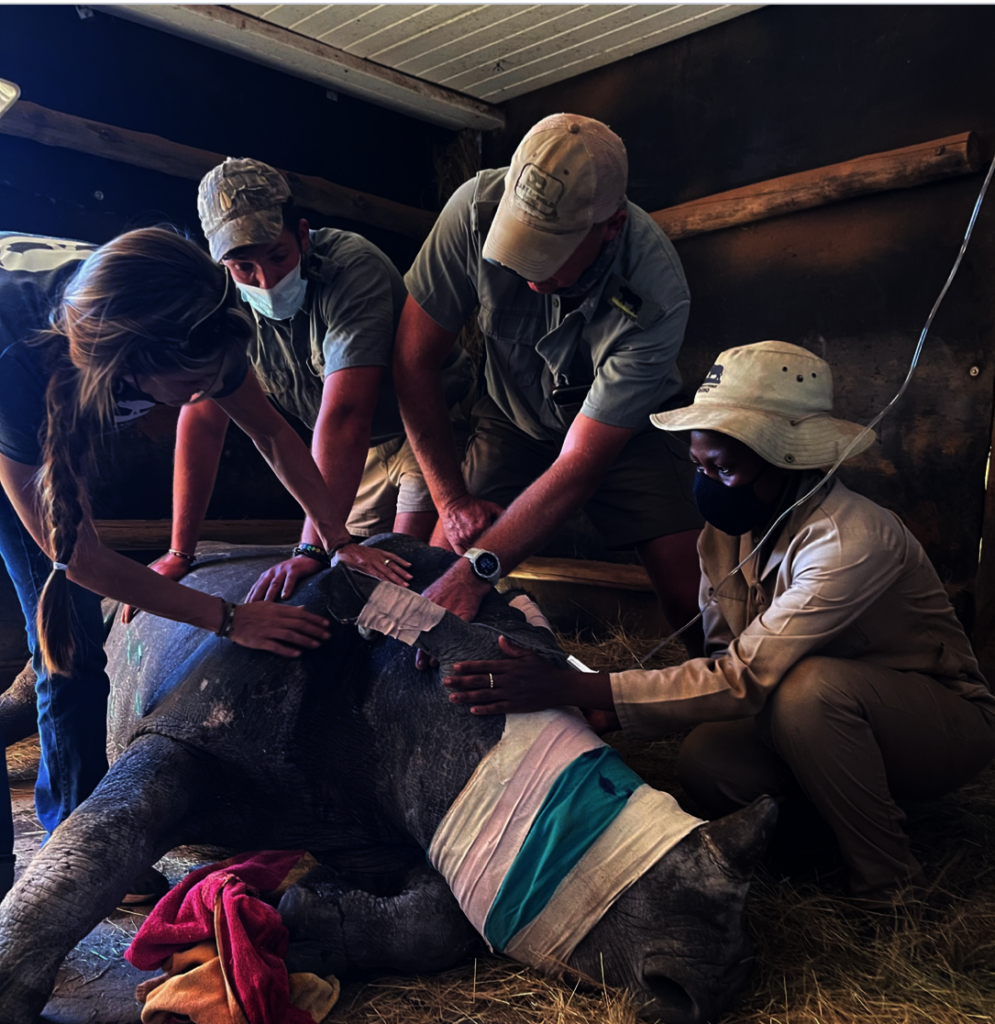
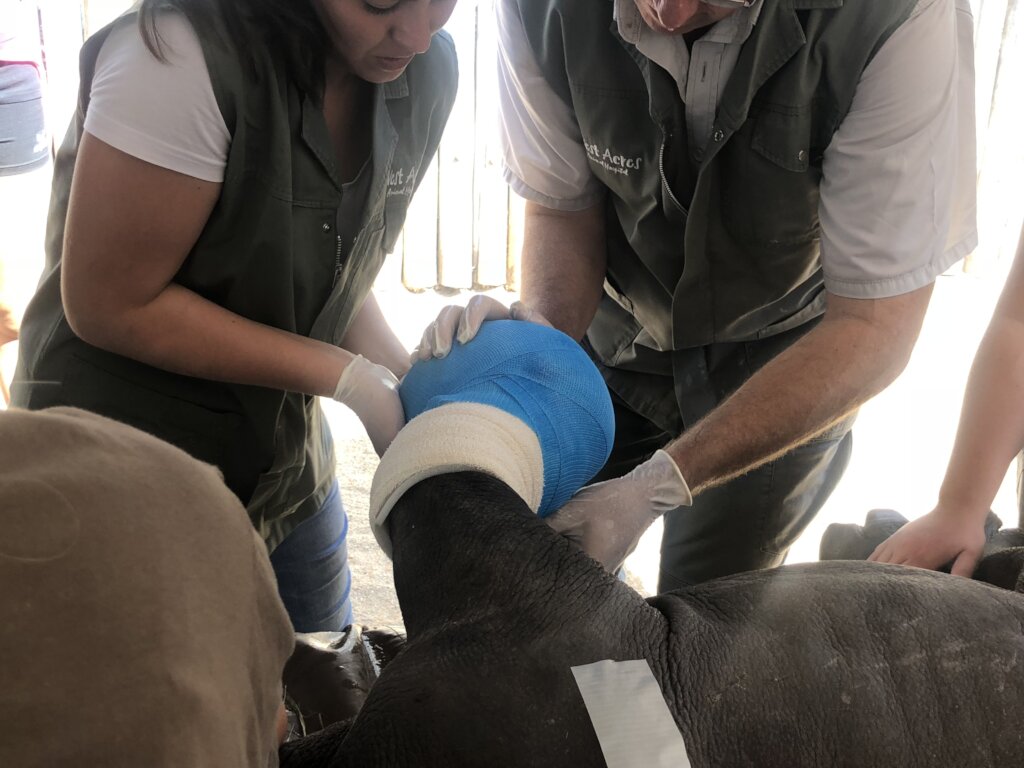
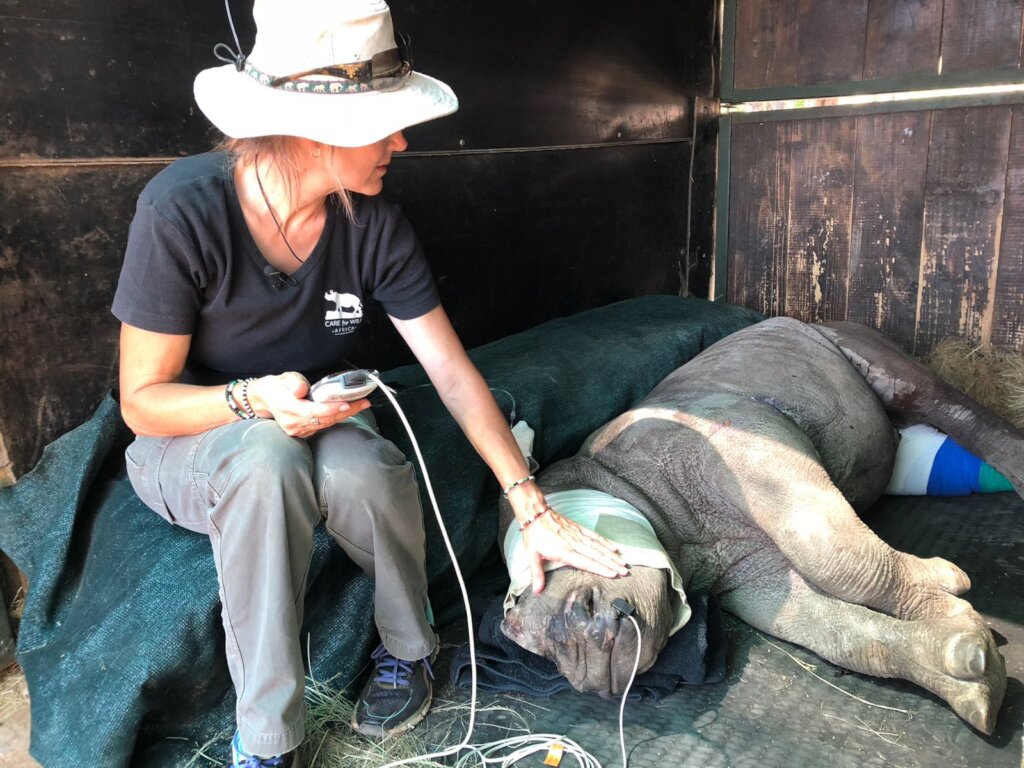
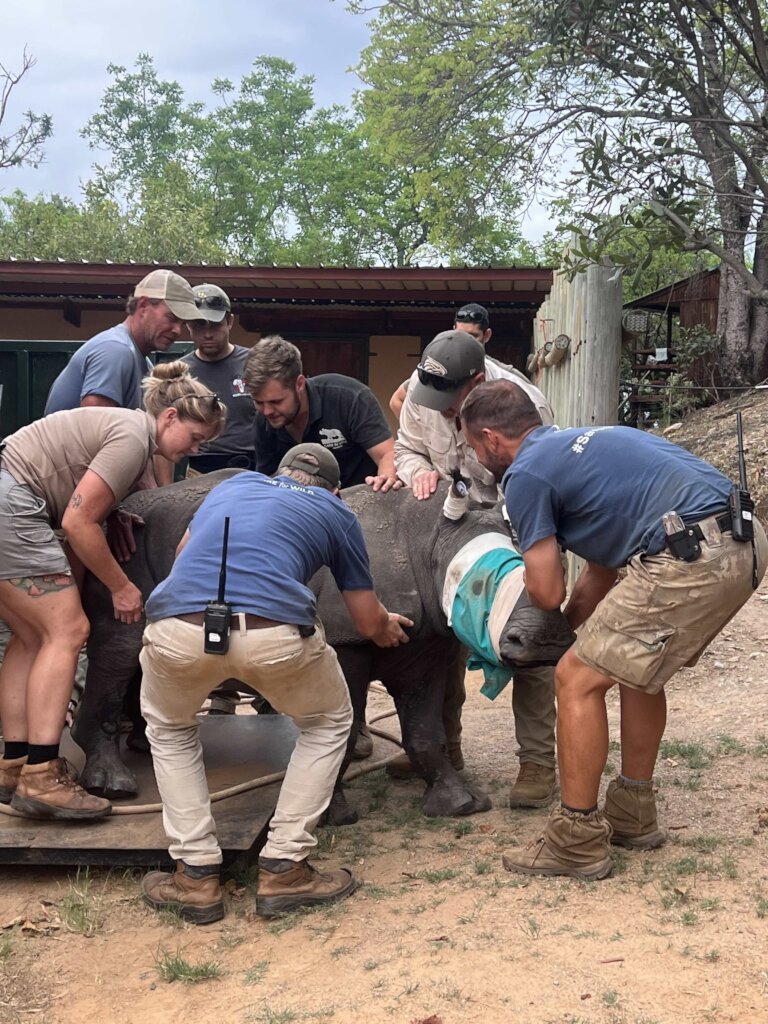
The Timbavati rangers immediately recognised the urgency need to find her. A coordinated 48 hour search on foot, by vehicle, and with drones brought together teams from across the region. Care for Wild joined the search on Tuesday afternoon, and by Wednesday morning the calf was found safely. Wildlife veterinarian Dr Ben Muller immobilised her, and she was transported directly to our ICU, where her rehabilitation journey began.
Her First Days: Safety, Comfort and Trust
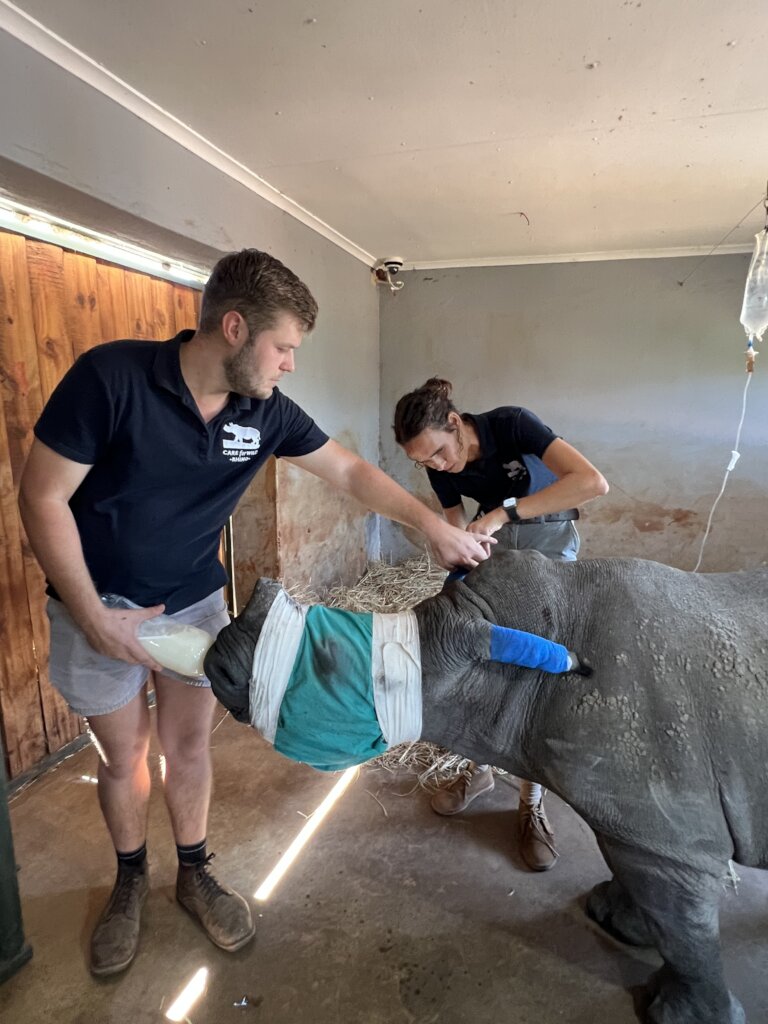
Despite the stress of being separated from her mother, she showed an exceptionally gentle nature from the moment she arrived. That first night, she accepted her milk bottle, a crucial step for any new orphan. In the wild, calves nurse for 17 to 20 months, so feeding is not only vital for nutrition but also for establishing trust and reducing fear.
During these early hours, she wore a blindfold and earplugs, common tools used to reduce sensory overload for frightened animals. With sight and sound softened, she could focus on the comfort of milk, the scent of her caregivers, and the steady rhythm of calm hands and quiet voices. As she settled, these aids were gradually removed.
Graduation to High Care
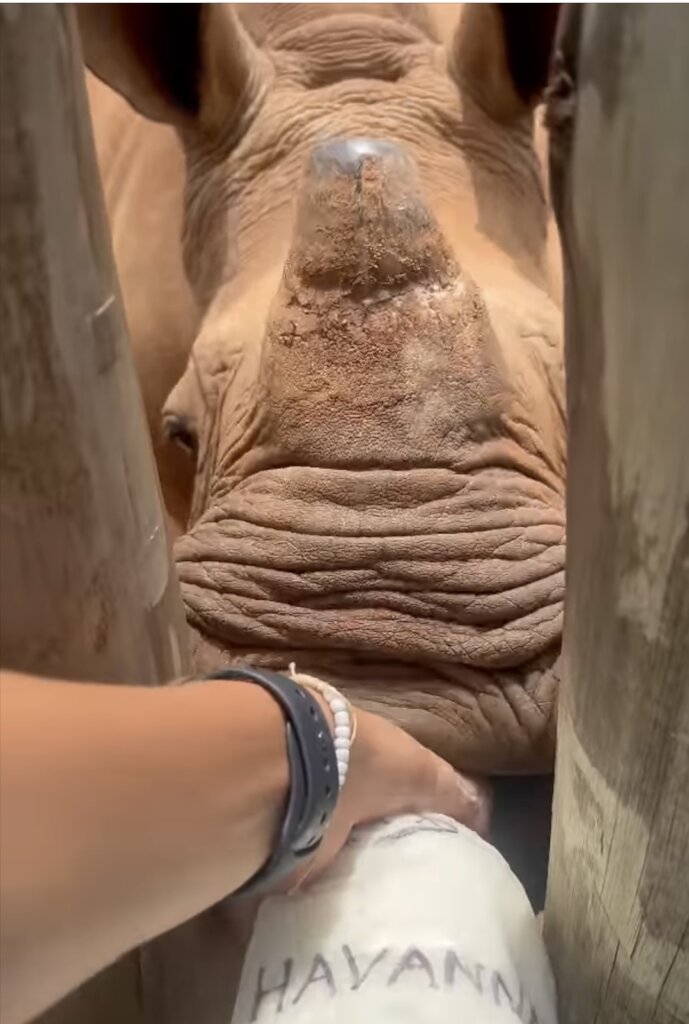
Within days, she was strong enough to leave ICU and move to our larger rehabilitation facility. Her blindfold was removed during a night time feed, under soft red light to protect her eyes. As dawn broke in the High Care Boma, she began to recognise the familiar faces who had been beside her since the rescue.
Patience, consistency and calm reassurance guided every step. She quickly adapted to her feeding routine every three to four hours and showed a healthy appetite and a growing confidence.
Finding Her Crash: The Heart of Rehabilitation
For rhino orphans, companionship is one of the most powerful tools for healing. Once stable, they must learn social behaviour, boundaries, communication and confidence from other rhinos. These lessons shape their future success in rewilding.
Her first introduction was with Victoria, a calf close to her size and age. But Victoria was unsettled and eager to return to her companions, Tippie and Takazani. Understanding the delicate nature of rhino personalities, our team adapted quickly. Instead of pairing them, we introduced the entire small crash together.
This proved to be the perfect match. The four quickly formed a harmonious mini crash, offering comfort, belonging and the first steps toward the social learning essential for a wild future.
Collaboration for Conservation
Her story is a beautiful reminder of what collaboration can achieve. From Timbavati’s dedicated rangers to veterinarians, helicopter pilots, ecological teams and our own ICU and rehabilitation staff, her rescue reflects compassion in action.
And just as importantly, her mother’s long life and legacy remain honoured. She raised many calves over decades, and in caring for her last one, we carry that legacy forward. With the continued support of our community, we will help this special calf grow, learn and one day return to the wild as the rhino she was born to be.
************
Rubybelle Welcomes First Calf
In the early hours of Sunday morning in August, rangers in the intensive protection zone shared joyful news. Rubybelle, one of our most cherished rescues, has given birth to her first calf, a healthy little bull. For everyone who has followed her journey, this moment is deeply emotional and profoundly moving.
From Orphan to Mother
Rubybelle’s life began in tragedy. On 8 August 2017, at just four weeks old, she was rescued after her mother was killed by poachers in the Sabie Sand Nature Reserve. That night, under a full moon, pilot Dave Powrie located the body of the rhino cow and, using thermal imaging, spotted a tiny calf running from approaching lions. He alerted the Mpumalanga Tourism and Parks Agency and contacted Care for Wild to prepare for an emergency rescue.
A second helicopter carrying veterinarian Dr Ferreira du Plessis and Chris Hobkirk lifted off from Nelspruit. With predators dangerously close, Ruby was immobilised at 23:38 and flown to safety, resting on Dr Ferreira’s lap until they reached Nelspruit. Petronel and the Care for Wild team met her on arrival and brought her straight to the sanctuary. Weighing just 92 kilograms, she entered the Intensive Care Unit and took her first bottle by 7am.
She soon joined Khanya, Rose and later Fern forming a small crash that grew up together through rehabilitation and rewilding.
A Full Circle Moment
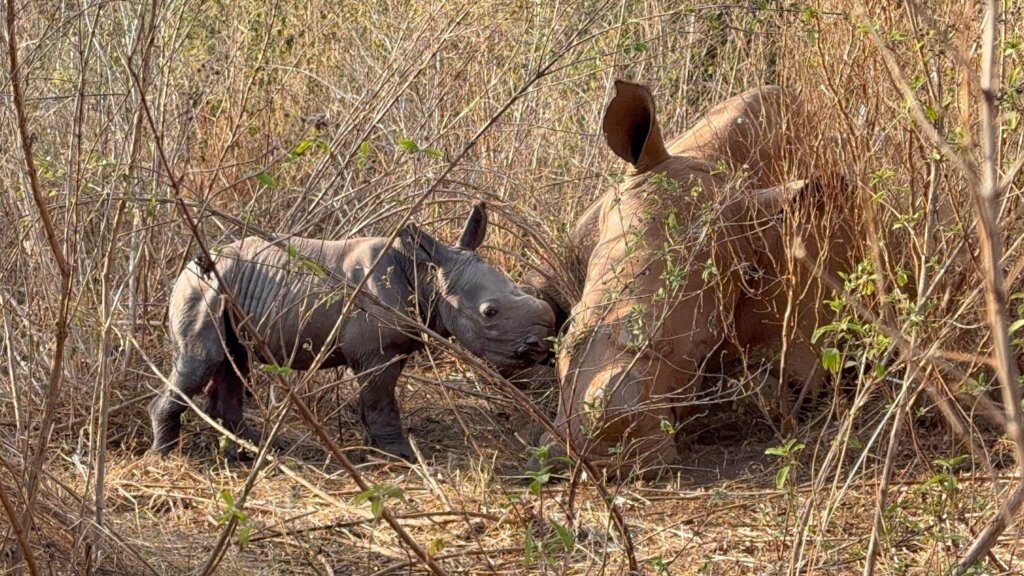
Nearly eight years later, Ruby now stands strong and confident in her natural environment as a first time mother. Her calf is healthy, alert and stays close at her side as she guides him through his first days.
This birth is a remarkable symbol of what long term commitment and compassionate care can achieve. Ruby’s survival and the safe arrival of her calf are made possible by the many people who have supported her from the beginning.
Thank you to everyone who has stood by Rubybelle. This new life is part of her legacy and part of yours.
************
A Special Milestone Moment in the Journey of Sophia’s Crash
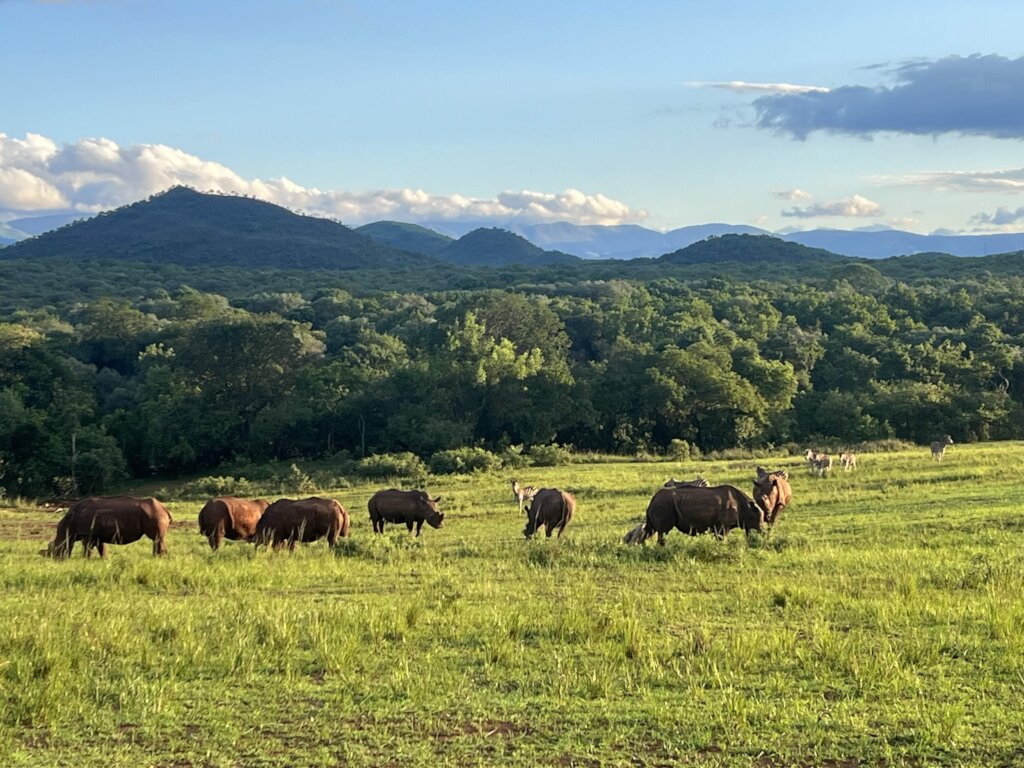
This month marks an extraordinary milestone for Sophia, Sparkle, Mayar, Blossom, Kai, Willow, and Solana; seven rhino orphans whose lives have been carefully nurtured at Care for Wild. After years of specialised care, they have now taken the next step in their journey: entering the Intensive Protection Zone, where they will continue their rewilding and release into the wild.
For every orphan we rescue, our vision is simple yet ambitious, to see them wild and free, living as the rhinos they were always meant to be. Achieving this requires a meticulously structured rehabilitation programme. For many orphans, particularly those arriving injured, the journey to independence can take years. Every phase is designed to rebuild their strength, confidence, behaviour, and natural instincts, ensuring they are equipped for long-term survival.
Rewilding begins long before a rhino leaves the rehabilitation facility. As they progress, orphans move into larger veld camps, reduce contact with humans, and begin forming their own social groups. This gradual transition allows them to live more independently, while still being closely monitored by caregivers.
The move into the Intensive Protection Zone is another carefully timed step. Here, they join a larger wilderness, sharing the space with other rhinos and wildlife, while responsibility shifts from caregivers to our rangers and rhino monitors. This zone is where real-world learning begins, exploring new landscapes, discovering water sources, adapting to new scents and sounds, and learning to navigate complex social dynamics, including the presence of dominant bulls.
Rewilding is never a quick process; it is a deliberate journey marked by countless small but vital milestones. This transition not only represents the personal growth of each rhino but also contributes significantly to the broader conservation of biodiversity.
We are immensely proud of Sophia, Sparkle, Mayar, Blossom, Kai, Willow, and Solana, and grateful to everyone who has supported them from the start of their journey. Their story is a powerful reminder of what careful, compassionate conservation can achieve.
Thank you for your continued support, this would not be possible without you.
Project reports on GlobalGiving are posted directly to globalgiving.org by Project Leaders as they are completed, generally every 3-4 months. To protect the integrity of these documents, GlobalGiving does not alter them; therefore you may find some language or formatting issues.
If you donate to this project or have donated to this project, you can receive an email when this project posts a report. You can also subscribe for reports without donating.



Support this important cause by creating a personalized fundraising page.
Start a Fundraiser