By Charles Olupot | Project Leader
School Dropout Youth - Uganda!
Uganda the average primary school dropout rate is 45% but this rate is much higher amongst girls. This can be due to to a lack of basic needs like good nutrition, clothing and child labour, or cultural reasons such as domestic chores, child marriages and teenage pregnancies. Even if they do attend, it may not always be an attractive place to be with a lack of role models, career guidance, educational materials and gender inequality.
There are also common cultural attachments to address given that parents and communities see girls as only a source of a dowry and less important than boys.
Charles has been a direct witness of school dropout rates. He started primary school with 100 children, and went to high school with just five. Now as a non profit leader, he wanted to implement a strategy that would not only attract kids to school and keep them there but shift the mindset for the entire community; showing them that girls can do what boys can do and be equally as important within the community if given the right education.
Since 2015 Charles introduced a skills for selfreliance program to help solve these educational challenges and longstanding inequalities.
Uganda has a high rate of school dropouts, according to research done in 2019. Teso sub-region (where the study district of Pallisa and Kumi are found) has a school dropout rate of 91% at primary school level, and this calls for high attention.
To attain sustainable livelihoods, we have focused on finding solutions to the problems of vulnerable communities by creating human-centered, participatory, and dynamic development opportunities. It embraces a person’s capabilities, assets, income and activities required to secure the necessities of life.
Through this program, school dropouts and young mothers are exposed to non-formal education opportunities.
In Teso 7,597 Youths aged between 18-30 are neither working nor in school and 18,699 of Persons aged 18 years and above are illiterate.
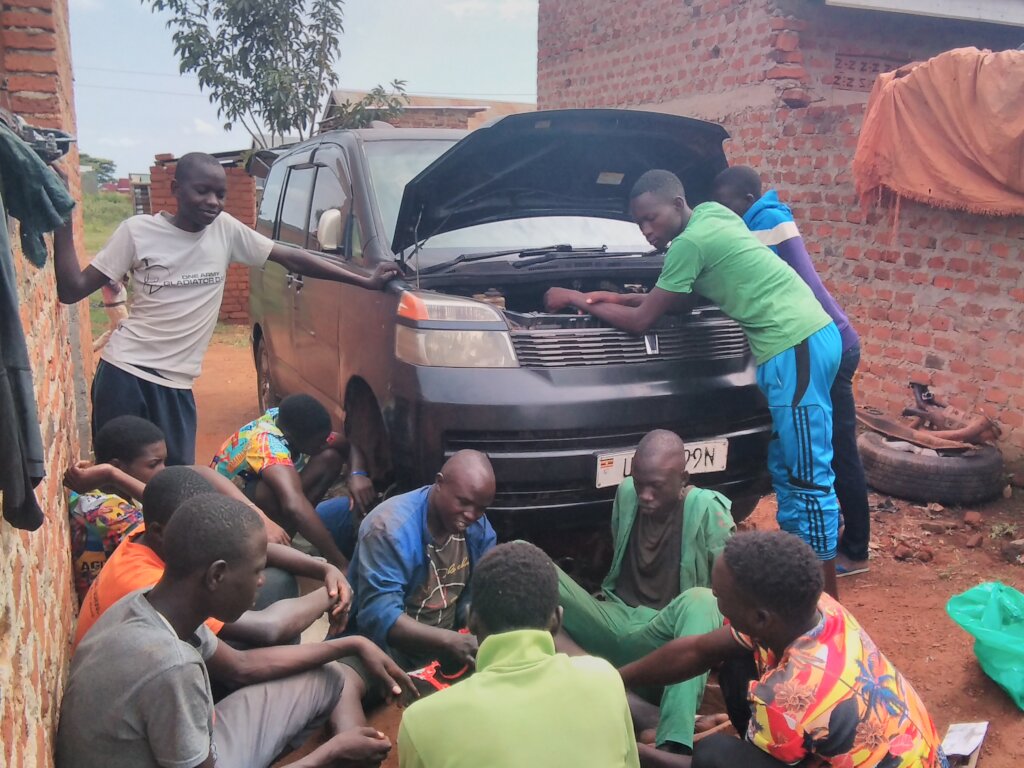
Our goal is to establishing a vocational skills training center that will equip the youth with skills that will enable them create income generating activities hence reducing the high rate of unemployment and ultimately alleviate poverty.
We call upon you to support this noble cause through financial donation or by donating tools or machines to our link below. https://goto.gg/56199
Our partnership with GlobalGiving organizations is aimed to promote skill development, help in facilitating skill development workshops that equip the youth and women with customized training according to their areas of interest and God given purpose.
Support for single mothers!
Small loans of 50 dollar,as a start up.
This programme empowers women through community-based savings groups that help members save money, develop financial literacy and invest in income-generating activities. These women’s programs also promote self-esteem boosting and community action that position women as confident decision-makers and leaders in their homes and communities.
Conclusion!
School dropout rates in Uganda are high, with about 45% of primary school children and 30% of secondary school children dropping out before completing their education
There are a number of factors that contribute to school dropout rates in Uganda, including:
Poverty: Poverty is a major factor in school dropout rates. Many families cannot afford to send their children to school, and children are often needed to work to help support the family.
Child labour: Child labour is also a major factor in school dropout rates. Many children are forced to work in order to support themselves and their families, and they do not have the time or resources to attend school.
Early marriage: Early marriage is another factor that contributes to school dropout rates. Girls who marry early are often forced to drop out of school in order to care for their families.
Gender discrimination: Gender discrimination is also a factor in school dropout rates. Girls are often discriminated against in the education system, and they are less likely to be enrolled in school or to complete their education.
Poor quality of education: The quality of education in Uganda is often poor. Schools are often overcrowded and under-resourced, and teachers are not always qualified. This can make it difficult for students to learn and can lead to school dropout rates.
The government of Uganda has taken some steps to address school dropout rates. These steps include.
Free primary education: The government of Uganda has made primary education free for all children. This has helped to increase enrollment rates, but it has not had a significant impact on dropout rates.
Despite these efforts, school dropout rates in Uganda remain high. There is still much work to be done to address the root causes of school dropout rates and to ensure that all children have access to quality education.
Here are some current statistics on school dropout rates in Uganda:
Primary school: 45% of primary school children drop out before completing their education.
Secondary school: 30% of secondary school children drop out before completing their education.
Girls: Girls are more likely to drop out of school than boys.
Rural areas: Children in rural areas are more likely to drop out of school than children in urban areas.
School dropout rates have a number of negative consequences for individuals and for society as a whole. These consequences include:.
Reduced economic opportunities: School dropouts are less likely to be able to get a job and earn a living. This can lead to poverty and social exclusion.
Increased crime rates: School dropouts are more likely to be involved in crime. This can lead to a breakdown in law and order.
Health problems: School dropouts are more likely to have health problems. This is because they are less likely to have access to healthcare and are more likely to engage in risky behaviors.
By addressing the root causes of school dropout rates, we can help to improve the lives of individuals and of society as a whole.
Project reports on GlobalGiving are posted directly to globalgiving.org by Project Leaders as they are completed, generally every 3-4 months. To protect the integrity of these documents, GlobalGiving does not alter them; therefore you may find some language or formatting issues.
If you donate to this project or have donated to this project, you can receive an email when this project posts a report. You can also subscribe for reports without donating.



Support this important cause by creating a personalized fundraising page.
Start a Fundraiser