By Orlando Montiel Salas | Clean Water Program Officer
The municipality of San Carlos is the capital of the department of Rio San Juan, Nicaragua. Within this territory is the city of San Carlos, which contains one of the major hospitals for the region. The hospital is responsible for all 4 municipalities that make up the department— San Juan de Nicaragua, El Castillo, San Carlos, and San Miguelito, Morrito.
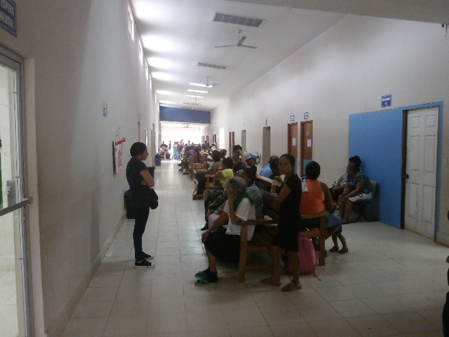
According to statistical information provided by the hospital, approximately 49,700 will have visited the hospital by the end of this year. In just January and February alone, 2,671 men and 5,616 women have visited. Their ages range between less than 1 year to 60 years and over.
The hospital has over 250 employees working in the areas of medical care, statistics, administrative staff, cleaning, and cooking. They also have staff who are tasked with ensuring the water provided by the storage tanks is received through the potable water distribution network of the company ENACAL of San Carlos.
However, water supplied to the hospital lacks the chlorine concentration at a level adequate enough to disinfect and purify all of it for the amount of individuals served— and did not guarantee that it was completely safe for consumption. This was a very obvious problem for the hospital administration and authorities, which led them to think and look for alternative solutions to the big problem they were facing: how they could improve their water quality.
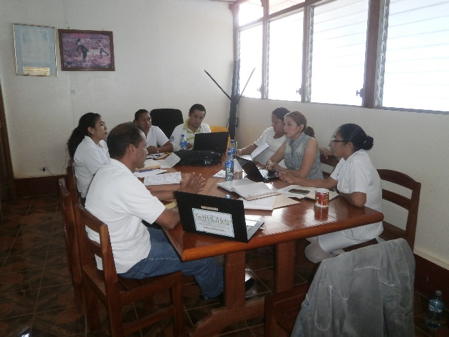
In August of 2016, the San Carlos hospital management staff decided to contact us and tell us about the water quality issue they were having. We decided we would need to have a meeting with several leaders and the administration of the hospital.
The result of the meeting with us and the hospital authorities was the decision to carry out a technical inspection on the water system and then to install one of Self-Help’s CTI-8 chlorinators.
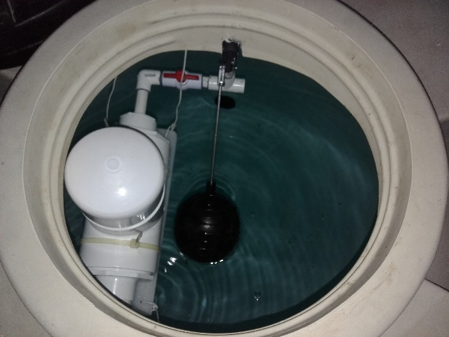
The Self-Help International Clean Water Program in Nicaragua, in coordination with the management of San Carlos Hospital, installed five (5) CTI-8 manual chlorinators, which currently guarantee the quality and safety of water within the hospital's facilities. The first CTI-8 manual chlorinator was installed on Thursday, January 19, 2017, in a tank with capacity for 5,000 liters of water, to supply the maternity and neonatal room inside the Hospital. The people that will directly begin to benefit from this each year are 471 newborns, and 3,436 pregnant and postpartum women. The last of the five chlorination systems was installed on March, 18th, 2017. The five chlorination systems installed cover the hospital’s pediatrics, general medicine and orthopedics, maternity, surgery, and emergency centers.
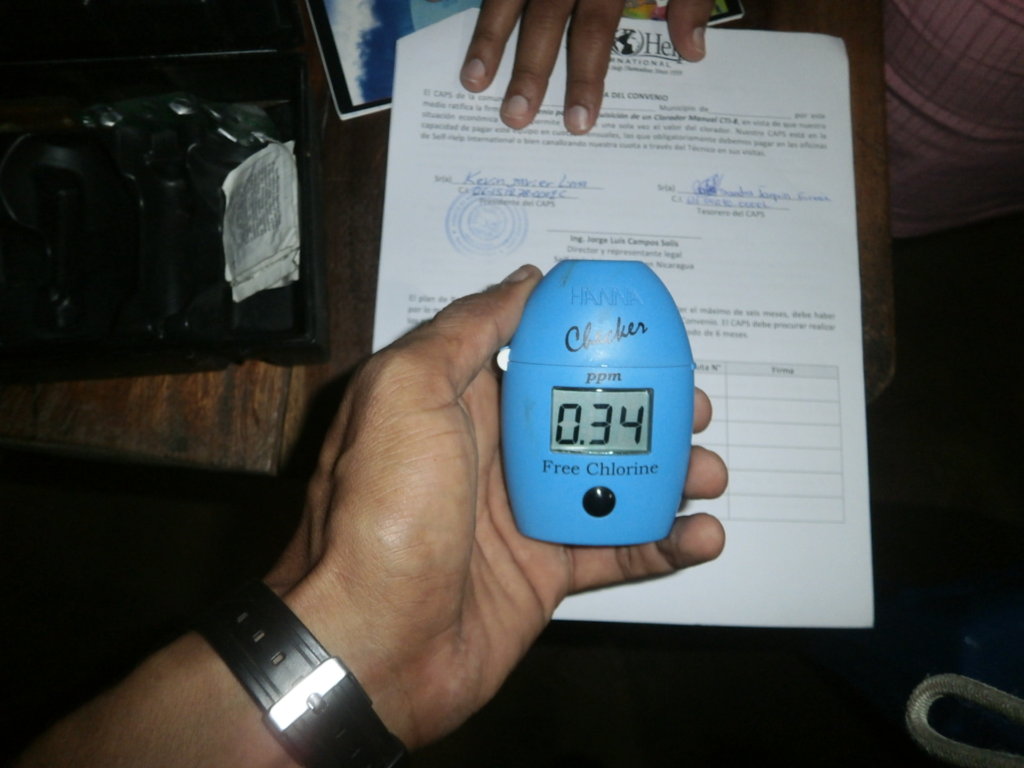
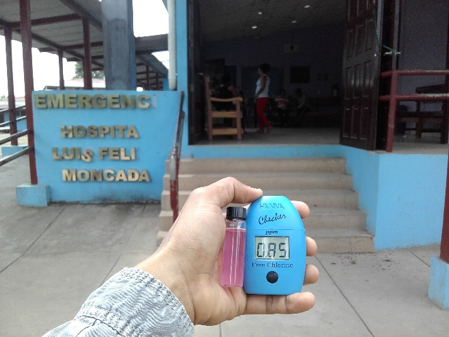
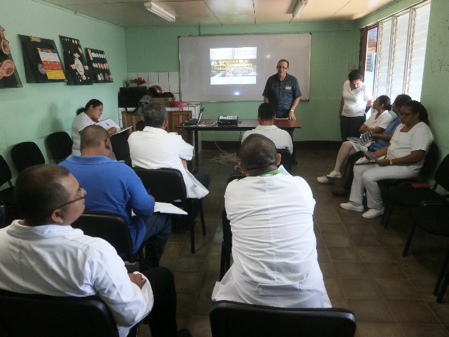
In April, the systems were tested for monitoring and evaluation. The results showed that the chlorination systems had successfully eliminated the problem of poor water quality in the Hospital de San Carlos. The Country Program Director and I provided educational talks to nursing staff, maintenance, cleaning, laboratory, administrator, doctors and directors of the hospital, regarding the use, management, and maintenance of the CTI-8 manual chlorinator. We hoped to expand the knowledge about the importance of reliable and clean water, and demonstrate the sustainability of the chlorinator equipment, in order to effectively communicate. They needed to understand why the correct amount of chlorine was so vital.
The Director of the hospital told SHI staff, “Now we have a good perception of the quality of the water that we have, and I feel happy because before it was a headache to talk about the quality of the water in this hospital beforehand--people criticized us on this subject, but we can say at any moment and in any meeting, we have water of good quality and safe for the population we serve. Now people who visit the hospital of San Carlos, for consultations, appointments, emergencies, or hospital admission of any kind, are sure to take and use the drinking water inside the hospital.”
Since the 5 chlorination systems have been installed, we can now say with ease that the 41,000 visitors of the hospital each year will have safe water for all of the hospital’s needs.
Project reports on GlobalGiving are posted directly to globalgiving.org by Project Leaders as they are completed, generally every 3-4 months. To protect the integrity of these documents, GlobalGiving does not alter them; therefore you may find some language or formatting issues.
If you donate to this project or have donated to this project, you can receive an email when this project posts a report. You can also subscribe for reports without donating.



Support this important cause by creating a personalized fundraising page.
Start a Fundraiser