By John Barrie | Executive Director
Note: I presented our solar food dehydrator to a small group of people who have an interest in building or having others build dehydrators for rural settings. That conversation led me to this review the why and how we are re-designing our dehydrator.
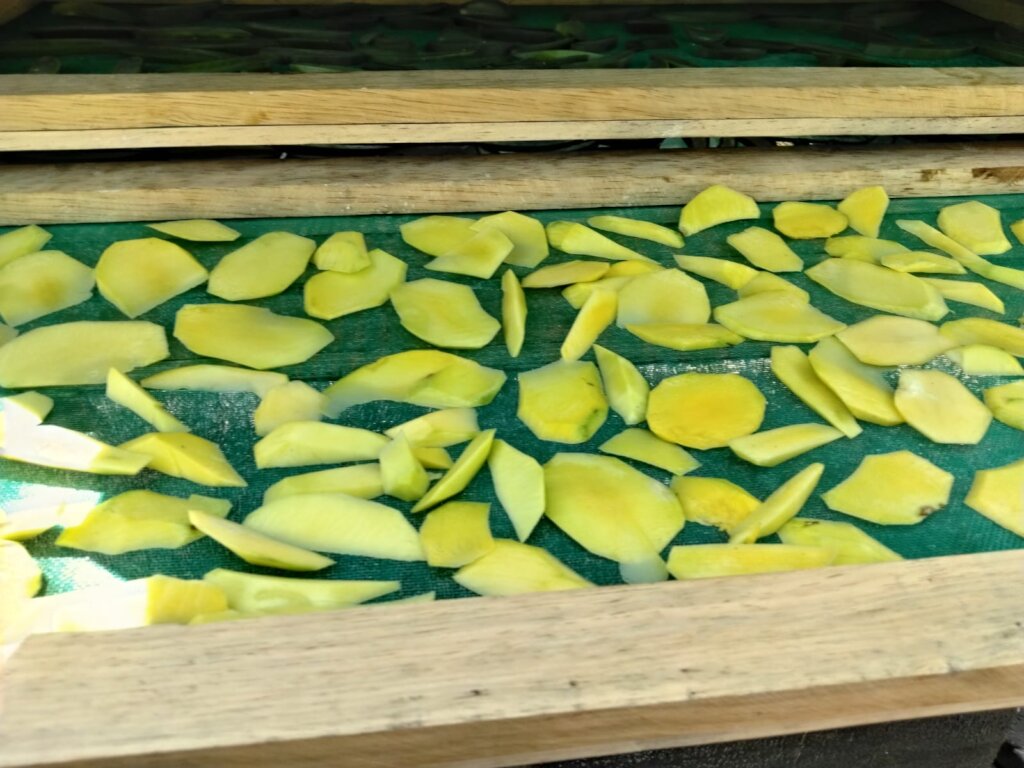
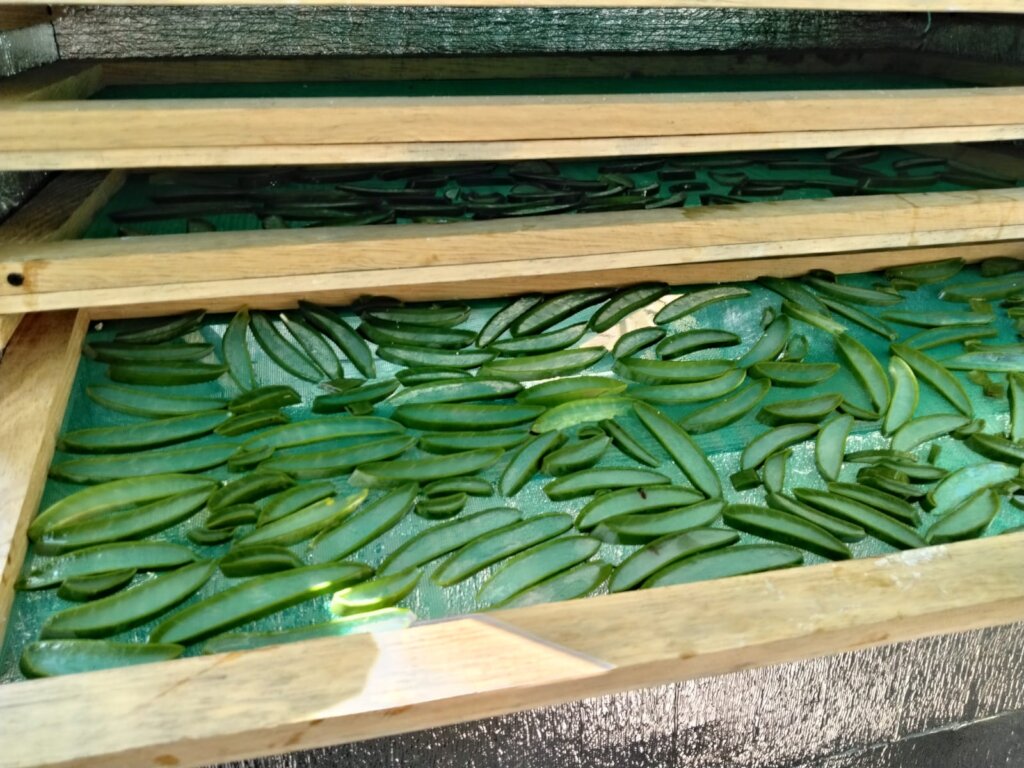
Designing a Solar Food Dehydrator with Solar Fans for Efficient and Weatherproof Dehydration
Introduction:
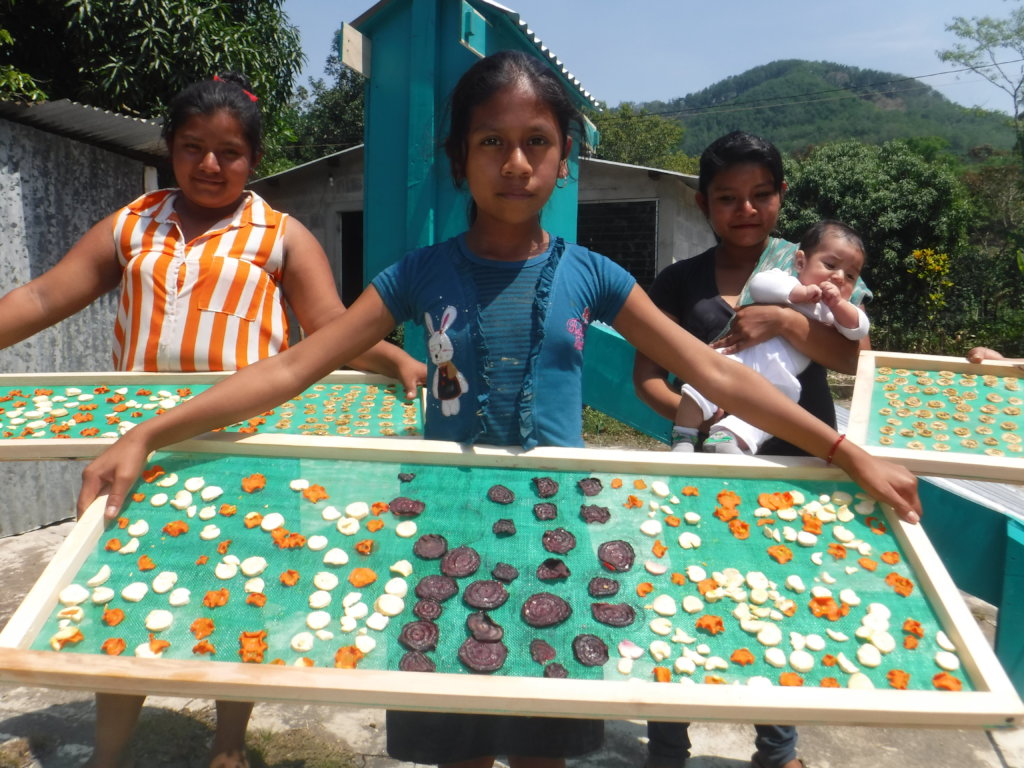
This report for GlobalGiving explores the design and development of our solar food dehydrator that is now equipped with small scale solar fans. Our objective is to create a new solution that ensures efficient and weatherproof dehydration of food, herbs, spices and specialty items like granola bars. Utilizing solar energy and enhancing air circulation, our new design aims to optimize the drying process and improve food preservation.Design Considerations:
1. Solar Panel and Power Generation:
Small scale solar panels will be integrated into the dehydrator to improve overall efficiency. The panels will be positioned at an optimal angle to maximize sunlight absorption, generating sufficient power to operate two fans. The fans are direct drive – no special electronics.
2. Enclosure and Weatherproofing:
The dehydrator enclosure will be constructed using durable and weather-resistant materials like steel and UV-resistant plastic. Emphasis will be placed on adequate sealing and insulation to protect the food from external moisture, insects and contaminants. A transparent cover made of tempered glass or polycarbonate will enable solar radiation penetration.
3. Air Circulation:
Strategic placement of small scale solar fans within the dehydrator will facilitate efficient air circulation. By promoting uniform distribution of warm air, these fans will enhance the dehydration process.
4. Temperature and Ventilation Control:
The design will incorporate adjustable vents or flaps to regulate internal temperature and ventilation. This feature allows users to fine-tune heat and moisture levels according to the specific requirements of different food items, thereby achieving optimal dehydration outcomes.
5. Food Tray Design:
Food trays will be designed using food-grade BPA-free plastic. Ample surface area will be provided for even placement of food items, ensuring efficient airflow between the trays. The inclusion of removable trays will facilitate convenient loading and unloading of food.
Conclusion:
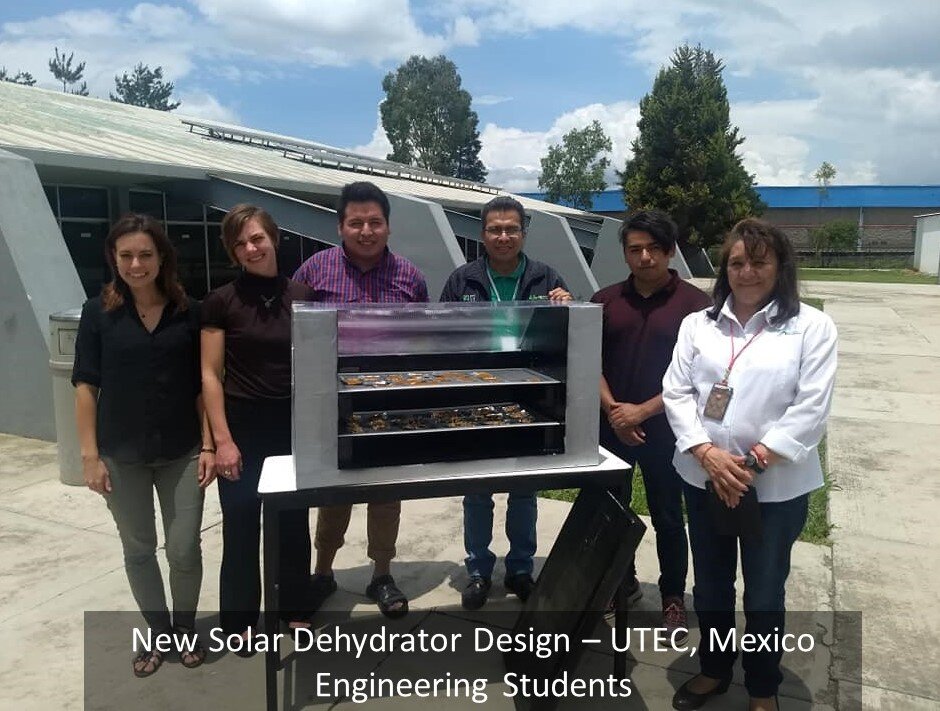
The re-design of our solar food dehydrator with small scale solar fans is a novel approach to sustainable food preservation. By harnessing renewable solar energy and optimizing air circulation, this system offers efficient and weatherproof dehydration of food items. The use of durable materials and proper sealing ensures longevity, making it suitable for various environmental conditions. Our new design will be available online from our website for other nonprofits to copy and improve upon thus promoting sustainable practices in rural development.
This month we are working on two fronts. One is creating new construction drawings based on our earlier design with Michigan State University Engineering students. This is something of a challenge as we are translating between a Spanish speaking rural farming cooperative to our designers in the United States. We are also working with local carpenters in Guatemala to make sure they understand the methods needed to build a weatherproof design. Once we have a new dehydrator made from wood we will add a dehydrator made from steel. The steel fabricators in Guatemala say this is an easy design to build.
We will be installing our new dehydrators at a farming cooperative and with our Mayan Power and Light partners. Both of these installations will record how the dehydrators perform over a period of two years. We will be finalizing our gen-2 design during this time.
From Guatemala we thank you all for supporting this project.
#SolarFoodDehydrator #RenewableEnergy #FoodPreservation #Sustainability #RuralDevelopment #SolarPower #FoodTechnology #SolarEnergy #GreenTechnology #Innovation #EnergyEfficiency #FoodSecurity #ClimateResilience
Project reports on GlobalGiving are posted directly to globalgiving.org by Project Leaders as they are completed, generally every 3-4 months. To protect the integrity of these documents, GlobalGiving does not alter them; therefore you may find some language or formatting issues.
If you donate to this project or have donated to this project, you can receive an email when this project posts a report. You can also subscribe for reports without donating.



Support this important cause by creating a personalized fundraising page.
Start a Fundraiser