By Davis Nordeen | Resource Development Assistant
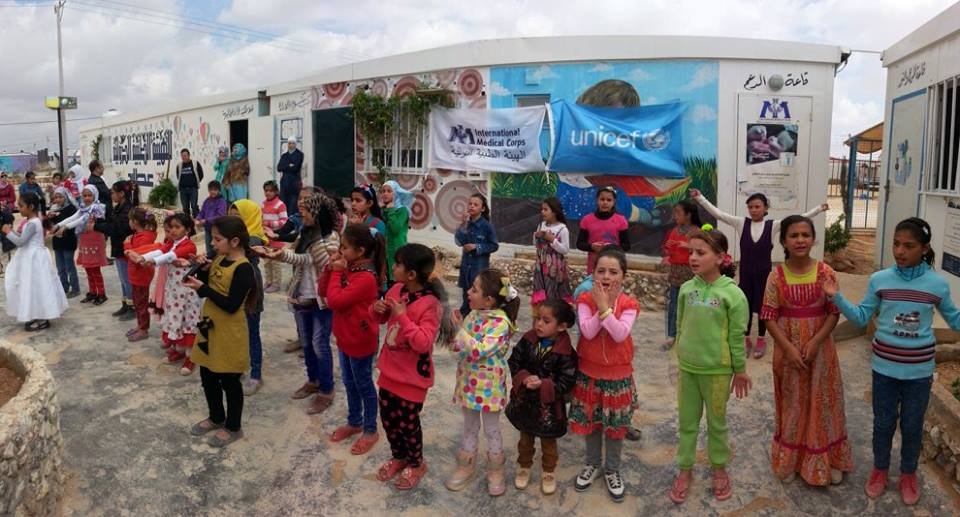
Living at Azraq Refugee Camp, Syrian children need no reminder that they are not at home. Sandbags line wide and empty roads, barbed wire fences run along the camp border, and a sea of 10,000 white corrugated shelter roofs block out the horizon in every direction. With barren deserts stretching out for miles on all sides, one can almost feel entrapped, and for the refugee children who have already been torn from their homes, schools and friends, conditions at Azraq camp can be a constant reminder of everything they have lost.
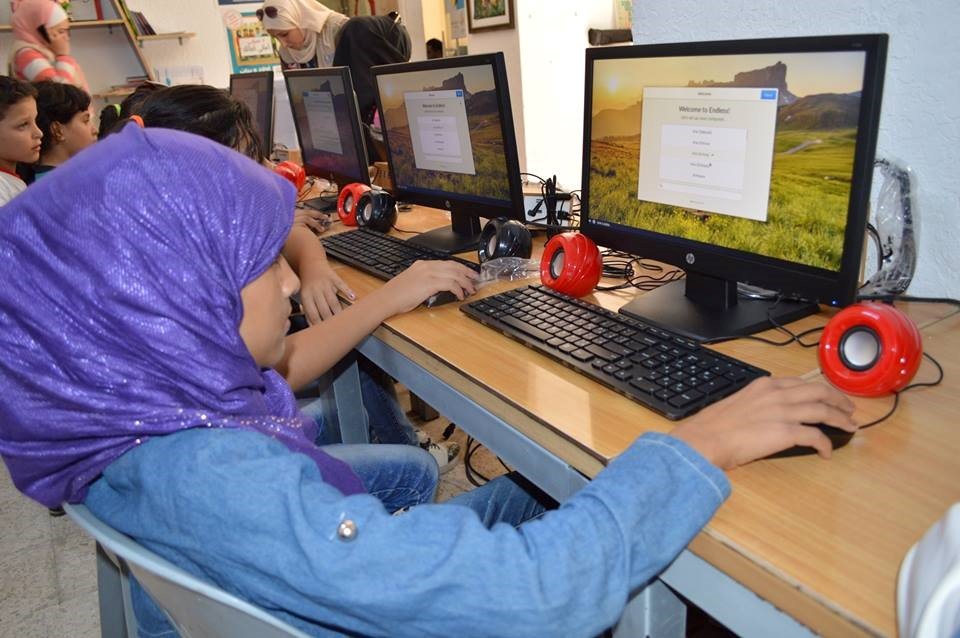
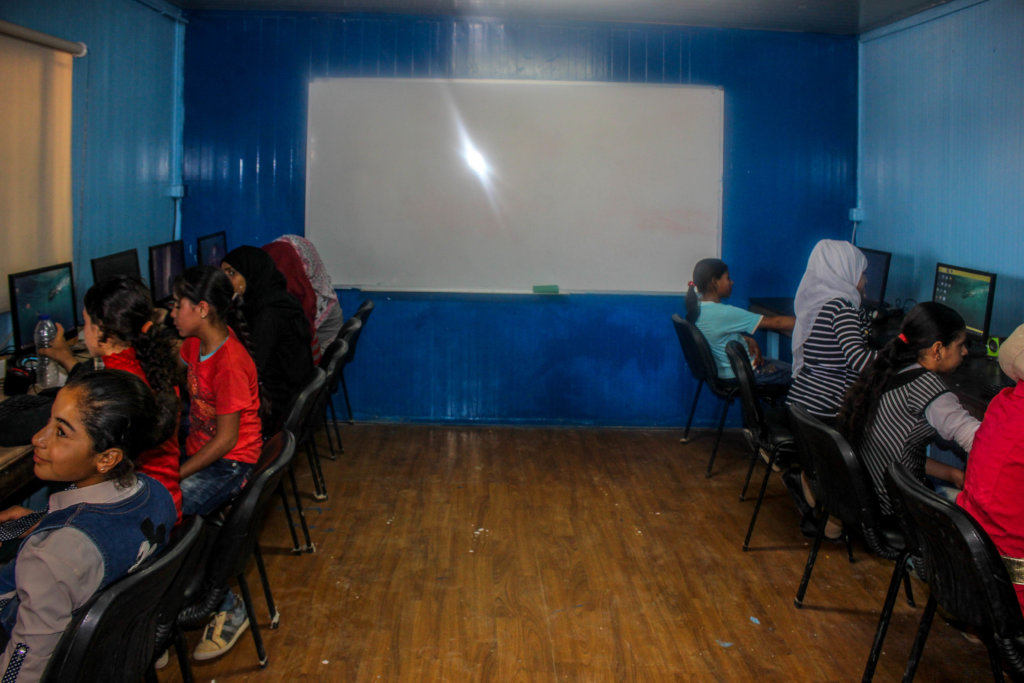
To help Syrian refugee children envision a brighter future, International Medical Corps provides psychosocial support and life skills training to children at Azraq camp at safe spaces called Makani or “My Space” Centers. To help children cope with the hardships they face outside the Makani Center walls, we recently provided 24 computers to the Azraq Camp Makani Center to help improve the educational and recreational opportunities available to vulnerable children.
Thanks to the new computers and a trained facilitator, 466 children have learned fundamental computer skills such as email and Microsoft Office, engaged in social media and online language learning, cooking, and science applications, and explored the internet, many for the first time.
In addition to the new computers, International Medical Corps provides other psychosocial support and skills-based education for the children at Azraq Camp, including running groups and classes for theater, sports, handicrafts, art, and language learning as well as a storytelling program, which teaches children life skills and morals through film. Through this support, we have helped to reach an additional 359 children at Azraq Camp from October to December 2017.
The Syrian conflict entered its eighth year in March, and the need for programs that offer psychosocial support cannot be understated. Many refugee children have now spent years surrounded by violence and insecurity with little education or emotional or social support. As a result, many Syrian refugee children are not able to cope with their experiences, and some develop depression, anger, and anxiety or behavioral and social problems. The Migration Policy Institute estimates that 44% of Syrian children show signs of depression and 45% are thought to be suffering from PTSD—10 times the prevalence of children elsewhere in the world.
Like all of International Medical Corps’ psychosocial services at Azraq’s Makani Center, one of the goals of installing the computers was to establish a routine. Many children at Azraq camp have become normalized to instability and idleness, and exploring the computers in structured groups allows them to learn together, create friendships, and develop a sense of belonging. Most simply, it allows them to experience what it means to be a kid again.
We thank the GlobalGiving community for your continued support of International Medical Corps as we reach vulnerable Syrian refugees living at Jordan’s Azraq Camp with psychosocial support.
By Davis Nordeen | Resource Development Assistant
By the Institutional Advancement Department | International Medical Corps
Project reports on GlobalGiving are posted directly to globalgiving.org by Project Leaders as they are completed, generally every 3-4 months. To protect the integrity of these documents, GlobalGiving does not alter them; therefore you may find some language or formatting issues.
If you donate to this project or have donated to this project, you can receive an email when this project posts a report. You can also subscribe for reports without donating.