By Radhika Bhagat | Head, Wild Aid
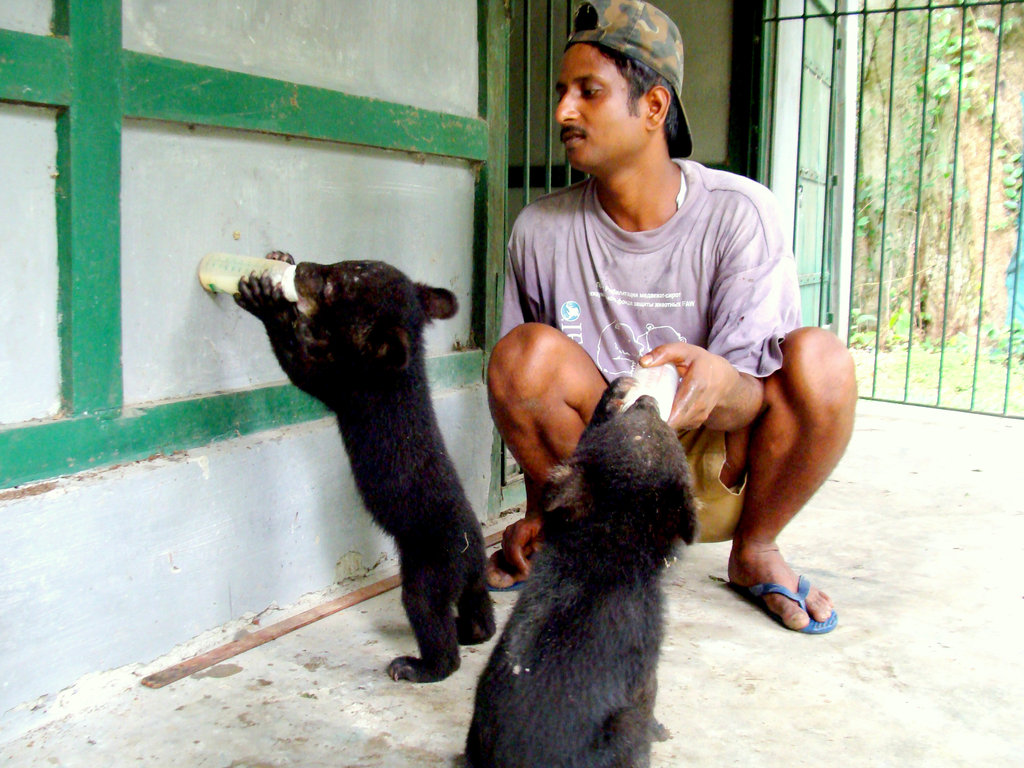
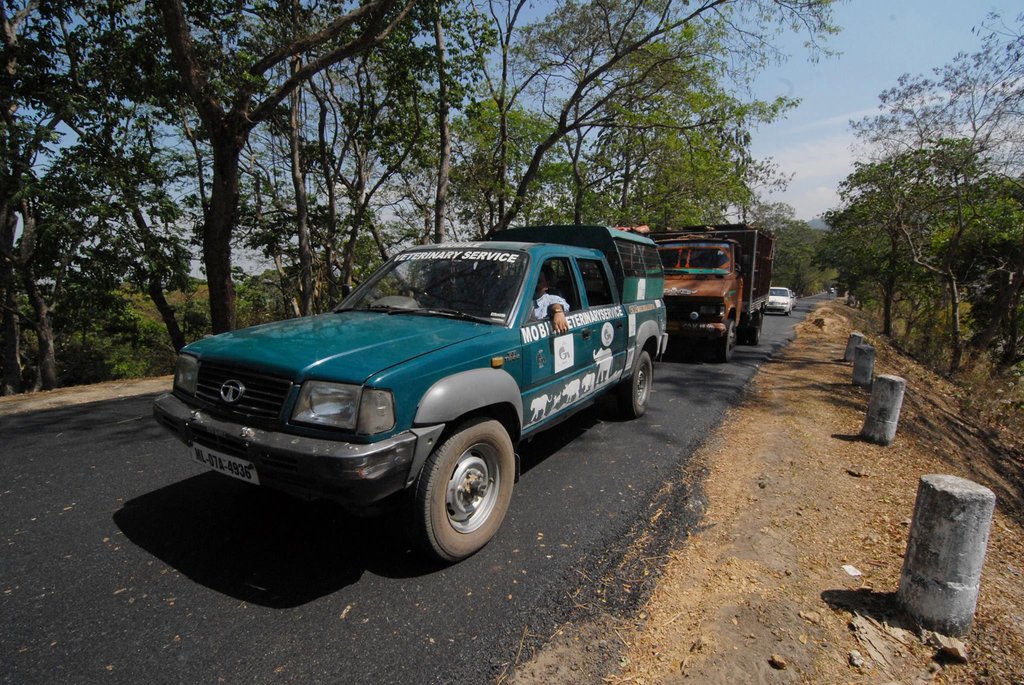
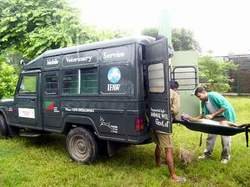
Similipal Tiger Reserve, located in the northern part of Orissa’s Mayurbhanj district, is spread over 2750 sq. km and is home to the highest number of tigers in the state apart from over 54 other species of mammals, 304 species of birds, 60 species of reptiles, 21 species of frogs, 38 species of fish, 164 species of butterflies and 1078 species of plants. The 1,555.25 sq. km Similipal Buffer Zone has 65 villages, with a population of over 12,500 people, mostly within the Reserve Forest. An estimated 250,000 people from nearly a dozen tribal denominations reside in over 400 villages on the fringes of Similipal Tiger Reserve. The MVS-STR is conveniently located at the fringe of STR at Pithabada Wildlife Range Office in Baripada and poised to immediately respond to any wildlife emergency which may arise. For the first time, the state of Odisha will have a dedicated mobile unit manned by trained veterinarian and caretaker to attend to wildlife emergencies reported from the region. The main objective of the MVS unit is to return every displaced animal to the wild while following the IUCN guidelines on translocation and placement of confiscated animals. The unit will be served by a small field station that will have basic facilities to accommodate temporarily displaced animals till their release. Non-releasable animals will be sent to zoos for lifetime care and breeding. The unit by its presence in the area will also help to create awareness drives amongst the local villagers on how to deal with and respond to different conflict scenarios.
The MVS clinics function under the concept that animals estranged from their natural habitat, either due to human interference or by accident, must be given every chance to return to their natural habitat. The major methods of operation of the MVS unit in a project area are:
1. Wildlife Rescue and Rehabilitation
2. Human-Wildlife conflict mitigation
3. Immunization of livestock around protected areas
4. Captive elephant care
5. Disease investigation, surveillance and control
Selected case studies for the reporting period:
a. Rehabilitation of a common palm civet
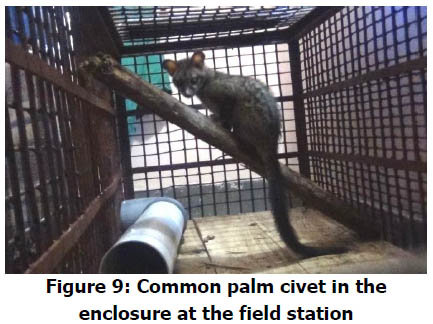
The first case to be admitted was a young female of a common palm civet (Paradoxurus hermaphroditus). The civet otherwise healthy, had corneal opacity on the left eye. It was kept at the center for a period of around 4 months in a specially designed enclosure and furnished with enrichments to hide (pipes) and climb (logs) . Initially it was fed with Lactogen milk formula and gradually some fruits were added to the diet. The animal was moved to the release site in August for soft release protocol. The idea behind the soft release was to keep the animal inside a cage at the release site and provide food inside the same for at least 15-20 days. This would reinforce site fidelity and the released animal can be monitored better. After spending almost 8 days in the cage, the gates were opened. Animal was released a little early because of unsuitable weather condition and chances of storm and rain. Supplementary feeding was provided at the site for 3-4 days after which it was gradually tapered. Camera traps were placed to document the dependence of the civet on the supplementary feeding, post release. Based on the camera trap records, it was found that the civet continued to come to the site for almost a week and consumed the food as evident by camera trap records. The cage was subsequently removed after a week.
b. Elephant displacements
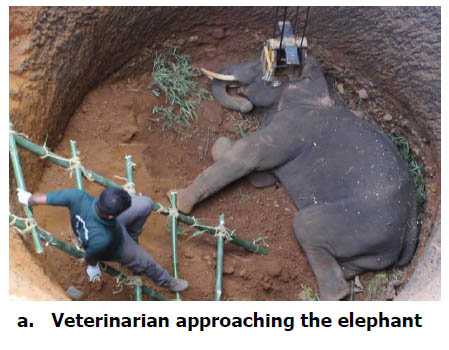
The MVS unit was busy with respect to cases of elephant displacements arising in and around Similipal Tiger Reserve. The first case was attended to on 20th November 2014. The team was informed that a sub-adult tusker had fallen inside a dry dugwell near Harisol on the fringe of Similipal Tiger Reserve. The team reached the spot and realized that the elephant was laterally recumbent (lying on its side), unable to move inside a 25 feet deep dry well . The forest department and locals had noticed the elephant in the well a couple of days back, and tried assisting it to come out on its own, by digging the sides of the well using an excavator. However, the team noticed that the elephant was severely injured, even probably broken its spine due to the fall, because of which it was unable to stand on its own. The locals had provided some free grass and leaves for it to feed and also poured water for drinking. However, the animal was unable to move or feed the same. An urgent decision was taken to sedate the animal chemically, restrain it and lift it out of the well using a crane. As elephant has a large and heavy bodied animal, extended compression on the abdomen region either due to lateral recumbency or a harness tied around its body is detrimental. The only method and as a matter of fact most suitable method was to tie the legs together and lift it upside down. A ladder was made using bamboos to allow the veterinarian to approach the animal and sedate it. The veterinarian prepared the drug and carefully injected on the thigh region of the animal. He noticed that although the elephant was moving its trunk, but was unable to stand or sit-up. Once the animal was sedated, with the help of some locals, forest department staff and veterinarians from Orissa University of Agriculture & Technology (OUAT), its four legs were tied together with reinforced webbing belt used for mountain/rock climbing and fire rescue. Once the webbing was tightly wrapped around the legs, the crane was lowered and attached to the hook. The crane was instructed to slowly lift the animal up, ensuring that it doesn’t hit the walls of the well. The animal was conscious and kept moving its trunk and trumpeting, but within 2 minutes it was taken out and placed on the ground. As the animal was still under mild sedation, the team approached and untied the legs. The belt was then tied to a nearby tree as a precaution if the elephant tried to escape. Supportive treatment in the form of rehydration was provided to the elephant. The elephant tried to get up and even sat up for a while. The team laid some hay on one side of the elephant to provide some support. Buckets of water was poured on it to cool the animal. On closer examination, the team realized that there was injuries to the back and spine seemed broken. The prognosis was grim, still the team decided to keep the elephant and provide necessary treatment. The animal survived for two days, but succumbed in the early hours of 23rd November.
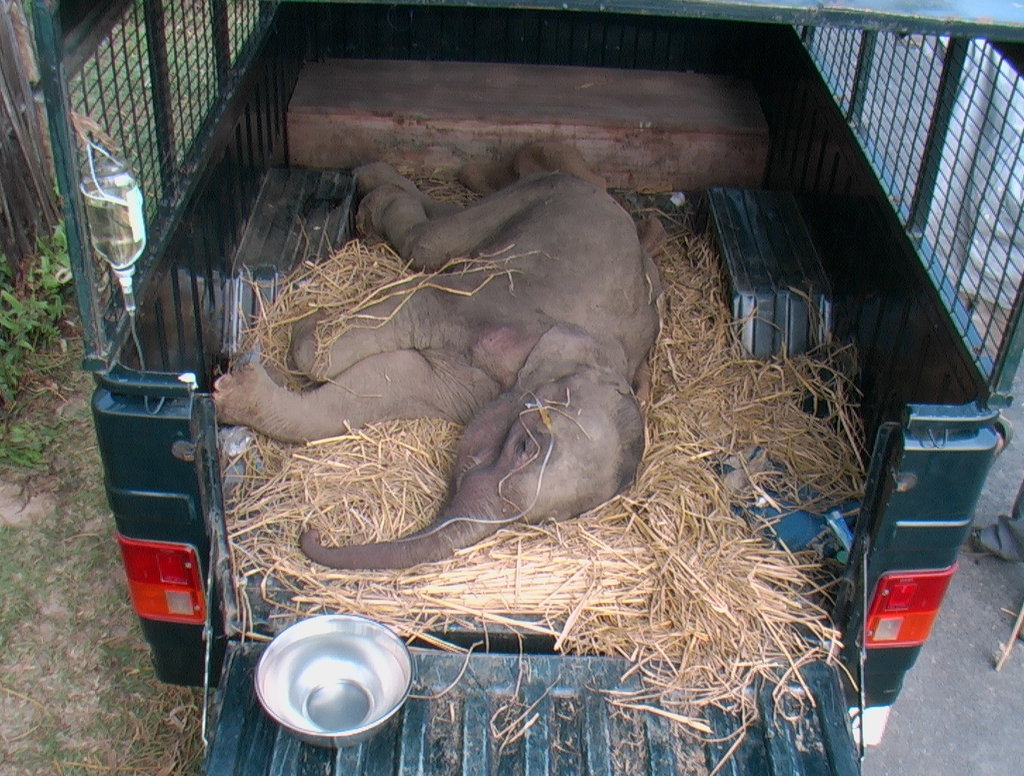
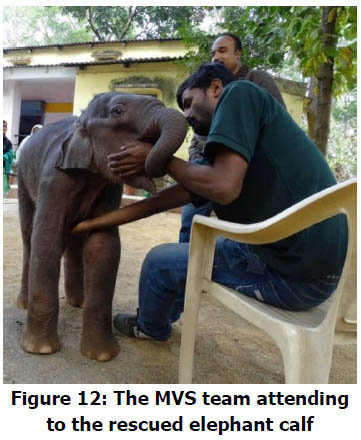
The second elephant displacement case was of a male elephant calf (2-3 months old) from the same area as the above around 1-1.5 km aerial distance from the dugwell (mentioned above). On 16th December evening a herd of 13 elephant was sighted around Sanshur village but on 17th morning villagers reported that four elephants were stuck in the ditch inside a rubber plantation area. It was suspected that the calf had fallen in first followed by probably the mother and the family. The forest department with the help of local villagers managed to bring a JCB and excavate facilitating the herd to come out. However, while escaping the calf was left behind and it entered the village. The team suggested that the calf be kept near the area overnight and attempt reuniting with the natal herd as the first line of management. Unfortunately, despite all attempts the reuniting failed throughout the night, only to be successful in the morning when the herd came and took the calf. Trackers were instructed to monitor the herd and the calf. The calf was following the herd for almost one entire day, but on 19th morning they found the calf lying in a well which was partially filled with water. Locals immediately took out the calf and informed the team. On examination the MVS team noticed that the condition of the calf not well and it was decided that apart from basic supportive treatment and thermoregulation, the calf be shifted to a facility for nursing.
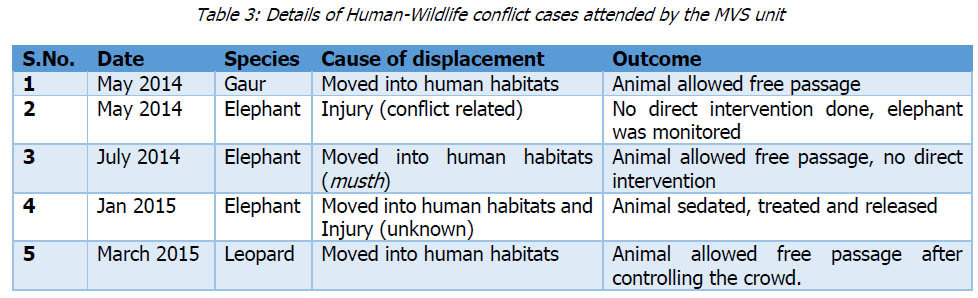
Conflict animal management: In the entire reporting period, the MVS unit attended to five cases of human-wildlife conflict as detailed in the table.
C. Conflict cases
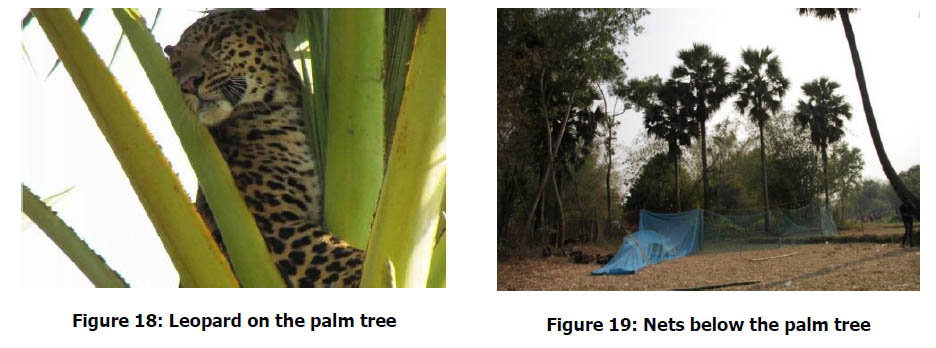
The last case for the reporting period was of a leopard that had entered human habitations in Baleshwar in the month of March. When frightened and chased by the locals, the leopard had taken shelter on a palm tree for almost 14 hours, before the team reached the spot . The forest department had reached the spot and apart from planning a strategy to capture the animal, the department attempted to control the gathering crowd. Upon the arrival of the MVS team, and subsequent discussion amongst all stakeholders, the best solution was to allow the animal to escape and return back to the forest on its own. However, this was difficult to convey to the locals and also convincing them not to come close or disturb the animal. While it was obvious that the animal would come down from the palm tree when it is dark, the team waited till that time without making any disturbance for the animal. With a view to convince the public gathered that efforts were being made to rescue the leopard, nets were tied around the tree. The priority was to save the public and then safely allow the animal to rescue. The large mass gathering created problems for the rescue team, but as per the plan, the leopard escaped in the evening without injuring anyone.
E. Livestock immunization
A preliminary survey was conducted in the villages under Baripada range of Similipal Tiger Reserve for presence of livestock. There are around 250 cattle and 400 goats/sheep in six villages under the Baripada range. Another 4-5 villages are under the Jashipur range of STR, which will be surveyed over the next few months. A ring vaccination program will then be organized for this villages in collaboration with the Animal Husbandry Department, Odisha. Additionally, the forest department also requested the MVS team to vaccinate around 250 dogs that are mainly used as guard dogs. The same will be discussed and appropriate action will be taken in the subsequent months.
Links:
By Abhishek Narayanan | Project Lead, Animal Rescue
Project reports on GlobalGiving are posted directly to globalgiving.org by Project Leaders as they are completed, generally every 3-4 months. To protect the integrity of these documents, GlobalGiving does not alter them; therefore you may find some language or formatting issues.
If you donate to this project or have donated to this project, you can receive an email when this project posts a report. You can also subscribe for reports without donating.