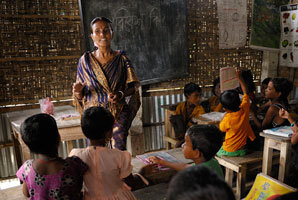
By Chantal Bianchi | Project Manager
CONTEXT
Ethiopia is the second largest country in Africa in terms of population and twice the size of France. Ethiopia is a secular federal state that shares borders with Somalia, Sudan, South Sudan, Kenya, the Republic of Djibouti and Eritrea.
Considered as one of the cradles of humanity, Ethiopia is one of the oldest areas of human settlement and the second oldest Christian (Orthodox) nation in the world. Despite sustained economic growth over the past 10 years and government efforts to improve access to basic services, Ethiopia is the 6th least developed country in the world.
The most significant factors and problems in the country are: very strong population growth, high land pressure and access to land, recurrent droughts and conflicts with Eritrea and Somalia. The population is highly vulnerable to unpredictable weather conditions and fluctuating prices on international markets for export commodities such as coffee.
Finally, the political situation in Ethiopia is complicated: in 2015, anti-government demonstrations were severely suppressed and hundreds of people died. In 2016, a state of emergency was declared for 6 months following a week of violence in the Oromia region (a few kilometers from Addis Ababa).
Yet the potential of this country is real. Better mobilizing and protecting existing natural resources, supporting the entrepreneurial spirit of poor people and increasing access to basic services are high priorities for us in Ethiopia.
With an estimated population of 234,000, Dire Dawa is Ethiopia's second largest city. Located 515 kilometers east of Addis Ababa and 350 km from Djibouti, it is on one of the country's largest trade routes. 45% of the population lives below the absolute level of poverty. The population is growing faster than the national average due to a high birth rate and high immigration (56% of the population is under 19 years old). It is the focal point of Somali, Oromo and Harari regions, close to the republics of Somalia and Djibouti, and lives on trade, the black market and smuggling of manufactured products, fruit and vegetables, and coffee. The city is experiencing a severe economic crisis due to the government's fight against illegal trade and the bankruptcy of local industries and railways, which are the mainstay of the local economy. The first victims of this impoverishment are children, and today there are 18,000 orphans and vulnerable children (OVCs) in Dire Dawa, a rapidly growing number.
A first program was carried out from 2000 to 2005, focusing on services provided to 254 street children and services and community mobilization in one of the most vulnerable districts of the city (downtown, market, bus terminal, etc.). Building on this experience and at the request of district communities, a new program (2007-2009 extended to October 2011) has enabled children and their families to raise awareness of HIV/AIDS and personal hygiene issues, with 333 vulnerable children in district 6 of Dire Dawa (out of 1,900 children in the section), the creation of an autonomous community organization dedicated to vulnerable children in the district.
At the end of the project in 2011, an evaluation demonstrated the relevance of active community participation in the management of these orphans and vulnerable children (OVCs).
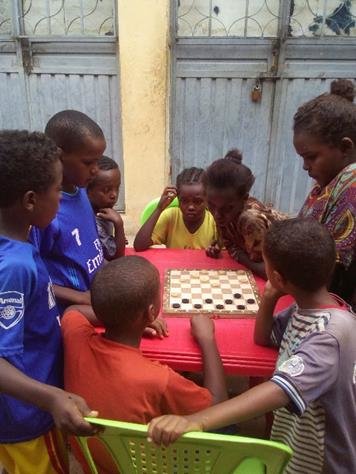
Between 2012 and 2014, a new project was also carried out in the Kebele 04 district, thus continuing the previous program in the city of Dire Dawa. Of the 300 OVCs cared for (including 150 street children), nearly 93 per cent were enrolled in school and almost 40 received vocational training.
PROJECT PRESENTATION
This project aims to extend the scheme implemented in district 4 and 6, to the Kebele 5 district of Dire Dawa and to encourage associations to develop their own activities independently from the initial phase of project implementation.
OBJECTIVES
Global: Contribute to strengthening and expanding the response of community organizations to improve the lives of poor and vulnerable children in Dire Dawa's Kebele 5 district.
Specific:
BENEFICIARIES
Direct: 300 vulnerable children distributed as follows:
Indirect: community members in general and local partner organizations.
PROJECT ACHIEVEMENTS
Objective 1: Improving health situation of OVC
Objective 2: Improving the level of formal education of OVC
Objective 3: Improving the psycho-social wellbeing of OVC
Objective 4: Improved system of partnership and collaboration with key stakeholders
- The search of a new location for the social center.
- The selection process of one CBO[1] to take the lead of the project after 2019.
So the discussions with the key stakeholders were focus on these two challenges. The trainings will be organized in 2019.
[1] A CBO is a Community Based Organization composed of people/families of the Kebele. For example, IDDIRS have a strong presence in the community in each Kebele. Traditionally, IDDIRS are funeral associations taking care of the families living in the same neighborhood. Recently, the role of IDDIRS has been extended from burial to the promotion of social welfare and local development managementObjective 5: Getting marketable skills and capabilities to be self-employed / and improving the economic condition of OVC families/guardians
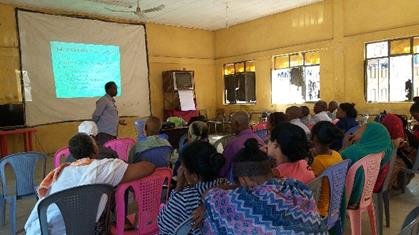
Objective 6: Awareness creation: Developing social mobilization and community empowerment
The budget for this project for the year 2018 amounts to $93,163 and Secours Catholique-Caritas France is supporting it to the tune of $61,830.
By Chantal Tathanhminh | Project Leader
By Chantal Bianchi | Project leader
Project reports on GlobalGiving are posted directly to globalgiving.org by Project Leaders as they are completed, generally every 3-4 months. To protect the integrity of these documents, GlobalGiving does not alter them; therefore you may find some language or formatting issues.
If you donate to this project or have donated to this project, you can receive an email when this project posts a report. You can also subscribe for reports without donating.



Support this important cause by creating a personalized fundraising page.
Start a Fundraiser