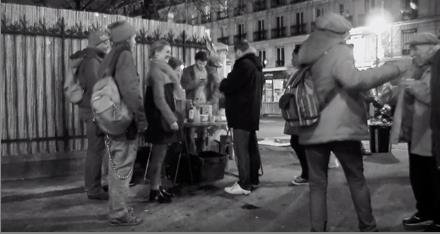
Support most vulnerable & fight against isolation

by Secours Catholique - Caritas France
Support most vulnerable & fight against isolation

Project Report | Aug 16, 2019
Creation of a social real estate agency in Ile-de-France

By Chantal Bianchi | Project manager


In 2016, we presented to you our project to create a social housing agency in Île de France to fight against bad housing situations. Today we wanted to give you the latests updates abour our project.


Context

The housing crisis is a reality for many years now. According to the Abbé Pierre Foundation in its latest report on poor housing, there would be 4 million non or poorly housed people (including nearly a million in Ile-de-France), plus nearly 12 million people in real situations of fragility (residential degraded, unpaid rents, over-occupation situation or hosted by third parties). More than a fifth of the population is concerned with a housing problem in our country. For the poorest households, housing is the biggest expense. It represents 55% of their consumption budget before the food (17%) and transportation costs (12%).


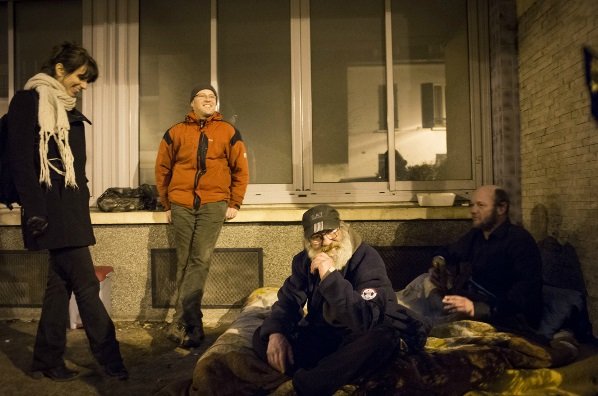
Special case in the Ile-de-France, Secours Catholique has identified the people staying in hotels like the poorest of our municipalities. It is mostly families, who are often in precarious administrative situation. The situation of families living in the hotel is a major concern for our teams in Ile-de-France. Indeed, hotel rooms as shelter for poor families have increase in the region, nearly 400% in ten years.


Today, nearly 35,000 persons, redirected by Samu Social, are hosted in hotels, mostly in the suburbs of Paris. Hotels are often poorly located, in the outer suburbs, far from public transport, shops, public services. The family members are promiscuous in their room, no privacy, conditions favorable to the emergence of various sufferings, sometimes violent and always tension. Quality of place is often deplorable (rats, mold, cockroaches ...), it is impossible to cook, hence the dependence solidarity networks, malnutrition, forced the assistantship.


At the end of 2017, 630,000 households were waiting for social housing in Ile-de-France and only 78,409 social housing had been allocated in 2017, which represents approximately 1 allocation for 8 requests. In 2016, there were 1,244,785 housing in Ile-de-France.


While the social housing production activity in Ile-de-France is significant evolution for several years (the annual production level of social housing has doubled compared to 10 years ago), it does not meet to the strong demand for social housing (710,000 applications recorded in the national registration system). Indeed, we observe that, despite an increase in production, the number of units allocated each year does not follow this trend, due to lower turnover rate within the social housing.


Ile-de-France will not come out of the housing crisis with the only social housing, essential, but currently insufficient. In the coming years, the uptake of existing private park in favor of the poor is therefore a necessity and represents a fundamental challenge to the fight against bad housing and social diversity in the city center.


Some associations have already committed to allow anyone access to housing, regardless of resource conditions. Thus 23 member cooperatives and associations companies lodge vulnerable households in decent housing and adapted to their needs and their resources. These organizations can put in rental housing for low rents securely for homeowners. 


The actions of the Secours Catholique in housing

The right to housing for the poorest populations is a fundamental right, to which Secours Catholique campaigns since its inception.


The accommodations are part of Secours Catholique's history from 1954 to the present. Indeed, Secours Catholique has created during its history, various shelter prototypes for people in precarious situations. In 1990, he consolidated these institutions financed mainly by public funds in an association-daughter to which it continues to support. 


Since, even if the accommodation is not at the heart of its mission, Secours Catholique continues to manage many places, both located in small rural towns than in medium cities and large urban areas, a total of several hundred beds, worn by thirty departmental delegations. The capacities range from 1 to 14 people. Each unit has a history and is based on a local network, woven sometimes for over forty years. Currently, some of the accommodation Secours Catholique still practice simple "sheltering", but in recent years a process of improving the quality of reception was undertaken.


24 Secours Catholique delegations (including 7 in Ile-de-France) manage ALT rooms or apartments, for a national total of 371 places (203 places in Ile-de-France). The Family Allowance Fund provides assistance to organizations temporarily housing people in difficulty for a fixed period. The duration of the accommodation is generally 6 months renewable, but no limit has been fixed by regulation.

Secours Catholique has therefore signed a convention renewable annually with the Prefecture's services in order to accommodate the people it hosts. The person accommodated signs an ALT occupation contract and a support contract with Secours Catholique. Agreed apartments and rooms are more than 95% of the homes that Secours Catholique has itself rented. The ALT is a flexible device (conditions of allocation and length of stay) that allows people to experience a self-contained home. This device has constituted for these people a real springboard to housing common law.


However, the main disadvantage of this device lies in its output. Indeed, the low number of accessible housing and related to the solvency of households makes it difficult for people to leave these temporary homes.


Another device used by our delegations: the sliding lease. The purpose of the sliding lease is to promote access to the housing of persons in the process of integration at the end of a transitional period during which the occupant has the status of sub-tenant before becoming a tenant in title. A contradictory periodic review is set up every 6 months, from the date of the signing of the sublease, in order to assess the capacity of the sub-tenant household, to become a tenant title after sliding lease.


The years of practice made it possible to point out the limits of this device:

  • Rental risk weighing entirely on the association holding the lease,
  • Failure to slip the lease on schedule, sometimes over several years,
  • Systematic recourse (by some donors) to this scheme for households with low or out-of-home resources, even though social support is not advocated by the social diagnosis.


The sliding lease, however, fits into a logic of integration and residential path and allows the household - unlike other rental intermediation devices - to access in the long term a lease of common law and therefore a status of tenant 1989 law, without change of place of residence.

However, the main drawback of this device lies in its output. Indeed, the small number of affordable housing and related household solvency makes it difficult to release people from these temporary housing.


Through its involvement in these actions for housing, Secours Catholique therefore has a significant rental housing (especially in Ile-de-France) making him a manager of housing. To add to the complexity of the management, the park is spread over the entire Paris region where each delegation manages its independently park.


The social housing agency creation project

Armed with these conclusions, the delegations of Secours Catholique in Ile-de-France wanted to modify their practices in order to achieve an innovative solution to meet the crisis of inadequate housing. 


The rental intermediation actions carried out by our delegations have made it possible to highlight the difficulty of our network to ensure the direct rental management of housing: time-consuming activity that requires specific professional skills. Hence the idea of creating a social real estate agency within the network.


The social real estate agency (AIS) is a structure with social purpose that has the skills of real estate agent - profession regulated by the law Hoguet - to put them at the service of the insertion through housing of people in difficulty. Its vocation is to favor the access and the maintenance of the weakened people in an independent housing of common law, while securing the rental risk for the solidary owner. It should be kept in mind that the use of the management mandate leaves the rental risk to the owners and require a commitment of solidarity on their part.


The social housing agency appeared for Secours Catholique, as the most suitable tool both on the operational aspects of rental management on the political aim. Indeed, this structure would improve the work of capturing and housing management by delegating to a professional entity specializing in real estate, allowing volunteers of Secours Catholique to dedicate totally to accompanying and monitoring social people.


The agency aims to fight against exclusion, to demonstrate the relevance of the Housing First policy. By its innovative nature, it aims to demonstrate, by example, that the initial investment, certainly necessary to ensure housing to people housed in accommodation or left on the street, is ultimately advantageous from a strictly economic point of view, in addition to providing obvious personal benefits in terms of reconstruction, integration and well-being capacities for the people concerned.


In addition, the agency will aim to provide the various stakeholders (volunteers, owners, tenants) to participate in the life of the association, including its governance and its advocacy function.


Named AIS Caritas IDF, our social housing agency is an experiment provided on 4 years, 2019 to 2022. The goal is to accommodate 200 households identified and socially followed by delegations of Secours Catholique. AIS wishing to the heart of its action unconditional welcome, no administrative, statutory or economic criteria are taken into account.


Furthermore, our wish is to reverse the logic of allocation based on the needs of the households to find the most suitable accommodation and not the opposite. There is no question here of relocating households in emergency to the street but to assist households who are willing, in a project of sustainable and thoughtful relocation. Finding housing comes at the end of this discernment phase.


At the end of the experiment and after the evaluation that will be made, AIS can support local initiatives swarming the Paris model in the regions, according to the needs of the territories.


After a first phase of a feasibility study which was completed in 2017, the year 2018 was devoted to the implementation of our project to create a social housing agency.


The first board of the AIS Caritas IDF took place on 5 December 2018. On this occasion, the Board has appointed a manager who took office on January 7, 2019. An employee joined the organization in early June, with mission to accompany our delegations and owners in their commitment to the project.

A social worker is responsible for carrying out social assessments of households to determine the ability to pay a rent and social support arrangements to be proposed by our volunteers.

The first households should enter their homes in September 2019.


A rental management officer is expected to join the team by the end of 2019.


By early 2020, forty housing should incorporate our housing stock.


To carry out this project, Secours Catholique has committed € 68,000 of expenses in 2018 and € 115,000 in 2019.


Attachments: Share on Twitter Share on Facebook

May 21, 2019
Support for street children in Ethiopia

By Chantal Bianchi | Project Manager

Feb 23, 2019
Aicha and Leonard Scholarships

By Chantal Tathanhminh | Project Leader

About Project Reports

Project reports on GlobalGiving are posted directly to globalgiving.org by Project Leaders as they are completed, generally every 3-4 months. To protect the integrity of these documents, GlobalGiving does not alter them; therefore you may find some language or formatting issues.

If you donate to this project or have donated to this project, you can receive an email when this project posts a report. You can also subscribe for reports without donating.


Sign up for updates

Organization Information

Secours Catholique - Caritas France

Location: Paris - France
Website:
Facebook: Facebook Page
X / Twitter: Profile
Project Leader:
Thomas AUGER
Digital Fundraising Manager
Paris , France

Learn more about GlobalGiving

Teenage Science Students
Vetting +
Due Diligence

Snorkeler
Our
Impact

Woman Holding a Gift Card
Give
Gift Cards

Young Girl with a Bicycle
GlobalGiving
Guarantee

Get incredible stories, promotions, and matching offers in your inbox

WARNING: Javascript is currently disabled or is not available in your browser. GlobalGiving makes extensive use of Javascript and will not function properly with Javascript disabled. Please enable Javascript and refresh this page.