By olivier ciza | PROJECT LEADER
Save life Make Difference Bujumbura 30-10-20224
Bujumbura - Burundi
25771452395
savelifemakedifference@gmail.com
www.savelifemakedifference.com
subject : Your support gives us hope
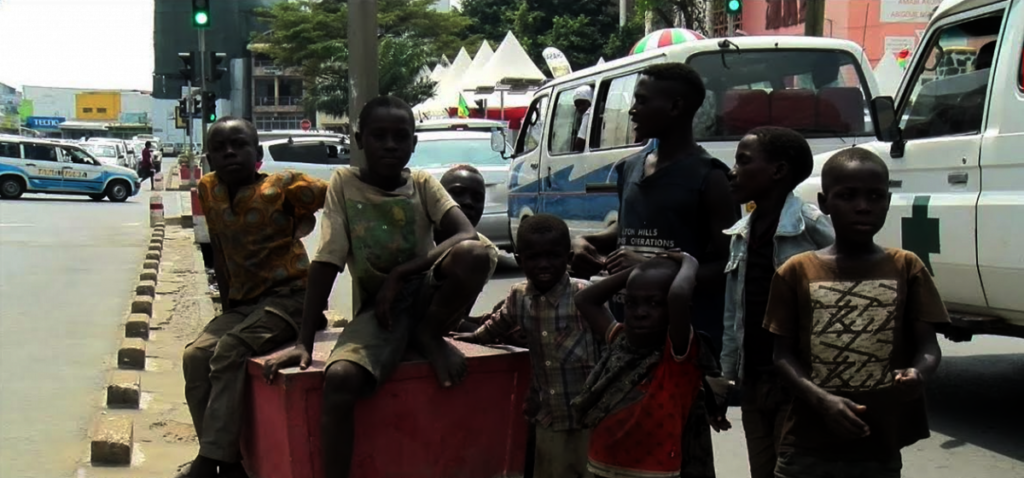
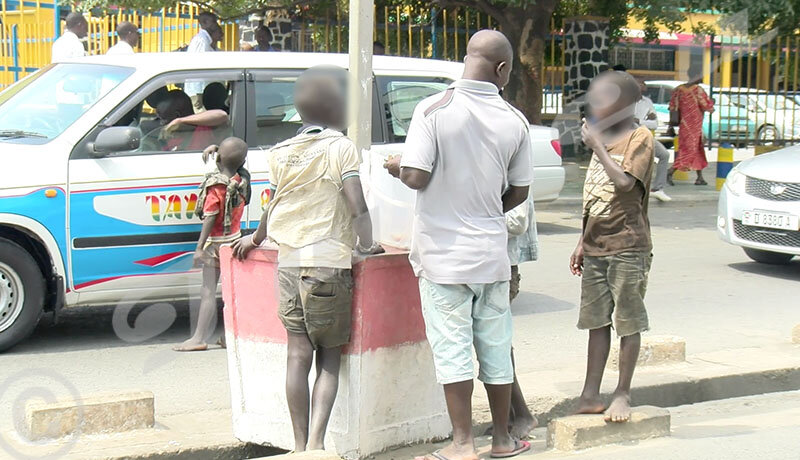
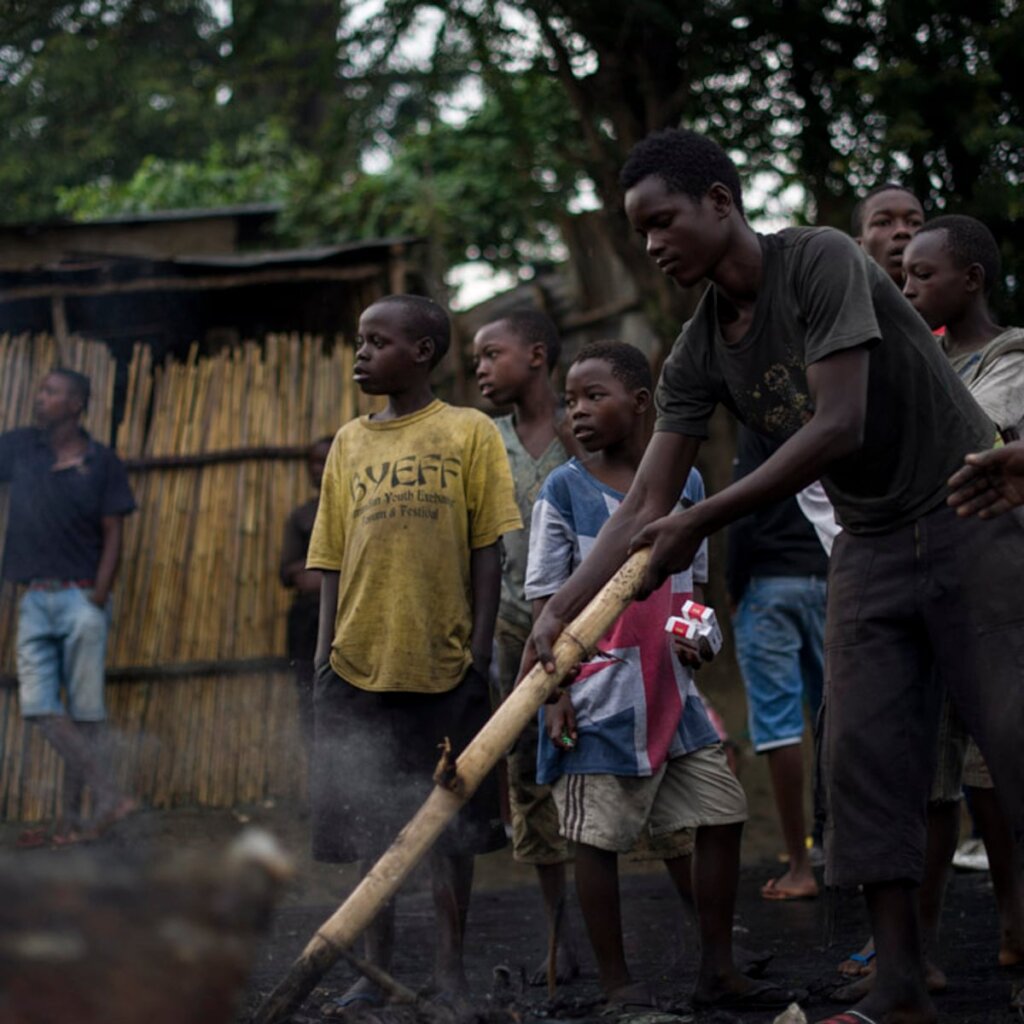
Where do you want us to go? My father is no longer there, and my mother remarried into another family. And since then, I went down to Bujumbura, and I haven’t had any work. And to survive, I started begging. I have nowhere to go,” confides Le Vic, a young street child encountered not far from the Saint-Michel Catholic church, in Mukaza commune, in the heart of Bujumbura.
After being arrested during the roundups of beggars and taken to his native province in the north of the country, he is back in Bujumbura.
“For me, it’s impossible to stay there. Because, to survive, you have to take up the hoe and cultivate the land. And I have never practiced this profession. And there you go, I came back to beg.
At least here, a person can leave you 1000 BIF, 2000 BIF or even 4000 BIF" (one dollar is equivalent to 2076 Burundian francs), he tells us.
His case is not isolated. The child, 17, had also been arrested and taken back to the interior of the country.
Today, he watches the police so as not to end up in their hands: "In fact, usually, we would stand in front of a bank, a microfinance, at the entrance to the markets, but it was very easy for the police to spot us because we operated in groups. Today, we work alone".
Orphaned, he says he has no other way to survive: "After my parents died, my uncles sold our property. When I tried to file a complaint, I received death threats.
And I fled my region to Bujumbura. I couldn't continue living there."
He acknowledges that begging is risky. "There are risks but we don't really have a choice.
If I manage to have another occupation, I would be happy," he admits, noting that on the street, they are exposed, among other things, to physical violence and drug use.
- Physical disability at the base
Among the street children, some live with a physical disability. This often attracts the compassion of passers-by. "How can I live without begging? How can I work in this state? I live thanks to charitable spirits," confides Edson, a street child, encountered on Mission Avenue. He is only 13 years old.
On this artery lined with large Indian and other Asian shops, it is in front of a ready-to-wear store that this one-armed child settles down. "I don't have any family who could take care of me," he admits. And to get to the city center, it's his 16-year-old big brother, also a street child, who carries him on his back.
With the recent police raids, these street children are very wary of journalists. While watching for the slightest movement of police officers in the area, he finally agrees to confide, saying that he was born with this disability. And unfortunately, his parents are dead.
"Since we were forced to provide for our own needs, we had no choice but to go begging," says the big brother from the street. Thanks to begging, he says that they manage to have food and pay for a small room in Kinama, north of Bujumbura.
Referring to the police raids to chase children off the streets, he believes that it is first important to tackle the causes. "They threaten to send us back to our home provinces. But we are natives of Bujumbura. Where are they going to send us? Let them find us other means of survival. That could work," he says.
He acknowledges, however, that "begging is not an honorable profession" and that passers-by have become increasingly reluctant to put their hands in their pockets: "With this threat from the government to punish those who give, some people are reluctant. Instead of giving you money, they offer to do certain tasks like laundry, cleaning and they pay you afterwards."
It should be noted that this operation to remove beggars from the streets concerns all beggars without distinction, children or adults.
- Addressing the causes first
For associations campaigning for children's rights, there had to be prerequisites for the success of the operation to remove child beggars from the street. "It is not enough to just remove them from the street, we must also try to understand why they are on the street," comments Olivier Ciza, president of the NGO SALIMADI save life makedifference
Approached by the Anadolu Agency, he indicates that there are several causes that push these children onto the street. "Poverty, family abandonment, abuse of the extended family in the case of orphans, dispossession of property, etc.," he lists, proposing the establishment of a child protection committee at the municipal level and a mapping of voluntary foster families.
For his part, Ferdinand Ntamahungiro, national coordinator of the National Federation of Associations Engaged in the Field of Childhood in Burundi (SALIMADI), believes that there should first be the identification of these people to know their needs, their origin and their exact number, the awareness of host families and the construction of reception centers.
Questioned, he recalls that this operation already appears in a vast government project spread over five years for the reintegration and social reintegration of all children in street situations and adult beggars. He adds that it is also a work that requires resources.
"To succeed, it must be a collegial work. The government must collaborate with children's rights organizations to find an adequate and effective solution".
Otherwise, he indicates that the majority of these children will still end up on the street as is the case today. "The observation is that some children are already back on the street. Others invade the neighborhoods to beg,” he emphasizes.
“And for this operation to be successful, we must first address the causes,” he concludes.
For his part, the doctor, a sociologist, indicates that several causes are behind this phenomenon. He mentions, among others, children orphaned by the political crises that have hit the country or by HIV/AIDS.
“Some children do not find families to take care of them after the death of their parents. And then, they end up on the street begging,” he analyzes.
The doctor notes that there are also children living on the street because they were born there. “These only know the street,” he regrets.
To succeed, this sociologist advises raising awareness among all the actors involved in this area.
For him, each time force is used to remove these children, the procedure will always be doomed to failure. "We must reintegrate through work, through supervision, through control and monitoring by the actors concerned," he suggests.
- Begging, a criminal offense
In its article 525, the Burundian Penal Code provides for penal servitude of 14 days to two months and a fine of 2.4 US dollars to 4.8 US dollars or one of these penalties only for "any person who exploits charity as a professional beggar or one who, through laziness, drunkenness or moral disorder, lives in a habitual state of begging".
The exploitation of begging is punishable by three to five years of penal servitude and a fine of 48 US dollars to 241 US dollars or one of these penalties only.
The punishment can range from five to ten years in prison and a fine of 48 US dollars to 241 US dollars when the exploitation is committed against several people or specific people such as minors.
"The exploitation of the begging of others is punishable by a term of penal servitude of ten to fifteen years and a fine of 2.4 US dollars to 241 US dollars when it is committed by an organized gang," it is specified.
As a reminder, on July 7, more than 200 adult beggars and 90 street children were arrested in the streets of Bujumbura, after the end of the government's ultimatum, given in mid-June, to leave the area voluntarily.
In Burundi, a survey conducted by the Coordination of Provincial Directorates of Social Development revealed that more than 7,000 children under the age of 18 are living on the streets. The city of Bujumbura, the economic capital, alone has 5,000 street children.
For Save life make difference we encourage our donors to continue to support us because street children have difficulty living and surviving, during the beginning of the project we received $423 raised from $20,000 goal and we carried out a small campaign to support some children at least for a few years and we are waiting for other means to continue our project and we greatly encourage our donors to continue to support us
Save life make difference
Bujumbura Burundi
Olivier Ciza
30-10-2024
Project reports on GlobalGiving are posted directly to globalgiving.org by Project Leaders as they are completed, generally every 3-4 months. To protect the integrity of these documents, GlobalGiving does not alter them; therefore you may find some language or formatting issues.
If you donate to this project or have donated to this project, you can receive an email when this project posts a report. You can also subscribe for reports without donating.



Support this important cause by creating a personalized fundraising page.
Start a Fundraiser