By OLIVIER C | Project Leader
Save Life Make Difference
SALIMADI
savelifemakedifference@gmail.com
Bujumbura Burundi
71452395
Sub: Project report
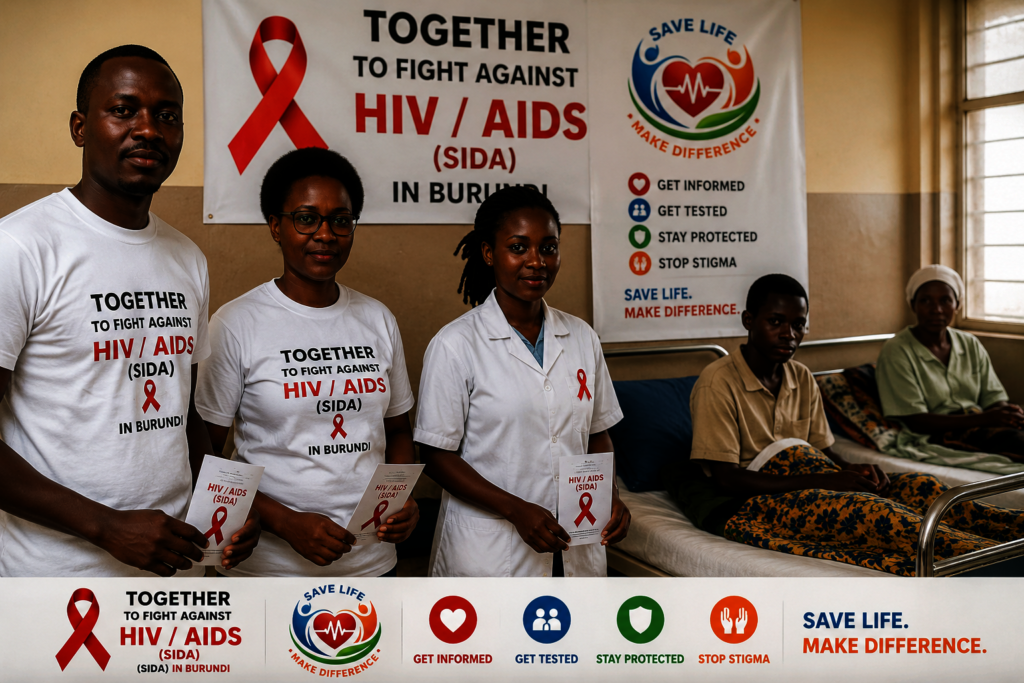
Despite significant progress in combating HIV/AIDS, Burundi still faces challenges due to deep-seated issues with poverty, stigma, and a fragile healthcare system. These factors can hinder access to testing, treatment, and sustained care, particularly among vulnerable populations.
Socioeconomic and cultural barriers
Poverty and health access: As one of the world's poorest countries, Burundi's high poverty levels intensify the HIV/AIDS crisis. This affects access to health services, with cost-recovery systems in public health facilities sometimes creating barriers for the most vulnerable.
Stigma and discrimination: Widespread HIV-related stigma in Burundian society is a serious problem. Fear of ostracism, rejection, and violence from family and the community can cause people to hide their HIV status, making it difficult to treat.
Marginalized populations: Key populations, such as sex workers and men who have sex with men, are disproportionately affected and face criminalization and social stigma, which limits their access to HIV services.
Gender inequality: Women are more frequently affected by HIV than men. The effects of stigma are particularly harsh on women, who can face verbal and physical violence, or expulsion from their homes if their HIV status is revealed.
Health system challenges
Weakened infrastructure: Years of civil war and political instability have weakened Burundi's health services. This, combined with high infant and maternal mortality rates, puts significant strain on the system.
Service quality gaps: Despite increasing treatment coverage, issues with HIV service quality remain. These include challenges with identifying new cases, maintaining consistent treatment, and improving treatment adherence.
Inadequate care for specific groups: Mother-to-child transmission rates have been alarmingly high, although the government is working to address the issue. There are also specific challenges in providing psychological support and treatment for young people living with HIV.
Limited domestic funding: Burundi's national AIDS response is heavily dependent on external funding, with donors historically providing the vast majority of funds. While the government has pledged to increase its commitment, external support remains essential to avoid losing past gains.
Progress and a path forward
Despite these difficulties, Burundi has made remarkable progress in combating HIV/AIDS. With the help of international partners and committed government action, the country has achieved high rates of people knowing their HIV status, receiving antiretroviral therapy, and achieving viral load suppression. Continued effort on multiple fronts is needed to sustain this success and eliminate remaining challenges.
To support Burundi against SIDA (HIV/AIDS), you can donate to organizations that provide direct services and advocate for government support, which includes strengthening healthcare systems, supporting vulnerable groups like sex workers and children orphaned by AIDS, and running anti-stigma campaigns. Supporting these efforts helps expand access to testing, treatment, and education, and promotes more inclusive policies and programs.
How to provide support
Support organizations providing direct aid: Donate to non-profits like the National Association for the Support of HIV-Positive People (ANSS) and SOS Children's Villages which offer services like screening, antiretroviral therapy, psychological support, and community care.
Advocate for stronger government policies: Encourage parliamentary action that promotes gender-sensitive policies, protects vulnerable groups, and includes men in testing and counseling programs.
Contribute to public health campaigns: Support educational and awareness campaigns that tackle stigma and prejudice, which are significant barriers to people seeking help and treatment.
Help with care for children orphaned by AIDS: Provide support for children who have lost parents to the disease through programs that offer care, education, and a path to independence.
Promote gender equality and women's empowerment: Address the gender-based violence and inequalities that make women and girls more vulnerable to HIV by supporting programs that are gender-sensitive and provide support to women.
Support strengthening the healthcare system: Donations of equipment and funding for healthcare infrastructure can improve the delivery of services, including the decentralization of testing and treatmen
t centers.
SALIMADI
28-10-2025
Legal representative
By OLIVIER | Project Leader
By OLIVIER | PROJECT LEADER
Project reports on GlobalGiving are posted directly to globalgiving.org by Project Leaders as they are completed, generally every 3-4 months. To protect the integrity of these documents, GlobalGiving does not alter them; therefore you may find some language or formatting issues.
If you donate to this project or have donated to this project, you can receive an email when this project posts a report. You can also subscribe for reports without donating.



Support this important cause by creating a personalized fundraising page.
Start a Fundraiser