By Linda Wairegi | Multimedia Storyteller
The value of accessible technology does not end when a device is handed over. Its impact continues as students progress through university, professional training and postgraduate education.
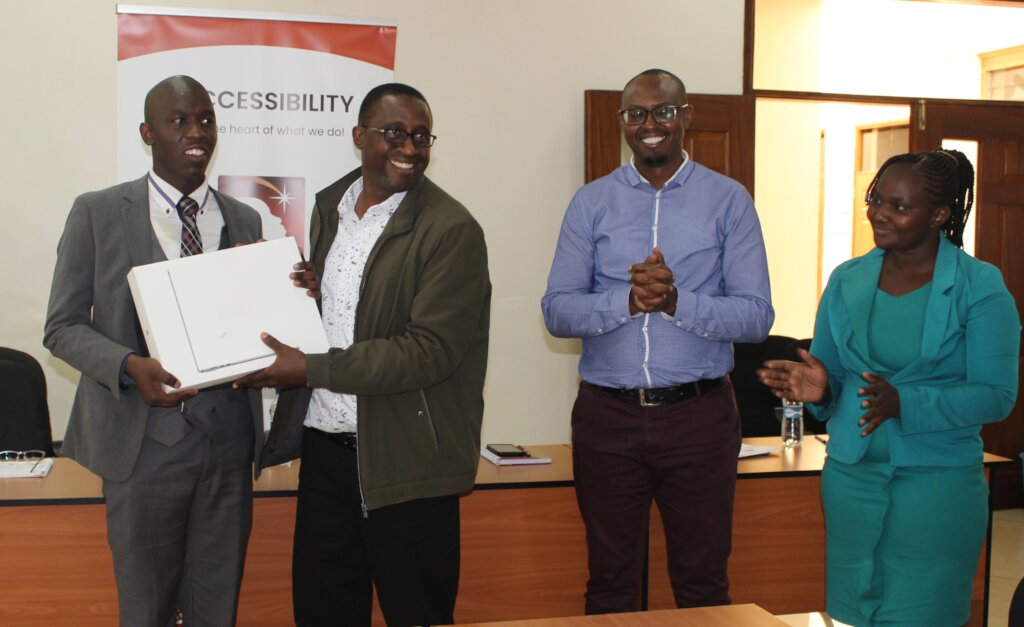
John is one of the students whose MacBook continues to support his academic journey. In September, John began pursuing a Master of Laws degree abroad. His programme has a demanding workload, with nine units, each requiring a separate independent project.
Completing these projects involves extensive legal research, reading and writing. John uses his MacBook and its built-in accessibility features to organise numerous notes, PDFs and drafts. This helps him manage several projects without losing track of important information.
The MacBook’s display and accessibility features are particularly valuable to John, who has monocular vision. He says the sharp display, dark mode and text-zoom features help him read dense academic materials for longer periods while reducing the eye strain and headaches he experiences.
John’s journey demonstrates the lasting value of the Assistive Technology for University Students (ATUS) project. The MacBook that supported his earlier studies is now helping him meet the demands of postgraduate legal education.
His progress is part of a broader story of students advancing at different stages of their legal education. Marvin, Elvis and Brian are continuing their studies at Kenyatta University.
Meanwhile, Kenyatta, Carol and Gloria have graduated from the University of Nairobi and progressed to the Kenya School of Law. There, they are developing the practical skills and professional competencies required for legal practice in Kenya. Evelyn has completed her studies at the Kenya School of Law and secured a position in the government sector, marking another important transition from legal education to employment.
We are proud to see these students advance in their academic and professional journeys. Their achievements can also encourage other students with visual impairments who may be considering careers in law but are uncertain whether they will have access to the technology and support they need.
As Caroline shared:
“The students used to Braille, and now having access to laptops makes it easier to do independent research. I will use what I’ve gained to reach out to people in remote areas and educate them.”
We are deeply grateful to everyone who has supported this project. Your generosity has helped students with visual impairments access digital learning materials, conduct independent research and participate more fully in university education.
However, many students with visual impairments still enter university without reliable access to assistive technology, digital legal resources and specialised training. With continued donor support, we can equip and train more students to participate fully in their education and pursue their career goals.
Whether through a one-time or recurring gift, your contribution can help another student access assistive technology, practical training and continued technical support. Donate today and help open the next pathway to opportunity.
Written by Linda Wairegi, Multimedia Storyteller
Links:
By Linda Wairegi | Multimedia Storyteller
By Linda Wairegi | Multimedia Project Manager
Project reports on GlobalGiving are posted directly to globalgiving.org by Project Leaders as they are completed, generally every 3-4 months. To protect the integrity of these documents, GlobalGiving does not alter them; therefore you may find some language or formatting issues.
If you donate to this project or have donated to this project, you can receive an email when this project posts a report. You can also subscribe for reports without donating.


Support this important cause by creating a personalized fundraising page.
Start a Fundraiser