By cindy barotte | Executive director
Cultural Action for Alzheimer
68 rue des Plantes
75014 Paris, France
April 06, 2018
Acting together for a global outreach of another perspective on Alzheimer’s
Dear donor,
Thank you so much for your generosity! We are very touched that you have chosen to support our cause !
Together we can provide immense benefits to patients with Alzheimer’s and related dementia. We can:
The demand is immense:
There are an estimated 5.5 million Americans living with Alzheimer's dementia in 2017; an estimated 5.3 million are age 65 and older. Almost two-thirds of Americans with Alzheimer's are women. Because of the increasing number of people age 65 and older in the United States, particularly the oldest-old, the number of new cases of Alzheimer's and other dementias is projected to soar. In 2016, 15.9 million family and friends provided 18.2 billion hours of unpaid assistance to those with Alzheimer's and other dementias.
Going Virtual, going global through Technology:
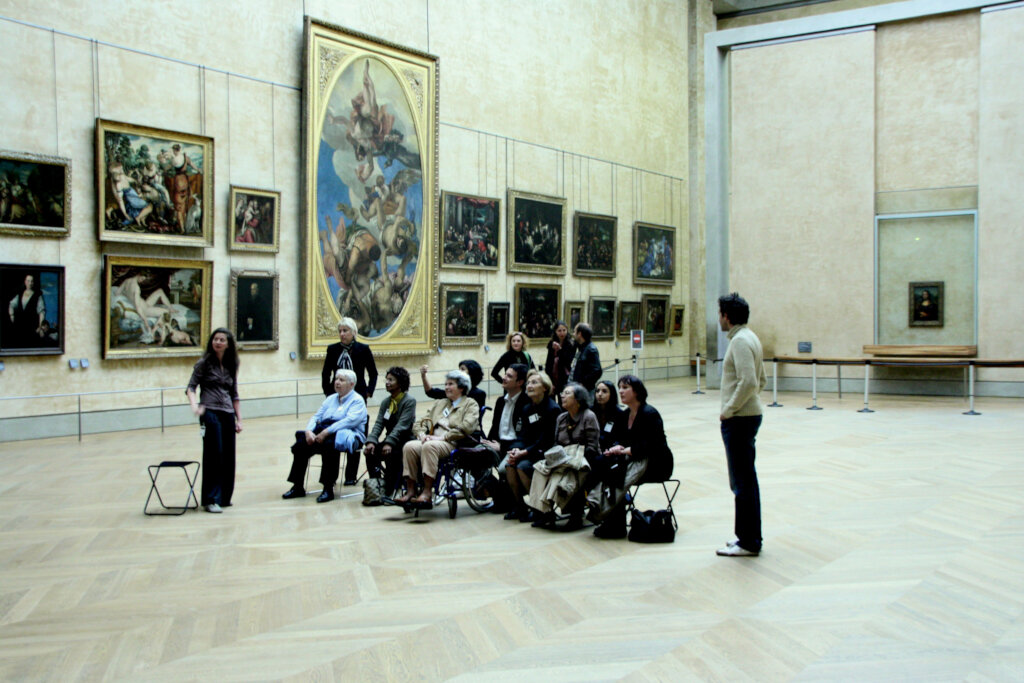
In 2016, the association finalized the concept of a website offering virtual visits which permits patients to experience visits at home, accompanied by a trained family member or community service volunteer, and thus dramatically expands the scope of the help brought by the association, even to those who are home-bound because of geographical, mobility, or other health challenges. The caregiver providing the accompaniment can easily manipulate the basic computer interactions required.
Each virtual visit includes the guided progressive discovery of four works of art, each in photographic format. This discovery occurs through a series of carefully adapted open questions, comments, explanations of key artistic symbols. The cultural, anthropological, historical, and/or artistic context is given, which allow the patient to concentrate on the structural elements of a work, and thereby to develop for themselves the meaning or significance of that work.
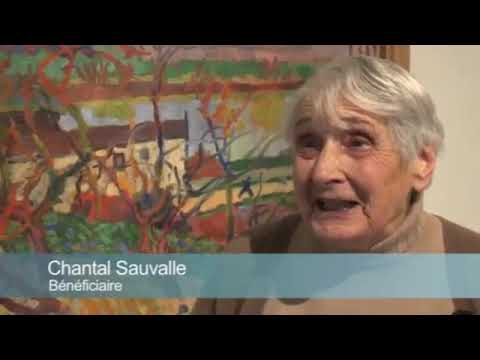
Below you will find a testimonial from a volunteer:
A very unique way to appreciate works of art…
The participant is extremely pleased with the program. He had not been to a museum in a long time. Every visit we meet he is very thankful to ARTZ for supporting such a wonderful program. The experience for him has been great. He really enjoys hearing about the artwork and offers some perspective of his own. He tells me that this is a very unique way to appreciate works of art. He is enthusiastic about every meeting we have and has only positive feedback on his experience. Additionally, his niece who manages his schedule is also very appreciative of how much he enjoys the experience. I believe he would love to renew this experience.
Below you will find an example of our approach to the discovery of a work of art:
What do you see?
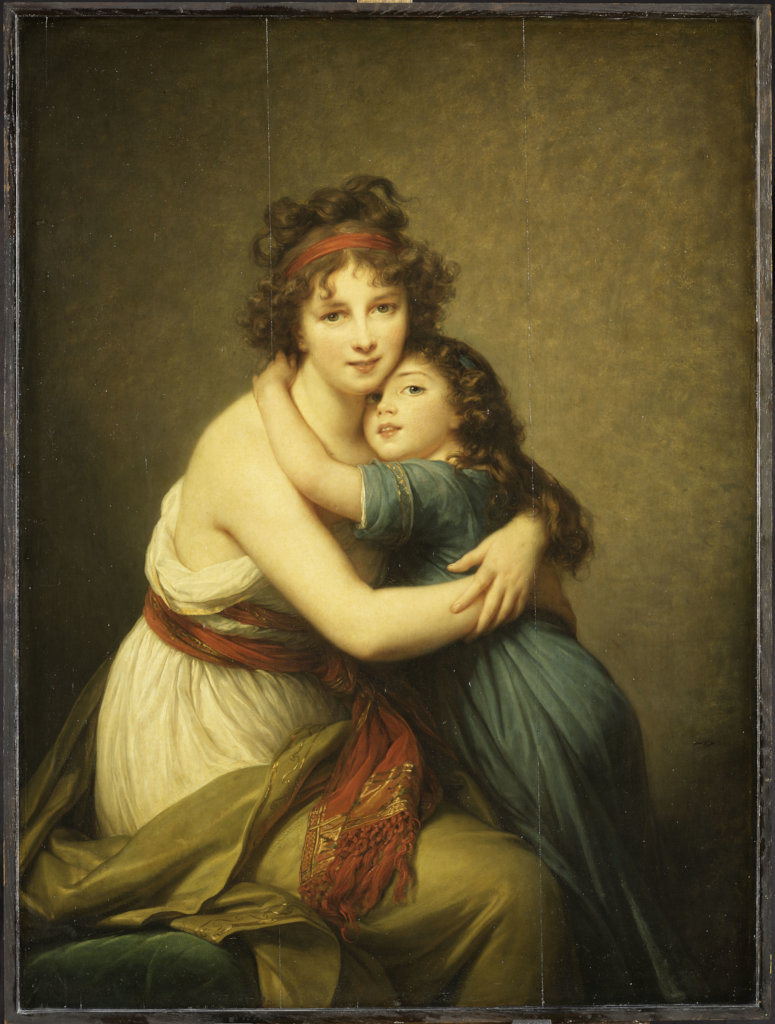
A young woman is sitting and she presses a little girl against her. A beautiful light wraps around them. The child does not seem very old, she snuggles against her mother who, in turn, hugs her.
The woman is wearing a white dress revealing her back. Her waist is highlighted by a wide red belt and an embroidered matching headband holds her curly hair. The little girl has a pretty face. Her long hair floats freely on her back and mingles with the folds of the blue fabric of her dress. The mother and daughter are smiling at us; they seem happy.
The many curves present in the composition as well as the colors used are creating the impression of tenderness and harmony. Do you see it?
In this self-portrait, Elisabeth Louise Vigée Le Brun poses embracing her daughter and highlights the tenderness that unites them. Almost all lines of the composition are curved. We can see that the arms are rounded, the lines of the back of the mother are curved, the roundness of the hips is accentuated, and the oval shapes of the faces are emphasized. All these curving lines evoke a certain sense of softness, tenderness, and sweetness.
The delicacy of the colors, their changing shades between shadow and light express the existing harmony. It is a beautiful image of the love that unites a mother and her child.
What message do you think Vigée Le Brun wishes to communicate here to her contemporaries?
At the time, children were often placed with external care (such as nannies) from birth. Many died in infancy and parents avoided "attaching themselves" to their child. Vigée Le Brun herself was educated at the convent and lived with her parents only starting from the age of eleven.
In the 18th century, the spirit of Enlightenment questioned society and the place of the individual in society. In 1792, Jean-Jacques Rousseau, a Swiss philosopher published treatise named: "Émile or On Education". The treatise stated that a child acquires the status of person. Therefore, little Julie in the painting will not go to the convent, like her mother, and instead her mother expresses her happiness in the ability of being able to raise her daughter herself. The piece reflects a profound change in the relationship between parent and child.
Benefits of our projet to caregivers:
If you wish, we would be pleased to invite you to take part in our annual meetings or to receive your opinion and testimony about the disease, our experience and our association.
We will post regularly on the website final reports of actions we have done with all the donations we receive.
Warmly
Cindy Barotte
Director of the ARTZ Association
For more information about the association here is the link to our website: www.actionculturellealzheimer.org
Links:
Project reports on GlobalGiving are posted directly to globalgiving.org by Project Leaders as they are completed, generally every 3-4 months. To protect the integrity of these documents, GlobalGiving does not alter them; therefore you may find some language or formatting issues.
If you donate to this project or have donated to this project, you can receive an email when this project posts a report. You can also subscribe for reports without donating.



Support this important cause by creating a personalized fundraising page.
Start a Fundraiser