By Maksuda Akter Hridi | Exicutive, Partnership, OBHIZATRIK Foundation
Summary
Bangladesh is highly vulnerable to floods, cyclones, river erosion, landslides, and other climate-related disasters. Every year, these emergencies affect the lives and livelihoods of thousands of families, particularly those living in low-income and remote communities.
OBHIZATRIK Foundation remains committed to providing rapid humanitarian support whenever a disaster occurs. The Foundation responds with emergency food, relief items, cooked meals, medical assistance, rescue support, shelter materials, and livelihood recovery assistance according to the needs of affected communities.
In 2024, OBHIZATRIK Foundation provided large-scale emergency and recovery support following severe flooding in northern Bangladesh. In 2026, the Foundation again responded to recent floods and heavy monsoon rainfall affecting communities in Cox’s Bazar, Rangamati, Khagrachari, Kurigram, and surrounding areas, as well as waterlogged slum communities in Dhaka.
Challenge
Natural disasters in Bangladesh can rapidly disrupt every aspect of community life. Floods, cyclones, landslides, and heavy rainfall can destroy homes, damage livelihoods, contaminate water sources, and leave families without food or safe shelter.
Children, women, pregnant women, older people, and low-income households are particularly vulnerable during emergencies. Families living in remote areas may face delays in receiving assistance, while daily wage earners in urban communities can lose their income when roads and homes become waterlogged.
The impact often continues after the floodwaters recede. Families may lose livestock, agricultural inputs, fishing equipment, homes, and other livelihood assets, making it difficult for them to recover without additional support.
Solution
OBHIZATRIK Foundation maintains a community-focused emergency response approach to provide assistance during and after disasters. Depending on the situation, the Foundation provides emergency relief packages, cooked meals, rescue assistance, medical services, shelter support, cash assistance, and livelihood recovery support.
During the major flooding in northern Bangladesh in 2024, OBHIZATRIK Foundation reached more than 900,000 people through its emergency response efforts. Around 250 individuals, primarily women and children, including pregnant women, were rescued and referred to hospitals for necessary care.
The Foundation distributed more than 80,000 relief packages and organised 30 medical camps to support communities during the post-flood recovery period. Recovery assistance included the construction of approximately 300 houses for displaced families and livelihood support for affected households. Around 100 families received livestock as livelihood assets, while 10 farmers received seeds and 10 fishermen received fishing equipment to help restore their income sources. In addition, 88 families received direct cash assistance to support their recovery.
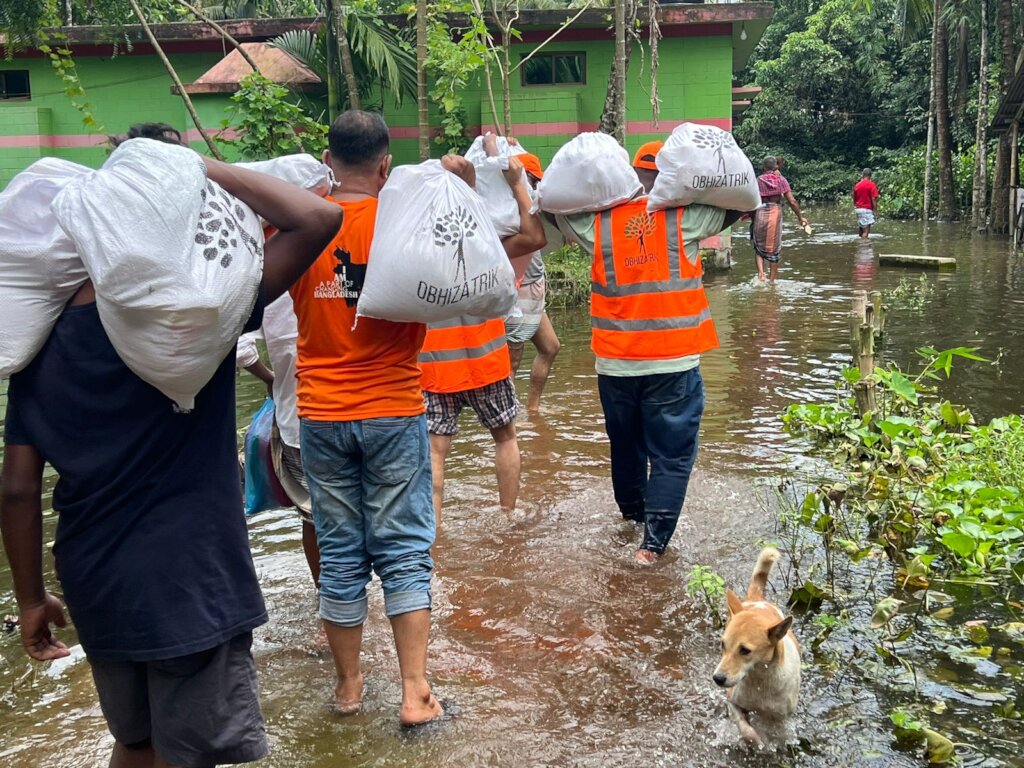
In 2026, OBHIZATRIK Foundation continued its emergency response during recent floods and climate-related emergencies. Relief bags and cooked meals were provided to affected communities in Cox’s Bazar, Rangamati, Khagrachari, Kurigram, and surrounding areas.
The Foundation also responded to the impact of heavy monsoon rainfall in Dhaka, where waterlogging left many families in urban slum communities unable to leave their homes or earn their daily income. Many daily wage earners were unable to work and faced shortages of food. In response, OBHIZATRIK Foundation distributed cooked meals to affected communities around Mirpur, Dhaka, providing immediate food assistance during the emergency.
Long-Term Impact
OBHIZATRIK Foundation’s disaster response goes beyond immediate relief. While emergency food, cooked meals, rescue support, and medical assistance help families survive during a crisis, recovery and livelihood support help them rebuild their lives afterward.
The experience of the 2024 flood response demonstrated the importance of combining emergency assistance with early recovery and livelihood restoration. Support such as houses, livestock, seeds, fishing equipment, and cash assistance enables affected families to gradually restore their income and become more self-reliant.
The Foundation’s continued emergency response in 2026 further strengthens its ability to reach vulnerable communities during sudden disasters, both in rural and urban areas. By maintaining rapid, community-based humanitarian action, OBHIZATRIK Foundation aims to ensure that people affected by disasters receive timely assistance and can recover with dignity, safety, and greater resilience against future emergencies.
Project reports on GlobalGiving are posted directly to globalgiving.org by Project Leaders as they are completed, generally every 3-4 months. To protect the integrity of these documents, GlobalGiving does not alter them; therefore you may find some language or formatting issues.
If you donate to this project or have donated to this project, you can receive an email when this project posts a report. You can also subscribe for reports without donating.



Support this important cause by creating a personalized fundraising page.
Start a Fundraiser