By Alejadra Rosado | CEO
Today we want to share something that fills us with joy. At UMPO we recently lived a beautiful experience that helped us see, once again, how our territory speaks through its children. That insight is pure gold for us, because it brings us closer to understanding how new generations can truly take root in our land.
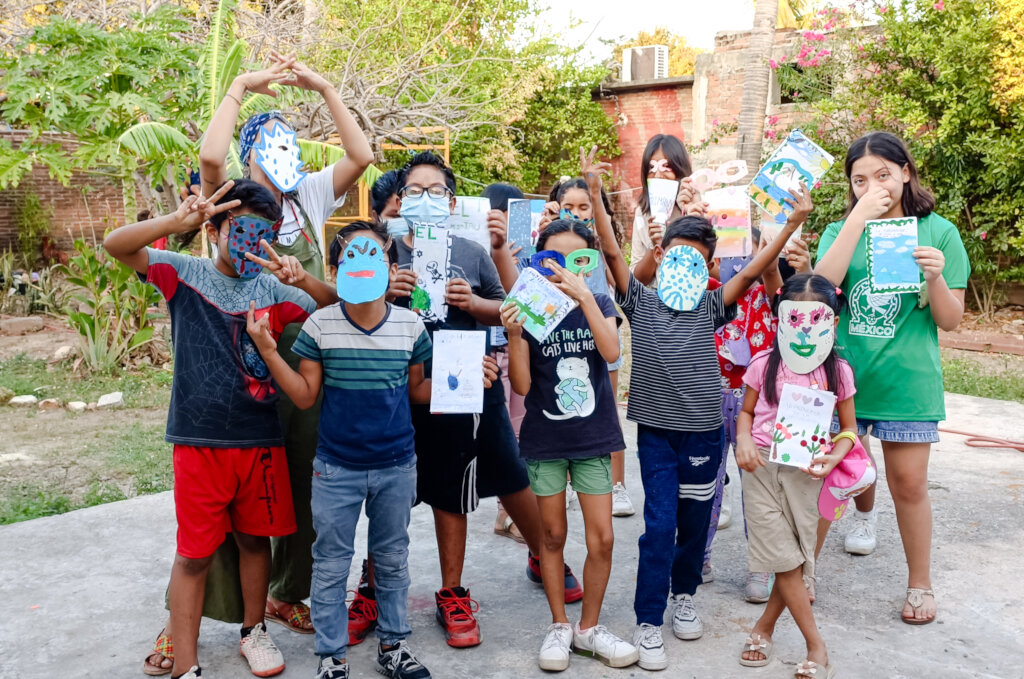
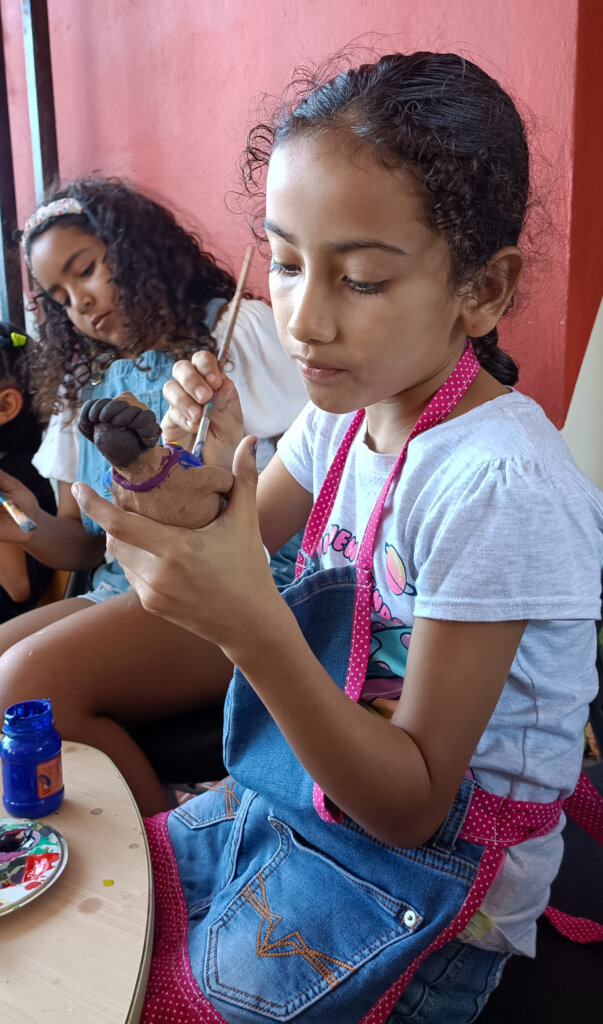
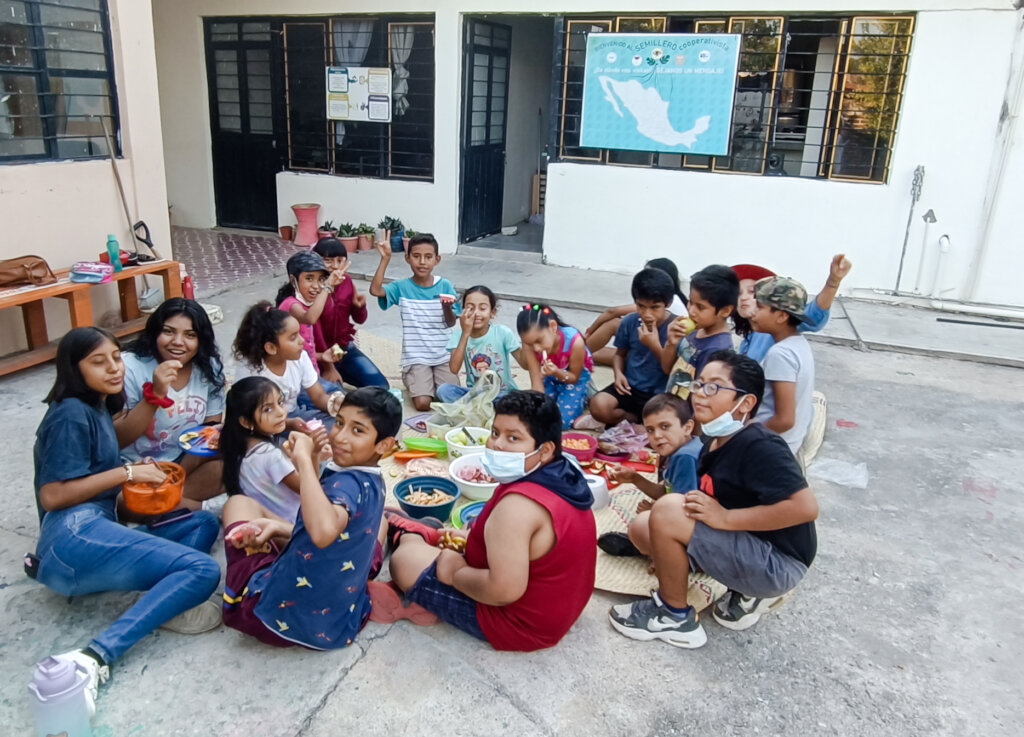
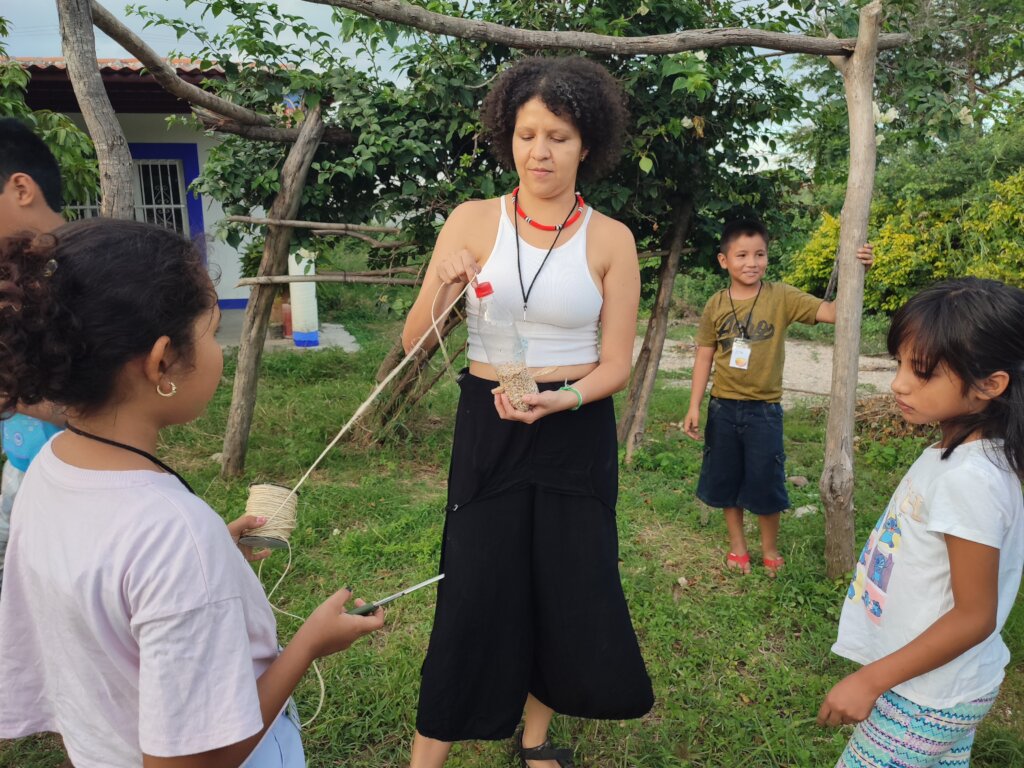
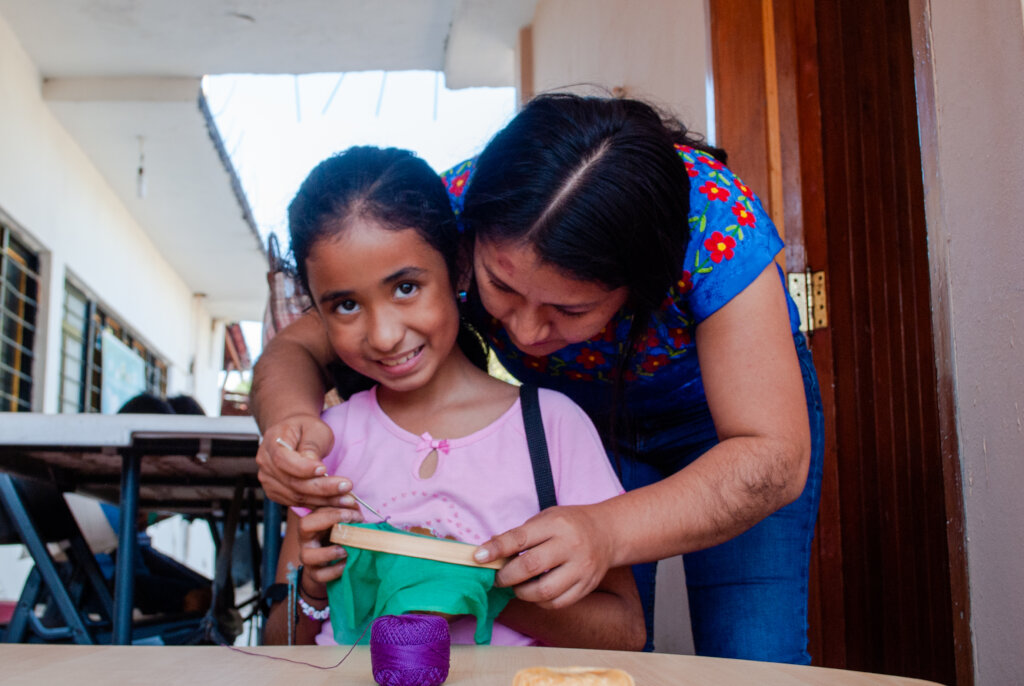
This time, the experience was guided by Guiebeu, a member of UMPO’s network of facilitators. She brought to our program Strengthening Our Roots a workshop called “Planting our bellybuttons”, a living journey to recognize the territory of Unión Hidalgo through direct contact with the earth. Children explored edible and medicinal plants, walked through trails, and learned how the pollinated world around us works.
Guiebeu shared with us:
“Alán and Dylan loved being in the monte, you could see how at ease they felt. That kind of knowledge is fading as concrete expands and people grow more afraid of going into the fields. Elisa loved observing the sky and drawing its clouds. When we talked about reading the territory and how we live in it, everyone said that in Unión Hidalgo the ants ‘warn’ when rain is coming. It was inspiring to see that even though they are young and live in a small community, the knowledge of plants is still alive. It is not academic botany, but they can name the plants and say what they are used for. They talked about the trees, touched them gently, and shared which ones were their favorites. They brought memories of the monte and of their connection with the trees. We recognized the plants we coexist with every day and talked about how they shape who we are as a community. The workshop was very dynamic because of the different ages. We created a collective mural, built a bird feeder and learned the names of the trees in Zapotec. We also reflected on the extractivism that threatens the territory. For me, it felt powerful to bring together the nostalgia of the Istmo where I grew up with the need to share that love. All of this becomes part of our collective struggle and organization in the face of industrial plans that threaten our home.”
The group was also accompanied by a local teacher, Maestra Isabel. With her we learned another story that moved us deeply. She told us that her bellybutton is planted in Unión Hidalgo, in the very same house where our colleague Andrea lives today. Life’s coincidences are beautiful. Even though Isabel no longer lives there, she walks past that house every day and feels that the place is still part of who she is. That is what it means to plant the bellybutton. Some families still do it today, burying it under a tree in the mother’s family home.
At UMPO we continue asking ourselves important questions. If one day this ritual stops being practiced, will the walks, the workshops and the shared stories be enough to keep us rooted in the territory? Will we still feel we can defend it even without planting the bellybutton? These questions accompany us as we create spaces where children and youth can deepen their relationship with the land.
At the end of the day, the participants offered us words of gratitude in Zapotec and gifted us guiechachi flowers in a ceremony that touched us deeply. It was a moment full of beauty and strength.
Today, those flowers are also for you. Thanks to your support, experiences like this continue to bloom.
Project reports on GlobalGiving are posted directly to globalgiving.org by Project Leaders as they are completed, generally every 3-4 months. To protect the integrity of these documents, GlobalGiving does not alter them; therefore you may find some language or formatting issues.
If you donate to this project or have donated to this project, you can receive an email when this project posts a report. You can also subscribe for reports without donating.



Support this important cause by creating a personalized fundraising page.
Start a Fundraiser