Executive Summary
The Climate-Smart Agriculture for Women Farmers (CSWF) project was implemented to strengthen the resilience, productivity, and livelihoods of women farmers through the adoption of climate-smart agricultural practices. Following the successful implementation phase, this report presents the outcomes, achievements, challenges, lessons learned, and sustainability measures of the project.
The project reached women farmers with practical skills, improved access to climate-resilient inputs, and enhanced knowledge on sustainable farming, resulting in increased crop yields, improved household food security, and greater women’s participation in climate-resilient agriculture.
Project Background and Rationale
Women farmers play a critical role in food production but are disproportionately affected by climate change due to limited access to land, finance, technology, and extension services. Increasing climate variability—such as droughts, floods, and soil degradation—has threatened agricultural productivity and livelihoods.
The CSWF project was designed to address these challenges by empowering women farmers with climate-smart agriculture (CSA) practices that improve productivity, build resilience to climate shocks, and reduce environmental impact.
Project Objectives
Overall Objective
To enhance the resilience, productivity, and socio-economic empowerment of women farmers through climate-smart agriculture.
Specific Objectives
To build the capacity of women farmers on climate-smart agricultural practices
To promote the adoption of climate-resilient crops and sustainable farming techniques
To improve soil health, water management, and biodiversity
To increase household food security and income for women farmers
To strengthen women’s leadership and participation in climate action
Project Implementation Summary
The project was implemented through a participatory and inclusive approach, ensuring active involvement of women farmers at all stages.
Key Activities Implemented
Training and capacity-building workshops on climate-smart agriculture
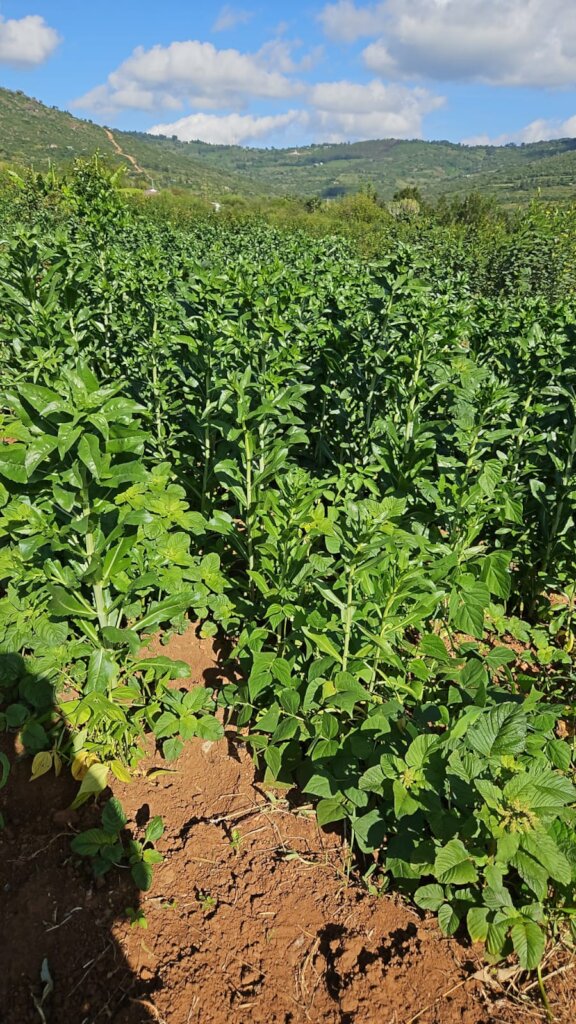
Demonstration plots for practical learning
Distribution of climate-resilient seeds and farming inputs
Training on composting, mulching, crop diversification, and water conservation
Awareness sessions on climate change adaptation and mitigation
Formation and strengthening of women farmer groups.
Beneficiaries
Primary beneficiaries: Women smallholder farmers
Secondary beneficiaries: Households, community members, and local farmer groups
The project directly benefited women farmers, with indirect benefits to families and communities through improved food availability and income stability.
Key Achievements and Results
a) Capacity Building
Women farmers gained practical knowledge and skills in climate-smart agriculture
Increased awareness of climate risks and adaptive farming strategies
b) Adoption of Climate-Smart Practices
Improved use of drought-tolerant and early-maturing crop varieties
Increased application of organic manure, mulching, and crop rotation
Better water-use efficiency and soil conservation practices
c) Agricultural Productivity and Food Security
Improved crop yields compared to baseline levels
Enhanced household food security and dietary diversity
d) Women’s Empowerment
Strengthened leadership and decision-making roles of women in farming activities
Improved confidence and participation in community-level agricultural planning.
Challenges Encountered
Limited access to finance for scaling up climate-smart practices
Climate extremes affecting some farming seasons
Initial resistance to adopting new farming methods
Time constraints for women balancing household and farming responsibilities.
Lessons Learned
Practical demonstrations increase adoption of climate-smart practices
Peer learning among women farmers is highly effective
Continuous extension support is critical for sustained behavior change
Gender-responsive approaches enhance project impact and ownership.
9. Sustainability Measures
To ensure long-term impact, the project adopted the following sustainability strategies:
Strengthening women farmer groups and cooperatives
Promoting locally available and low-cost climate-smart practices
Encouraging knowledge sharing within communities
Linking women farmers to extension services and local markets
10. Conclusion
The Climate-Smart Agriculture for Women Farmers (CSWF) project has demonstrated that empowering women farmers with climate-smart knowledge and tools significantly improves resilience, productivity, and livelihoods. The post-implementation outcomes highlight the importance of gender-responsive, community-driven approaches in addressing climate change and food security.
The project provides a strong foundation for scaling up climate-smart agriculture initiatives and replicating the model in other communities.
Recommendations
Scale up the CSWF model to reach more women farmers
Improve access to finance and climate-resilient inputs
Strengthen partnerships with government and extension services
Integrate climate-smart agriculture into local development plans.
![Share on Twitter]()
![Share on Facebook]()