![]()
SECOND-STAGE PROGRESS UPDATE
From Survival to Recovery
Investing in the Strength of Survivors of El Fasher
Darfur Women Network (DWN) August 2026
“For the first time in more than three years, many participants felt genuine happiness and realized that they were not alone.”
Executive Update
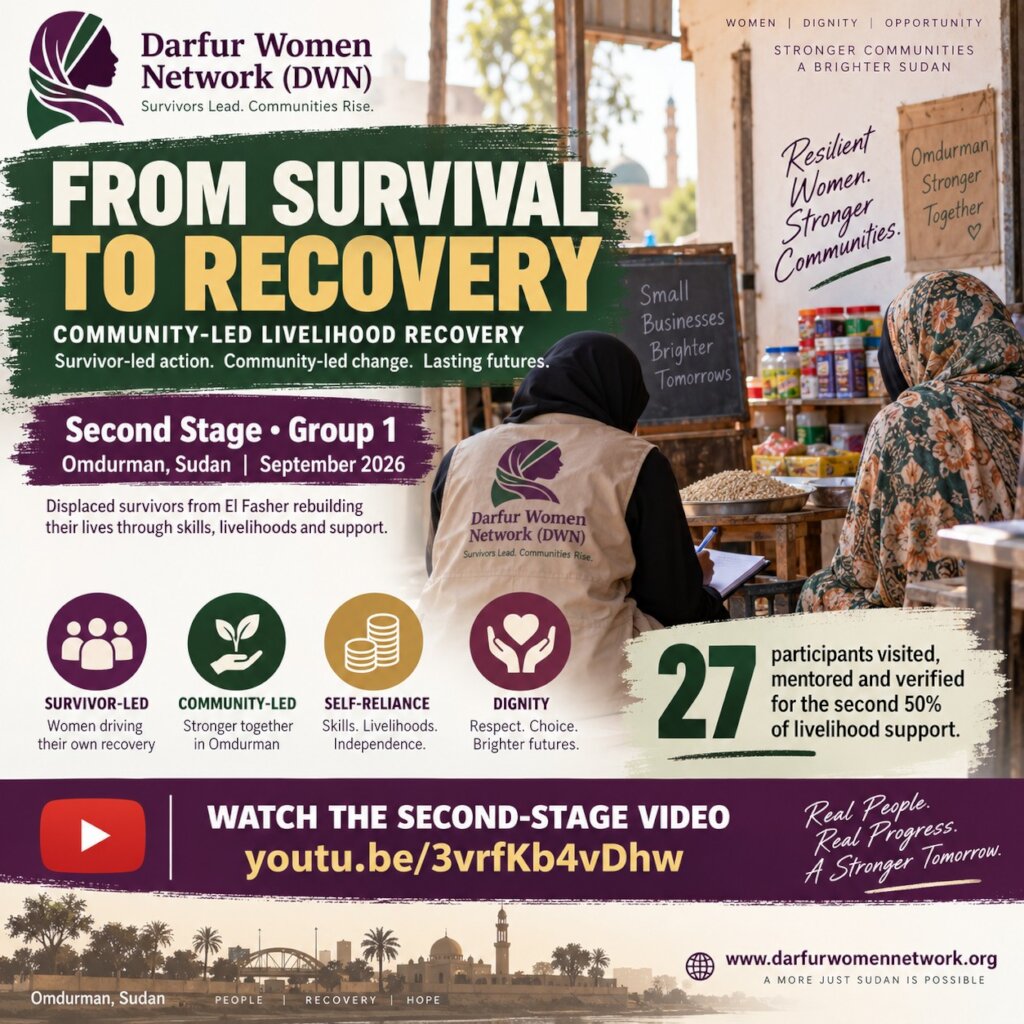
Darfur Women Network(DWN) has advanced to the second stage of its community-led recovery program for 27 survivors of the genocide in El Fasher who reached Omdurman after repeated displacement. Each participant received the initial 50% of the approved cost of her or his individually assessed livelihood needs. Participants signed receipts, and DWN documented the assistance to ensure transparency and accountability.
DWN's field team has now conducted follow-up visits to observe changes, understand challenges, and provide practical encouragement. These visits are not designed to judge participants. They are part of a respectful partnership that helps each survivor use the investment successfully, adapt to difficulties, and continue moving toward self-reliance.
DWN is also working with three additional displaced men whose livelihoods require further assessment and tailored support: a barber, a seller of body and hair products, and a toy seller. Their small businesses currently generate few or no sales. They are not included among the 27 participants who have already received the initial 50% investment.
Behind the Number “Displaced”
Displaced people are often described only as numbers. But every number represents a person, a family, a history, and a life interrupted by violence.
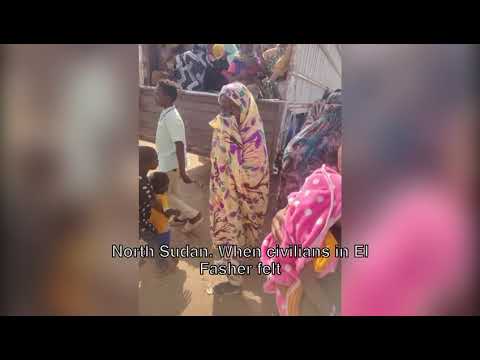
The 27 participants in this recovery stage survived the siege and atrocities in El Fasher. When they escaped death, they did not know where they were going or whether they would survive the journey. Many fled with weak bodies after prolonged hunger and thirst. Mothers carried or guided children while facing fear, uncertainty, and the danger of armed Rapid Support Force (RSF) personnel traveling in military vehicles and carrying weapons.
Along their routes, families encountered dead bodies and children separated from their parents. Some children had witnessed their parents being killed. Survivors traveled without reliable guidance or protection, uncertain which direction could lead to safety. Many were displaced more than once before reaching Omdurman.
They arrived carrying trauma, grief, and memories that cannot be seen in a beneficiary list. Many had buried their dreams in order to remain alive. Reaching Omdurman ended one dangerous journey, but it did not end their struggle. They still had to find shelter, food, income, safety, and a reason to hope again.
The Second Stage: Supportive Observation and Mentoring
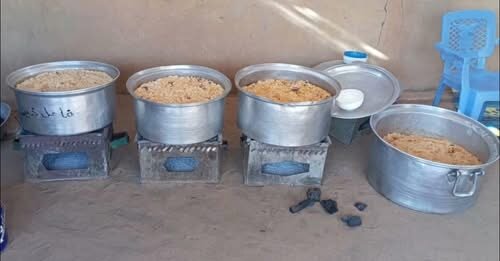
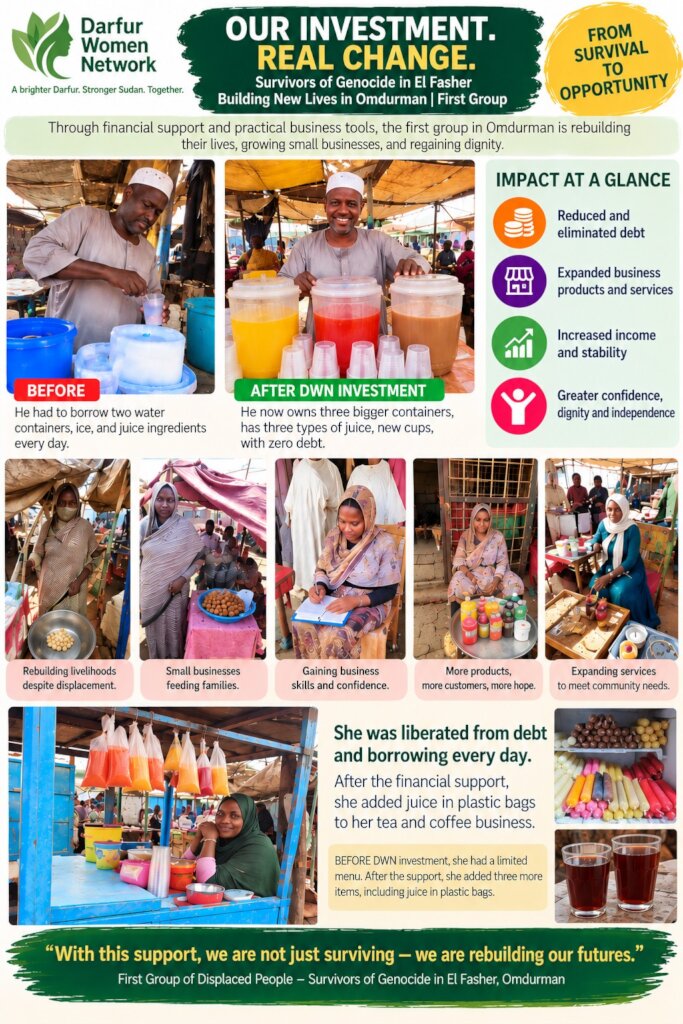
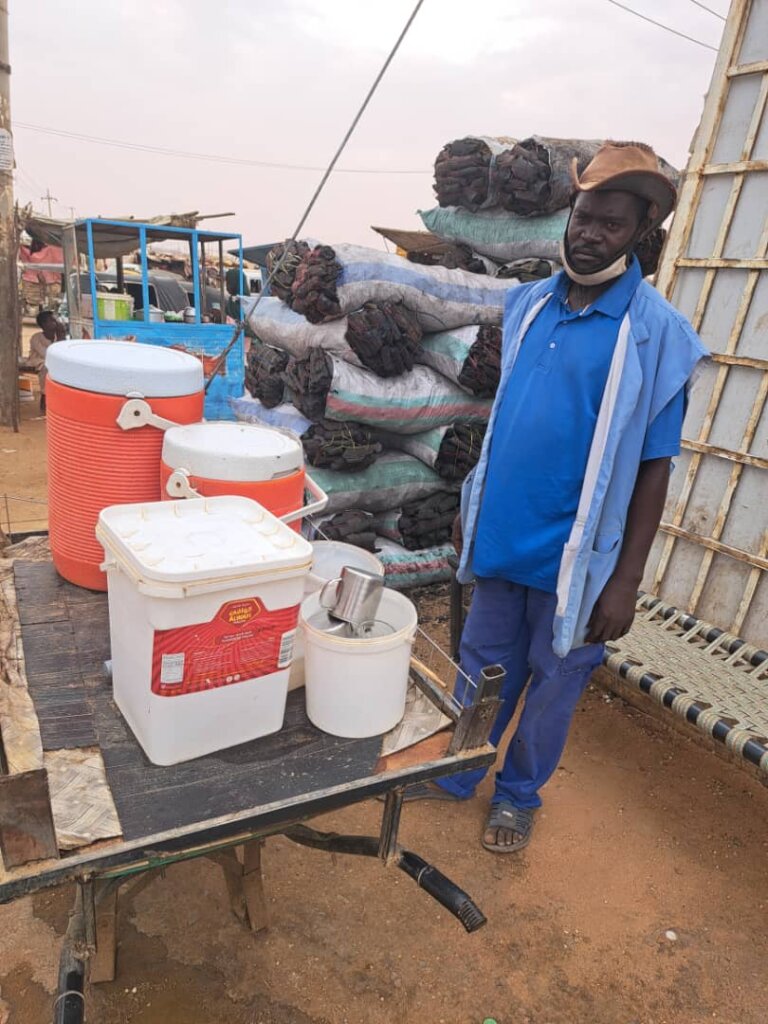
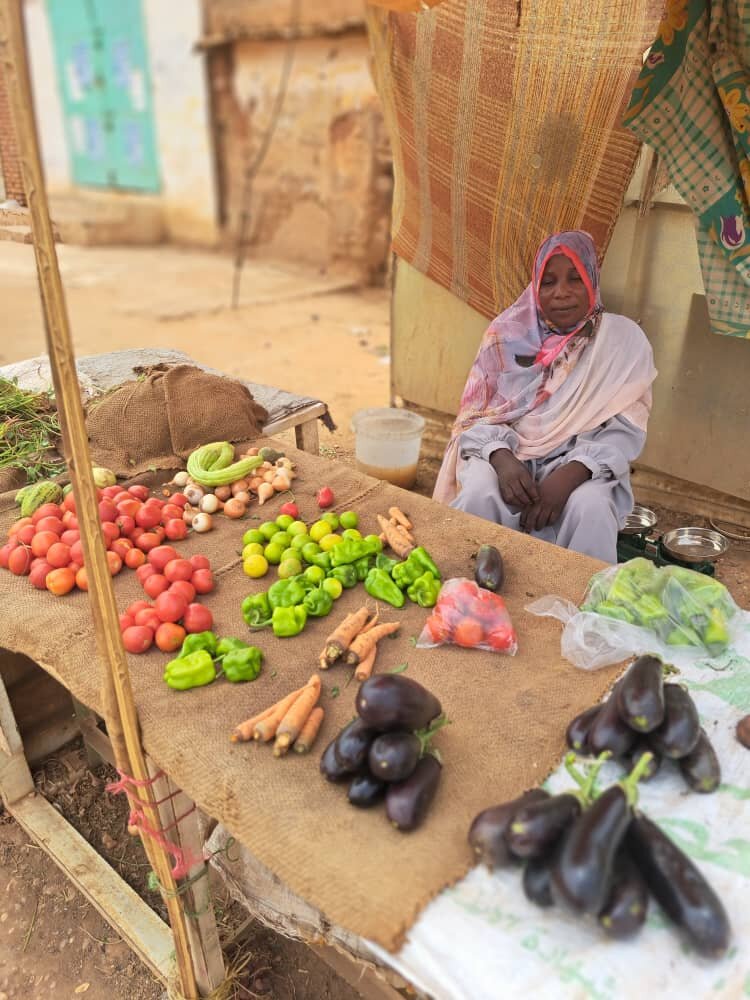
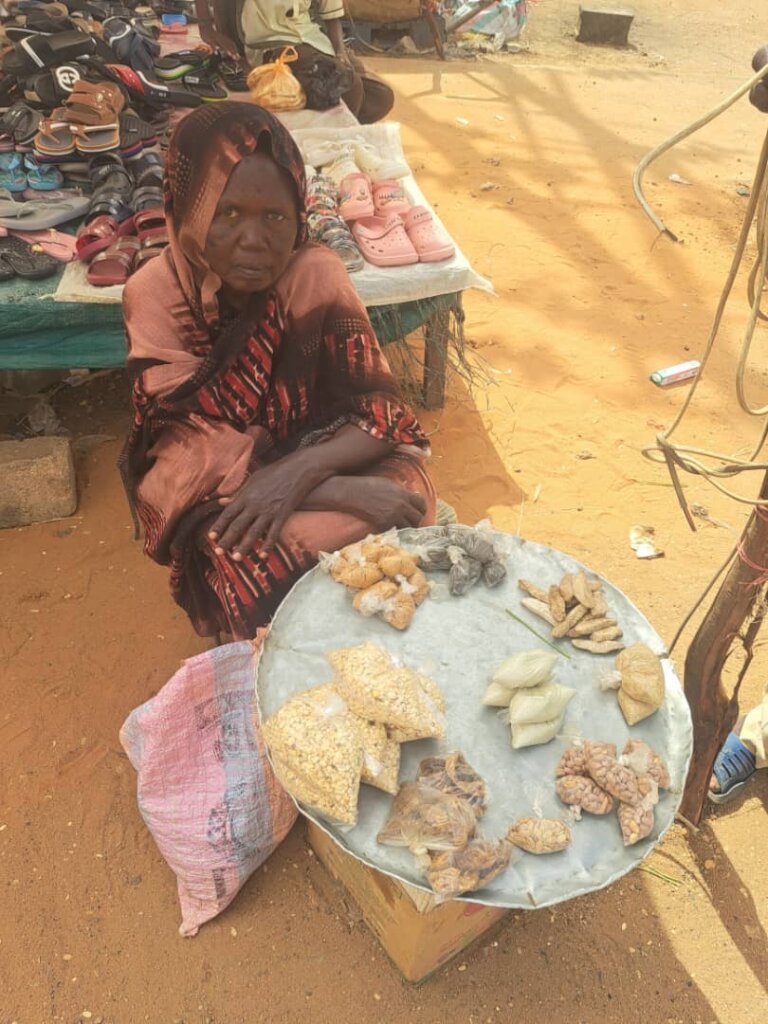
The initial 50% investment was provided according to each participant's assessment and livelihood plan. The purpose was to give survivors the means to strengthen work they had already started or were prepared to begin, such as selling food, kisra, tea, coffee, vegetables, or beverages, or providing other small services.
During the follow-up visits, DWN's team focused on learning alongside participants. The team:
Observed how the initial investment was being used and whether the livelihood activity had started or expanded.
Listened to participants describe early changes, practical difficulties, and additional needs.
Discussed ways to strengthen purchasing, sales, recordkeeping, and management of limited working capital.
Encouraged participants and reinforced that setbacks would be addressed through mentoring rather than blame.
Documented progress to guide decisions about the remaining approved support.
Our principle: observe, listen, encourage, and solve problems together—without judgment.
A Moment of Joy and Recognition
Receiving the initial investment was deeply meaningful to participants. Many had not experienced such happiness for more than three years. Signing the receipts was more than an administrative step: it confirmed that they were being treated as active partners in their own recovery, with dignity, responsibility, and a future worth investing in.
For survivors who had felt forgotten, this support carried a powerful message: You are not alone. Your skills still matter. Your work matters. Your future matters.
Early Changes Observed
The follow-up visits confirmed that participants had begun putting the first investment into action. DWN observed renewed activity, commitment, and hope as survivors used livelihood inputs and equipment to strengthen their daily work. The visits also helped the team identify challenges requiring continued mentoring and individualized support.
DWN is continuing to review each participant's progress. Verified information on income, sales, reduced borrowing, and business growth will be documented after sufficient time has passed. This report therefore presents qualitative progress and does not claim results that have not yet been fully measured.
Three Additional Livelihoods Under Assessment
DWN's team is working with three additional displaced men who are trying to earn an income through barbering, selling body and hair products, and selling toys. Although they have taken the initiative to establish these activities, they currently receive few or no purchases.
The team will listen to each participant and assess the reasons for limited sales, which may include location, customer demand, product selection, pricing, visibility, missing equipment, or insufficient working capital. DWN will not assume failure or blame the participant. The purpose is to identify a realistic path forward—strengthening the existing business where possible or helping the participant adapt the livelihood plan when necessary.
Accountability with Compassion
All participants signed receipts for the initial 50% investment. DWN maintains individual assessment records, livelihood plans, distribution documentation, and monitoring notes. This process protects donor resources while respecting the realities survivors face, including illness, trauma, insecurity, market disruption, family responsibilities, and unstable living conditions.
Accountability does not mean punishment. It means walking beside participants, understanding what is working, responding to barriers, and making careful decisions that support lasting recovery.
Next Steps
Complete and consolidate the findings from the follow-up visits for all 27 participants.
Complete individual assessments and livelihood recommendations for the three additional men.
Continue individualized mentoring and respond to livelihood challenges identified during visits.
Verify the appropriate use and early effects of the initial investment.
Determine eligibility and timing for the remaining approved recovery support.
Document measurable changes in income, sales, borrowing, household stability, and progress toward self-reliance.
Integrate psychological and psychosocial support as resources become available, recognizing that livelihood recovery and emotional healing must advance together.Our Gratitude
Darfur Women Network extends its deepest appreciation to our generous donors and partners. Your support is helping survivors move beyond day-to-day survival and begin rebuilding their lives with dignity.
The 27 participants in the second stage—and the three additional men now under assessment—are not simply displaced people. They are mothers, fathers, workers, caregivers, protectors, and survivors. They have endured what no person should experience, yet they continue to work, care for their families, and rebuild.
Lifesaving Assistance → RecoveryInvestment → SustainableLivelihoods → Self-Reliance
Thank you for seeing the people behind the n
![Share on Twitter]()
![Share on Facebook]()