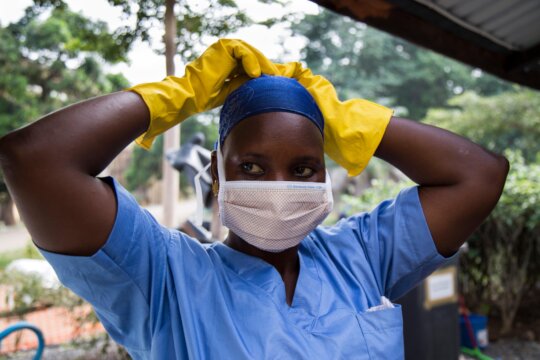
![Evelyn and Dr. Ortega]()
Evelyn and Dr. Ortega
Mental Health Care After a Disaster: The World Health Organization (WHO) estimates that rates of common mental disorders, such as anxiety and depression, double during humanitarian emergencies - affecting up to 20% of the population - while people with severe mental disorders are especially vulnerable in emergency situations. After Typhoon Haiyan struck the Philippines, the WHO estimated that 10–15% of the affected population would suffer more serious psychological problems as a result of the crisis, and that 3–4% would suffer from severe mental disorders.
Mental health support systems are critical for populations affected by conflict and crises, because the survivors are not only faced with stressful experiences such as violence and loss, but also often have to adapt to the challenges of new environments such as displacement and loss of property and livelihoods. Distressing experiences and fragmented or insufficient medical services can lead to unaddressed mental health and psychosocial issues, impacting the welfare and functioning of individuals and families.
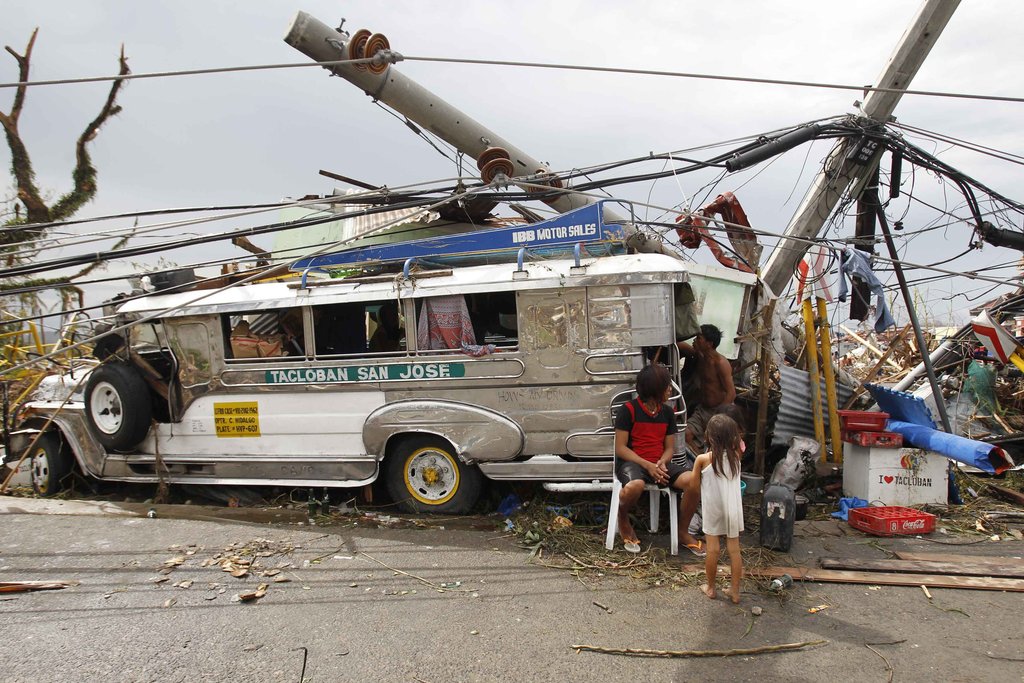
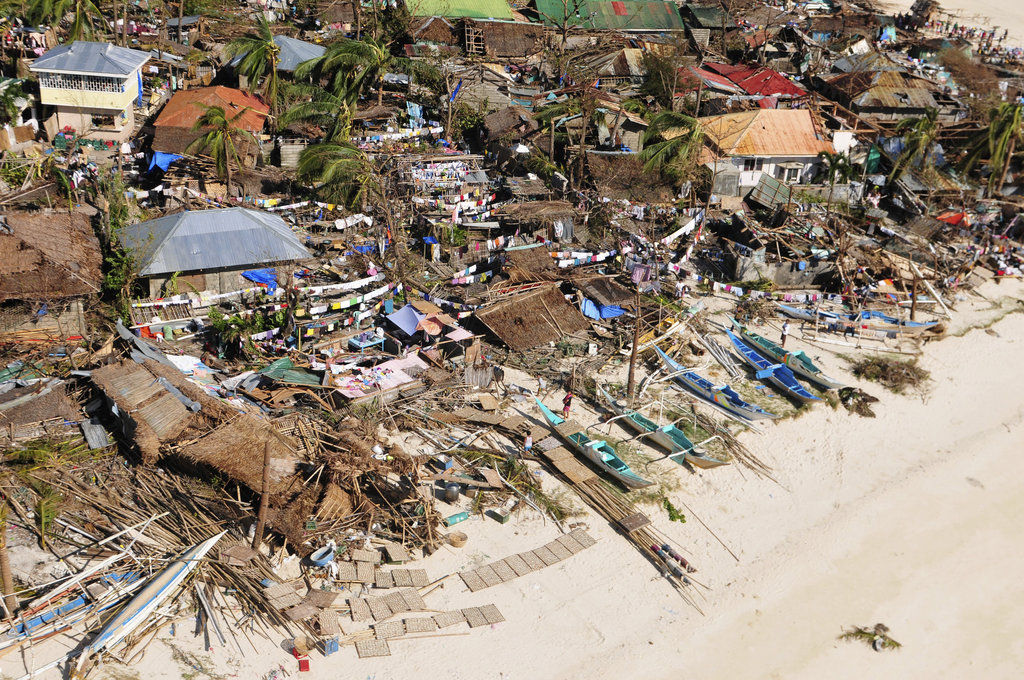
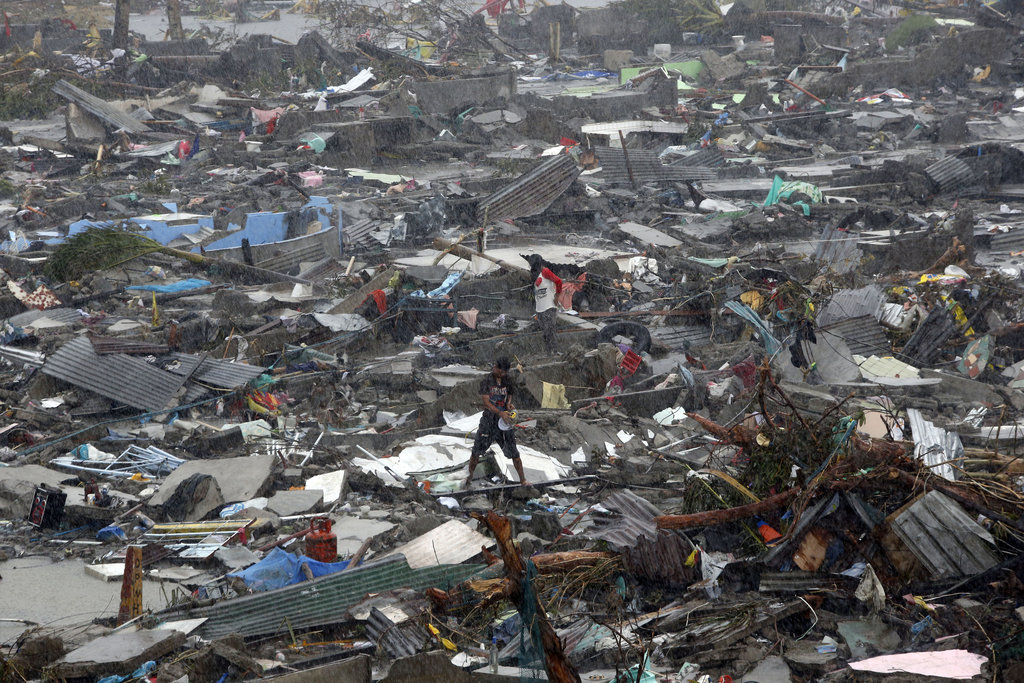
The city of Tacloban in Leyte Province was the epicenter of the 2013 typhoon, and one of the worst-affected areas. International Medical Corps’ teams in Tacloban reported that almost 100% of patients they saw had suffered the loss of home and livelihoods, and that approximately 75% of patients at clinics in affected areas reported psychological distress.
As one of the very few international relief organizations to make mental health care a priority, International Medical Corps has the capacity to respond to mental health and psychosocial needs during a disaster like Typhoon Hiayan; build the capacity of mental health systems in disaster-affected areas while delivering services and supporting recovery; and help develop national policies to ensure these systems will remain resilient in the face of future disasters. In post-tsunami Aceh and Sri Lanka, International Medical Corps’ mental health guidelines were cited by the WHO as examples of “building back better” and creating sustainable mental health services. International Medical Corps also delivered integrated mental health programs after Hurricane Katrina, in post-earthquake Pakistan, post-earthquake Haiti and in numerous post-conflict settings in Africa. Further, International Medical Corps has been one of the pioneers of combining psychosocial support with its nutrition programs to enhance infant development and improve maternal mood.
International Medical Corps’ Response in the Philippines: International Medical Corps was on the ground in the Philippines within 24 hours of Typhoon Haiyan, and began supporting a comprehensive emergency response. Rapidly implementing a network of mobile medical units, International Medical Corps was able to reach remote communities cut off from health care and basic services, providing over 14,625 health consultations in more than 80 villages. As local capacity recovered and the need for direct humanitarian service delivery decreased, International Medical Corps shifted towards early recovery efforts in 17 municipalities in late December 2013. As part of this work to “Build Back Better” in the Philippines, International Medical Corps is coordinating with national, local, and international agencies to combine mental health care with the delivery of primary and secondary health care.
In order to create a more permanent solution to addressing mental health concerns in the Philippines, International Medical Corps trained 34 primary health workers in 17 municipalities throughout the Leyte Province to identify and manage priority mental health conditions according to national and global WHO guidelines.
In addition, 17 health care workers were trained under the WHO’s more advanced training program that consists of three modules given as 2-3 day sessions (totaling 7-9 days of training) for doctors and nurses working in primary care centers at the community level. Ultimately, this program provides participants with specialized training to identify mental illness and provide the proper medications and psychosocial care to properly treat them. These advanced training sessions also provided opportunities for health care providers to examine the existing mental health referral systems, and fill gaps to serving patients with more severe needs. This training program adds to a broader effort to promote mental and psychological well-being at the community level that includes training over 600 community leaders to recognize some of the symptoms of mental illness and refer them to the appropriate place to seek treatment.
Moving forward, International Medical Corps will work with the Philippine Department of Social Welfare and Development to train social workers as part of multi-disciplinary health teams to follow up with patients, connect people to needed services, and help reduce the stigma related to seeking mental health care. Further, International Medical Corps will expand its training program to include health care workers in municipalities that have not yet received training, and provide mentoring visits after the workers are certified to help ensure they put into practice the techniques and lessons learned during the training sessions.
Success Stories: Two women who had participated in International Medical Corps’ advanced training program, Evelyn Cabanero, a lead nurse and Dr. Eugenie Nicolas-Ortega, a primary care physician, shared their insights on how mental health services within their hospital are evolving after Typhoon Haiyan and International Medical Corps’ trainings. Through education for health care workers and community outreach programs to reduce the stigma of seeking help for mental health issues, International Medical Corps has given health care workers and families a new level of comfort which will lead to more people getting the treatment they need.
Evelyn and Dr. Ortega spoke about their increased comfort with approaching patients who may exhibit signs of mental illness, “We are no longer afraid of them. Before now, we were afraid of them because they may be violent. Now we are not afraid to approach or even touch the patient. We talk to them, make eye contact, and build rapport.”
Another benefit of International Medical Corps’ mental health training are the shifting attitudes in the community regarding suicide, which has led to more patients being referred for mental health treatment instead of only treating the damage done by suicide attempts: “…Now, we provide more follow-up appointments including psychological advice and referrals to a psychiatrist in Tacloban.”
Evelyn explained how the Burauen District Hospital plans to open a new room with three beds reserved for patients in need of mental health care. They also discussed the plans for a greater integration of mental health treatment and awareness across hospital services. “We’re now able to give treatment to depressed patients, whose final action is sometimes suicide. The hospital staff will work to prevent the progression of depression and other forms of mental illness,” Dr. Ortega added.
Evelyn ended the discussion with a statement that gets to the root of the issue of treating mental illness in the Philippines, “there’s a stigma attached to mental health issues because families lack knowledge regarding mental health.” Through education initiatives, and with your support, such as the training programs, International Medical Corps is helping to eliminate these types of stigma and build the capacity of local health care systems to properly care for those who suffer from mental health issues.
![Share on Twitter]()
![Share on Facebook]()