By Jennifer Schechter | CEO
Integrate Health Celebrates the Retirement of Co-Founder and Togo Country Director Christophe Sesso Gbeleou
In June, Integrate Health (IH) celebrated the retirement of Co-Founder and Togo Country Director Christophe Sesso Gbeleou. His retirement marks a significant leadership transition for the organization as he has served as a leader, mentor, and advocate since the organization’s founding.
After witnessing numerous devastating cases of AIDs in his neighborhood, Christophe collaborated with local doctors and people living with HIV/AIDs to create the Association Espoir pour Demain (AED-Lidaw) in 2001 and, in 2004, co-founded IH in collaboration with U.S. Peace Corps volunteers in Togo. Christophe continued his career with the Togolese Ministry of Health (MOH) and various multi-lateral development agencies while staying in close touch with AED-Lidaw and IH. In 2010, he returned to AED-Lidaw to serve as the Executive Director until 2016, when he stepped into the role of Country Director at IH.
As Country Director, Christophe provided strategic direction through immense organizational growth, from a handful of staff serving 2,000 HIV patients to a multi-national effort accompanying governments to scale primary healthcare solutions. His humility, dogged persistence, and commitment to government accompaniment have left an indelible mark on our team. Christophe’s expertise remains a valuable asset, and he will continue to serve on IH’s local advisory board.
After a rigorous recruitment process, IH is pleased to internally promote Dr. Charlotte Dzamado, former Director of Technical Assistance, to the Country Director role. Charlotte, a Doctor of Medicine with a Master’s degree in Public Health, joined IH in 2021 as a Health System Strengthening Specialist. During her tenure, she has played a critical role in advancing key initiatives including the government’s Wezou program and COVID-19 response.
We welcome Charlotte to her new role and wish Christophe a well-deserved retirement.
Togo Highlights
Successes
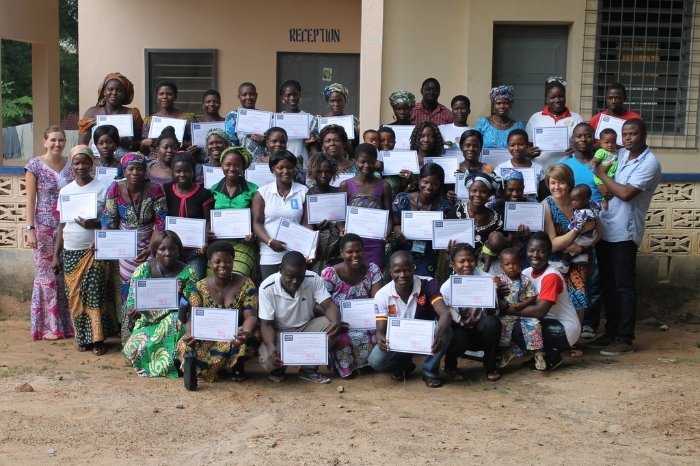
Saving Lives and Livelihoods (SLL) Phase II Project:Supported by AMREF Africa and funded by the Mastercard Foundation, the SLL project aims to improve vaccination coverage and effectiveness and integrate COVID-19 vaccines into routine immunization programming. IH leverages its expertise in community engagement and digital health to support the MOH in implementing this project in four districts in the Maritime region of southern Togo. This quarter, over 8,000 people received integrated vaccination services through IH-facilitated vaccine campaigns and targeted outreach. In addition, IH supported training for 150 Community Health Workers (CHWs) on the use of immunization tools, community mobilization, and tracking children lost to follow up. Despite some challenges such as low coverage among pregnant women and elderly populations, and COVID-19 vaccine hesitancy in some communities, there has been strong local stakeholder commitment and multisectoral coordination. IH will continue to work with the MOH to enhance equitable vaccination access for vulnerable groups in Togo.
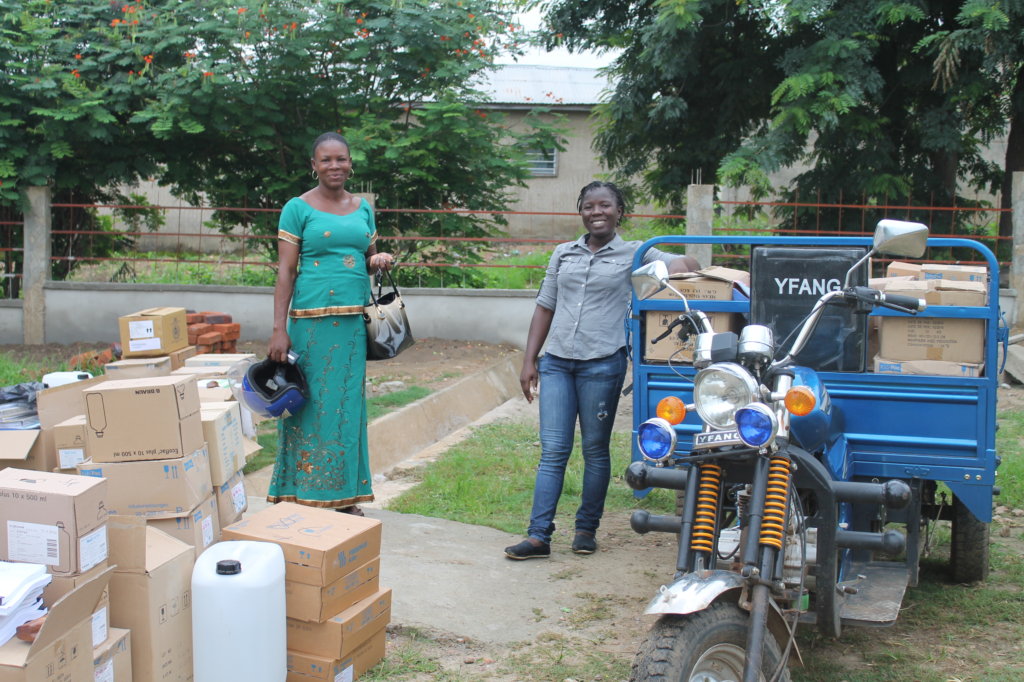
CHW Policy Reform Pilot: This quarter marked significant progress for the national CHW policy reform pilot program. In June, IH donated essential medicines and supplies for CHWs in the Anié district. Key partners and the MOH have all contributed elements to the complete package of CHW care, allowing CHWs to begin providing services. For example, malnutrition treatments were provided by UNICEF, and malaria treatments were provided by the Global Fund. Over the past year, more than 850 CHWs have been trained across four districts in the Plateaux region, including 206 CHWs in the Anié district where IH supports.
Challenges
Data Synchronization on Tonoudayo: This quarter, IH faced challenges with data synchronization on the Tonoudayo application due to connectivity problems and late data entry. This led to late reporting on some indicators such as CHW visits, timeliness, and under-five consultation rates, as data verification was delayed. IH anticipates that reporting on these indicators will be corrected in the coming weeks and current numbers will increase. IH continues to provide training and support to CHWs and clinical mentors to improve the quality of data collected. IH has also instituted some process improvements including data verification before CHWs submit data to health centers.
Guinea Highlights
Successes
Mid-term Evaluation: IH is pleased to share that the midterm evaluation of the program in Guinea is now complete. In an effort to continuously improve our evaluation methodology, IH worked with Guinean experts in community health research, the Mafèrinyah Research Center, who used a standardized and globally accredited DHS household survey tool. The mixed methods study included a household survey, semi-structured interviews, focus group discussions, and health center assessments. The midterm evaluation found an 87% child vaccination coverage rate (three doses of the pentavalent vaccine) among survey respondents (n=863). Although this number is not directly comparable to the baseline finding of 45% as study methodologies differ, we are encouraged by the increase and that the midterm figure exceeds the mid-term target of 80%.
Gavi Global Summit: In June, IH’s Chief Partnership Officer and incoming CEO Emily Bensen spoke at the Gavi Global Summit in Brussels about IH’s partnership with Gavi, the government of Guinea, and private sector partners to expand vaccine access and strengthen local health systems. Emily highlighted that two years into our partnership with Gavi, over 4,500 formerly zero-dose and under-immunized children in Guinea have received vaccines through community-based primary care delivery. She also announced that IH is finalizing a renewed partnership with Gavi and a philanthropic donor to accelerate digital tools for health workers, roll out the malaria vaccine, and expand our work across West Africa.
Kendeya Digital Health Application Implementation: In January, IH rolled out the Kendeya application for 102 Community Relays (CRs), 13 CHWs, and 5 Clinical Mentors in the Kouroussa district. In April, IH and MOH officials interviewed users to get feedback on the performance of the application. Approximately 70% of surveyed CRs reported high satisfaction with the application, citing improved community monitoring. However, challenges remain, including data sync issues, connectivity disruptions, and mismatches between paper and digital records.IH identified poor internet access as the core issue affecting Kendeya synchronization. While the application functions offline, unstable connections hinder data upload. To address this issue, IH is partnering with the telecom company Orange to improve internet access for CRs, ensuring data collected during home visits can sync reliably with the central server. Despite sync-related challenges, Kendeya supports real-time data tracking, including vaccination reminders.
Challenges
Fire at Guinea’s National Vaccine Warehouse:IH is devastated to share that on June 20th, there was a fire at the national vaccine warehouse in Conakry, destroying over four million doses of essential vaccines, including the child pentavalent vaccine and the soon-to-be-rolled-out malaria vaccine. IH has been supporting the MOH with immediate next steps as much as possible, including seconding a member of our staff to the Expanded Vaccination Program team to help with crisis planning and vaccine inventory. Next, upon request of Gavi’s Senior Country Manager for Guinea and MOH leaders, IH will host a resource mobilization roundtable with local partners to raise more support to replace much-needed vaccine doses.
Organizational Highlights
Skoll Gender Roundtable: In April, IH and Last Mile Health hosted a Gender Equity panel discussion on the sidelines of the Skoll World Forum to amplify our Gender Framework for Action. The panel discussion explored opportunities to invest in women CHWs across their careers. Panelists shared recommendations for doers and donors, highlighted tangible examples of progress, and laid out a vision for future steps. There were approximately 60 participants at the event, all of whom were fully engaged during the question-and-answer session. In attendance was former President of Ireland Mary Robinson who provided opening remarks and participated in the panel discussion. It was especially amazing to see her engage directly with CHW Millicent and share experiences of being champions of contraception and reproductive rights.
Recognition of IH as a Learning Partner to Government: IH leaders published an article in Stanford Social Innovation Review sharing how IH reimagined its role with governments: not as a provider to be scaled, but as a learning lab. This piece tells the story of Togo’s bold maternal health reform, supported by IH through cost modeling, evidence, and iterative design, leading to free maternal care for hundreds of thousands of women. As global aid declines, this collaborative model could be the key to truly sustainable, government-led reform.
In addition, based on IH’s work on Project BIRCH in Guinea, the Global Fund recently published a feature highlighting how local municipalities are now budgeting for Community Health Worker salaries for the first time. This is a major shift toward domestic, sustainable financing, and a model for what’s possible when funding follows national priorities. The article is available to read here:Global Fund blog.
Recruitment: IH is excited to welcome Melanie Joiner as our new Senior Director of Partnership. She will be replacing Emily Bensen as the head of the Partnership team as Emily transitions into the CEO role (effective January 2026). Melanie brings almost two decades of experience in global health, with expertise in building strategic partnerships and managing health programs in West Africa. Melanie is not new to IH, having served in the Peace Corps in Togo with two of our co-founders, Jenny Schechter and Kevin Fiori, and previously on IH’s Board of Directors from 2011–2013. Melanie will focus on strengthening existing partnerships and developing new relationships with diverse donors. We’re excited to have her bring her passion and expertise to expand access to primary healthcare in West Africa. Please join us in welcoming Melanie (back) to the IH team!
Community Health Worker Spotlight: Malibe Naoutche
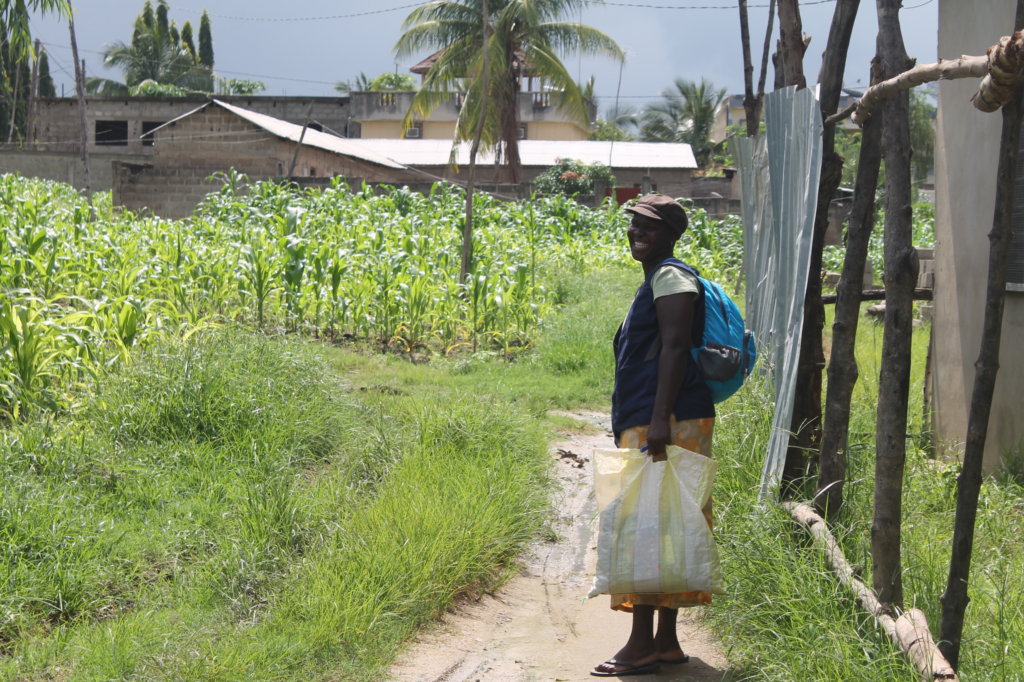
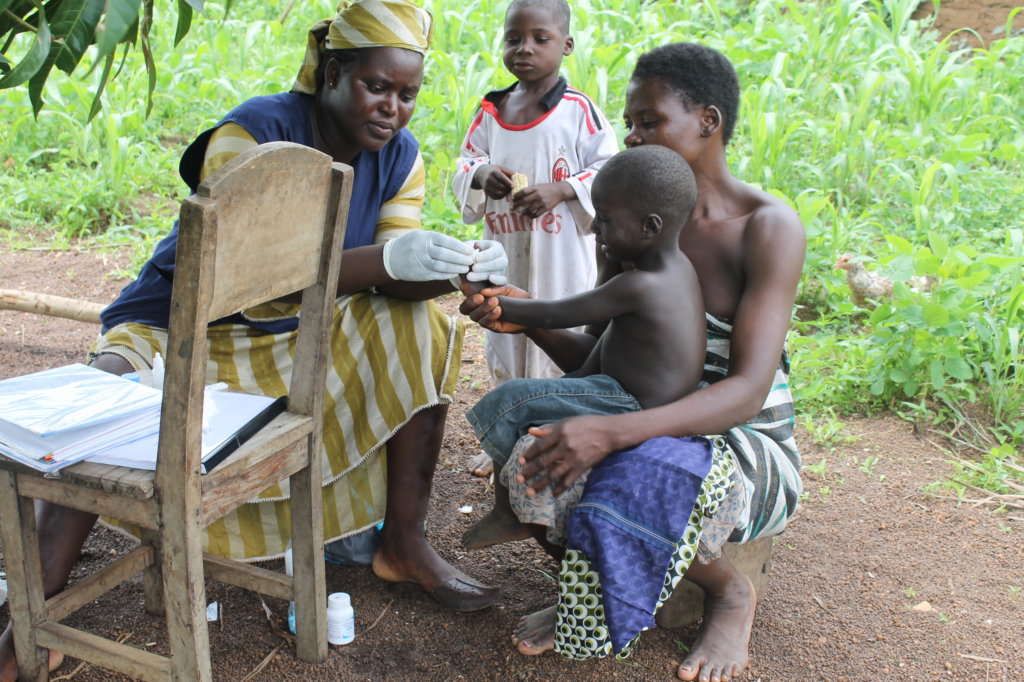
Malibe Naoutche has been a CHW for six years and works in Kpétab, a rural farming community in the Dankpen district. Malibe travels daily through the village, going door-to-door to provide essential health and education services to pregnant women, women of childbearing age, and children under five. She refers patients to health centers when necessary. She is a familiar face in the community, one that the women in Kpétab have grown fond of over the years.
IH supports CHWs like Malibe with financial resources, tools, and training that they need to provide life-saving information and essential primary healthcare services.
For Malibe, this work is personal. Before the Integrated Primary Care Program was launched in the Dankpen district in 2019, Malibe’s sister’s first child died from pneumonia. Due to lack of information, the family thought it was a witch attack—a widespread belief in rural Togo. However, pneumonia can be treated. So, when the Integrated Primary Care Program was introduced in Kpétab, Malibe wanted to contribute, in her own way, to putting an end to the suffering of women and children in her community. Through her work as a CHW, Malibe not only saves lives, but is also an essential link in building a healthy and productive community.
“What motivates me is seeing the impact of my work. When I see families adopting the health practices I've told them about, it fills me with great joy, knowing that this information has literally saved their lives.” - Malibe Naoutche
Financial Highlights
Links:
By Jennifer Schechter | CEO
By Jennifer Schechter | CEO
Project reports on GlobalGiving are posted directly to globalgiving.org by Project Leaders as they are completed, generally every 3-4 months. To protect the integrity of these documents, GlobalGiving does not alter them; therefore you may find some language or formatting issues.
If you donate to this project or have donated to this project, you can receive an email when this project posts a report. You can also subscribe for reports without donating.



Support this important cause by creating a personalized fundraising page.
Start a Fundraiser