![]()
Integrate Health Supports Ultrasound Program Scale-Up in Kara Region
Integrate Health’s Integrated Primary Care Program includes equipping health districts with mobile ultrasound machines and providing training to midwives on use of the machines during routine pre-natal care. Ultrasound is an essential technology for quality maternal care; however, primary health centers across Togo often lack the equipment and trained staff to provide this critical intervention. In Togo, only obstetricians, gynecologists, and radiologists are trained on how to use ultrasounds, leaving a gap in services particularly in rural areas where midwives are the first point of contact for pregnant women. In late 2021, the Kara regional department of the Ministry of Health (MOH) asked Integrate Health to support them in scaling up the ultrasound program to the entire Kara region. This is an exciting example of Integrate Health’s approach being adopted and scaled by the MOH.
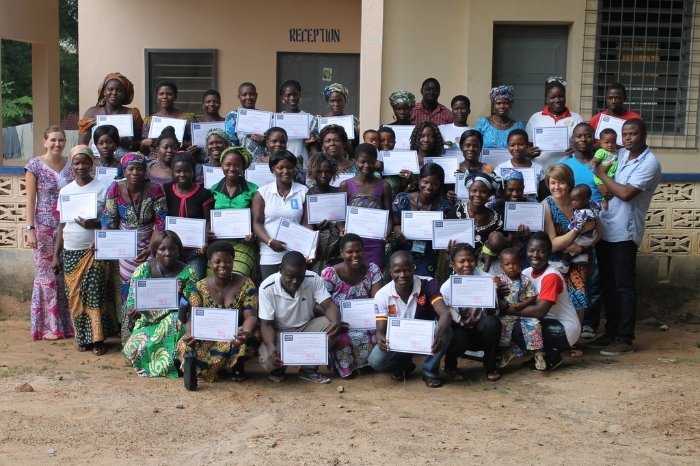
Integrate Health co-developed the program strategy with Kara regional MOH counterparts and, with generous funding and a supply of ultrasound machines from the DAK Foundation, organized a training program for 20 midwives in ultrasound examination techniques. The two-week training program was held at the University Teaching Hospital in Lomé from February 22nd to March 7th. Training modules included classroom and practical training to equip midwives with the skills to recognize key danger signs in pregnancy, such as signs of miscarriage in the first trimester, multiple pregnancies, fetal abnormalities, and other pregnancy-related complications. After the training, attendees participated in internships under the supervision and coaching of physicians in the radiology and obstetrics and gynecology units of the University Teaching Hospital. Participating midwives will return to their health centers with new skills and equipment that will dramatically improve quality of care in rural communities.
This program demonstrates the benefit of task shifting to address access to, and quality of, health services in rural communities often left out of the health system.
This initiative was featured in the Togo Topnews newspaper, and more details can be found, in French, using the link here.
The official launch of the program is scheduled for May 1st. We look forward to reporting on this exciting initiative in the coming months.
Program Highlights
Successes
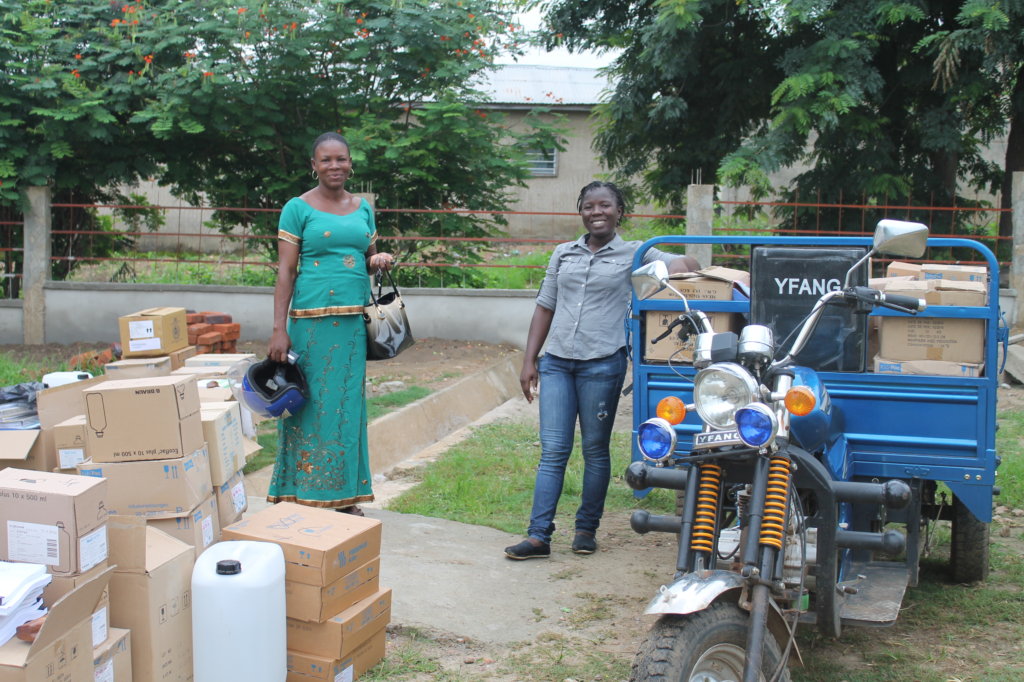
This quarter, the rural transportation program was launched in the Binah district. The Integrate Health team collaborated with district health officials and community leaders on the purchase and retrofitting of tri-motorcycles to include a gurney and bench in the back carriage and a covering for privacy and weather protection. The Integrate Health team also participated in the recruitment and training of ambulance drivers. In March, 14 ambulance drivers—two from each of the seven communities that Integrate Health supports in Binah—were trained on topics including Togolese traffic laws and first aid administration. The purpose of the rural transportation program is to eliminate the geographical barriers that rural communities face in traveling from their homes to health centers and regional hospitals. The newly trained drivers will participate in periodic refresher trainings and will ensure the safe transfer of critically ill pregnant women and children under five to health centers and the district hospital. The rural transportation program is now effective in all five Integrate Health-supported districts.
Integrate Health is making significant progress towards one of our annual objectives to align technical and financial partners around harmonized tools and a national framework for quality assurance. Currently, the government and other stakeholders measure quality of care differently. This makes it challenging to compare healthcare delivery across geographies and programs and to ensure high-quality healthcare delivery to every community across the country. In March, Integrate Health, the Ministry of Health, and other key partners participated in a two-week workshop to address this challenge. The workshop resulted in comprehensive definitions of quality for each level of the healthcare system (tertiary, primary, and community-based), covering seven dimensions of quality, some of which include personnel, security, and timeliness. The team also developed tools for measuring and tracking improvement initiatives, which will be managed by a quality assurance task force created for each district. The next step is for the tools to be piloted in some of Integrate Health’s sites and in other parts of the country.
Challenges
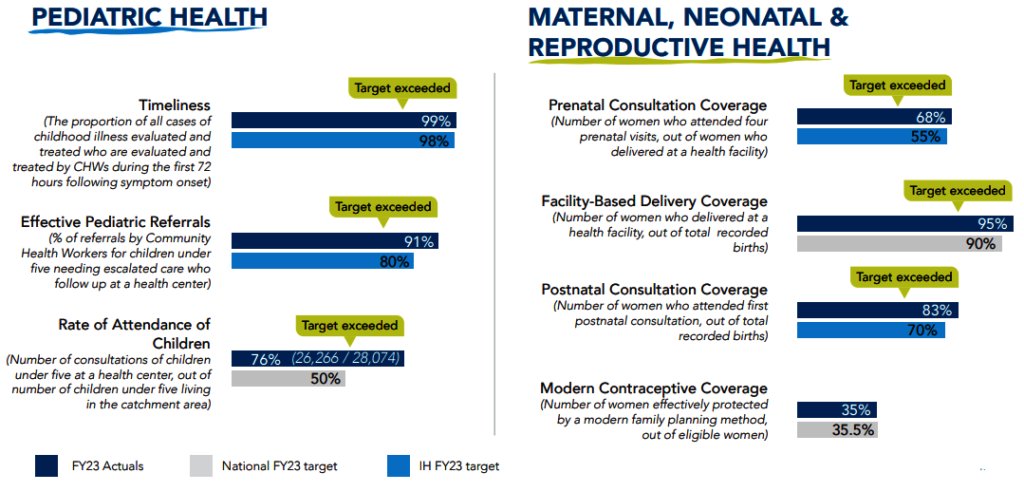
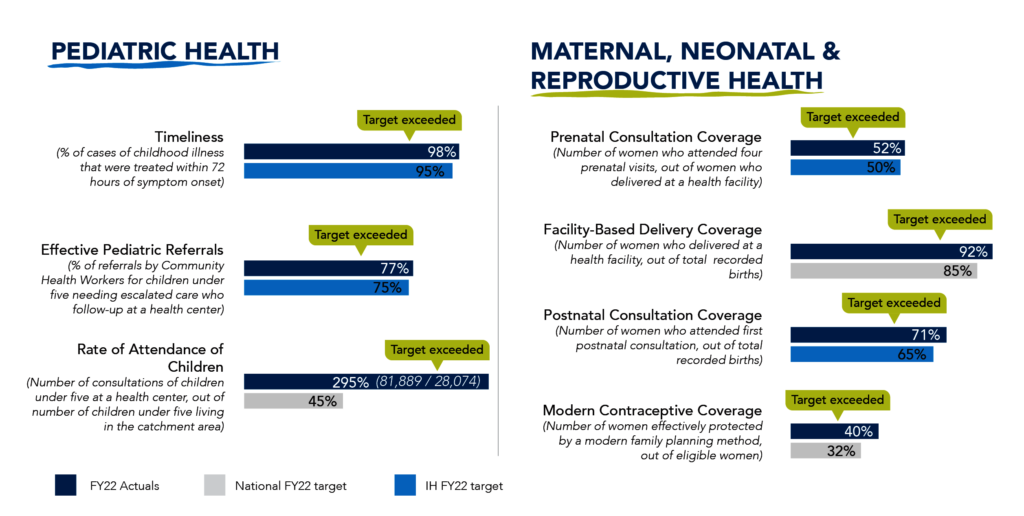
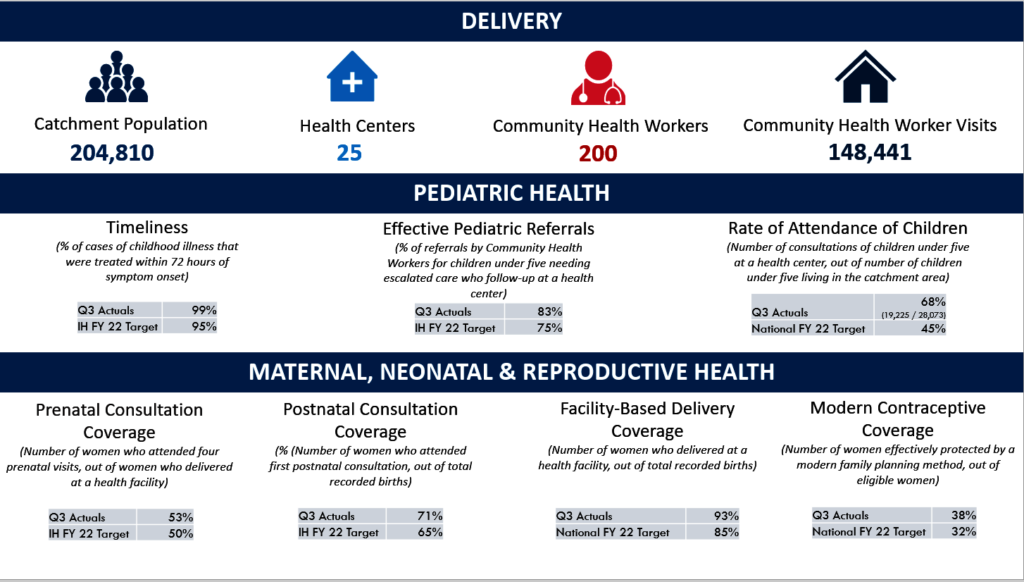
This quarter, Integrate Health observed a slight overall decrease in modern contraception coverage from last quarter, from 41% to 38%. This is because, despite increases in the Kéran and Binah districts, the modern contraceptive prevalence rate has dropped in the Kozah, Dankpen, and Bassar districts. This negative change in three districts is due to changes in data collection, not due to a decrease in access to, or use of, contraceptives. The Monitoring, Evaluation, and Quality Improvement (MEQI) team recently implemented a more accurate data quality initiative, which revealed that previous DHIS2 data on contraceptive prevalence might have been mistakenly inflated, leading to Integrate Health reporting on those numbers. The MEQI team is still in the process of identifying the root cause for the discrepancy between paper register and DHIS2 entries and is working closely with the district and regional health teams to implement a long-term solution to ensure data entry quality.
Expansion Highlights
Successes
Over two years ago, Integrate Health began reflecting on how to expand the Integrated Primary Care Program beyond Togo. In that time, the team conducted a scoping analysis, engaged consultants to do field research, met with partners, and received board approval to move forward in Guinea as the second African country of implementation. The selection of Guinea was based on compelling need, strong political will, an explicit invitation to partner, and the existence of an evidence-based national community health strategy. Integrate Health recently conducted a workshop with key Ministry of Health (MOH) officials and partners in Guinea to identify the top priorities that will inform the Integrate Health and MOH partnership agreement and work plan for the coming years. This participative approach was greatly appreciated. Integrate Health will continue to share updates as work in Guinea advances.
Challenges
Integrate Health is in the planning phases of providing support for the expansion of the Integrated Primary Care Program to a new region of Togo, to be directly implemented by the district-level Ministry of Health (MOH). As other national priorities ramp up, including work to define a national harmonized cadre of Community Health Workers, the planning for program expansion—specifically selecting a region and health centers within it—has stalled. The Integrate Health team is working to sequence priorities in partnership with the MOH in Togo to ensure all priority objectives are achieved.
Organizational Highlights
Successes
Integrate Health is pleased to announce its partnership with Angela Bruce-Raeburn, an experienced consultant who specializes in providing guidance to international organizations on developing a diversity, equity, and inclusion (DEI) ethos for their organizations. Integrate Health is committed to being an anti-racist, anti-sexist, anti-neocolonial, and pro-equity organization. Angela will collaborate with the Integrate Health Board and staff, in Togo and the US, to continue the ongoing process of striving for diversity, equity, and inclusion within our organization.
This quarter, Integrate Health welcomed three new staff members: Pharmacist, Huberta Annie Gertrude Ayawo Welbeck; Business Analyst, Olivier Fabre; and Qualitative Analyst, Fiona Rowles. We are excited to have them on board as Integrate Health continues to grow and increase its impact.
Challenges
In January, after a COVID-19 testing campaign of all Togo-based Integrate Health staff, the offices in Lomé and Kara were closed due to COVID-19 positive cases and exposures. Luckily, most cases were asymptomatic, and those who showed symptoms were treated and closely monitored by Integrate Health’s clinical team. Additional precautionary measures were put in place after the 14-day office closure, and the team in Togo is now back in the office.
Community Health Worker Spotlight
Victorine N'nimbiniyaou Tamandja
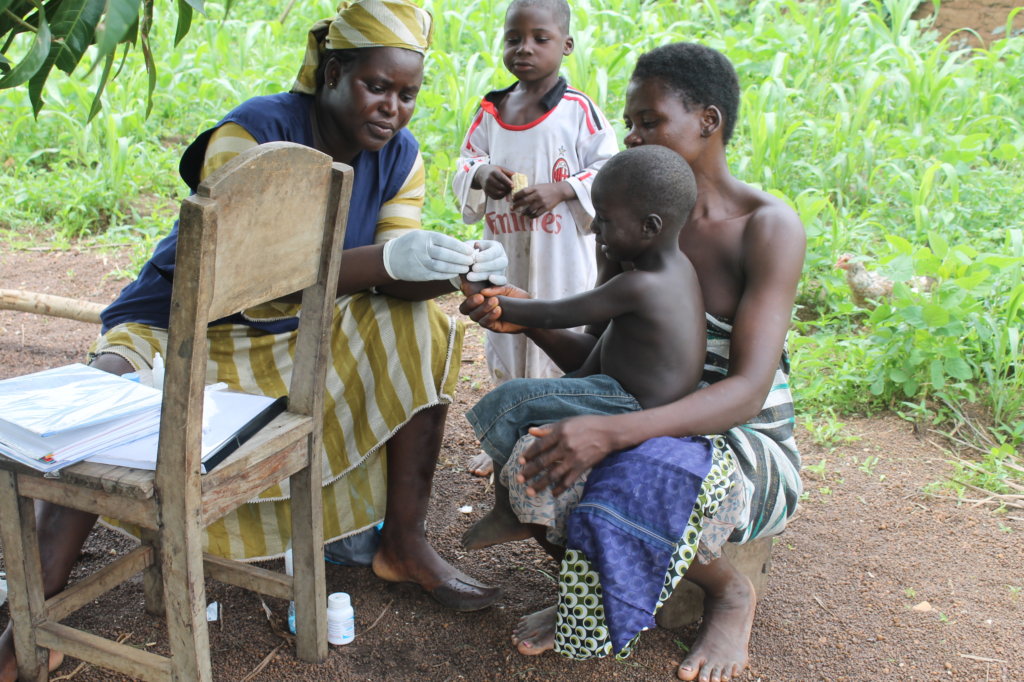
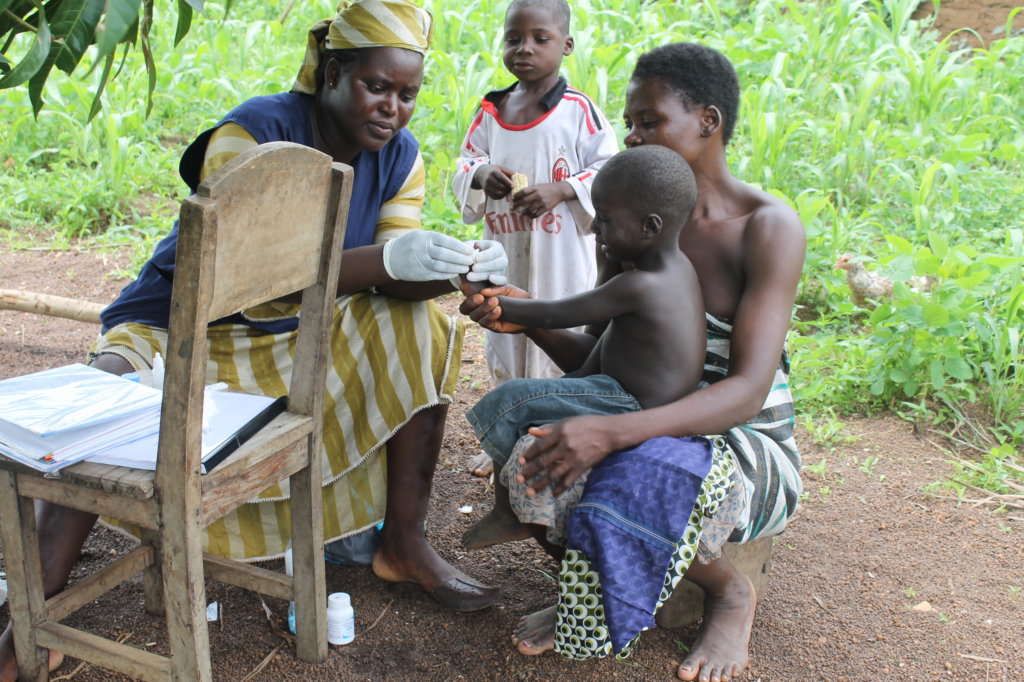
Victorine N'nimbiniyaou Tamandja is a Community Health Worker (CHW) with a passion for addressing social issues. Born in Ouagame, a village in the district of Dankpen, Victorine is the youngest of 20 children and had to drop out of school at the age of 16 due to financial challenges. Her dream was always to become a nurse. Before working with Integrate Health, Victorine made a living from small trading businesses. She is dedicated to her community, and, although she spent part of her childhood in another district, has maintained strong connections to Ouagame where she grew up and lives today. Victorine enthusiastically applied to be a CHW in 2019 and for the past three years has worked with Integrate Health. She provides an essential link between her community and the health center in Ouagame, an area with a high prevalence of malaria, acute respiratory infections, and malnutrition. Her objective is to take care of the health of children under five years old and to direct pregnant women to health centers for proper care and follow-up.
"I once visited a house where a child was suffering from diarrhea for days on end, and the mother thought it was due to teething. The mother was hesitant at first. I persuaded her to allow me to examine the child, and eventually I treated him. When I made a follow-up visit the next day, the diarrhea had stopped, and the mother was very happy. She has become a champion in helping me break down some harmful beliefs held in the community, and she encouraged other mothers not to ignore their babies' persistent diarrhea, even when they are teething.”
![]()
Links:
![Share on Twitter]()
![Share on Facebook]()