By Deutsches Rotes Kreuz e.V. | Corporate Partnerships
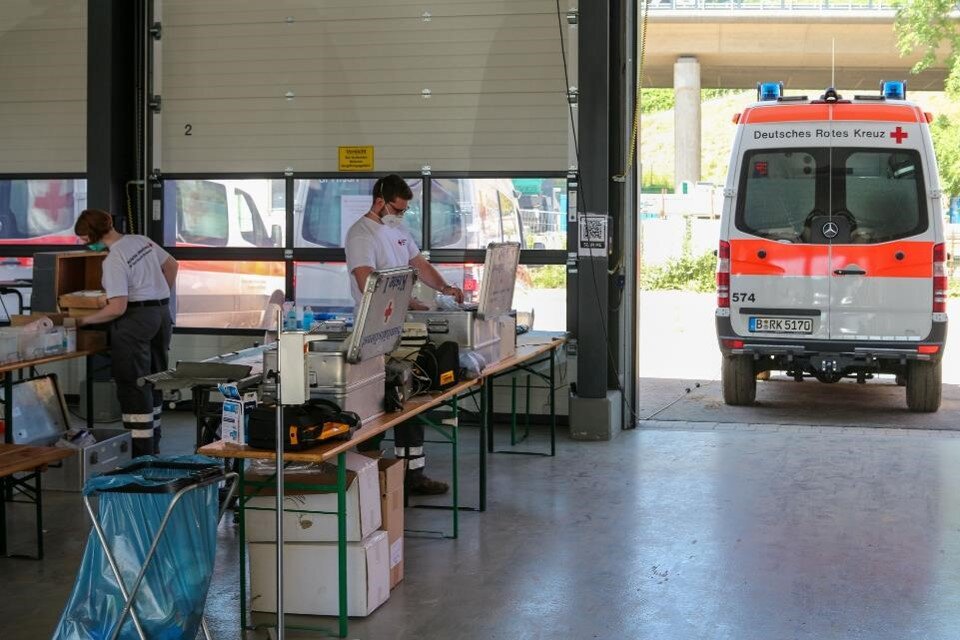
Following the devastating flood disaster in Germany, in which thousands of people lost everything, the German Red Cross (GRC) and its 3,500 staff and volunteers provided emergency aid and care in the first weeks following the disaster with the provision of drinking water, food, electricity, shelters, mobile health care, psychological help, counseling and support services and cash assistance. After the first response, the GRC started working on the reconstruction program.
Detailed measures that have been implemented:
Rescue: Evacuation, search and rescue operations of victims and missing persons and first aid measures
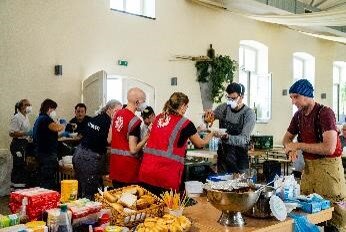
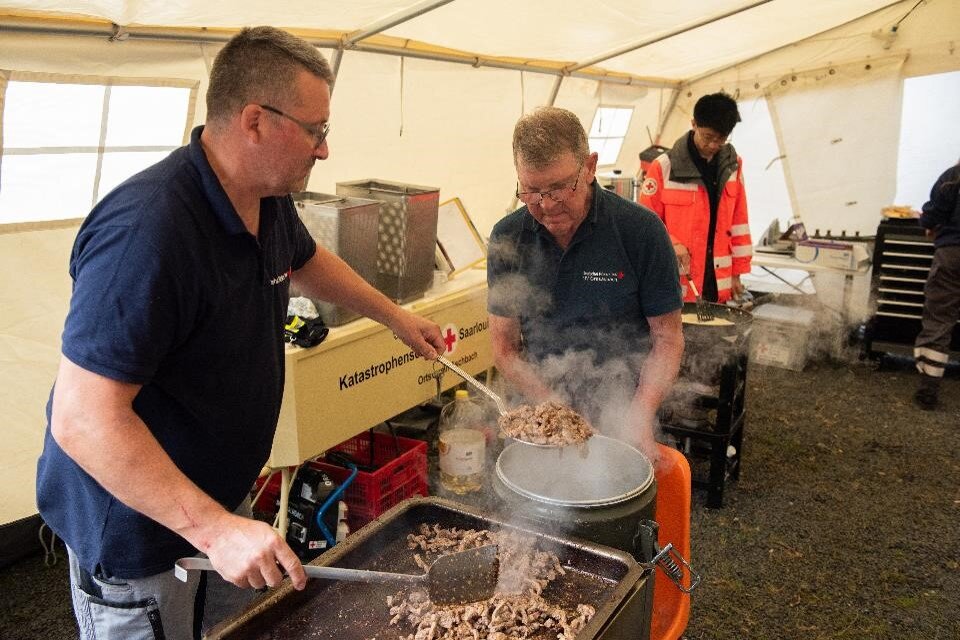
Catering center: About 10,000 meals and 10,000 lunch boxes were distributed daily via the catering center in Grafschaft. 40 distribution points were supplied directly
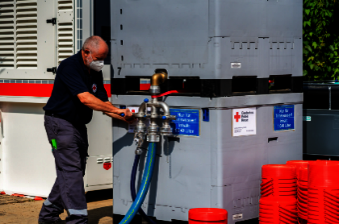
Water and hygiene: Delivery of fifty 1,000 liter drinking water tanks (25 distribution points with 2,000 liters each), daily supply of 140,000 liters of drinking water, provision of hygiene points with washing and showering facilities, distribution of hygiene kits, protective clothing and information material to protect against infections
Wastewater treatment plants: Many wastewater treatment plants were destroyed by the floods. To prevent wastewater from flowing untreated into the Ahr, the German Red Cross built temporary sewage treatment plants. The first went into operation in Mayschoß on August 27, 2021, and the second in Hönningen on January 21, 2022.
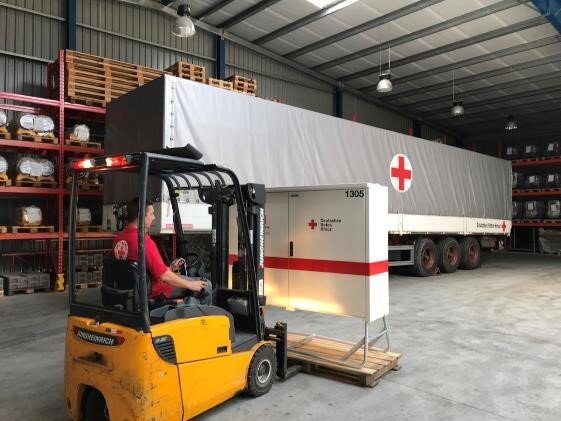
Relief supplies: Supra-regional coordination of the resources of the GRC federal reserve, the Care 5,000 laboratory (federal civil defense reserve)
Accommodation and construction: Provision of sleeping places for those affected (1,000 bunk beds), 30,000 blankets and sleeping bags, acquisition of high-pressure cleaners, pumps; supply of 1,000 construction dryers as well as acquisition of building materials and tools and provision of warm air heating fans and expertise for heating of residential buildings
Electricity and grid: Supply of numerous power generators to supply entire streets; supply of emergency power through decentralized emergency power systems and small power generators at special hot spots, improvement of the partially disrupted communications structure (satellite communications, directional radio), restoration of the Internet connection
Cash assistance: Emergency aid support program for daycare and school starters; provision of cash aid by the GRC regional associations of Rhineland-Palatinate and North Rhine: EUR 100 per school and daycare child, EUR 300 for particularly affected households; extended aid program of the regional association Rhineland-Palatinate with cash aid of EUR 500 to 5,000
Health: Establishment and operation of four mobile medical clinics and an emergency pharmacy, support of the local rescue service, psychosocial support for both victims and helpers, Tetanus prophylaxis, Corona vaccination
Consulting: GRC consulting and service center Ahr - Support in applying for subsidies, social benefits, insurance questions, visits to authorities, psychological support. Integrated in the center are: Aid dispensary, laundromat, shower cabins, café and play corner for children.directly supplied.
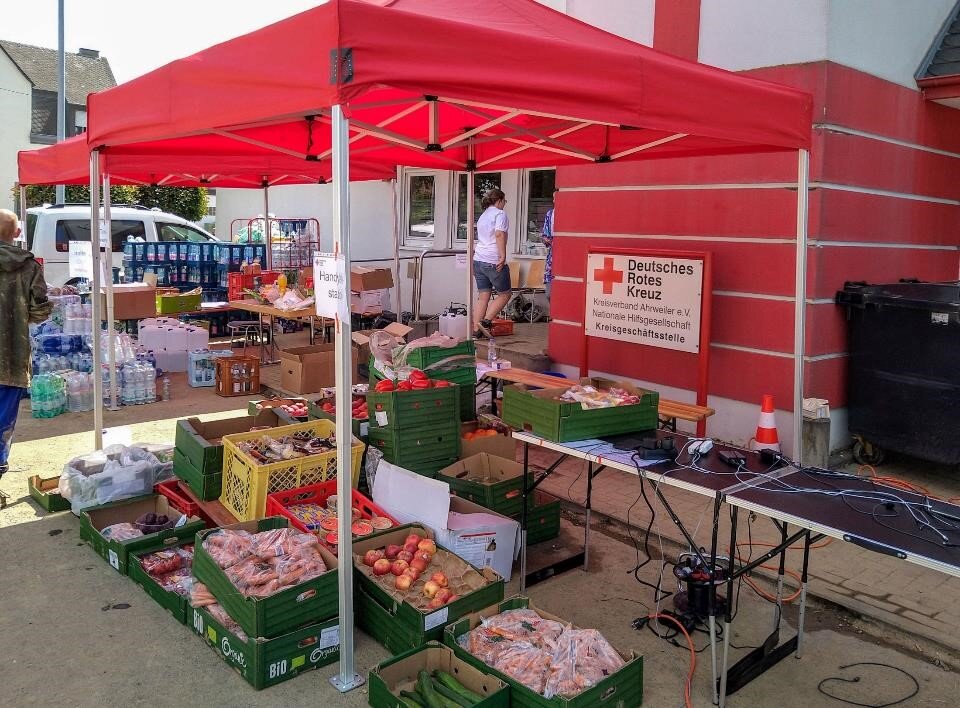
The flood leaves. We stay. Unbureaucratic help from person to person - that is what the German Red Cross's mobile and stationary contact points in the flood regions provide. Financed by donations, the teams offer help in coping with everyday life - from advice on subsidy applications to talks and play afternoons for young and old.
By Violette Matuszewski | Corporate Partnerships
Project reports on GlobalGiving are posted directly to globalgiving.org by Project Leaders as they are completed, generally every 3-4 months. To protect the integrity of these documents, GlobalGiving does not alter them; therefore you may find some language or formatting issues.
If you donate to this project or have donated to this project, you can receive an email when this project posts a report. You can also subscribe for reports without donating.